“Uncertainty is the only certainty, so prepare for it”
Text Björn CrulImage Boris Vermeersch
Looking back on 2024, looking ahead to 2025
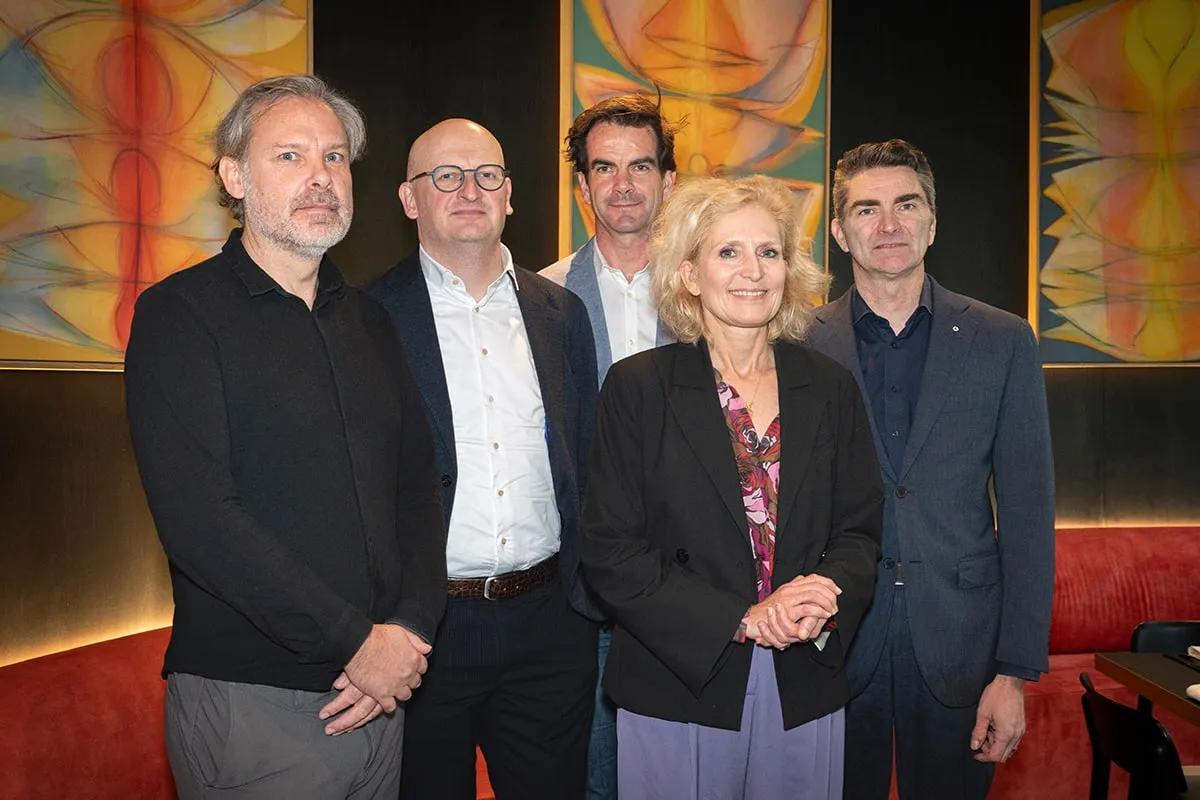
During this round-table discussion, we look back at the key economic and political events of 2024 and ask what prospects 2025 holds. Business Vlaanderen brought five experts together for a lively discussion on sustainable economic growth in volatile times: Hans Diels (geopolitical expert, Etion), Veronique Goossens (chief economist, Belfius), Dimitri Pelckmans (head of risk services, Atradius), Edward Roosens (chief economist, VBO) and Tom Vermeiren (lecturer, House of Sustainable Transitions, VUB).
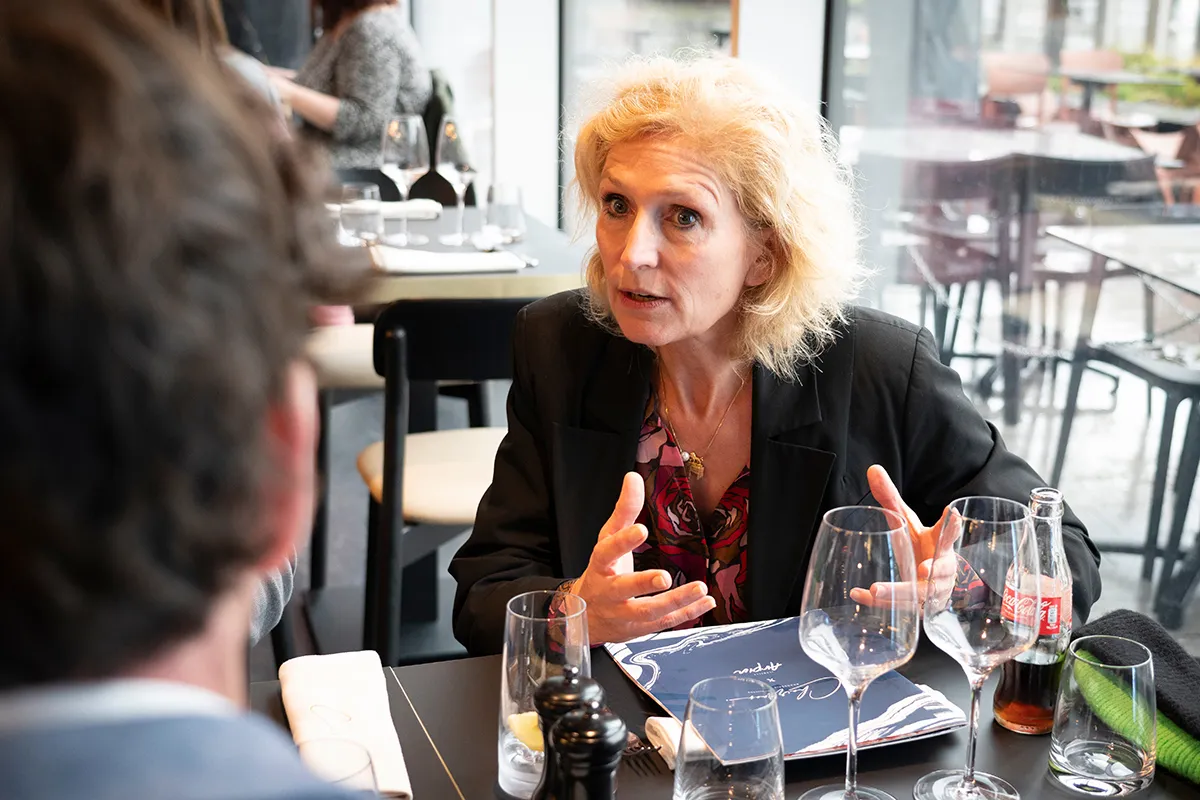
2024 was a major election year, with elections in more than 70 countries, including Belgium and the US. Edward Roosens: “The election victory of MR and Les Engagés in Wallonia is what stands out most for me. It’s a gamechanger: for the first time, we’re seeing centre-right policies across the language border. There’s a firm determination to do things differently. I recently attended a meeting where all the federations and Walloon administrations consulted together on administrative simplification for businesses. That’s never happened before. You can feel the great enthusiasm among everyone involved.”
That centre-right direction also offers prospects at federal level, although forming a new government is proving far from straightforward. “There are things we’ve been advocating for 20 years that are finally being discussed and will hopefully be translated into policy. I’m thinking, for example, of limiting the duration of unemployment benefits and introducing more flexible working hours. Of course, not everything will be perfect, and tax policy still needs to be worked out, but this is encouraging,” says the VBO’s chief economist.
Trump, a risk to democracy
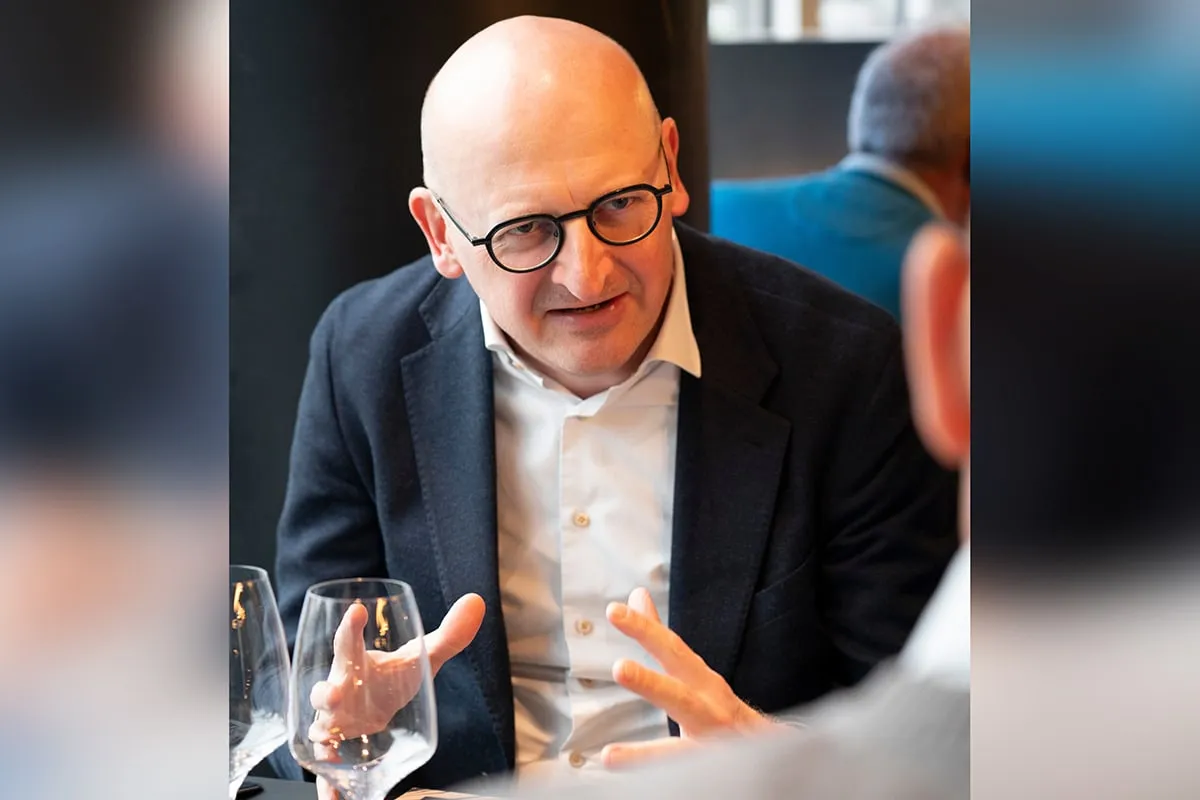
Veronique Goossens, chief economist at Belfius, looks back at the US presidential election. “The biggest surprise for me was the ‘red sweep’. Despite the enthusiasm Kamala Harris’s candidacy generated among Democrats, Donald Trump won by a wider margin than expected. He is firmly in the driving seat and will be able to get a lot done. For instance, the president-elect has announced that he wants to curb the power of the US Federal Reserve. Governor Jerome Powell has already indicated that he intends to stay in office. Above all, I hope that the system of ‘checks and balances’, embedded in the US system, remains intact.”
Dimitri Pelckmans, head of risk services at Atradius, also sees Trump’s re-election as one of the most striking events of the past year: “When you look at the role Elon Musk has played and how he influenced the campaign … that poses risks to democracy. But it is just as striking that two wars are raging on Europe’s borders and that we seem to be letting these conflicts continue and escalate. Donald Trump suggests he can resolve everything in no time. The question, of course, is at what cost. For Europe in particular, the question is how we can take greater control of our own destiny …”
Hans Diels, geopolitical expert at Etion, agrees: “For me, the positive outcome of Donald Trump’s election is the wake-up call it gives Europe. The EU is being forced to find its own path and reconsider its relationship with the US, China and Russia. That will be more than necessary, because we are heading into an unstable period. The US stock markets reacted very positively to Trump’s election, the deregulation Elon Musk is set to introduce and the announced trade war with other countries. But the ultimate impact on the US economy is far from certain, for example if inflation rises and there is a shortage of cheap labour.”
What growth scenario lies ahead?
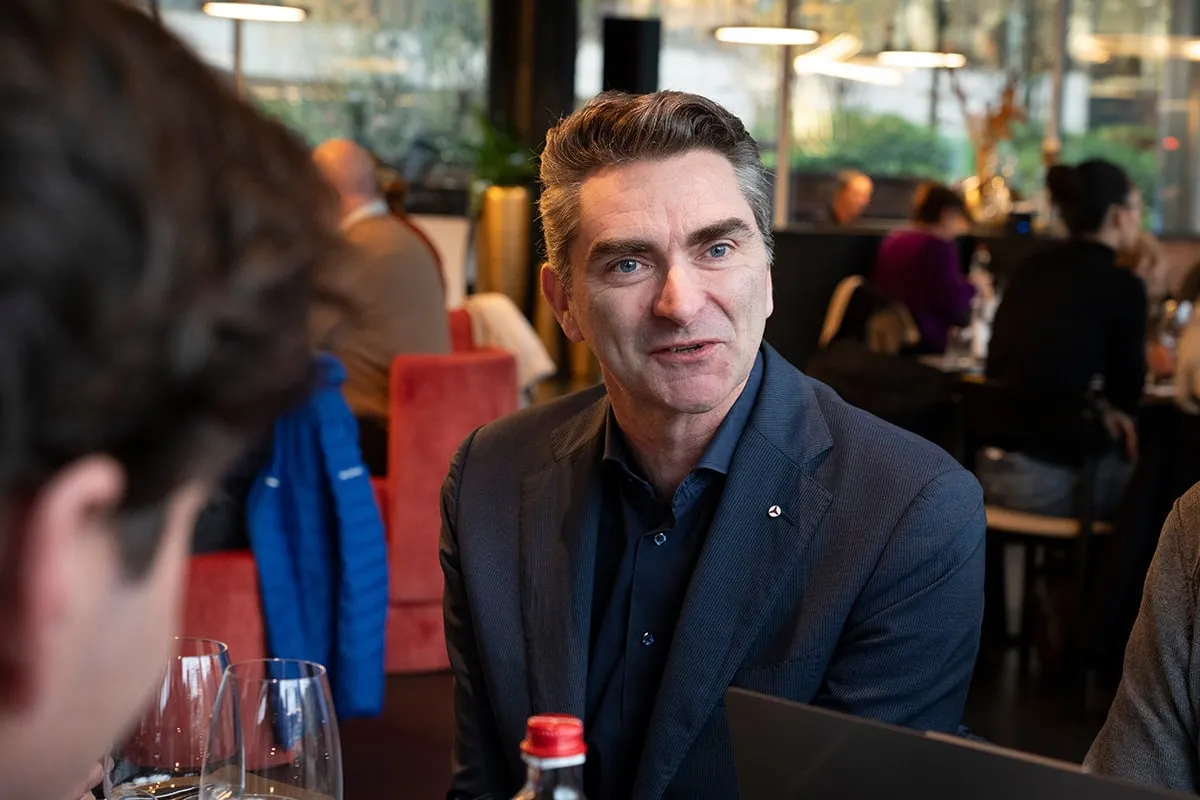
Tom Vermeiren, a lecturer in sustainability economics at VUB, notes that the election rhetoric in both Belgium and the US focused solely on growth. “We live in a globalised economy and society. In my view, the election debates focused too much on the need for further economic growth. The question should be: how much do we need to grow to remain healthy? Is growth still the right direction? I believe societal challenges such as climate change should feature much more prominently in discussions.”
There were frequent calls for degrowth scenarios over the past year. Veronique Goossens is sceptical: “Of course, there are major challenges that require answers. But our social security system and prosperity are based on GDP growth. Our pensions are guaranteed on the basis of future economic growth. That creates a tension involving a great many balances.”
Edward Roosens agrees: “Degrowth means we will earn less, because society’s income will no longer grow. That’s a social powder keg! Just look at the reaction when only limited wage growth is possible, on top of high indexation … To preserve the planet, I believe more in productive investment. A company such as Holcim, for example, is investing 500 million to reduce CO2 emissions from its cement production. The government must support these kinds of new business models. That’s how we can achieve sustainable growth.”
Sustainability: reporting rules are getting in the way
Making industry more sustainable will be one of the major challenges in the years ahead. The new European Commission has high ambitions in this area, including the Clean Industry Deal and the Net Zero Industry Act. “As a continent, we are leading the way. A great deal is being demanded of our businesses, while the US and China are making few adjustments. We need to be careful not to price ourselves out of the market,” says Edward Roosens. “And the constant stream of regulation coming our way, such as sustainability reporting under the CSRD, is unworkable and causing considerable frustration.”
The issue is also being raised in Etion’s network. “We hear concerns from SMEs that supply large companies about exactly what they need to do and how they should do it,” says Hans Diels. “Complex rules such as the CSRD effectively favour large companies at the expense of smaller ones, which lack the resources to organise themselves for this kind of reporting. We need less regulation and much clearer choices in the rules.”
Dimitri Pelckmans agrees: “Europe takes a much stricter approach to this than other major powers. What’s more, the way regulations are implemented across EU member states still results in differing instructions. We need regulation that creates a level playing field. And we need a different mindset. As with Gaudi’s Sagrada Familia, we must be willing to invest in measures whose results we may not live to see.”
Tom Vermeiren points to another risk of the reporting drive: inaccurate data and reputational damage. “We need to become aware of the environmental impact of businesses. That is why it is useful for this data to be made public. But pressure to report creates a risk that data quality will be inadequate or that audits will not be carried out properly. This creates a false impression and can also lead to greenwashing. Yet sustainability efforts offer businesses many opportunities to raise their profile, develop new business models, attract talent and so on. They need to be genuinely committed, and the figures will follow.”
A challenging year ahead
Finally, we asked our panellists what the biggest challenge facing businesses in 2025 will be. “We will continue to face geopolitical conflicts and economic warfare,” warns Hans Diels. “Every entrepreneur, whether a baker or an apple grower, would be wise to map the risks to their market and supply chain and prepare accordingly. Geopolitics is relevant to every business today.”
Tom Vermeiren adds: “Businesses are facing many challenges at once: technological change, sustainability, material shortages, Trump’s protectionism … The dark fog of turbulence must not cause entrepreneurs to freeze. You have to be willing to make choices and stick to your vision in turbulent times.”
Alongside volatility and uncertainty, the labour market remains tight. “For me, the biggest challenge remains finding qualified people at a fair wage,” says Dimitri Pelckmans. “Without talent, businesses will not be able to overcome their challenges. And when it comes to the future of industry, we need not only young people choosing STEM subjects, but also an education system that embraces innovation and technology. Unfortunately, we’re not there yet.”
“Belgian businesses can only stand out by innovating and offering top quality. The challenge, then, is to keep costs under control while investing for the long term. That is why we hope the authorities will provide a supportive framework for entrepreneurship that facilitates investment,” says Edward Roosens.
The going will remain tough for some time yet. Veronique Goossens concludes with some advice: “As a business, talk to your banker. There are many ways to keep your financing costs under control so you can continue investing. If you start a dialogue in good time, you can always find solutions, even before a problem arises.”
Question about this story? Ask your question
Keep following this
Get an email when a new story is published. No account needed.
- SubjectRoundtable