




Forum Jobs is set to celebrate its 30th anniversary. Marjolein Geens and Karel Staelens on labour shortages, technology and the future of HR
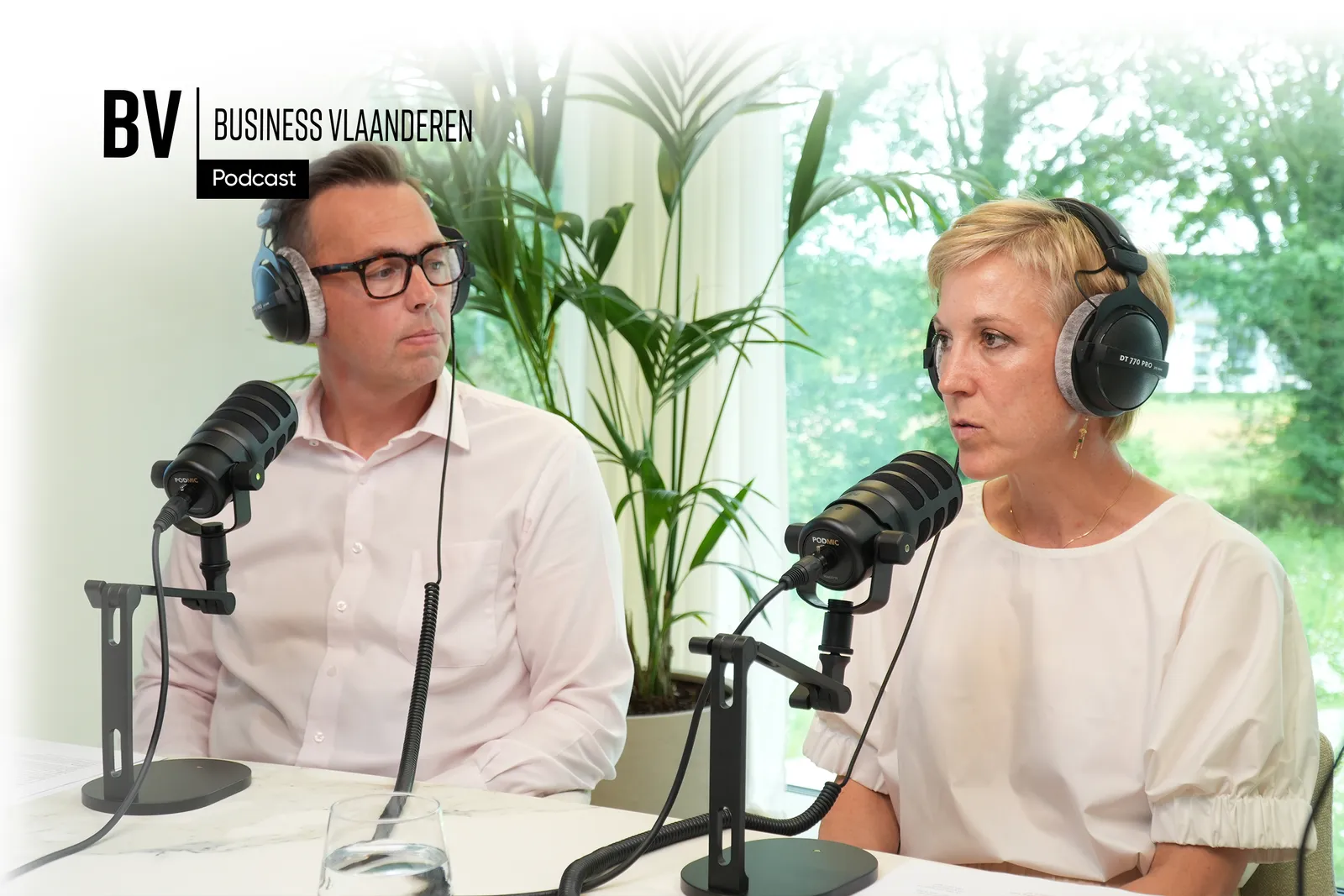
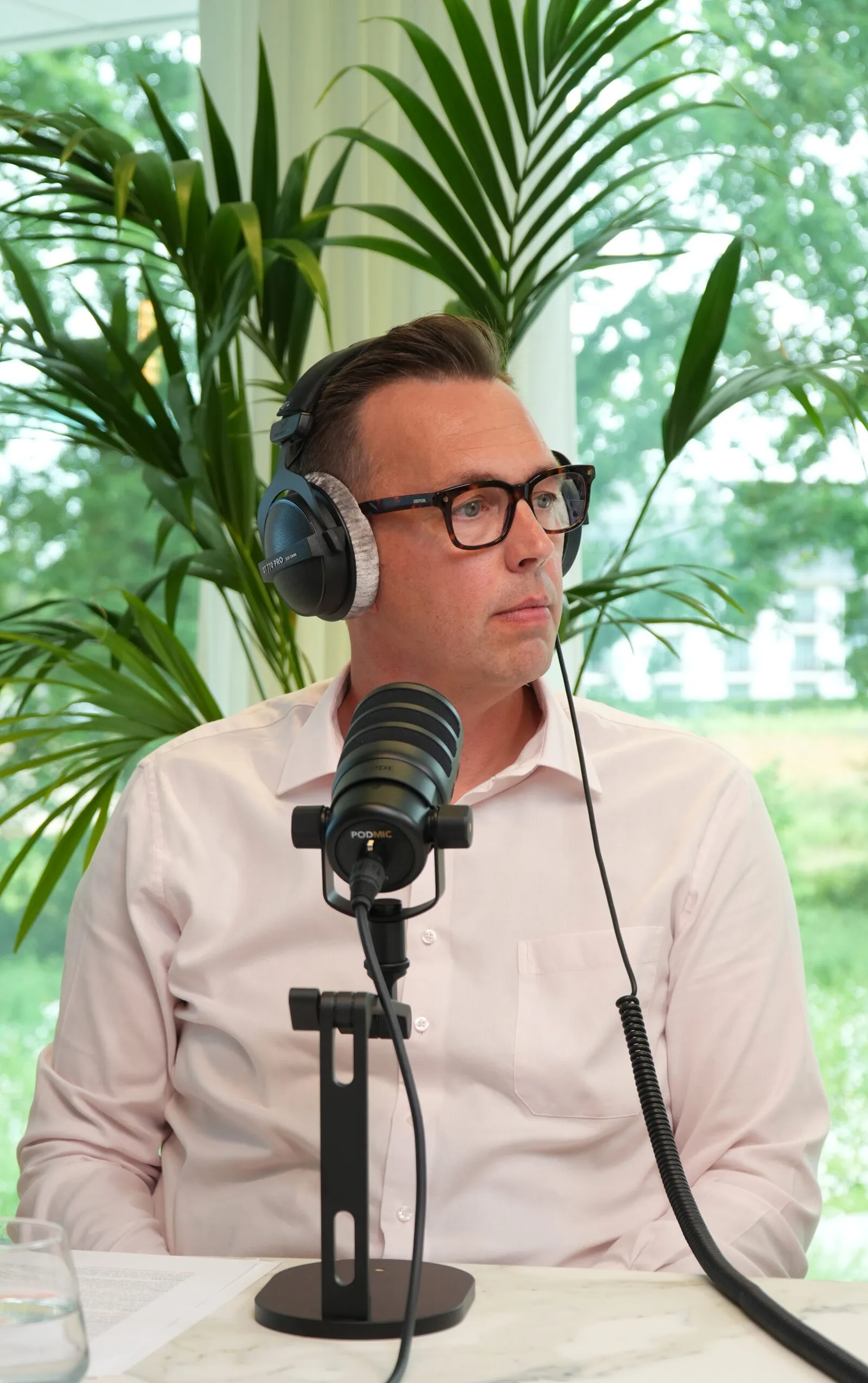
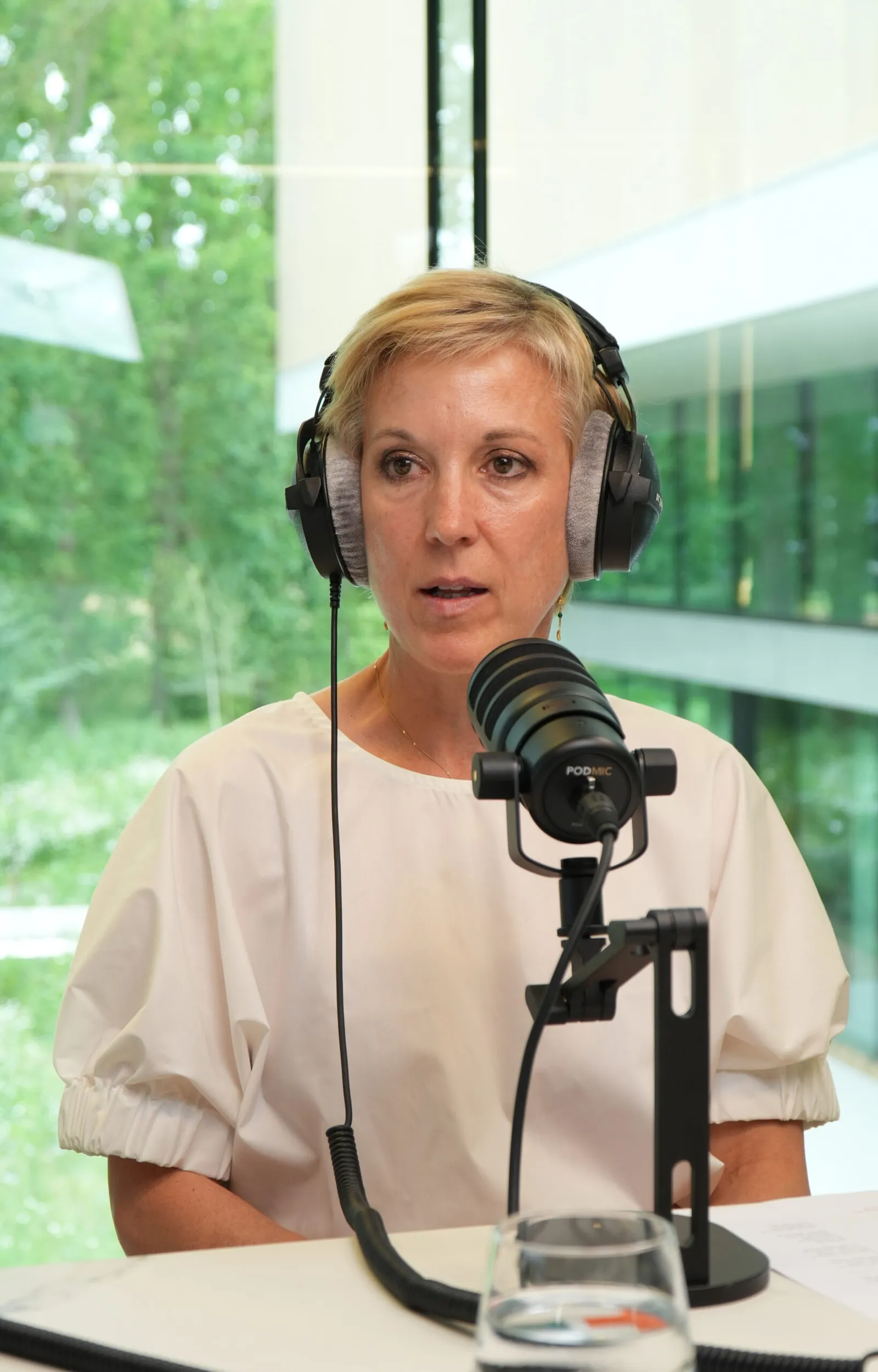
Forum Jobs is set to celebrate its 30th anniversary. In this first episode of the Forum Jobs series on the Business Vlaanderen podcast, host Bavo Boutsen talks to CEO Marjolein Geens and CCO Karel Staelens about how Forum Jobs has evolved, labour shortages and the changing expectations of candidates and employers. They discuss the HR group’s multibrand strategy, the role of technology and AI in recruitment, internationalisation and the importance of human contact. They also look ahead to the future of HR and share their top advice for employers looking to attract and retain talent today.
Een zakelijke vraag aan Forum Jobs? Get in touch
Full transcript
All chapters (21)
- Introduction and guest introductions
- Thirty years in a fast-changing sector
- Labour shortages and pressure on the labour market
- Optimism and positivity as part of the company culture
- The pace of change and candidates’ evolving expectations
- Forum Jobs as a broad-based HR partner
- From temporary staffing to a multibrand strategy
- A team-based bonus scheme
- Looking back at Forum Jobs’ growth
- Technology supporting the multibrand organisation
- Fundamental changes to the services we offer
- Strategic priorities for the coming years
- Practical applications of technology
- AI, time savings and hospitality
- New HR solutions and internationalisation
- Putting clients and candidates first
- Optimism about technology and the labour market
- Top tips for employers
- Start with candidates’ potential
- Invest in your relationship with your HR partner
- Closing remarks
Introduction and guest introductions
Bavo Boutsen Welcome to the Forum Jobs podcast series, produced in collaboration with Louwers Mediagroep. In this series, I talk to people from the company, giving us a chance to get to know its leaders, specialists and people on the ground better, and to learn from the inside how the company works. Today, I’m kicking things off with two people who have decades of experience in the sector between them. They are Marjolein Geens, the company’s CEO, and Karel Staelens, its CCO. Together, they steer the organisation, which will soon be celebrating its 30th anniversary. So, what’s it like to turn 30 as a company?
Thirty years in a fast-changing sector
Marjolein Geens It goes quickly, doesn’t it? It really does. Looking back, a lot has happened over those 30 years. Not only within our company, but also in the environment we work in every day. And what does that feel like? It’s also something very characteristic of our sector. Things move very quickly in our sector. People who have worked in our sector, or still do, will tell you that’s what defines it: things move very quickly. So, it’s good.
Bavo Boutsen Has it ever been any different, have you ever felt that things were moving quickly?
Karel Staelens It’s a constant, indeed. We sometimes tend to think it’s something new, but actually it’s always been this way: everything evolves very quickly, and you have to keep up constantly to stay up to speed.
Labour shortages and pressure on the labour market
Bavo Boutsen Let’s look at the current environment you’re operating in today. What are the main recruitment trends? What should we be talking about? What’s the general picture?
Marjolein Geens If the reports are anything to go by, that’s certainly the case. I think, for the first time in a long while, we’re seeing a tension between the tight labour market, with fewer candidates entering the labour market, and the demand, which is still very strong, as we see every day on the ground. Many companies in our sector are still actively looking for new people.
Read the full transcriptCollapse transcript18 more chapters
Optimism and positivity as part of the company culture
Bavo Boutsen So, given that challenging situation, you might expect people to feel quite negative. But I don’t really get that impression from you. Is there reason to be negative, or is optimism still the main message?
Marjolein Geens In general, it’s hard to sum that up in one sentence, but optimism is what we stand for as a company. We need that positivity to keep delivering results, to constantly reinvent our services and to serve our clients and candidates. So yes, there is that tension, and we need that positivity. It’s part of who we are, part of our DNA. It shapes how we work and how we deal with everyone, both internally and externally, so that we can deliver results.
Bavo Boutsen Has that positivity been there for all 30 years? Has it been part of your DNA from the start?
Marjolein Geens Yes, it really has. Everyone here pulls in the same direction. There’s no finger-pointing. It’s always difficult for a growing organisation to get everyone pulling in the same direction in a challenging environment. But that positivity, helping each other and working together, is really what we stand for. We genuinely believe it’s the driving force behind our success.
The pace of change and candidates’ evolving expectations
Bavo Boutsen We’ve already touched on the pressure in the market. Everyone talks about it, but could you make it concrete for us? What does that enormous pace of change mean for you? How do you try to keep up?
Karel Staelens When it comes to the pace of change, candidates are becoming more and more demanding. I think that’s fair enough. They want to know more about the company, what the job actually involves and what the company culture is like. That’s a big part of what we do. We spend a lot of time understanding our clients’ needs and matching them with candidates’ expectations.
Bavo Boutsen And that’s something that’s always been the case, it seems to me.
Karel Staelens It has always been the case. Perhaps the difference now is that the impact and development of technology are becoming increasingly tangible, giving us more time to focus on the essence of our job: matching. That’s our trade.
Forum Jobs as a broad-based HR partner
Bavo Boutsen We should explain what your company does. You’re an HR partner. If you had to pitch the company as briefly as possible, what exactly do you do?
Karel Staelens We’re an HR group. We started out in temporary staffing, and since then we’ve developed a broad range of services and activities, enabling us to provide a suitable answer to pretty much any recruitment challenge our clients face. I think that’s one of the things, or one of the points, that really sets us apart. We look at what the need is and then find the best possible solution. And if necessary, we actually come up with new solutions that are right for the client.
From temporary staffing to a multibrand strategy
Bavo Boutsen As we’ve said, the current environment is not an easy one. You’ve built quite an extensive structure to respond to it. Let’s take a look at how the company is structured. How are you organised internally?
Marjolein Geens Yes, 30 years ago we started out staffing purely blue-collar workers on a temporary basis. That’s how we grew, and it’s something we’re very good at. It gave us a strong foundation in terms of quality. But today, the market, our clients and candidates alike, expects us to go a step further. To get closer to our clients and candidates by offering specific services. So we’ve undergone a complete transformation. We’ve become a brand partner, taking the burden off our companies and candidates in areas ranging from temporary staffing to recruitment and selection, and project sourcing, tailored to specific clients and sectors, as well as to specific candidates. That’s really one of the things that sets us apart: we understand that talent, the candidate as an individual, also needs to be prepared for niche roles. They all have their own label, communicating in different ways and attracting candidates. With WWT, Worldwide Talent, we focus on candidates from abroad, technical profiles that are really difficult to find here today. We bring people in from abroad for our clients and take care of everything from A to Z, including documents and accommodation. G-Jobs focuses specifically on people with a health condition who are looking to return to the labour market. It’s a hot topic for many politicians. But in reality, on the labour market, we see huge potential and a great deal of talent to identify. So our strength lies in combining a focus on sectors and clients, I’m an industry specialist, with a sector-specific approach and a candidate-focused approach. That really is what makes us strong. And it’s not just about offering those services: we’re also organised internally in a way that motivates everyone to do it. We haven’t set up a series of silos. Instead, we encourage our employees to work across the business. Everyone knows the story and can explain it all to their client. They don’t need to know everything from A to Z, but if they identify a need, they can say: I have a colleague who specialises in that, and they’ll come and help you. Cross-selling all our divisions is really important to us, and we encourage it through a very distinctive bonus scheme for our people.
A team-based bonus scheme
Bavo Boutsen So that bonus scheme puts what we’ve just been talking about, the collective culture and sense of togetherness, into practice in the company structure too.
Marjolein Geens That’s reflected in the bonus structure. One thing you see less often in our sector is that our incentive, our bonus, is always based on group performance. The team, the local team, can earn a bonus together. And the more business lines they bring to the client, the more they’re incentivised. We never set individual targets for our people. Because for us, being able to do it together is a major strength. What we do is a team sport, played at a high level.
Bavo Boutsen So that structure and the culture around it, with the bonus structure as a concrete example, sound pretty unique to me.
Marjolein Geens Yes.
Bavo Boutsen Of course, you’re not the only ones in the sector.
Marjolein Geens No, we certainly have a few competitors, as we call them, who also work with a multibrand strategy. But what really sets us apart is that we cross-sell across the business, and teams are incentivised to bring in clients for each other, with the client and candidate at the centre, bringing everything together. Our people have a lot to think about. The expectations are high. We do ask a lot of our employees: everyone needs to know our whole story and be able to sell it. Candidates and companies are receptive to that story.
Looking back at Forum Jobs’ growth
Bavo Boutsen That’s a great story in itself, but as we’ve said, you’re turning 30, so we should also look back in this recording at the journey you’ve made as a company to get to the structure and culture you’ve just described.
Karel Staelens I think I’m especially proud of our people, because they’ve continued to reinvent themselves and adapt to the new reality throughout the journey. Over the past 30 years, a lot of people have worked for our group. They’re the ones who have built our company’s success.
Technology supporting the multibrand organisation
Bavo Boutsen And the fact that you’re now a multi-brand company seems to me, in a way, by definition, to make things more difficult. You have many more parts of the business to take into account. How do you make sure there’s still an overarching umbrella for all those businesses?
Marjolein Geens Our own people make that happen. There’s a lot of change coming in our sector. We’ll talk about that later. Technology is very important. For a long time, people thought technology would make the sector redundant. That everything could be handled and solved through technology, in a highly advanced way. And we’re still working on some really big things in that area. So, in that sense, one of our goals is to give our own people, our Forum Force, more time and more space to be with our clients and our temporary workers, and to have those conversations with enough time and substance. That’s where we make the difference.
Fundamental changes to the services we offer
Bavo Boutsen So I hear that a lot has stayed the same over the past 30 years, but have there also been things that have fundamentally changed over time, that you now do completely differently? The world is fundamentally different, of course, so I imagine a lot has changed by definition.
Marjolein Geens Absolutely. The strategic decision to move beyond simply staffing blue-collar workers. That’s still a very important part of what we do as a company. But we can also offer services such as staffing for office roles. We’re Beez4U, and we can provide a project sourcer, someone to temporarily cover a role in your HR department. Or we’re G-Jobs: have you, as a company, ever thought about all the long-term sick employees you have? Could we take a look at that together and put a plan in place? So yes, we’ve become very different in that respect, combined with the technology we’re putting in place behind it. Absolutely.
Strategic priorities for the coming years
Bavo Boutsen OK, the past is all very well, but of course we also need to look to the future. So, turning our attention to what’s on the agenda for your company, what are the biggest projects? What’s the common thread running through your strategy for the coming years?
Karel Staelens Well, as we see it, the common thread is staying true to our DNA and continuing to work together. Because one thing Marjolein hasn’t mentioned is that our offices work with a shared candidate database. Collaboration is very much at the heart of what we do. At Forum, there is no “I”, and we mean that literally. It’s all about working together. If a client in the Bruges region has a recruitment need, the Ghent office might well work on it too, in collaboration with the local office. So that’s something we definitely want to maintain. At the same time, we’re going to make much greater use of technology in our core business, matching demand with the talent we have.
Practical applications of technology
Bavo Boutsen And yes, that’s something everyone says: we need to use technology. But could you make that more concrete? What does it mean, for example? Which technological applications do you want to use much more?
Karel Staelens Well, we already use a lot of technological applications. We have a digital assistant that helps us, for example, when interviewing candidates. It takes notes and produces a report. It also speeds up competency matching, so we can respond much better and faster to clients’ needs. And that’s just one example. There are quite a few, as Marjolein said.
AI, time savings and hospitality
Marjolein Geens I think that, particularly when it comes to technology, everyone is talking about AI. And we’re all doing something with it. I understand your question, but we can’t go into it in detail just yet. Perhaps that adds a little suspense too. When we do talk about it, it will go beyond simply adding a layer of AI. We’re going to make some major changes to our DNA. The sole aim is to free up time. We also see our sector changing in the future, towards everything to do with the experience. Whether someone walks into a Forum Jobs office or an office under one of our other brands, we’ll support them throughout their career. They need to have a positive experience. Hospitality will make its way into our sector. That’s very important to us. The idea comes from the hospitality industry. And it will certainly matter in our business, given how much time will be freed up from work. A lot of the work in our sector is still done manually, sometimes in a very concerning way, when you see it. We’ll invest all the time that becomes available in our people, so we can provide an even better service.
New HR solutions and internationalisation
Marjolein Geens And beyond that, when we look to the future, any business that offers a solution for our candidates or our clients, and has even the slightest connection to HR, is something we’ll examine to see whether it fits into our business and our way of working, and whether we should incorporate it. And there’s one more important area: internationalisation. We’re looking at that very broadly and with a long-term perspective. We firmly believe that we need to do more to address labour shortages sustainably.
Putting clients and candidates first
Bavo Boutsen Perhaps we should pick up on that for a moment. It applies to how you want to approach clients, but just as much to candidates, because it’s always about people.
Marjolein Geens Exactly, exactly. Whether they’re a candidate or a client, both are king, and they’re both people. It’s up to us to bring them together in the right way, while making sure they still see us as the intermediary, the party that brought them together: “Thanks to Forum, we got in touch.”
Optimism about technology and the labour market
Bavo Boutsen What we started with isn’t a reason to be pessimistic. I said that at the start, but looking at everything we’ve discussed, it seems to me that your whole approach is a counterweight to that very mindset. There’s a risk of growing pessimism in people’s perceptions, I think, especially when it comes to the labour market and rapid technological change. Everything is happening too fast, there’s too much of it.
Marjolein Geens You’re probably referring to the idea that a lot of jobs are going to disappear. But we also know that a lot of new jobs will emerge, jobs we can’t even imagine today. And let’s hope that time is freed up across the board, in all sorts of sectors, so people can spend more time truly connecting with one another.
Karel Staelens There are also plenty of studies that support that view. In the coming years, we’ll need a fairly large influx of people from abroad to meet the needs of the Belgian labour market. So I really don’t think there’s any reason to be pessimistic.
Top tips for employers
Bavo Boutsen OK, that’s a great note to end on, but we always finish this podcast with a regular closing feature. We ask our guests to give one specific tip to employers in your field on how to deal with HR challenges. So, a question for each of you: what’s one golden tip you’d like to share with employers?
Start with candidates’ potential
Karel Staelens Perhaps I’ll go first. The golden tip I’d like to offer is this: the perfect candidate doesn’t exist, just as the perfect job doesn’t exist. But I’d encourage employers to start with a candidate’s potential, their willingness to learn and opportunities to develop, and build for the future from there. In the years ahead, everyone will have to keep investing in learning, if only because of all the technological developments. People will need continuous training and will have to invest in their future.
Bavo Boutsen The way you put it makes me think that, in practice, employers are often looking for that perfect, rare candidate.
Karel Staelens That does happen. Sometimes employers take too long to make an offer to a good candidate they’ve found, who may not be perfect. By then, of course, that person has already started working somewhere else.
Invest in your relationship with your HR partner
Bavo Boutsen OK, Marjolein, the same question for you.
Marjolein Geens My message to employers would be: invest in your relationship with your HR partner. We describe ourselves as a crucial supplier to many companies. We supply your most important raw material: people. Invest in that relationship too. Make time for your contacts at your local office, so we can translate the needs of the candidate market as effectively as possible and present your company in the best light. We sell talent to companies, but we also sell companies to talent. That relationship needs to be a priority, and you really need to invest time in it.
Bavo Boutsen And in the complex and challenging context we’ve described, that matters more than ever.
Marjolein Geens Yes, we firmly believe that.
Closing remarks
Bavo Boutsen To wrap up, all that remains is for me to thank you both very much for this conversation. Anyone who wants to find out more about Forum Jobs can tune in to the next episode, as this is a podcast series with three episodes in total. We’ll take a closer look at the solutions Forum Jobs is bringing to this complex labour market, and how it is trying to tackle the challenges. Perhaps we’ll see you then. For now, thanks for listening.
Companies in this story
Keep following this
Get an email when a new story is published. No account needed.
- ThemeAttracting and retaining people
- SubjectHR, finance & IT
- CompanyForum Jobs







