




Jan Toye takes stock: “I’ve become a 78-year-old rebel”
Text Christina Van GeelImage Illias Teirlinck
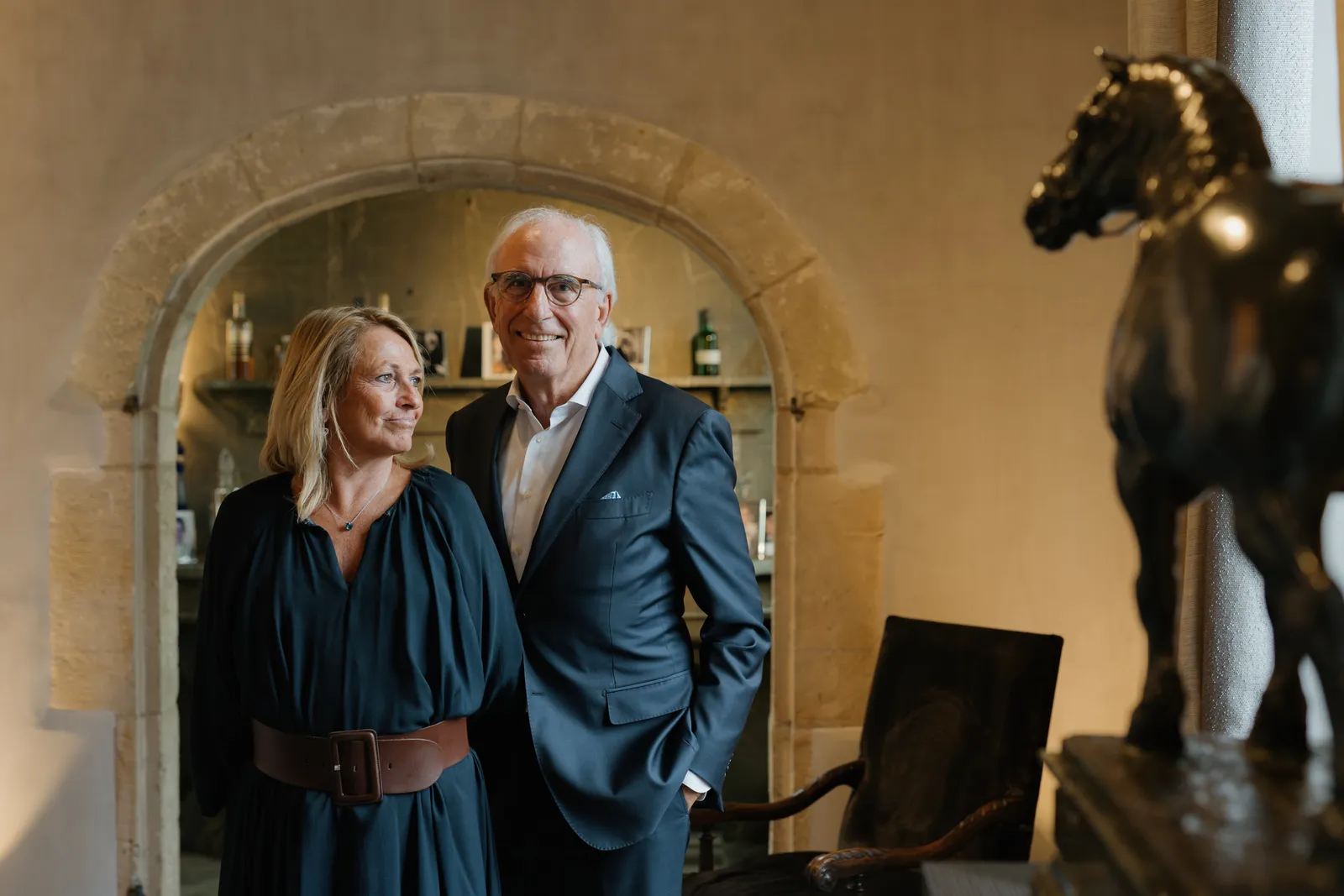
Jan Toye was the public face of Palm Brewery for many years. He grew the family business into a larger brewing group, incorporating Rodenbach, Brouwerij Boon and Brouwerij De Gouden Boom, among others. The death of his son Christoph, who struggled with existential questions and ultimately took his own life, profoundly changed his outlook on life. In De Balans, he speaks candidly about loss, fatherhood, social injustice and his search for a balanced life.
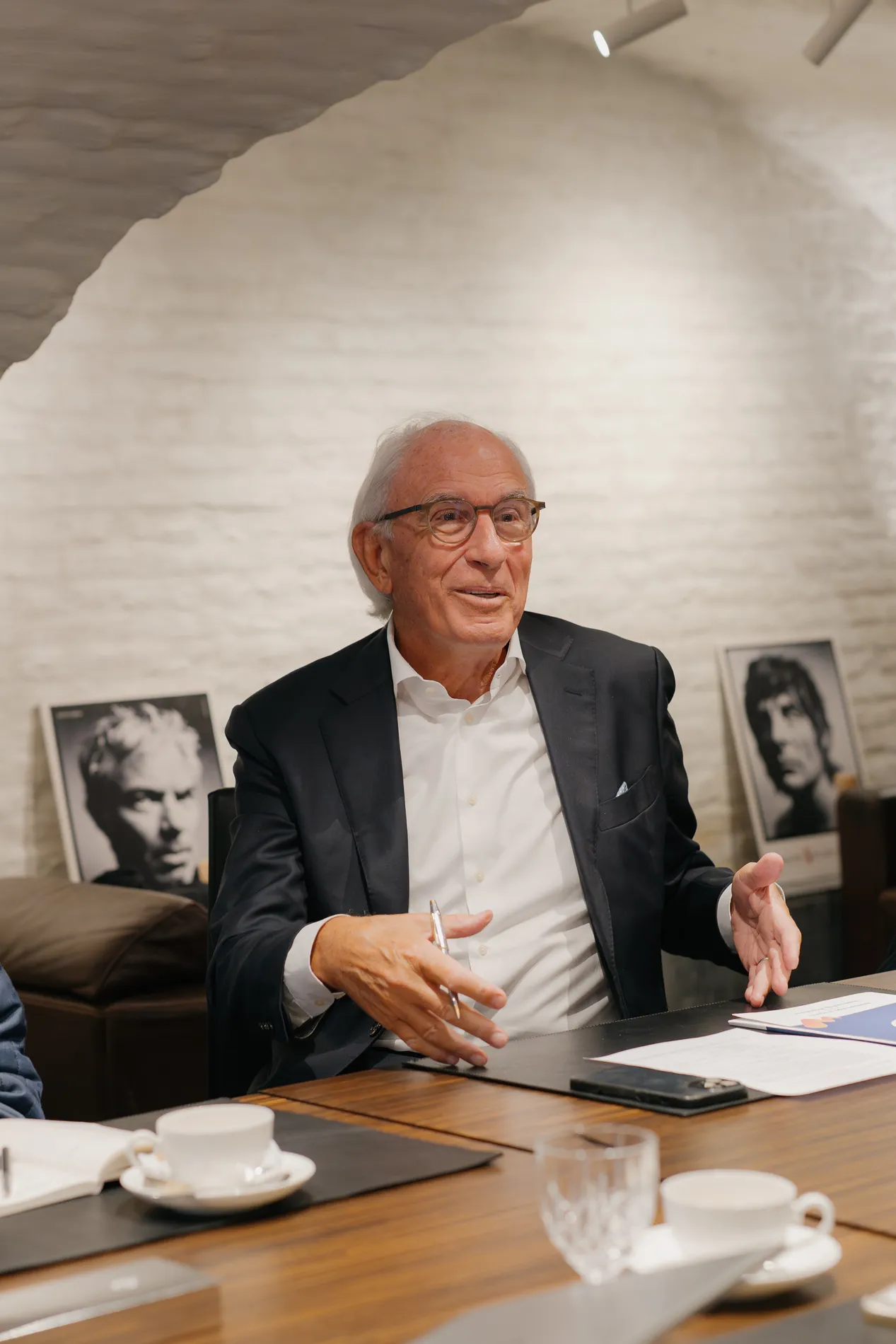
What was your childhood dream? And what became of it?
Jan Toye: As a child, I dreamed of becoming an entrepreneur, preferably in construction. Getting my boots muddy, walking around a building site and being able to say at the end of the day: “Look, we built that.” I loved the idea.
But life took me in a different direction. I eventually joined the family business, the brewery. At the time, it felt almost inevitable. My uncle had no children and saw me as the one who would carry on the work.
Looking back, I sometimes think I spent a very long time wearing blinkers. Working, running a business, innovating, always striving for more, managing teams. That was the mindset I was in. Today, I’m mainly trying to help build people up, foster connection and create a warmer society. Perhaps that childhood dream hasn’t disappeared after all, but simply changed shape.
What did you learn from your parents?
My mother gave me something incredibly valuable: the feeling that I was free to become who I was. She believed in my talents before I could see them myself. She always said: “Just do what feels right for you.” That sounds simple, but it isn’t. Many parents project their expectations onto their children, and that creates pressure. I felt free at home. If I was enthusiastic about something, I was encouraged. That gave me a strong, positive self-image. Too strong, my wife sometimes says (laughs). The feeling that I was allowed to exist just as I was.
My father, meanwhile, gave me a kind of moral compass. He always said: “If you want to be free in life, you must be able to look everyone straight in the eye.” I still carry that with me every day, and I’ve added one more: the tax authorities too. I don’t think freedom has anything to do with money, status or power. Freedom means not having to carry shame, or being vulnerable to blackmail.
What have you learned from your children?
My children may have taught me the most important lessons of my life. The insights just came painfully late. For a long time, I felt I had a baton to pass on. The family business had to live on through my children. That seemed self-evident to me.
Then one day my son Christoph wrote to me: “Dad, I’m not your ‘asset’.” That line hit me hard, because he was right. Without really realising it, I saw him as someone who had to carry on my dream, when all he wanted was to be himself. Christoph was a thinker, a searcher. He asked existential questions I had hardly ever considered: What is the meaning of existence? He was constantly searching for meaning, for an answer to the question, “Mother, why are we alive?”
For a long time, I was mainly focused on running a business and moving forward, while he struggled with fundamental questions about life. At a certain point, that existential emptiness became unbearable for him and he took his own life. That forced me to stop and reflect, and to look differently at success, happiness and what it means to be human. I realised how little room we as a society make for vulnerability, doubt and existential pain. We teach people to perform, but not how to deal with meaninglessness, fear or grief.
My son Matthias has taught me a lot too. Shortly after Christoph died, he said: “Now all that pressure is on my shoulders alone.” I suddenly realised how many expectations he had been carrying without my really seeing it. Later, he decided to become a pilot. At first, that was hard to take, but today I understand. He has chosen a life that gives him energy. When he gets up in the morning to fly, he does so with enthusiasm. Perhaps that is the essence of happiness.
Where do you find happiness?
For me, happiness lies in connection, in small human moments. A conversation. A listening ear. Someone feeling safe enough to share something vulnerable. Sharing our vulnerability is what made Katrien my wife, my safe place and my partner for life. The power of sharing vulnerability is immense, yet it’s a resource for mental wellbeing that is often missed, particularly among Flemish people, who are notorious for keeping things bottled up.
The Warme William campaign, led by Katrien, aims to change attitudes among children and young people. People don’t always need solutions. Sometimes they just need someone who stays and really listens. The mental health crisis would be largely solved if everyone were a Warme William to someone.
Simplicity makes me happy too. A chat with the neighbours. Laughing together. Feeling that you belong somewhere. We underestimate those things. People used to come in through the back door. Today, we increasingly live alongside one another rather than with one another.
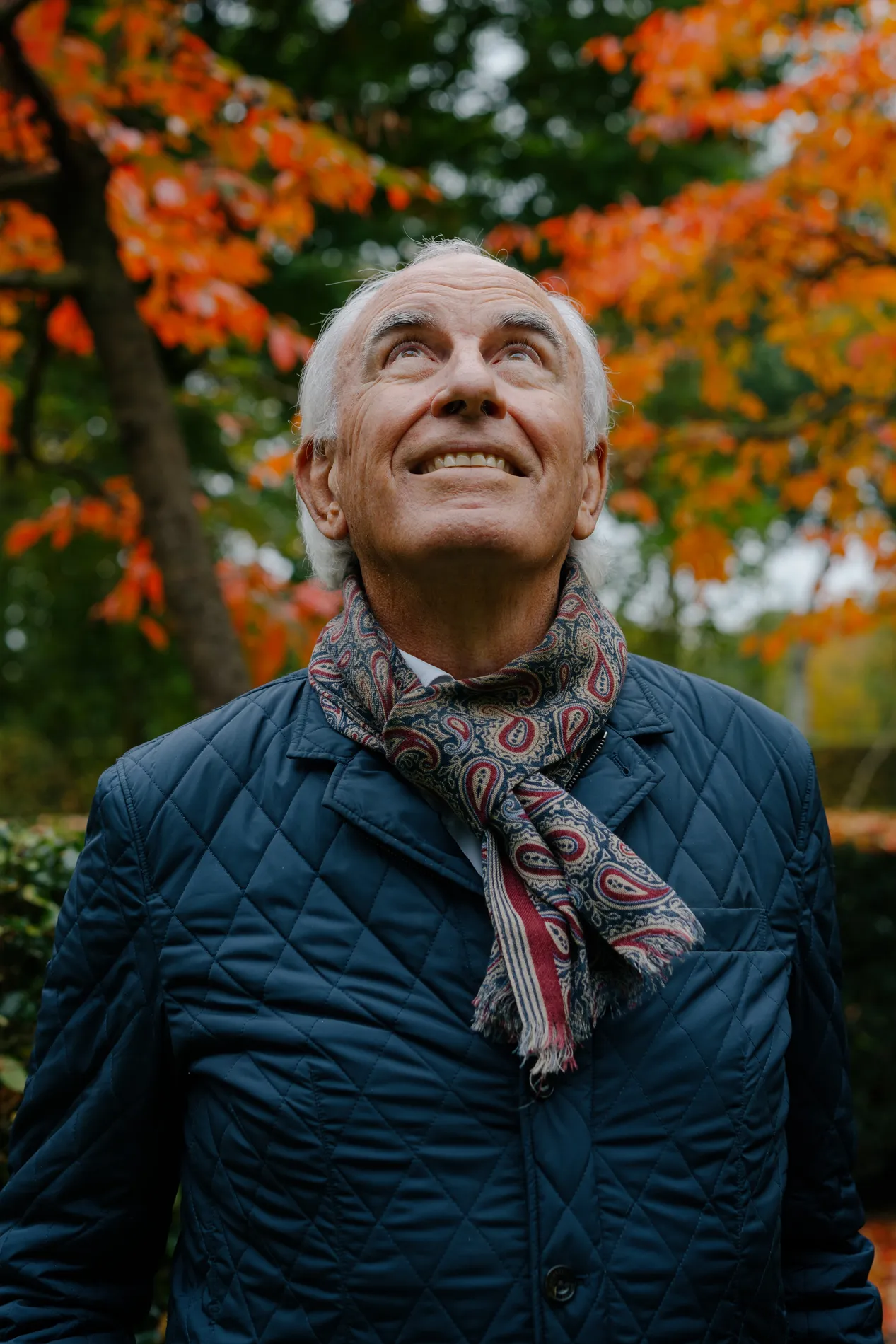
Is there anything you regret?
Yes. I regret not being emotionally present enough for my children. Running a business consumes you. You’re always busy: solving problems, thinking ahead, shouldering responsibility. Only afterwards do you realise how many moments you missed. How children sometimes simply need a father who is there. Not as an entrepreneur, not as a leader, just as a dad.
I also regret the expectations I placed on my children. I thought I was giving them opportunities, but in reality I was putting them under pressure. That’s a painful realisation. At the same time, it has made me more compassionate. Today, I try to see people differently, focusing more on who they really are.
What makes you indignant?
What makes me indignant is the way power can dehumanise people. Things go wrong as soon as systems become more important than people. I see it in politics and the economy, but especially in education. We still organise education as if children can be moulded into standard products and delivered to the labour market as efficiently as possible. Everything revolves around performance, grades, the transfer of knowledge and control, while we forget that every child is a unique person with their own talents, sensitivities and dreams.
Fewer than 40 per cent of young people are motivated at school. That should set alarm bells ringing across society. But instead of thinking fundamentally about what young people need in order to grow, we respond with more discipline, more pressure and more standardisation. School should be a place where children can flourish and be curious, a place where they can discover who they are.
What makes me indignant is that we keep mopping the floor while the tap is still running. We invest in support services after young people have reached breaking point, but are much less willing to look at the causes. Cognitive development is not the only thing that matters. We should also ask: does a young person feel seen? Are they allowed to be themselves? Do they feel they matter? Unless we dare to put those questions at the centre, we will continue to lose young people in systems that are supposed to help them grow.
What gets you out of bed in the morning? What is your personal mission?
I get up feeling that I still have something to contribute. That I want to help build a society in which young people have more opportunities to become themselves. My mission is actually simple: to help create the conditions in which young people can grow. Like a little plant that can only flourish in a pot with good soil.
I don’t believe you can force people to be happy. But you can create an environment in which they can discover themselves, grow, fall, get back up and become resilient. That’s what I still live for today. Perhaps I’ve become a 78-year-old rebel. But when I see how many young people are struggling with meaninglessness and loneliness, I feel I can’t stay silent.
Question about this story? Ask your question
Keep following this
Get an email when a new story is published. No account needed.
- ThemeBusiness transfers and acquisitions
- SubjectGeneral







