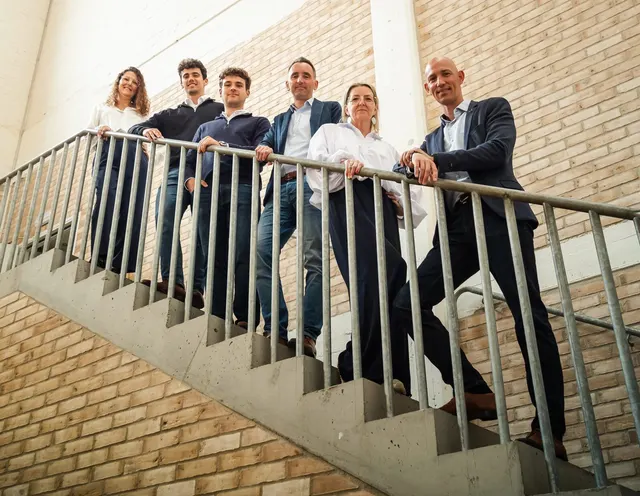
Netsky is now an entrepreneur too: “The whole thing has grown very naturally”
Text Bavo BoutsenImage Joren De Weerdt
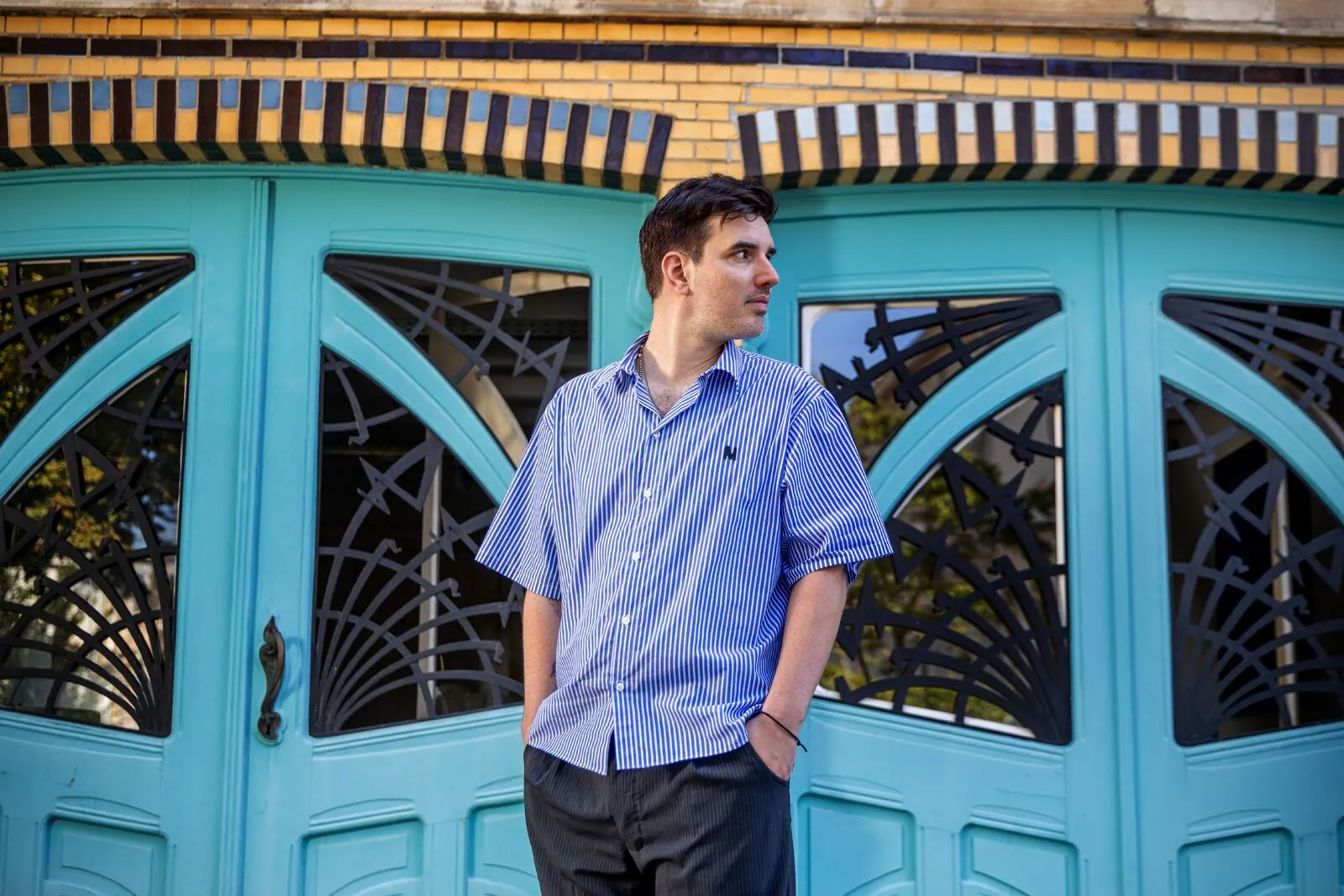
Drum and bass producer and DJ Boris Daenen, better known as Netsky, has been at the top of the global scene for more than a decade. Since last year, he has combined his music career with his own business, Time-Line.io, where he is using AI to take live shows to the next level: “This company grew out of a problem I experienced myself during my shows.” His ambition remains undiminished, as an entrepreneur as well as an artist.
You co-founded the startup Time-Line last year. How would you explain what your company does to someone without a technical background?
Boris Daenen: We use artificial intelligence to analyse music in real time. This helps production teams stay in sync throughout a show. In other words, our technology analyses all the nuances in the music and identifies the feeling behind particular sections of a track, making it easier for other aspects of the show to respond to them. Our software therefore helps the technical crew responsible for lighting and other elements of the show keep them in sync with the music.
Today, this is done in practice using a technique known in the industry as timecoding. The crew analyses the set in advance and records in a running order when to use which visual effects. This is a very labour-intensive process, however, and forces the DJ to perform their show in pre-set blocks. It also requires a great deal of experience from the production crew, because interpreting the music based on the visual audio files is not always straightforward. By partially automating this process, we give both artists and technicians more room for spontaneity and creativity. This means teams can prepare more quickly, stay in sync and adapt shows on the fly without compromising the magic of live music.
Do you feel like a real entrepreneur now?
Boris Daenen: For me, the whole thing has actually grown very naturally. The company started with a problem I experienced myself during my shows and wanted to solve. At first, I had no intention of turning it into a business, but I soon saw that other artists had the same problem. Today, I’d say I split my time roughly 50/50 between music and Time-Line. But I certainly don’t intend to stop making music, not even in the long term. I simply couldn’t do that.

What are your ambitions for Time-Line?
Boris Daenen: We’re targeting the world of electronic music, particularly large-scale productions. Festivals, clubs and DJ sets are the world we know well. But in time, we’d also like to develop applications beyond that segment. I’m thinking of theatre productions, cinema or even home entertainment. I’d also like the technology to become available on a smaller scale in time. My dream is to bring the experience of a festival or club show into people’s living rooms. That could, for example, take the form of a simple set of lights that responds to the music you’re playing. I don’t think the general public yet fully appreciates the impact this kind of technology can have on their experience.
There’s something a little un-European about stating your ambitions so matter-of-factly. Does the fact that you’ve been living in the US in recent years play a part?
Boris Daenen: Definitely. That American way of thinking, particularly in the tech world, really motivates me. You have to work every day to stay on top of your game. Otherwise, as a startup, you’ll soon be taken over by a bigger player. But I also value the Belgian no-nonsense mentality and structures. There’s no getting around the fact that the American way of doing business creates enormous pressure. I know plenty of people who work in tech there and simply don’t dare take their holiday allowance. That’s not the kind of atmosphere we want to create at our startup. So there’s definitely a Belgian influence too.
How would you describe Belgian entrepreneurship?
Boris Daenen: What always strikes me when I go to Belgian festivals and chat with technicians or anyone I work with is that things are simply much more human here than anywhere else in the world. Especially compared with America. You can really feel that in the companies connected to Tomorrowland’s incubator, too.
Speaking of which, how important is Lab of Tomorrow, Tomorrowland’s startup ecosystem, to Time-Line’s story?
Boris Daenen: It’s been hugely important. First of all, it was through them that I met my co-founder, Evelyn Robbrecht. She previously worked at Apple, so she knows the American tech world very well. We’re also a good fit with the other companies in the ecosystem in terms of what we do, because we’re all active in the entertainment tech sector. And, of course, it’s an internationally recognised seal of quality that opens a lot of doors. Being able to roll out our system this year on pretty much all of Tomorrowland’s main stages is effectively our first major use case as a company. That’s pretty crazy, especially when you consider that we’ve only been around for a year.
You built the software behind Time-Line yourself using machine learning. What was that like?
Boris Daenen: It actually felt very natural. I’ve always been really into technology and was programming as a child. Making electronic music is also, in a way, a form of arranging and programming, and is inherently connected to technology. I can well imagine that it triggers very similar things in the brain. At the same time, it’s obviously very different, because at some point you have to release music into the world, whereas you can keep refining a digital product based on feedback. It’s also a team effort. And I love that, because as a DJ you’re on your own. In that sense, the company feels a little like going back to the days when I performed with a band.
There’s currently a lot of debate about the use of AI in the music world. Has your own experience building Time-Line’s AI-driven software changed how you see this debate?
Boris Daenen: Obviously, I’m following these developments closely. The use of AI in electronic music is a fact of life today. I use it too. But it’s not black and white. There’s a big difference in how you use it, and obviously we don’t want to move towards a world where all music is generated from prompts. That would only lead to more brainrot. That’s absolutely not what we do with Time-Line. We use the power of AI to read existing music and make it easier to integrate, rather than to generate new music.
Ultimately, though, I think we’ll need some form of fingerprinting to protect the owners and creators of music. But I think it’s too early to make any firm decisions about that. The worlds of art and music have always responded to technological change. Think of the whole evolution of streaming or, a little further back, the arrival of samplers.
Finally, Belgium’s club scene, which is internationally acclaimed and even recognised as intangible cultural heritage, is under considerable pressure today. Is that something you’re concerned about?
Boris Daenen: Of course. But I think it depends a lot on the region, and that there will always be a certain ebb and flow. In Eastern Europe, for example, festivals are having a harder time at the moment. That’s much less the case in Belgium, but clubs are struggling. I still play in clubs pretty much every week, although at the moment I do play less in places like Antwerp, where I grew up. Parties will always continue in one form or another.
Question about this story? Ask your question
Keep following this
Get an email when a new story is published. No account needed.
- SubjectGeneral