New baler points the way forward
Text Valérie CouplezImage HEKLA
Focusing on quality and energy efficiency
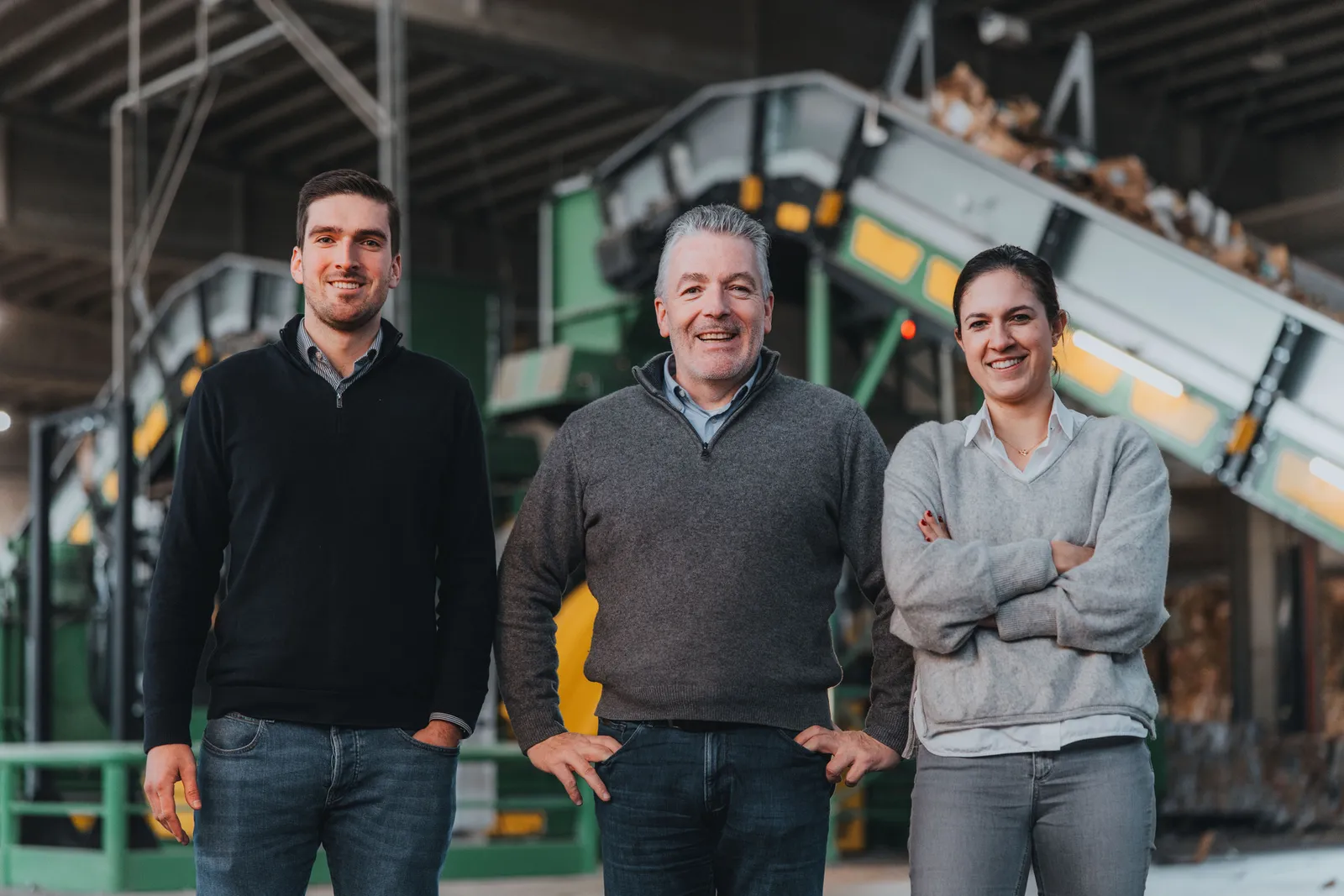
What are family businesses so good at? Looking ahead with confidence. It is not just about meeting your customers’ requirements today, but also being ready for tomorrow’s. Investing in a new baler fits perfectly with Gilgemyn Recycling’s business vision: focusing on quality, continuity and sustainability.
Gilgemyn Recycling traces its roots back to the once-thriving flax industry. Brothers André and Frans, however, saw the tide turning: with their lorry and old flax press, they had everything they needed to switch to collecting and processing waste paper and cardboard. The family business thus grew from a small paper collector into an expert in paper and cardboard recycling.
The values of those days, enterprise, personal contact and an eye for quality, remain its guiding principles to this day. “Our ambition is not to become the largest paper and cardboard processor, but the leading name in paper and cardboard recycling,” says Emma Gilgemyn, a member of the third generation, who runs the company with her brother Maxim, father Wim and mother Ria. “I didn’t want to see what they had built go to waste, so I decided to join the family business. I can’t imagine the streets without Gilgemyn’s containers and lorries.”
Service and flexibility
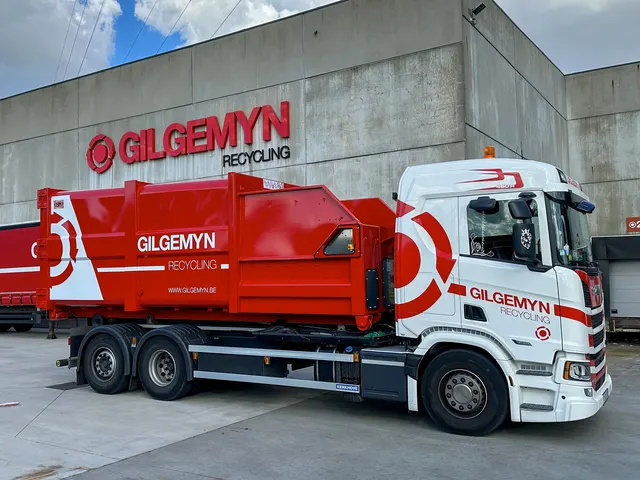
Anyone travelling around West Flanders will recognise their distinctive red and white colours. The key to that success? “Our personal service,” says Emma without hesitation. “We work with customers to find the right solution for their waste streams, offering different types of containers and collection frequencies, as well as turnkey solutions for those who want them.”
“Our focus is on paper and cardboard, but we work with local family businesses that specialise in other materials, so we can take care of all our customers’ needs. Our flexibility is also greatly appreciated.”
Investing in people and equipment
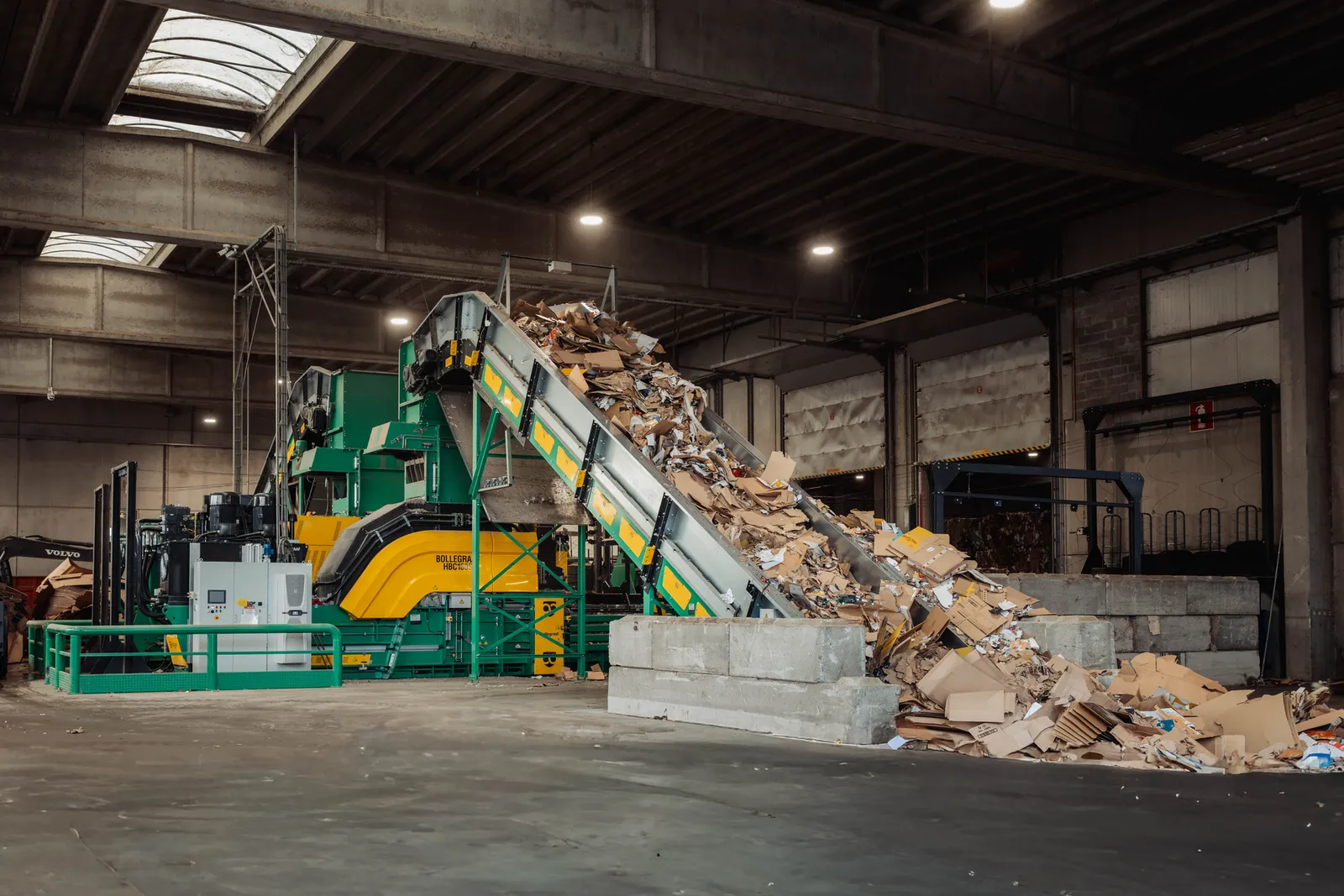
Gilgemyn Recycling invests heavily in modern machinery. Its lorries, for example, remain in the fleet for just five years. Last year, eight of its eleven lorries were replaced with new Scania trucks. “It’s good for our employees to know that we invest in equipment so they can do their jobs as well as possible. At the same time, it boosts efficiency, as the new lorries are more energy-efficient, and continuity, because we have very few breakdowns,” explains Maxim Gilgemyn.
The same philosophy applies at the production site. “When we moved to this location in 2007, we gave a lot of thought to how we could organise everything as efficiently as possible, from establishing the right workflows to working entirely under cover, so that we could achieve the highest possible quality.”
The Rolls-Royce of balers
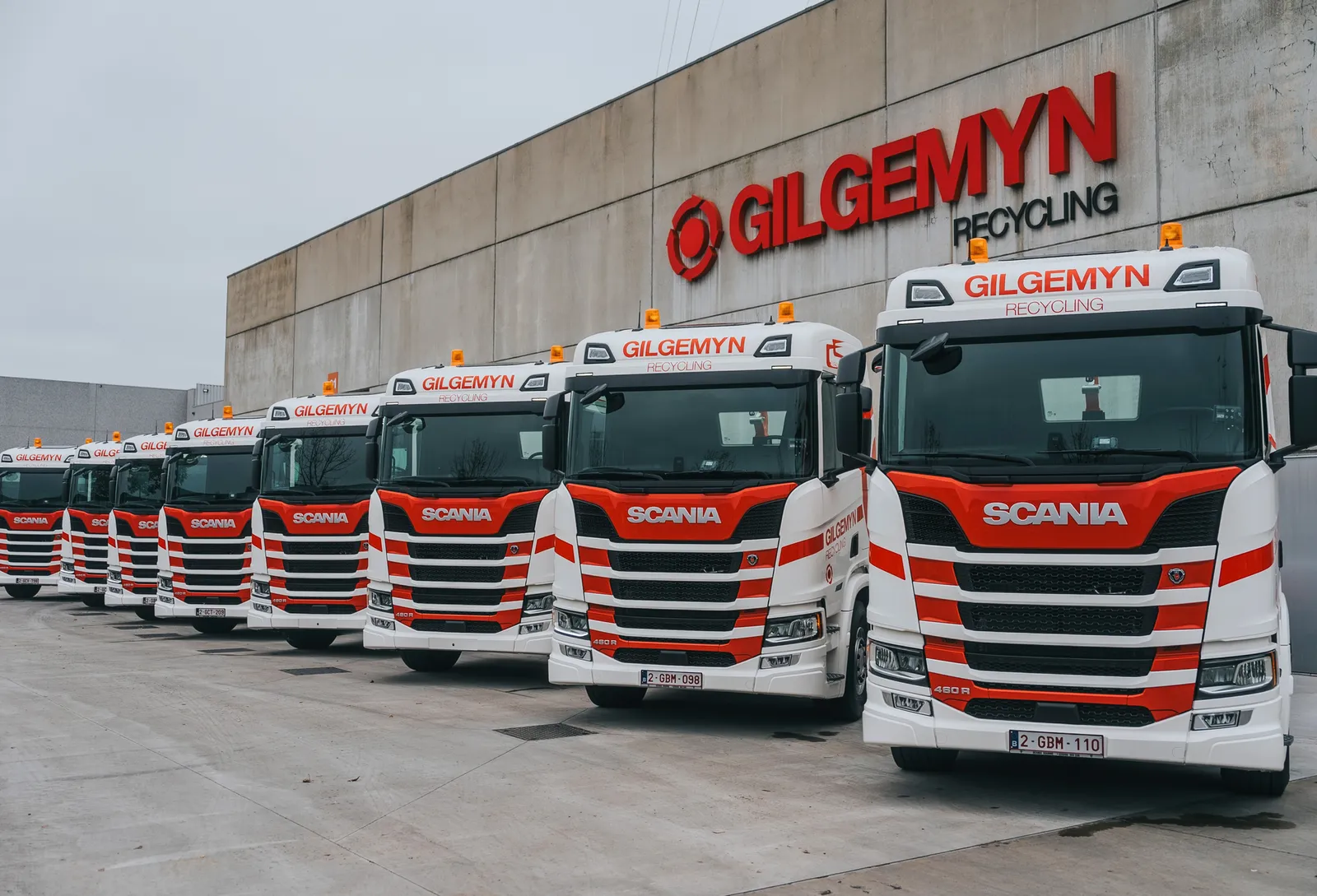
Higher quality is also what Gilgemyn Recycling aims to achieve with its investment in a new baler. Maxim Gilgemyn says: “Customers are often impressed that just four employees in the production hall can process up to 10,000 tonnes of material a month. Reliable operation of our two production lines is essential to that. By investing in new baling technology, we achieve several goals at once: higher quality, greater capacity, heavier bales and improved energy efficiency.”
Choosing the Bollengraaf HBC-160S was an obvious decision. “We’ve been working together since 1977, and they’re still best in class today, the Rolls-Royce of balers,” adds his father Wim. “The HBC-160S is the fastest on the market. The new controls are also very user-friendly, even a child could operate them, and they offer plenty of diagnostic options.” The fact that the previous baler, after fifteen years of faithful service, is getting a second life at a company in the Netherlands says a lot about the robustness of Bollengraaf technology. “They’ve taken things further with the new generation. They listened carefully to customers’ experiences when developing the new platforms. It looks better, but what matters most to us is what’s inside,” says Wim Gilgemyn. “The way the tying wires are fed through, for example, or the automatic oil lubrication. Wear parts are also easier to access.”
Further improving sustainability
Energy efficiency was also a decisive factor in choosing the new generation. “Pressure and resistance are now adjusted to suit the material, which can save us up to 10% in energy consumption. Our customers appreciate that too: we’re making an effort to minimise our CO2 footprint. Solar panels already cover half of our energy consumption. We’re now looking at how electric lorries could fit into our fleet,” concludes Maxim Gilgemyn.
Question about this story? Ask your question
Keep following this
Get an email when a new story is published. No account needed.
- ThemeEnergy security and the circular economy
- SubjectIndustry