Leadership in turbulent times: how entrepreneurs grow through clarity rather than certainty
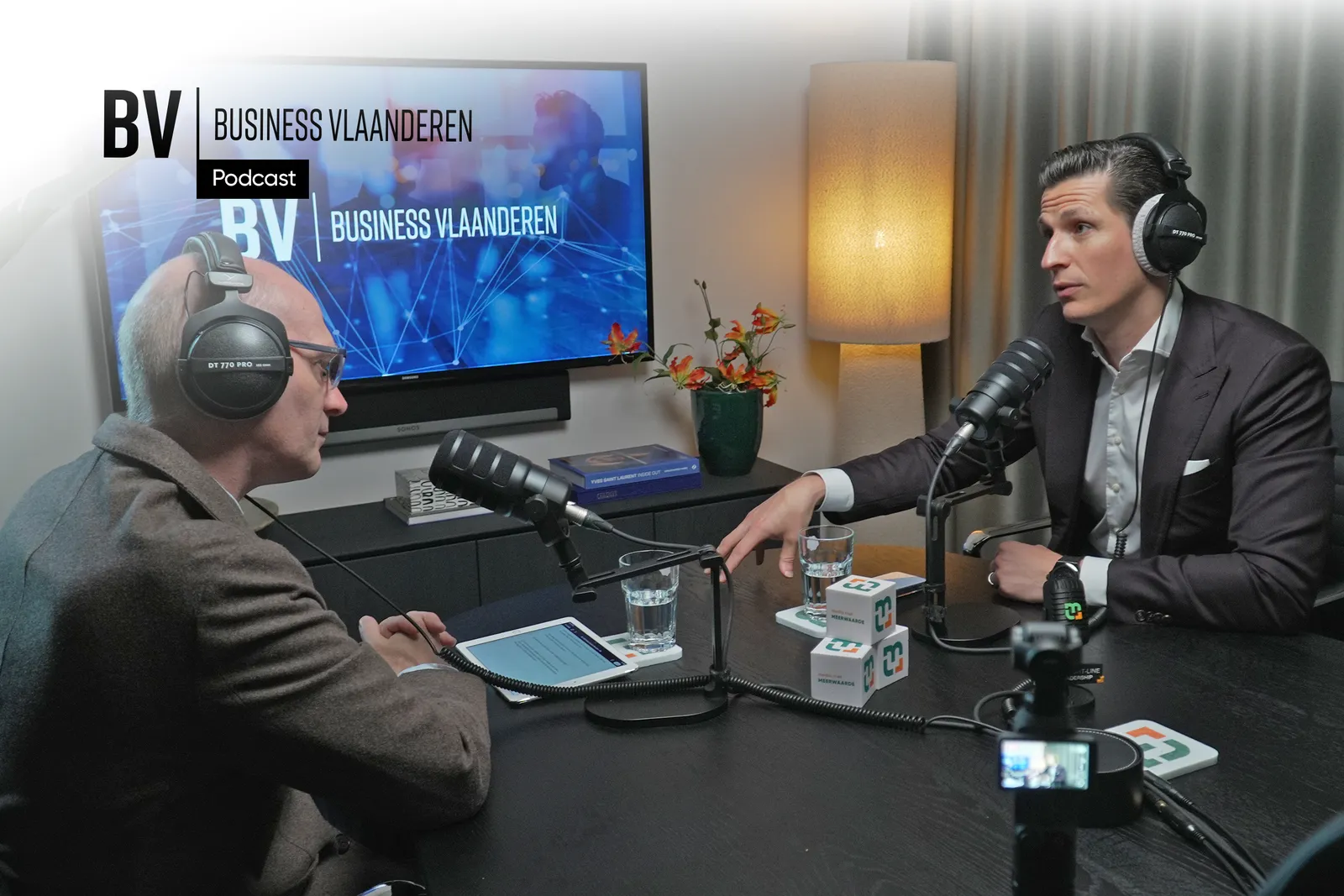
Geopolitical tensions, rising costs, trade tariffs and an unpredictable market put entrepreneurs under pressure every day. How do you stay on course as a leader when the world is constantly changing? In this episode of the Business Vlaanderen Podcast, Björn Crul talks to Kristof Cuppens of Straight-Line Leadership about leadership in turbulent times. They discuss why uncertainty has always been with us, how entrepreneurs can break patterns, why clarity matters more than certainty and how the right mindset and practical leadership principles can create opportunities even in turbulent periods.
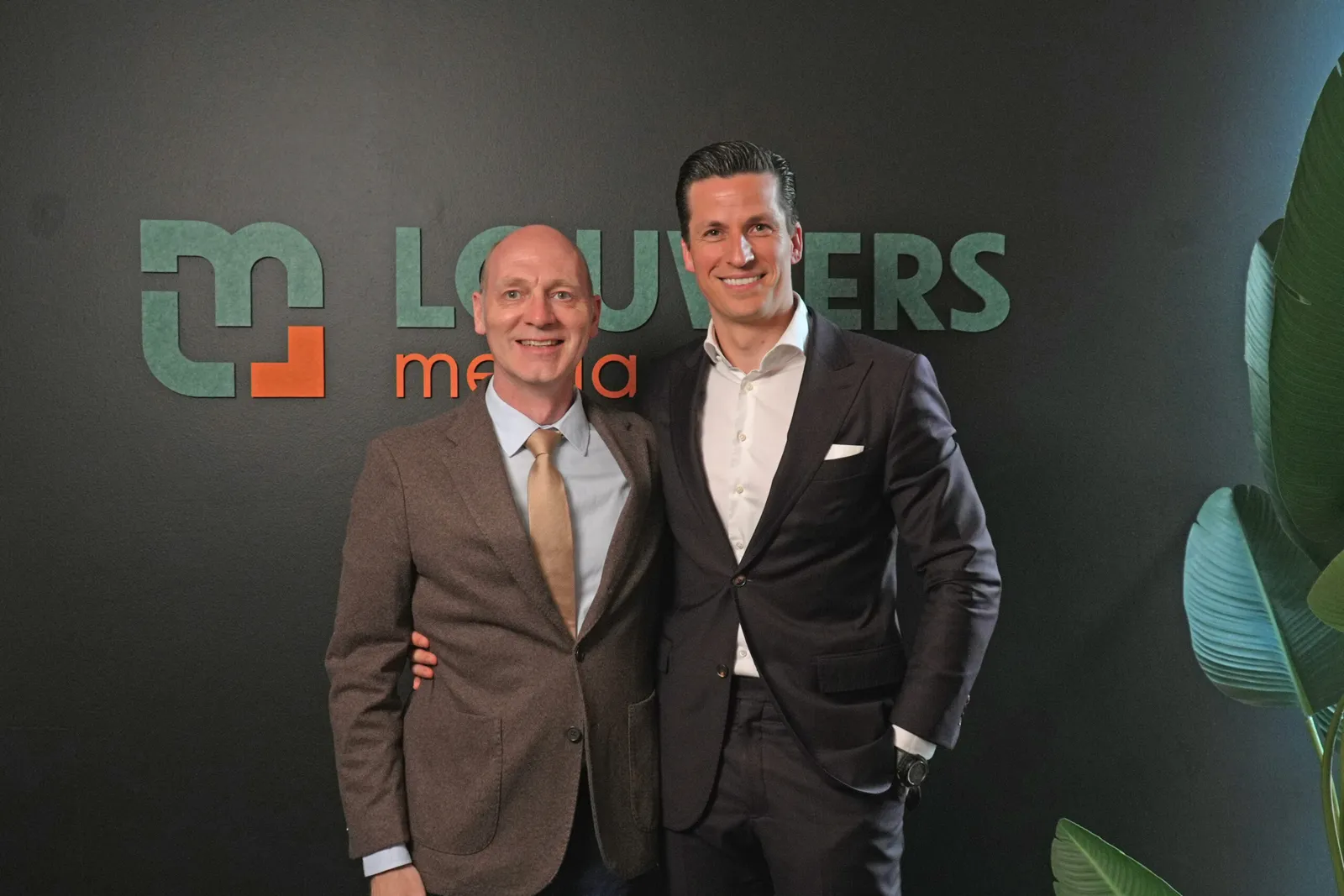
Een zakelijke vraag aan Straight-Line Leadership Benelux B.V.? Get in touch
Full transcript
All chapters (21)
- Introduction: Leadership in turbulent times
- Uncertainty has always been with us
- Turbulence has always been there
- Turbulence is not the problem, our response to it is
- The same reality, a different experience
- Slow down to spot opportunities
- The three worlds of Straight-Line Leadership
- The zigzag world and the straight-line world
- Clarity over certainty
- A practical example from the property sector
- Clarity breaks the self-fulfilling prophecy
- Conversations shape results
- Victim versus owner
- When is something really a problem?
- The six-step setback protocol
- A practical example from a manufacturing company
- Slow down for one day to speed up structurally
- Not working harder, but making the right decisions
- Difficult conversations start with a clear frame
- Three questions for entrepreneurs who want greater clarity
- Closing
Introduction: Leadership in turbulent times
Björn Crul Hello, listeners, and welcome to a new Business Vlaanderen podcast in partnership with Straight-Line Leadership. Perhaps more than most, entrepreneurs today are experiencing just how uncertain and turbulent the world is. Geopolitical conflicts, trade tariffs, rising energy prices and a tight labour market. Each of these factors shapes the environment in which businesses have to navigate, and that environment is becoming ever more complex and uncertain. How can you lead your teams and organisation through periods like these, and even turn them into opportunities for further growth? I’m discussing that today with Kristof Cuppens of Straight-Line Leadership. Hello, Kristof, welcome.
Kristof Cuppens Hi, Björn. Thanks.
Uncertainty has always been with us
Björn Crul Kristof, when I talk to entrepreneurs today, for example for articles in Business Vlaanderen, I often hear that there is a lot of uncertainty and volatility, that markets are shifting and customers are interested but not making decisions. Do you hear the same comments?
Kristof Cuppens Absolutely. What I find particularly striking is that people talk about it as if it were something new, as if it were unique to the present day. But it isn’t. There has been plenty of turmoil and volatility for a long time.
Turbulence has always been there
Björn Crul And we’ve simply forgotten the previous crises.
Kristof Cuppens Yes, for example. We forget very quickly. Everything goes back to normal. But that predictability has never really existed. That calm has never really existed. Of course, there are people who remember the 1970s and say they were the golden years. But there was turbulence and uncertainty then, too. What strikes me most is that people talk about it today in a way that makes it seem as if everything is moving faster. Change may be happening faster, but I believe we have the most control over how we deal with it. Once you focus on factors you can’t control, everything seems beyond your influence and you experience nothing but greater turmoil.
Read the full transcriptCollapse transcript18 more chapters
Turbulence is not the problem, our response to it is
Björn Crul You used the word turbulence just now. We all know it from flying. Turbulence has always been with us. Is that the basic premise?
Kristof Cuppens Absolutely. Turbulence in itself means nothing. Imagine you’re on a plane. I think it’s a good example. We were on a plane recently, and two people sitting next to me experienced it in a straightforward way: the plane goes up a bit, it goes down a bit, that’s it. But my wife’s mind takes her somewhere much darker. She sees her whole life flash before her and thinks: we’ll never see our children again, this is the end. Yet exactly the same thing is happening. Four different people experience the same thing in completely different ways.
The same reality, a different experience
Björn Crul And it’s much the same in business?
Kristof Cuppens Yes, exactly the same. For one person, turbulence is something that helps them stay alert, so they see more opportunities and actually slow down. While everyone else is under pressure, they choose to slow down and ask themselves: what am I not seeing? Under stress, you think less clearly and see fewer possibilities. People who understand how performance works know that turbulence is a reminder to slow down. Both internal and external turbulence create new opportunities in the market.
Slow down to spot opportunities
Björn Crul So turbulence is a cue to slow down. Is that also when you see opportunities others miss?
Kristof Cuppens Ultimately, yes. Take the speed at which AI has arrived, for example. People who haven’t kept up with it experience it as incredibly fast. But technology is there to speed things up. Today, you might be able to prepare twenty quotations in an hour, whereas it used to take you a week. If someone fights this new reality, they are really fighting the world they live in. And in eleven out of ten cases, you lose when you fight reality. Those who accept what is and remain flexible can navigate much more easily. A good pilot navigates turbulence with greater precision. But if someone falls back on a weak foundation, noise creeps in. You see it in many businesses: people navigate by noise, not by clarity and signal. And as a leader, you have to learn to tell the difference.
The three worlds of Straight-Line Leadership
Björn Crul That brings us to the model Straight-Line Leadership is known for. You identify three worlds: the circle world, the zigzag world and the straight-line world. It’s about how you achieve your goals as an entrepreneur. Could you briefly describe those three worlds?
Kristof Cuppens The circle world is very familiar. You have point A, where you are today, and point B, where you want to get to. But every year, you end up circling back to the same point. Think of New Year’s resolutions. Many people make them year after year, but barely three per cent achieve them. They keep saying they’re going to lose weight or give something up, but ultimately they end up back where they started. You see the same thing among entrepreneurs. They say they want to attract better staff, find different customers or enjoy more peace of mind, but they keep repeating the same patterns. That’s the circle: ending up back at the same point every time.
The zigzag world and the straight-line world
Kristof Cuppens Then there’s the zigzag world. It’s characterised by peaks, usually caused by urgency or external pressure. There’s too little money in the account, sales are disappointing and suddenly everyone starts micromanaging. As soon as the pressure eases, people slip back again. You see the familiar yo-yo effect with weight loss, too: under pressure, people manage it for a while, then they relapse. Then there’s the straight-line world. That’s the direct route from A to B, as effectively as possible and with as little loss of people, money and energy as possible. No one is always straight line. Everyone has all three patterns within them. The goal is for a leader to learn to recognise those patterns: in themselves, their leaders, their departments, the market and even the society in which they do business. First, you recognise the patterns. Then you break the circle and zigzag patterns, and finally you deliberately establish straight-line patterns in yourself and your organisation.
Clarity over certainty
Björn Crul So it’s really about leading with great clarity and setting very clear expectations, so that people do what they need to do.
Kristof Cuppens That’s right. Clarity is often the most important thing of all. Many people seek certainty. I think my father or grandfather once said that the only certainties are that we pay taxes and that we’ll die one day. And ultimately, that’s true. Entrepreneurs often seek certainty, even though an entrepreneur is precisely the person who takes on the greatest risk in the end. Those who seek certainty automatically become more cautious. If you learn to distinguish between certainty and clarity, you can get much more out of people. You’ll also see where you are creating noise yourself and where others are doing so. Then you create clarity by reducing everything to the essential information, the essential skills and the essential actions needed to achieve the goal.
A practical example from the property sector
Björn Crul Do you have an example from your work that shows this approach delivering effective results?
Kristof Cuppens Certainly. I was recently talking about Johan Krijgsman of ERA. A few years ago, Ghent University published a study predicting that the property market would cool. Many people immediately accept that kind of research as the truth. But a leader like Johan understands that such a message can create a particular pattern within his organisation. If you’re not careful, people take that message on board and it becomes the story they use to guide themselves.
Clarity breaks the self-fulfilling prophecy
Björn Crul It becomes a self-fulfilling prophecy.
Kristof Cuppens Exactly. So what do you need to do as a leader? You need to create clarity. People seek certainty: certainty that there will be enough sales, that enough money will come in. Johan created clarity by looking with his team at what was within their control. What could they actually influence? That became their focus. That same year, ERA grew by more than twelve per cent, while the market declined and, according to the research, was supposedly going backwards. It always starts with recognising the patterns that emerge. Johan saw that this news would create a particular pattern within his organisation. If you’re not careful, people take that story on board. The language people use then becomes reality. Every business is a network of people, whether it has ten or a thousand.
Conversations shape results
Björn Crul It basically becomes a kind of alibi.
Kristof Cuppens Exactly. A network of people is connected by a network of conversations. Those conversations constantly influence one another. If no one breaks that pattern and communicates with conviction, the self-fulfilling prophecy persists. That network of conversations then influences the network of commitments, the actions people take and ultimately the results they are responsible for. If I leave my leader and say, “The market is down five per cent, so what do you expect me to do now?”, I’m taking a victim position. A leader’s job is to show people what they cannot yet see for themselves, break the pattern and establish a new one.
Victim versus owner
Björn Crul That brings us to another distinction you make: leaders who are victims versus leaders who are owners. What’s the difference?
Kristof Cuppens Victim means victim, owner means owner. A victim mentality is the belief that life happens to you. Most people will instinctively think: that’s not me. But it is much more subtle than that. “Yes, but the market.” “Yes, but the competition.” “Yes, but the US president.” “Yes, but covid.” Those are all valid excuse cards, but they still put you in a victim position. What you are really saying is: I have no influence. But you always have influence. There are two things you can control: what you say and what you do. If you focus on those, you come from the owner side. That is where strength comes from and you start to see possibilities. You stop asking why something is happening to you and start asking what you can do to move the situation forward, even if the game seems harder than ever. Victims often live in the past or in a future that does not yet exist. Owners act in the present. They ask themselves: where can I have an influence today, and who do I need to be as a leader for the people who rely on me?
When is something really a problem?
Björn Crul And how do these people deal with problems? Because, of course, problems do arise.
Kristof Cuppens Absolutely. But first we need to establish what a problem actually is. Suppose our car will not start. We say: we have a problem. But is that right? First, you look at the deviation from the norm. The car will not start. Then you ask: do we know the cause? I know nothing about cars, and I don’t think you do either.
Björn Crul I know how to start it.
Kristof Cuppens Exactly. So we do not know the cause. The third question is: does it matter? Of course, because we want to be able to drive the car. It is only when you have a deviation, do not know the cause and it matters that you have a problem. Suppose a company normally turns over five million euros and this quarter manages only 3.6 million euros. That is a deviation from the norm. You then look for the cause. If you do not know the cause and it has a major impact, you have a problem. But if you do know the cause, in the world of straight-line performance you do not call it a problem, but a setback. And there is a set protocol for dealing with a setback.
The six-step setback protocol
Björn Crul What does that protocol involve?
Kristof Cuppens It consists of six steps. Step one: declare a setback. That may seem obvious, but many people do not name it. They hope it will go away on its own. As a leader, you need to be willing to get to the cause. So you declare the setback and bring the right people together, however busy things are. Step two: gather the facts. Not opinions, but facts. What are the figures? What is the deviation? Step three: bring people into contact with the programmed future. What happens if this continues? Often, that alone makes people realise that nobody will get bonuses, investments will not go ahead or other goals will become unachievable. Step four: then define the desired future. Where do we want to get to, and by when? Step five: establish what is missing. What conversations are missing? What actions, information or skills are needed? What requests need to be made, and to whom? Internally and externally. Step six: take action and follow up briefly. I have never seen anyone who applied this protocol properly fail to turn a setback around.
A practical example from a manufacturing company
Björn Crul You really need to get your whole organisation on board. You mentioned an example of that earlier.
Kristof Cuppens That’s right. We work with a large manufacturing company that operates in several countries. The director who was part of our membership programme was put in charge of a site that had barely grown for years. Everyone had accepted that it was good enough. That is dangerous, because becoming number one is not difficult, staying number one is. When he started there, he immediately declared a setback and laid all the facts on the table. Everyone responded: “We don’t have time for that.” But that belief had been part of the problem for years. Was that a fact or an opinion? It soon became clear that it was an opinion. He then brought his people into contact with the future: what happens if we keep going at this pace? Only then did it really begin to sink in.
Slow down for one day to speed up structurally
Kristof Cuppens In the end, he shut down the entire production operation for one day. Everyone, including the investors and the board, said: “Don’t do it.” But he replied: “You made me responsible for this. If you are not prepared to take a hit for one day, what are we doing here?” He stopped production, sat down with everyone and optimised a number of things. Within three weeks, that site was producing 32% more output than before. That is easy to measure. All he did was follow the six steps. Of course, you will face resistance, but that is precisely a leader’s job. You know where you want to go and you take a clear position on it.
Not working harder, but making the right decisions
Björn Crul The important thing here is that it is not just about working faster and harder. It is about doing the right things.
Kristof Cuppens That’s right. The question, of course, is: what is right? Many people do not dare to make decisions because they are afraid of making the wrong one. They often wait because they do not yet have all the information and do not feel fully certain. That brings us back to the difference between a powerful leader and someone who keeps waiting. A powerful leader acts from a place of clarity, even when there is still uncertainty. Making decisions creates momentum. After all, you can only make adjustments by taking action. Strength then means standing by that decision, even when resistance arises. That resistance may come from the board, colleagues or employees, but it may also be the resistance you feel yourself.
Difficult conversations start with a clear frame
Björn Crul What does that mean for an entrepreneur who has to address a group to explain difficult decisions?
Kristof Cuppens To start with, I would drop the label “difficult”. As soon as you call a conversation difficult or confrontational, you already create a certain charge around it. You take that into the conversation, and other people pick up on it too. Just see it as a conversation or a setback. Neither good nor bad, but necessary. Then, as a leader, you need to be very clear about your point B. What do you want to achieve through that conversation? Next, you set a frame. You actually did that earlier. You told me in advance how long the conversation would take, what we were going to do and what you expected of me. That meant I knew exactly where I stood. That is what leaders do: they take the lead by setting a clear frame. Many people simply start a conversation and see where it takes them. Afterwards, they usually say they did not have time to prepare. But slowing down so you can speed up afterwards remains essential. Know who you want to be as a leader when you have that kind of conversation. Do not make it unnecessarily weighty, set your frame and know where you want to go. It is often better not to speak first, but last. Listen first, gather the facts and only then respond. Many people think leaders mainly need to be good at speaking, when in fact they need to be good at listening. We have two ears and one mouth. Use them in that proportion.
Three questions for entrepreneurs who want greater clarity
Björn Crul Suppose a listener recognises themselves in this conversation and realises that, in these turbulent times, they are not focusing enough on clarity and leadership. What is the first step?
Kristof Cuppens I would keep it very simple and ask myself three questions. One: what is working today? There are always things that are going well. Doing more of what works usually does work. Two: what is not working? Examine that thoroughly and stick to the facts. No assumptions such as “it feels as if” or “it seems as if”. Be specific. And three: what is missing? In most cases, it is not a lack of knowledge. Perhaps sometimes it is, given the pace at which AI is evolving, but in 98% of cases there is no shortage of information. What is missing are certain conversations, commitments, clear agreements on speed and quality, or consistent patterns in feedback and communication. Many people act from a victim position, driven by busyness rather than productivity. Once you confront people with that, they immediately become more effective. That is also why so much change management fails. Change often remains superficial. Who you are will always carry more weight than what you do. You can teach yourself to listen better, but if you are already thinking about your own reply, you are not really listening. Your identity ultimately determines how you speak, listen and act. That is why we work at the level of blind spots. If you are experiencing turbulence, you first need to make your own blind spots visible. A coach or a good book can help with that. But above all, do something with it. Take one idea, sit down for half an hour without distractions, put your phone away and really think it through. In my experience, nine times out of ten people then find their own next step.
Closing
Björn Crul Kristof, we have to wrap up. But I think that may well be the best advice: for our listeners to take half an hour after this podcast to reflect on our conversation.
Kristof Cuppens Absolutely.
Björn Crul Kristof Cuppens, thank you for sharing your insights with us.
Kristof Cuppens Thanks, Björn.
Björn Crul Listeners, if you would like to explore this subject further, I would direct you to www.straightlineleadership.com. You will also find a webinar there on leadership in turbulent times. Thank you for joining us today, and until next time.
Companies in this story
Keep following this
Get an email when a new story is published. No account needed.
- ThemeBusiness growth and entrepreneurship in Flanders
- SubjectServices
- CompanyStraight-Line Leadership Benelux B.V.