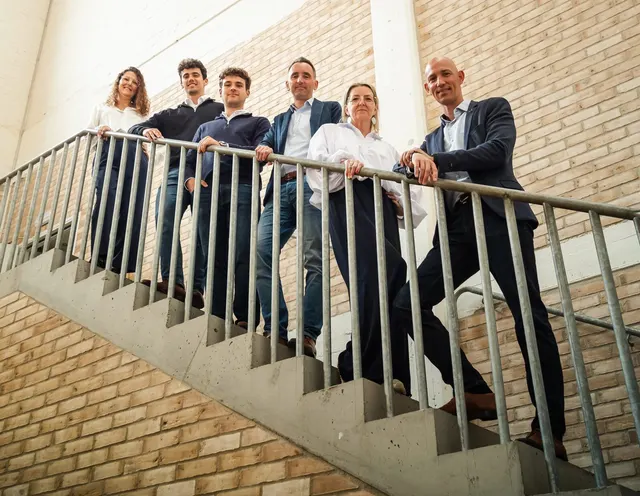
“We want to give businesses every opportunity to grow in Mechelen”
Text Björn CrulImage Stad Mechelen
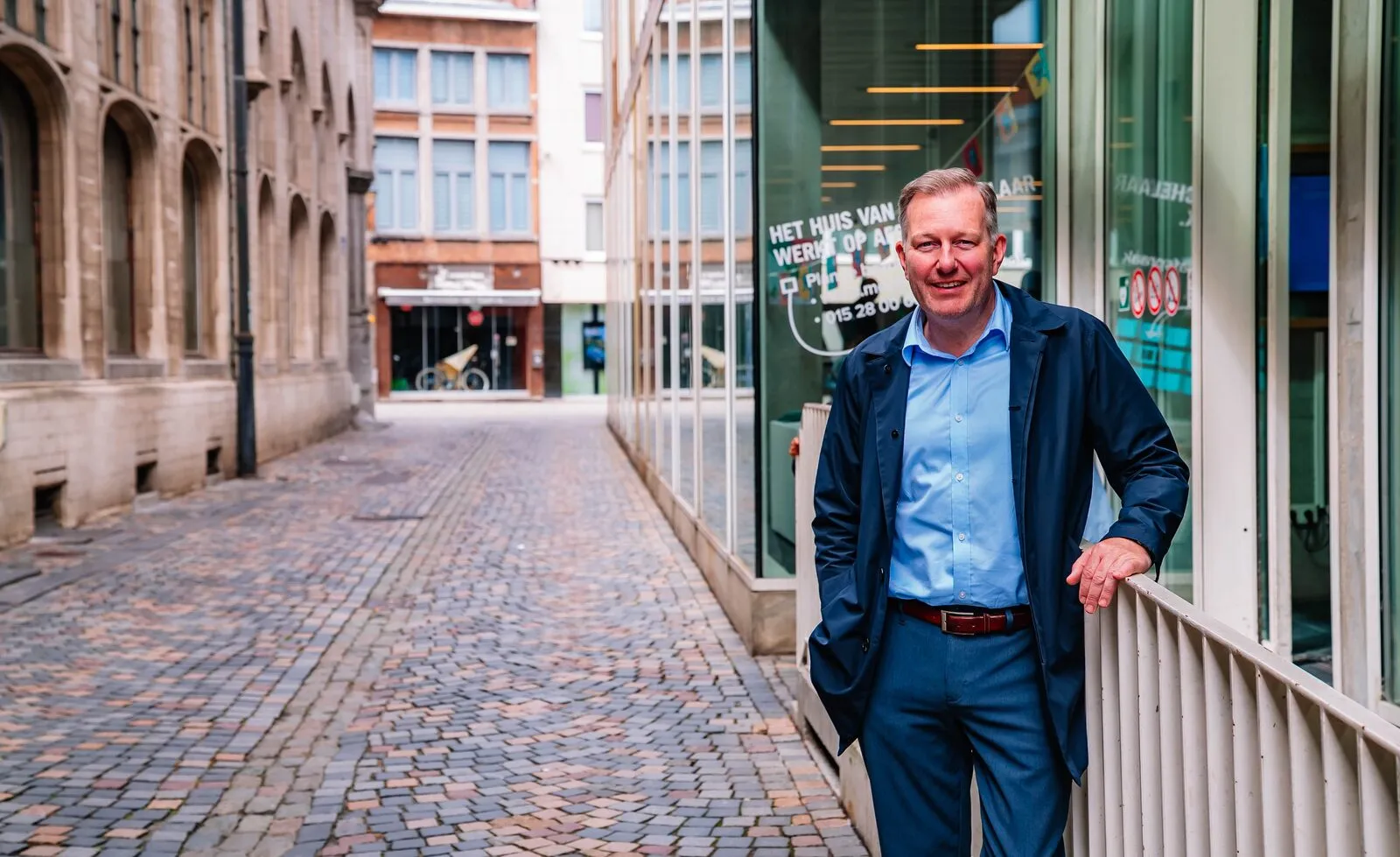
Mechelen benefits from its central location between Antwerp and Brussels. Technology companies and start-ups are increasingly finding their way to the city, while retail, hospitality, industry and services are holding up well. With new business space in Ragheno, better access to business parks and further investment in the circular economy, Mechelen aims to strengthen this momentum even further, explains Alexander Vandersmissen (Voor Mechelen), Alderman for Business, Mobility & the Economy.
What do you see as Mechelen’s economic strengths today?
Alexander Vandersmissen: “We have a strong mix of services, technology, retail, healthcare, industry, logistics and hospitality. That makes our local economy resilient and dynamic. Large manufacturers such as Mars and P&G, for example, provide direct employment as well as business for numerous suppliers.
What we have also seen increasingly clearly in recent years is that technology companies are choosing Mechelen. We are known for major players such as Telenet, Cochlear and Fanuc. But a dynamic has taken hold, and we now have a whole ecosystem of innovative companies. Flanders Technology & Innovation’s decision to bring the FTI Expo to Mechelen this year is part of that trend.
Finally, of course, there is our geographical advantage: an AAA location in the Flemish Diamond, between Antwerp and Brussels, close to the E19 and with a new railway station currently under development.”
Is that appeal reflected in the figures?
Alexander Vandersmissen: “Absolutely. Since 2016, the number of active businesses in our city has risen from 9,300 to 11,876, an increase of almost 28 per cent. There is also plenty of dynamism among young businesses: 147 companies were added in the past six months, and Mechelen ranks fifth in VLAIO’s Scale-up Monitor. Scientific, technical and specialist business services have also grown strongly. This sector accounted for 22.8 per cent of all business start-ups between August 2025 and July 2026.”
Independent retail and hospitality are struggling in our cities. What is the city doing to help?
Alexander Vandersmissen: “In recent years, we have made a deliberate investment in our main shopping area. Public spaces have been refurbished, the traffic-restricted zone has been extended, and several streets and squares have been better connected. At the same time, we want to ensure that the area remains accessible, including with a free park-and-ride facility and a shuttle service using buses and boats. Together with the Mechelen MeeMaken traders’ association, we are developing initiatives to make the city centre more attractive, such as the monthly Koopzondag, the street market and Local Friday. As a result of these efforts, both the total retail floor space and the number of retail and hospitality businesses increased between 2024 and 2025.”
Space for businesses is scarce in many Flemish cities. How big a challenge is this for Mechelen?
Alexander Vandersmissen: “It is an important issue for us too. We are focusing mainly on redeveloping existing business sites and bringing underused locations into use. To that end, we have developed a new framework to make more efficient use of existing industrial zones. This could mean, for example, building upwards, or sharing parking infrastructure and renewable energy installations. We need to make maximum use of the space available for economic activities that create jobs and added value.”
A major new development is planned at Ragheno. What role should it play?
Alexander Vandersmissen: “Ragheno, the new urban district behind the station, is particularly important for our economic development. It will add no less than 144,000 square metres of business space. The project is due to get under way in 2027. We can already see that the redevelopment of the station area is attracting businesses. Telenet will build its new headquarters there, while Alken-Maes and Lease a Bike have recently established their headquarters nearby. This shows how important it is to combine high-quality business space with excellent accessibility.”
Accessibility falls under one of your other portfolios, mobility. What else is planned in this area over the coming years?
Alexander Vandersmissen: “De Ontknoping is a crucial project. It will completely redesign access to Mechelen from the E19. The existing slip roads will be completely revamped to make them more compact and efficient, and two direct entry and exit points will be added to our main business zones. This will make a huge difference for Mechelen-Noord. Our central location is already one of our greatest economic assets. De Ontknoping will enable us to strengthen that position further. We are counting on the Flemish Government to speed up this very important project.”
Mechelen is also building a strong profile around the circular economy. What economic benefits does this bring?
Alexander Vandersmissen: “Our circular projects have already given rise to businesses such as E-Battery, which refurbishes e-bike batteries, and Spruce Goose, which gives discarded furniture a new purpose. They also attract larger players. Decathlon, for example, has established its circular logistics and repair centre here. An important next step is the Impact Factory, a public-private partnership in a repurposed 3,400-square-metre industrial building between the station and the city centre. It will be a hub for impact entrepreneurs, circular projects and creative businesses.”
What are your main economic priorities for the coming years?
Alexander Vandersmissen: “Alongside accessibility and space, I particularly want to strengthen cooperation between businesses. Through the business associations on our business parks, we now reach more than 150 companies. This allows us to tackle shared challenges relating to, among other things, energy, climate adaptation, parking and circular business practices. I also speak to business leaders, retailers and hospitality entrepreneurs almost every day. Staying in touch with what is happening on the ground matters: businesses primarily need an efficient government that creates room for them to operate. I would therefore also like to see simpler regulations and greater autonomy for local authorities.”
Question about this story? Ask your question
Keep following this
Get an email when a new story is published. No account needed.
- ThemeEnergy security and the circular economy
- SubjectGeneral