




Young talent is forcing companies to rethink how they talk about pay
Text Bavo BoutsenImage Forbes, Compinsight
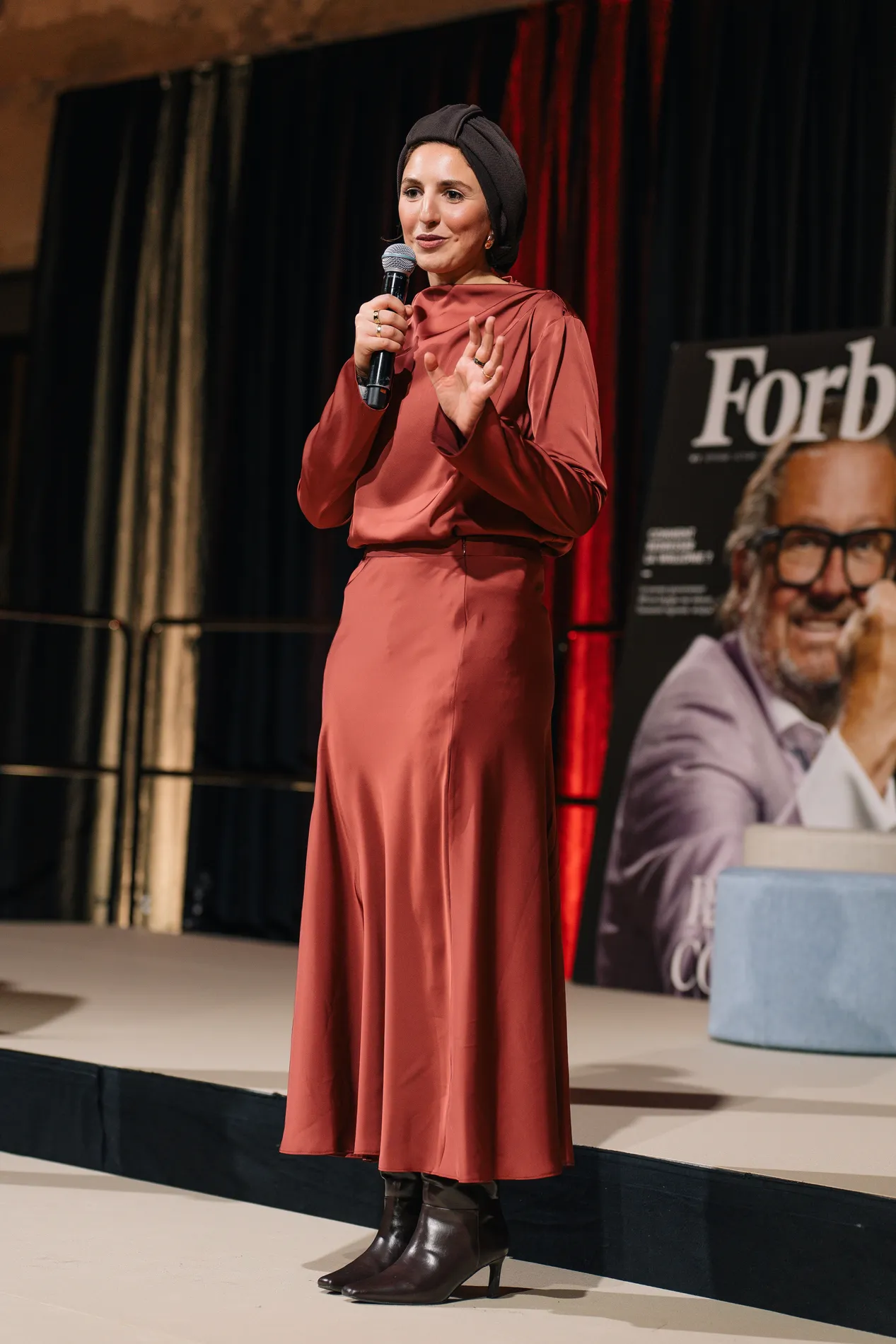
“We give organisations the language to start the conversation”
Belgians have traditionally been reluctant to talk about what is on their payslip. Younger generations of employees, however, see pay differently: they want greater transparency, are more critical and are less willing to accept inequality. According to pay expert Soukaina Bouddount, whose work earned her a place on Forbes Magazine’s ‘30 under 30’ list, this shift in attitudes is forcing organisations to rethink their pay policies from the ground up.
Although pay is a daily reality for every employer and employee, the subject often receives surprisingly little strategic attention. “Here, it is viewed through a tax lens. It is a burden for employers, which they should keep as low as possible through optimisation,” says Soukaina Bouddount, pay expert, author and founder of Compinsight, which helps companies rethink their pay policies strategically.
The taboo is beginning to crack
This approach is fuelled by the persistent taboo surrounding pay. “People in our country simply don’t like talking about it. That is much less the case in other countries, such as the Netherlands. In Scandinavia, you can even look up how much someone earns in a database,” she says. However, research by various HR service providers shows that this taboo is far less prevalent among younger employees. “They dare to bring the subject up and use digital tools to compare salaries. That is gradually breaking down the taboo.”
Through Compinsight, Bouddount is actively seeking to change the prevailing culture. “We want to open up the conversation and help everyone understand that pay is primarily about showing appreciation and offering people a sense of what lies ahead.” This gives employees greater insight into the rules behind the scenes. “In practice, we start by mapping out the existing pay policy. That is very important, because at an SME it has traditionally evolved through ad hoc decisions and on a case-by-case basis, with changes only made when a particular employee questions their situation,” she says.
The analysis then provides the basis for designing a policy. “This is about what a sense of progression looks like. That means looking at pay rises, but also at how to motivate people. How do you encourage them to go the extra mile? Think bonus plans or other tailored incentives. We can rarely fully undo historical decisions because of the rules on acquired rights,” explains Soukaina Bouddount. She says the process nevertheless often brings recognition and relief. “We give organisations the language to start a conversation about an emotionally charged subject.”

Pay transparency directive
Her efforts have been recognised. Late last year, Bouddount featured on Forbes, the business magazine’s prestigious ’30 under 30’ list in Belgium. The accolade celebrates exceptional young innovators. “It is the first time someone from the HR world has made the list. It is a powerful signal of how attitudes have shifted in recent years,” she says proudly.
Another key factor in this shift is the EU Pay Transparency Directive. The directive must be transposed into Belgian law by June 2026 and requires companies to be more open about their pay scales, including during recruitment. It also introduces a reporting requirement for larger companies with more than 150 employees. The measure is primarily intended to help Europe close the gender pay gap, which remains a reality on monthly payslips.
Experts point to the far-reaching nature of the directive. Greater pay transparency will inevitably lead to more openness in other areas too, and cultural change of this kind takes time and support. Research also shows that many companies are not sufficiently prepared. Given the urgency of the issue for society, Bouddount has become more active in public debate in recent years. “I approached a publisher myself with the idea for my first book, ‘Belonen met impact’. Its publication led to my column in De Tijd, and I am now increasingly invited to speak to companies. Recognition from Forbes Magazine has, of course, given my profile an additional boost,” she explains.
In the longer term, she believes the cultural shift will lead to a business world where pay is discussed more openly and seniority carries less weight. “There will need to be far more tailored approaches. One-size-fits-all models will increasingly disappear, especially under pressure from younger employees, who have many more tools and the language to put this issue on the agenda. My advice to employers is therefore to review your pay policy as soon as possible and learn to think about it proactively. A reactive approach simply isn’t fit for the future,” concludes Soukaina Bouddount.
Question about this story? Ask your question
Keep following this
Get an email when a new story is published. No account needed.
- ThemeAttracting and retaining people
- SubjectHR, finance & IT







