What works in events? Three experts on a sector in transition
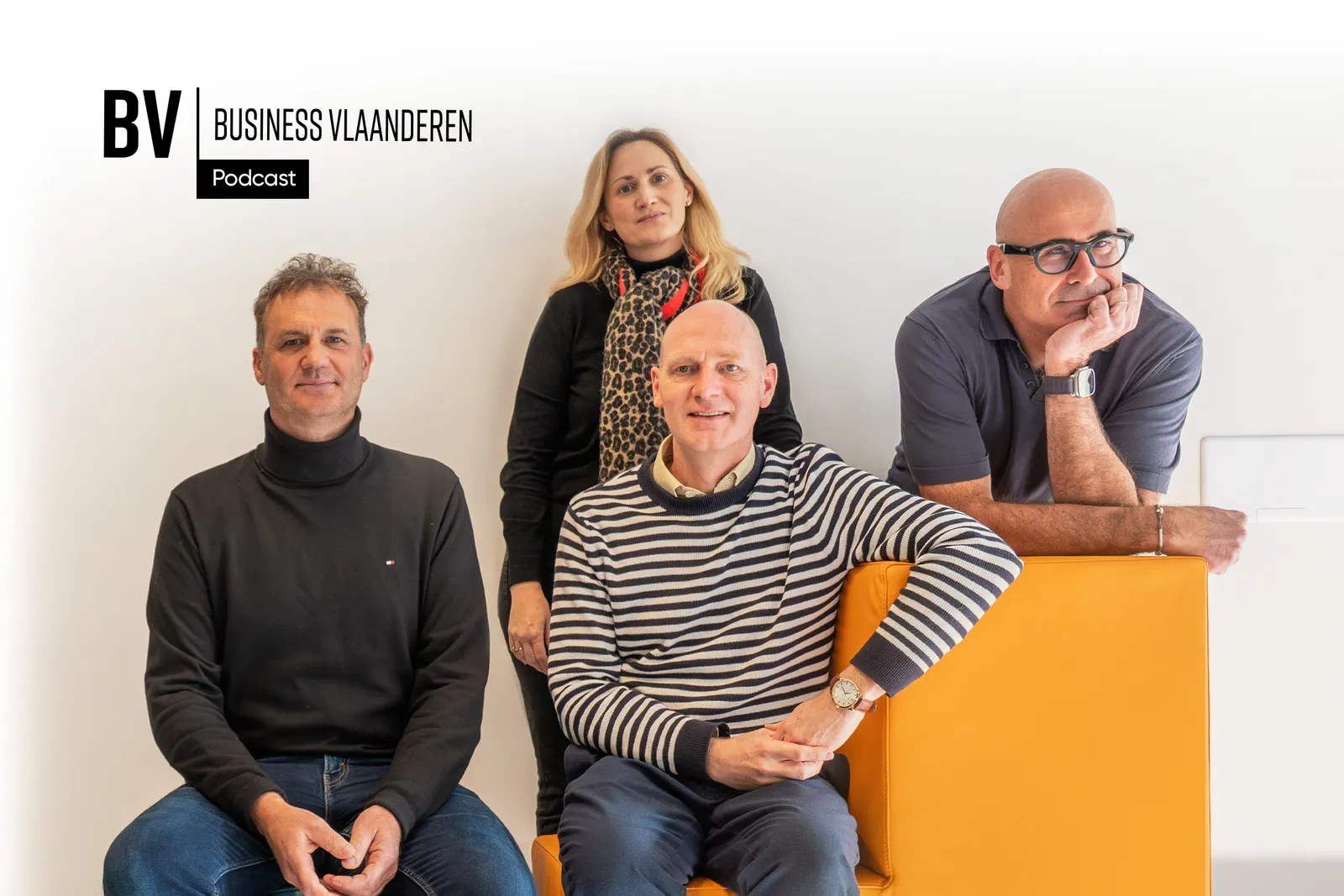
Welcome to the Business Vlaanderen podcast, where, just as in our magazine, we keep our finger on the pulse of trends and developments in Flemish business. In this episode, we take stock of the events sector. Business owners love inspiring conferences, challenging team-building activities, spectacular parties and networking opportunities.
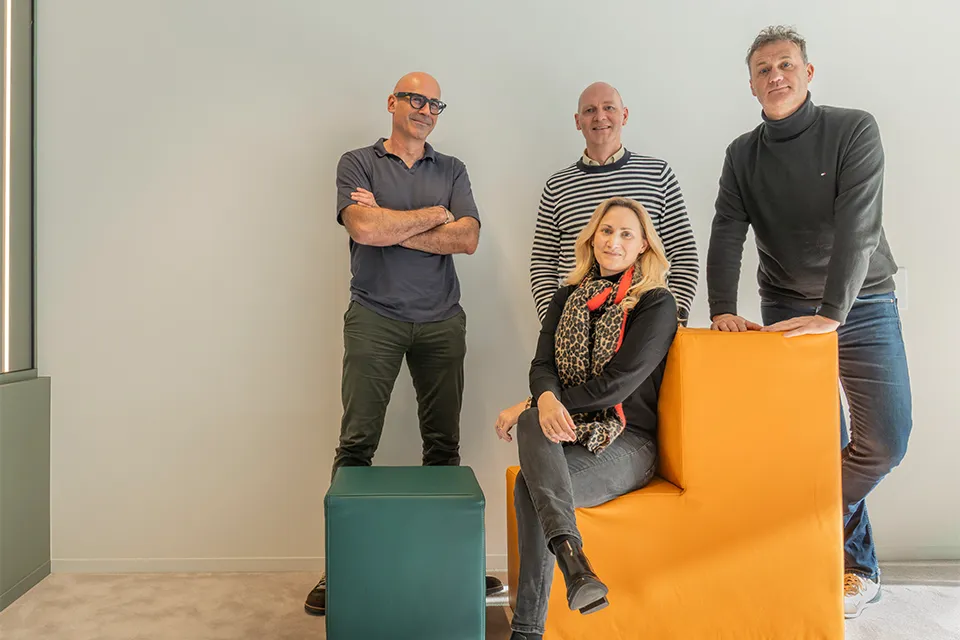
But what are their priorities today, and what does that mean for the organisers and suppliers behind all these events? I’m discussing it with three seasoned professionals:
- Steve Roose, creative and organiser at event agency Event Mosaic.
- Severine Smetz, National B2B Sales Manager at Kinepolis
- Dan Vandevoorde, founder and driving force behind Xtreme Creations, which provides visual support, including for events.
Full transcript
Alle hoofdstukken (60)
- , Björn Crul
- , Steve Roose
- , Björn Crul
- , Steve Roose
- , Björn Crul
- , Steve Roose
- , Björn Crul
- , Severine Smetz
- , Björn Crul
- , Severine Smetz
- , Björn Crul
- , Severine Smetz
- , Björn Crul
- , Dan Vandevoorde
- , Björn Crul
- , Dan Vandevoorde
- , Björn Crul
- , Severine Smetz
- , Björn Crul
- , Steve Roose
- , Björn Crul
- , Severine Smetz
- , Steve Roose
- , Björn Crul
- , Dan Vandevoorde
- , Björn Crul
- , Steve Roose
- , Björn Crul
- , Severine Smetz
- , Steve Roose
- , Björn Crul
- , Dan Vandevoorde
- , Björn Crul
- , Steve Roose
- , Björn Crul
- , Severine Smetz
- , Björn Crul
- , Steve Roose
- , Severine Smetz
- , Björn Crul
- , Severine Smetz
- , Steve Roose
- , Björn Crul
- , Dan Vandevoorde
- , Björn Crul
- , Dan Vandevoorde
- , Björn Crul
- , Dan Vandevoorde
- , Björn Crul
- , Steve Roose
- , Björn Crul
- , Severine Smetz
- , Björn Crul
- , Björn Crul
- , Dan Vandevoorde
- , Björn Crul
- , Severine Smetz
- , Björn Crul
- , Steve Roose
- , Björn Crul
Business Vlaanderen, Episode 1
A conversation about the events sector
Host: Björn Crul
Guests: Steve Roose (Event Mosaic), Severine Smetz (Kinepolis), Dan Vandevoorde (Xtreme Creations)
, Björn Crul
Hello, listeners, and welcome to the Business Vlaanderen podcast, where, just as in our magazine, we keep our finger on the pulse of trends and developments in Flemish business. In this episode, we take stock of the events sector.
Business owners love inspiring conferences, challenging team-building activities, spectacular parties and networking opportunities. But what are their priorities today? And what does that mean for the organisers and suppliers behind all these events?
I’m discussing it with three seasoned professionals. Steve Roose, creative and organiser at event agency Event Mosaic. Severine Smetz, National B2B Sales Manager at Kinepolis. And Dan Vandevoorde, founder and driving force behind Xtreme Creations, which provides visual support, including for events.
Welcome, all three of you. Steve, let’s start with you. What is the latest, or one of the latest, events you’ve worked on, and what was your role?
, Steve Roose
A few weeks ago, I had the opportunity to organise a high-end dinner in Brussels for an international pharmaceutical company. There were a lot of requirements and questions to deal with. My role is to coordinate the event. We make sure we have the right partners to put on a great event. Everyone involved needs to be briefed and have the right information. And of course, we’re also on site to manage the timing and any changes.
In this case, it was actually a deal that had been finalised between an American and a European pharmaceutical company. All the stakeholders were there, with private bodyguards, their own jet, catering requirements, changes and so on.
Read the full transcriptCollapse transcriptnog 58 hoofdstukken
, Björn Crul
An event never goes entirely according to plan. What’s the biggest challenge you face at that kind of event?
, Steve Roose
I always say: one plus one never equals two in the events sector. I think we all understand that straight away. The thing is, there are a lot of people involved, and changes come from above. Everyone has to be able to work with that schedule, with that revised plan.
That happens during the preparations, but it also happens on site. And that’s before you even get to unexpected problems, such as planes not arriving on time or train strikes coming out of the blue.
So you always have to think on your feet, listen carefully to what the client wants, and, above all, build a good relationship with your staff and suppliers. If you want to change the whole schedule the day before, a number of people have to be able to adapt to that too.
That also requires flexibility from suppliers. So you need to negotiate and talk things through with them. You need to know them and bring them on board with your vision. Someone who puts a plate on the table, so to speak, doesn’t know the whole story, but they need to be enthusiastic too. They need to say: “Okay, we’re working together, we’re going to make this project happen together.” Everyone needs to be pulling in the same direction.
So what the client wants is important, but how you work with your team, your staff and your suppliers is at least as important.
, Björn Crul
You’re a bit like the hub of the wheel, I suppose. Do you need to be particularly good at handling stress?
, Steve Roose
Yes, I think if you were to list the criteria for what an event manager can or should be, being able to handle stress would be right at the top. Stamina is important too, because you have to keep making those changes. You need to be physically fit as well.
I always like to mention that, because during an event you can easily be working for 15, 16, 17 hours. Then you look at your step counter and it says 38,000 steps or something.
That’s all part of it, but it’s also a sector that offers an enormous amount of satisfaction. If you enjoy it, if you see people leaving with a smile, thanking you and literally giving you a pat on the back, then you’re happy at the end of the day.
Then you’ve done something for those people, you’ve done a good job, and it remains a great memory for you and for them. And every time it’s a new story. I think that’s the common thread in an event manager’s life: you never have the same day twice…
, Björn Crul
Is it the same for you, Severine? No two days alike at Kinepolis?
, Severine Smetz
No two days are the same. My role is also a little different from Steve’s. I manage the team of B2B professionals. So I’m not personally the event coordinator, but I do coordinate the team.
We have a presence at our cinemas nationwide and locally. And we do a lot of B2B activities. These include premieres, conferences and product launches, and the range is broad, right through to memorial services at our venues.
I could give you lots of examples. The latest big event we’ve had was for a client that has been choosing Kinepolis Business for 22 years: Devox with the Java-compagnie. It’s a major ICT conference over three days.
They take over the entire right wing of Kinepolis Antwerpen. They use the whole event venue located on the right-hand side of the complex, as well as the conference rooms.
It runs over three days and involves a substantial build. And yes, it’s a great partnership.
, Björn Crul
Do you ever find yourselves pulled in two directions? On the one hand, the cinema has to be open for people who want to see a film, while on the other, you naturally want to host as many events as possible.
, Severine Smetz
Absolutely. First and foremost, of course, we remain a cinema for B2C audiences. But our role is really to be the icing on the cake.
The cinemas are open, the lights are on, the staff are there, we have a full team working on B2B, and the facilities are available. They’re facilities that businesses can genuinely make use of.
So we position our USPs in the market from a business perspective, and we’re doing that very successfully.
, Björn Crul
And do those peaks not coincide? Are they in separate seasons?
, Severine Smetz
Sometimes those peaks coincide, sometimes they don’t, and we try to complement each other as much as possible. That’s certainly true of film events, because we host a lot of those, but we also hold plenty of non-film events.
For non-film events, we look at how they fit with the rooms we have: which rooms are available, and which can we fill with B2B activities?
The big advantage for us is that a lot of B2B activity takes place during the day, while our B2C audience is mainly concentrated in the evening.
The same goes for holiday periods. They’re very popular with B2C visitors, but less so with B2B clients.
But there are certainly times when the two overlap. Then we talk to each other to see how we can achieve the best possible outcome.
, Björn Crul
Now let’s turn to you. You’re a supplier to the events sector. You make inflatables, or inflatable props, as I’ll call them. What are some of your most recent projects that you’re really proud of?
, Dan Vandevoorde
Abroad, our most recent major festival was Electric Love Festival in Austria, with more than 50,000 people.
We made three rocket engines for the hardstyle dance stage. That’s a specific style of dancing and a specific type of music. It was a co-creation with other elements made from rigid materials. There’s sound, music and LEDs. So that was our latest project this summer.
And last week in Belgium, we worked on De Jeugd van Tegenwoordig at the Lotto Arena, Sportpaleis in Antwerpen.
, Björn Crul
And what did you make for them, for example?
, Dan Vandevoorde
For their show, they had around a dozen large inflatables on stage, which were blown up in front of the LED screens during the performance. The stage set-up was slightly different from the tour they did in the Netherlands for their 20th anniversary.
They were objects they feel strongly about, with a story behind them, written in a creative way that’s worth reading in its own right.
But we made the inflatables, and the people running production can inflate and coordinate them perfectly well themselves.
, Björn Crul
Severine, looking at the number of invitations to events I receive these days, the events sector seems to be thriving again after the COVID period, when everything was very difficult. How do you see the market at Kinepolis today?
, Severine Smetz
I think we’re very glad to be able to confirm that. I’d say: never underestimate the power of live. We’ve certainly seen that very clearly.
From one day to the next, our B2B operations came to a complete standstill. And of course, that makes you worry, because at first we thought: oh, two weeks’ holiday for everyone.
But it turned out to be more than two years. As a sector, we were also caught somewhere in the middle, in all sorts of ways.
And then you start worrying: how are we ever going to make up for that? But the recovery was actually very quick.
We were able to bring our regular clients back very quickly.
Of course, we then faced a second challenge after COVID: the Hollywood strike. That was a major issue for us in terms of content.
We hold hundreds of events for businesses every year, and a lot of them involve films. Naturally, we also need the content to attract those clients.
So that was a new challenge. But at this point, we can say we’re really starting to get past it.
The content line-up for 2025 looks very good. And over the past year, we’ve really returned to pre-COVID levels. We’ve got our B2B event numbers back.
We can be proud that we’ve managed to bring those events back.
, Björn Crul
Steve, how do you look back on that, and has it changed the business?
, Steve Roose
Yes and no. What I mean is, we asked ourselves: will businesses still invest in bringing people together?
At that point, when you’re sitting with just two or three people from your office and nothing is happening, you keep asking yourself that question.
It soon became clear, when restrictions began to ease in early ’22, and eased considerably, that the answer was an emphatic yes.
People were absolutely looking forward to those events. So ’22, ’23 and ’24 were overwhelming. I can’t think of a better word.
There was even a point when we had to stop delivering, because things were happening so quickly and there was so much of it.
Now we’re seeing the effects of decisions made at the highest level. The US president is waging a trade war.
Companies are still willing to bring people together, but budgets are being scrutinised very closely.
We feel it and we see it. We see it across all event agencies. People in the sector are talking about it too.
But this is a phase we’ve been through a few times in the past.
So we know that, in around six, eight or ten months, things will turn around nicely and return to the level of around ’22, ’23 and ’24.
, Björn Crul
Severine, I remember there was a time when there were lots of webinars and hybrid events. They’re a bit less popular now, aren’t they?
, Severine Smetz
I actually think live events came back so quickly thanks to webinars.
At a certain point, especially when the COVID period goes on for so long, we get tired of screens and webinars.
Eventually, you sign up for everything, but afterwards you think: what did I get out of that?
You miss out on something, and I think we all felt that very strongly.
You don’t have that connection. You can’t talk to people or come up with new ideas together.
And I think we really missed that.
So I think we should be grateful for webinars, because the live experience only came back faster as a result.
During the COVID period, we also set up a studio at Kinepolis Antwerpen. We’ve actually stopped doing that, because demand for live events is everywhere.
, Steve Roose
Yes, absolutely. For around a year, online was all we could do.
So online events are still around. They’re sometimes offered as a partial option.
For example, someone who can’t attend a conference can follow it online. It’s recorded, saved and so on.
But it’s not the same in terms of feel, experience or being able to shake someone’s hand.
Waving at a screen just isn’t the same.
So the live experience takes priority.
, Björn Crul
Dan, let me come back to you. As I understand it, you more or less fell into Xtreme Creations by chance around 30 years ago.
How is business today, and has COVID had an impact?
, Dan Vandevoorde
COVID had a huge impact. After years of hard work, just before COVID, we were finally working with global stars.
The Dua Lipa and Billie Eilish tours.
I have an English partner and an Italian one. We were developing things at full speed. We were almost there, working out what it would be and what it would look like.
Then, in the space of two weeks, the whole world came to a standstill.
No events, no festivals. Point of sale was already pretty quiet. Trade fairs were cancelled too.
So yes, you end up sitting all alone in the office.
Through our network, we ended up at minus 40% in the first year and minus 25% in the second.
All things considered, that wasn’t too bad for the events sector. Many of our clients, the event agencies, were down to 5 or 10%.
And then there was the online side of things, which people weren’t exactly embracing wholeheartedly either.
As a team, we actually started covering Ineos’s Dragon Ships, the LNG tankers, abroad.
That meant we didn’t burn through our cash, and afterwards we were able to move quickly into the huge wave that followed, because everyone wanted to do everything.
Everything.
And since just after COVID, we’ve been in overdrive, and it hasn’t stopped.
But as Steve just said, you can feel event agencies saying: we have to do more, perhaps for the same budget.
And that pressure is there.
Sometimes that means creativity takes a hit, which isn’t good for the overall trend either.
But our clients are based across Europe and beyond.
So in that sense, there are shifts in Belgium and the Netherlands, or the UK, and things are a bit more difficult in the US again too.
But overall, things are finding their way, and we’ll come through it.
Geopolitically, though, these are uncertain times.
, Björn Crul
Creativity has come up. I think that’s exactly what many clients look to you and the sector for, and especially to event agencies, Steve, to come up with creative concepts.
Where do you keep getting those ideas? You’ve been in this sector for 25 years. How do you come up with new concepts and ideas? Where do you find inspiration?
, Steve Roose
We work with a team of six, which helps with brainstorming sessions.
Of course, we also have our friend ChatGPT alongside us. You use that too, and it’s like having a seventh person in the room.
But I pick up most ideas on the street or on social media. You think: oh, that’s a nice idea, I’ll remember that, or we mustn’t forget that.
Sometimes I save it on my computer, and so do my colleagues. Then it’s: wait, wait, how can we do that? We could do it this way.
So those things… there’s no course or degree for that.
Things move incredibly fast on social media in particular, and you get a feel for the trends: what’s happening? How should you communicate it? What resonates, and what doesn’t?
And if you have something that resonates, you can sell it to the client. Then you can add a few touches here and there to create something fun that you couldn’t have done before.
, Björn Crul
Severine, I saw you nodding. Where does the creativity come from when it comes to what you offer?
, Severine Smetz
A lot of it comes from our clients, of course, because we’re a venue, a space for them to fill.
We also work with partners, so clients can choose to work with those partners or set things up themselves.
If I had to name the most creative example by far of business meets pleasure, it would be Techorama, our annual ICT conference, where they really focus on bringing the two together.
They have a theme every year.
Two years ago, for example, it was circus, and they transformed our entire cinema into a circus, even putting a Ferris wheel in the car park outside.
Our local team then has to help with the practicalities, of course: is that allowed? How should we set it up?
We also work through everything with them indoors: the reception area, foyer and lighting in the auditoriums.
Even the catering is themed, with oliebollen and the like.
Last year, the theme was sport, and suddenly you walk into a whole sports complex.
But they’re not the only ones. We do this with several clients.
We also have clients who come to us with suggestions.
For example, there’s an annual Gondola conference, and at one point they suggested replacing all the posters, that whole wall of posters, with keynote speakers.
Naturally, we said yes.
And then the whole wall was covered with keynote speakers, including a Lego keynote speaker.
And they put their own spin on it.
It’s great to see.
Our colleagues in marketing also bring TV productions to life, together with the media companies.
We’ve had (Masked) Singer and De Mol.
We always try to work with the client to make the most of our cinema setting and create a complete experience.
, Steve Roose
Added value often comes from the people and performers you can bring on stage.
They create a unique experience, the salt and pepper of your event.
That’s where it happens, on stage, and those people can bring something more than just the script or what you had in mind.
Those people are often key players in the story.
, Björn Crul
Dan, you turn creative concepts into inflatable sets. What’s the biggest challenge for you?
, Dan Vandevoorde
The challenge is that concepts sometimes need to be adapted so they can be translated into inflatables.
It’s a technical field, and we’ve now got 30 years of experience.
So we’re skilled enough by now to see it through successfully.
The advantage of our products, of course, is that they’re sustainable, because they’re made of textile filled with a combination of air and pressure.
They’re also very easy to transport and assemble.
We get our creativity from our clients, the agencies and the people who commission the work.
They’re people who come up with ideas based on what they see on social media or at an event.
They then bring us a new or adapted concept, which we can assess from a technical point of view: yes, we can do that, this way. Does that work? This is the budget.
Then we see how it lands, and whether the end client has the budget.
‘The sky’s the limit’ is always a dangerous thing to say, but we’ve managed to take inflatables from being best known for sex dolls, if I may say that here at the table, to bouncy castles and pink elephants, lots of pink elephants…
But inflatables are now part of the marketing mix, one of the tools an event agency or marketing agency recommends to a client for all kinds of occasions.
And a picture is worth a thousand words.
Social media has given rise to a whole photographic, Instagrammable culture.
And that’s been a fantastic development for us.
At every festival, hundreds of thousands of people take photos of the stages they’re at. They film them and post them.
So there’s huge demand for large structures that stand out and convey a message or create a particular theme.
, Björn Crul
Steve, as I said, you have 25 years’ experience in this sector. Looking back, which event or experience do you remember most fondly? What are you most proud of?
, Steve Roose
That’s a difficult question.
I’d say that a few years ago I was able to provide catering for an international ministerial conference.
Presidents and heads of government from around the world were there.
It was quite an undertaking.
There’s a lot involved: security, quality, lobbying, and people from outside making their own wishes, demands and requests.
And we brought it all to a successful conclusion.
Then you’re walking down the stairs among the Merkels and Macrons, and you see those people in real life.
It was an experience you’d normally only see on a TV or video screen.
And you realise it’s all a little different from how it’s presented.
When you see the Turkish president and the Greek prime minister greet each other as if they were at a school reunion 30 years ago, so to speak…
That was something I hadn’t expected.
So that remains a very fond memory.
I’m glad I was able to bring it all to a successful conclusion, that nothing went wrong and that everything ran smoothly.
That’s a great thing.
, Björn Crul
Severine, what do you look back on with great pleasure?
, Severine Smetz
I’ve been with Kinepolis B2B for almost seven years now. The first thing I’d say is the team. It’s a fantastic team that gives its all every day.
Continuity is always very important, and so is keeping that experience within the complexes, because that’s where it all happens.
So I think the team spirit is really important to me.
We’re also going on a team-building day with some of the team this Friday, so that’s important too.
, Björn Crul
Is everything sorted? There’s someone at the table…
, Steve Roose
We have an ensemble.
, Severine Smetz
Yes, yes, yes. Look.
So the team is something I think is very important to mention.
What I’m most proud of… I think, well… I have to go back to COVID, but perhaps it’s Kinepolis as a whole.
We still wanted people to experience cinema.
So during COVID, we organised Kinepolis On Tour.
For those who still remember: that was outdoor cinema in the most magical locations.
But I can tell you, it was quite a challenge.
We did it for two years, over two summers.
Finding the fields, exploring the possibilities, providing F&B on site… We worked very closely with every department.
We put on some really wonderful productions, but I can tell you, the things we had to arrange with the local authorities… we still talk about those stories sometimes.
And specifically in B2B, I’d say we try to be ready to serve as many clients as possible every day.
During very busy periods, we sometimes host three to six B2B events or clients in our theatres on the same day.
So yes, that requires us to be extremely prepared.
We have run sheets that are very well coordinated with the various local departments.
We also have two national key account managers, because we are set up so that if a client chooses two or more complexes, they still have just one point of contact.
They brief the theatres, so you get a bit of a plug-and-play, copy-and-paste approach across the different theatres the client chooses.
So we always try to maintain a very high level of service. We think that’s really important too.
, Björn Crul
Are there still enough people available to deliver all those services? We sometimes hear that labour shortages are also being felt in the events sector.
, Severine Smetz
Yes, honestly, I think that’s a challenge for every sector.
One advantage we have here is that we work with a lot of permanent staff.
We’re a team of twenty, and at least fifteen of us help organise events.
So we’re fortunate in that respect.
We have event coaches, and we also work with a pool of students.
We’ve been doing that for a long time, together with Randstad.
That’s where our strength lies. We don’t have to look for people at the last minute every time.
Where I do see a problem is with our caterers. I don’t think they have it easy.
We’ve certainly seen that issue return post-COVID.
Availability, especially during busy periods, can be a challenge, because we recently had a client choose eight venues in one evening, all with the same caterer.
You have to make sure you can maintain the quality and keep the service standards high.
, Steve Roose
I always say that, specifically for an events agency, this isn’t a job, it’s a lifestyle.
So when a client calls, you go.
That doesn’t mean you can, may or should always give that client 100% of what they want.
But we don’t watch the clock. If you start doing that, you can’t get involved in all our clients’ stories.
You have to work out how to do it as well as possible: work with your team, with freelancers, with your permanent staff and with your suppliers, as I mentioned earlier.
Those things are important, but you can’t watch the clock, it just won’t work. It won’t end well.
, Björn Crul
So, how labour-intensive is it to build those wonderful creations you’ve made on site and make sure everything is in perfect order?
, Dan Vandevoorde
If there’s power, it’s usually not labour-intensive.
You basically just plug it in and wait for it to inflate.
The fans or pumps use very little power.
After that, it’s often a matter of safety. You mainly have to watch out for wind and the weather.
Sometimes we train our clients the first time around. We send a coordinator along to do the installation with them the first time.
But for sustainability, it’s important for clients to install and move their own structures.
And that’s what happens. Especially when there’s been a larger investment, products are reused in a different setting.
The idea is that we no longer have to take a plane or car to Hamburg or Paris to help the client.
, Björn Crul
You mentioned sustainability. What does sustainability mean in the visual marketing business?
, Dan Vandevoorde
A great deal.
We’re talking specifically about 3D items: logos, shapes and characters.
A lot of those shapes… there was a whole trend towards 3D printing.
It’s a very interesting development in itself, but the machines are expensive and relatively limited in size.
Then there’s the shape industry: the floats you see at carnival, with 3D shapes.
But it’s also used for professional applications: stages, major festivals, including Tomorrowland and many others.
They’re made from a polymer, polystyrene, which is coated, fireproofed and painted.
But once dismantled, these items have to be stored somewhere or destroyed.
It’s still polystyrene, so it isn’t environmentally friendly.
And we’ve spent the past thirty years diplomatically introducing inflatable technology into that world.
And we’re making more and more progress.
Of course, some things still need to be combined with rigid materials, but the combination gives you the ideal mix of visuals and visual effects.
Inflatables are definitely hot right now.
, Björn Crul
Can the things you make also be recovered and reused?
, Dan Vandevoorde
Our clients certainly try to do that, because these are always large items that require a fair amount of budget.
So they reuse them.
As a company, we also try to make certain shapes reusable over the longer term.
Sometimes we take structures back after a festival or event and add them to our hire list.
By now, it’s quite a long list of what I’d call a fair few oddities.
But every year or two, a client or event agency will say: that’s fun, it would be perfect for this particular event with this theme.
Then it gets hired out, giving the inflatable a second life.
, Björn Crul
Steve, when it comes to sustainability, are clients asking you about it more and more? Is sustainability an aspect of the event they want you to organise?
, Steve Roose
Yes, absolutely. Sometimes it’s even the main focus of the event itself.
Every company above a certain size, at a certain scale, has a policy on this.
And our own events sector has developed an app that lets us assess all these elements.
What we do as a matter of course is always look at what’s available locally.
If we’re holding an event in Antwerp, we look for a local caterer or audiovisual company.
We don’t try to bring one in from somewhere else.
But clients ask questions, have policies, calculate CO emissions, and assess anything else with an environmental impact.
We have clients who absolutely don’t want beef at their event.
That’s one example, but their lists are much longer.
Recently I saw an invitation from a major bank circulating in the sector, which people could sign up for.
I think there were 35 questions, six or seven of them about ESG: the company’s policy on governance and the environment.
Absolutely, it’s part of events, and it’s becoming increasingly measurable.
, Björn Crul
Does that match your experience, Severine?
, Severine Smetz
What we certainly see is that tenders for public authorities award points for different criteria, and sustainability always scores highly.
Post-COVID, we noticed that it was very high on the agenda. The question was: what are you doing about it? Do you have a charter?
We had to submit it, including to our caterers.
In the current climate, I have to say it’s less of a priority for our business.
That’s not a good sign, of course, but it shows that companies have other things to consider when making choices.
Budgets are under pressure, and we all know that sustainability requires resources.
So we’re seeing a little less of it at the moment.
We try to look at small things with clients: replacing plastic cups with glass, lanyard return points, and looking at suppliers and waste management with caterers.
We often work with GM Catering, who are very advanced in this area as an event caterer.
We certainly take it into account in B2B.
More broadly, energy management is high on the agenda at Kinepolis: making technical installations as energy-efficient as possible, especially projectors.
And as a cinema, we face the challenge of improving waste management and sorting.
But yes, we’re seeing a little less of it now. I think it’s a trend we’d rather see going the other way, but the current climate isn’t particularly conducive to that.
, Björn Crul
We’re almost out of time. I have one last question, and I’d like you to give a very brief answer.
What do you see as the biggest challenge for your business over the coming months and the coming year?
, Björn Crul
Dan?
, Dan Vandevoorde
The geopolitical situation is top of mind.
I don’t want to be pessimistic, but I think it’s a serious challenge that we as a company can do relatively little about.
Because it all comes down to a race between people in their 70s and 80s who absolutely want to go down in the history books, or something along those lines.
So I think that’s by far the biggest challenge.
The world will keep turning, with or without us, but this is the biggest challenge.
, Björn Crul
Severine?
, Severine Smetz
I think we’re all in agreement on that.
We really are living in uncertain times, but on the other hand, we can remain positive as a sector because we bring people together.
And people want to be together.
That’s how we started the podcast too. Live connections… who can stop that?
Yes, things are uncertain and budgets are under pressure, and we’re seeing that too.
And then companies make choices, particularly when it comes to fun.
We’re seeing it with St Nicholas events: they’re no longer held annually, but every other year.
We are seeing that.
But I want to stay positive: we’re in a really enjoyable sector, both B2C and B2B in our case.
And bringing people together… afterwards, they can start new projects.
That’s something I strongly believe in.
, Björn Crul
Steve, what’s the challenge?
, Steve Roose
I can only agree with those two points.
I might add one thing: we mustn’t forget how many great companies we have in Flanders.
I can’t say it often enough: I visit new companies every day.
I’m sometimes completely taken aback by what these people do: how forward-thinking they are, how innovative and high-tech they are, and how readily they can match or outperform the competition abroad.
And that remains our strength. It’s incredible.
, Björn Crul
Well, that’s our time.
All that remains is for me to thank you for this conversation.
Dan Vandevoorde, Severine Smetz and Steve Roose.
And to you, our listeners: I hope you’ve learned something from it.
Thank you for listening, and we look forward to welcoming you back for another Business Vlaanderen podcast.
And for more inspiration, you can of course visit our website: businessvlaanderen.be.
Keep following this
Get an email when a new story is published. No account needed.
- SubjectIndustry