The art of listening: leadership according to Straight-Line Leadership
Text Bavo BoutsenImage Straight-Line Leadership
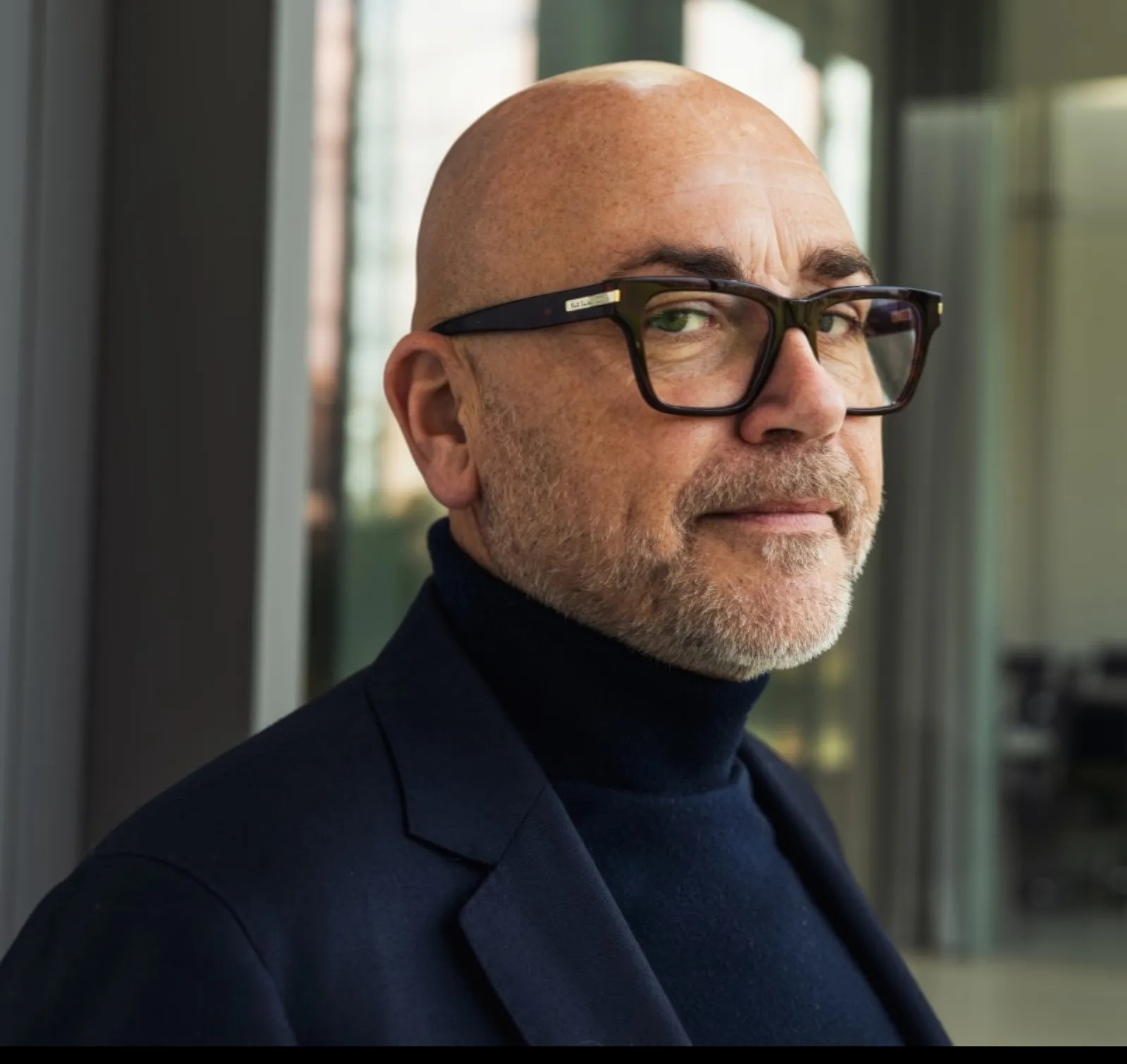
During the Covid-19 pandemic, many business owners were forced into crisis mode. For Tom Saeys, that period marked the start of a new chapter: no longer at the helm of a business himself, but helping business owners lead both their companies and themselves. And with success: he has been coaching under the Straight-Line Leadership banner for the past year and a half.
“When Covid hit, I switched to online coaching for business owners almost immediately,” Saeys explains. “At the same time, Straight-Line Leadership was launching its Black Swann project. It immediately caught my attention because it was a major platform for reaching business owners. So I got in touch with them fairly quickly, but it was only a year and a half ago that they actually asked me to join them as a coach.”
Between the initial approach and officially joining, Tom Saeys had the opportunity to start a coaching programme with Dusan Djukich, the founder of the Straight Line philosophy. “That programme is still ongoing today and gives me the opportunity to stay on top of my game as a coach. Above all, it gave me the vocabulary to guide people through their distinctions, and how they view themselves and their own responsibilities.”
The internal-world dialogue
Today, he coaches on leadership and communication. “That matters more than ever, because we live in a world where genuine communication is often avoided. “In my circles, I see a lot of people whose working day is half hijacked by what I call the internal-world dialogue,” Saeys says. “These are moments when you are effectively talking to yourself, which makes it impossible to be productive. We then look for ways to explain this to ourselves, by blaming something outside ourselves or treating this unproductive time as part of the working day.”
Tom Saeys therefore wants above all to make his clients aware of this internal-world dialogue. “If they can recognise it, they can choose to step out of it and return to genuine communication with the outside world, rather than with themselves, whenever they want to. In practical terms, this means that as a coach, I mainly listen to what is and is not being said.”
Lessons from improvisational theatre
“In short, I’m here to help my clients connect with what they say and what they project to the outside world,” he continues. “That means I try to open doors for them, but then leave them ajar. Ultimately, they have to step inside themselves to see what is in the room. I don’t want to go in myself and then tell them what’s there.”
Saeys’ approach to coaching is also the result of around 30 years’ experience as an actor in improvisational theatre. “It taught me to make associations incredibly quickly by default and, above all, to accept every situation or conversation as a starting point. In other words, you learn to keep your ego in check. For me, that is essential as a coach. Coaching isn’t about me, but about the people sitting opposite me,” he concludes.
Een zakelijke vraag aan Straight-Line Leadership Benelux B.V.? Get in touch
Companies in this story

Keep following this
Get an email when a new story is published. No account needed.
- ThemeBusiness growth and entrepreneurship in Flanders
- SubjectServices
- CompanyStraight-Line Leadership Benelux B.V.