




Electric driving: how businesses can get a handle on charging costs
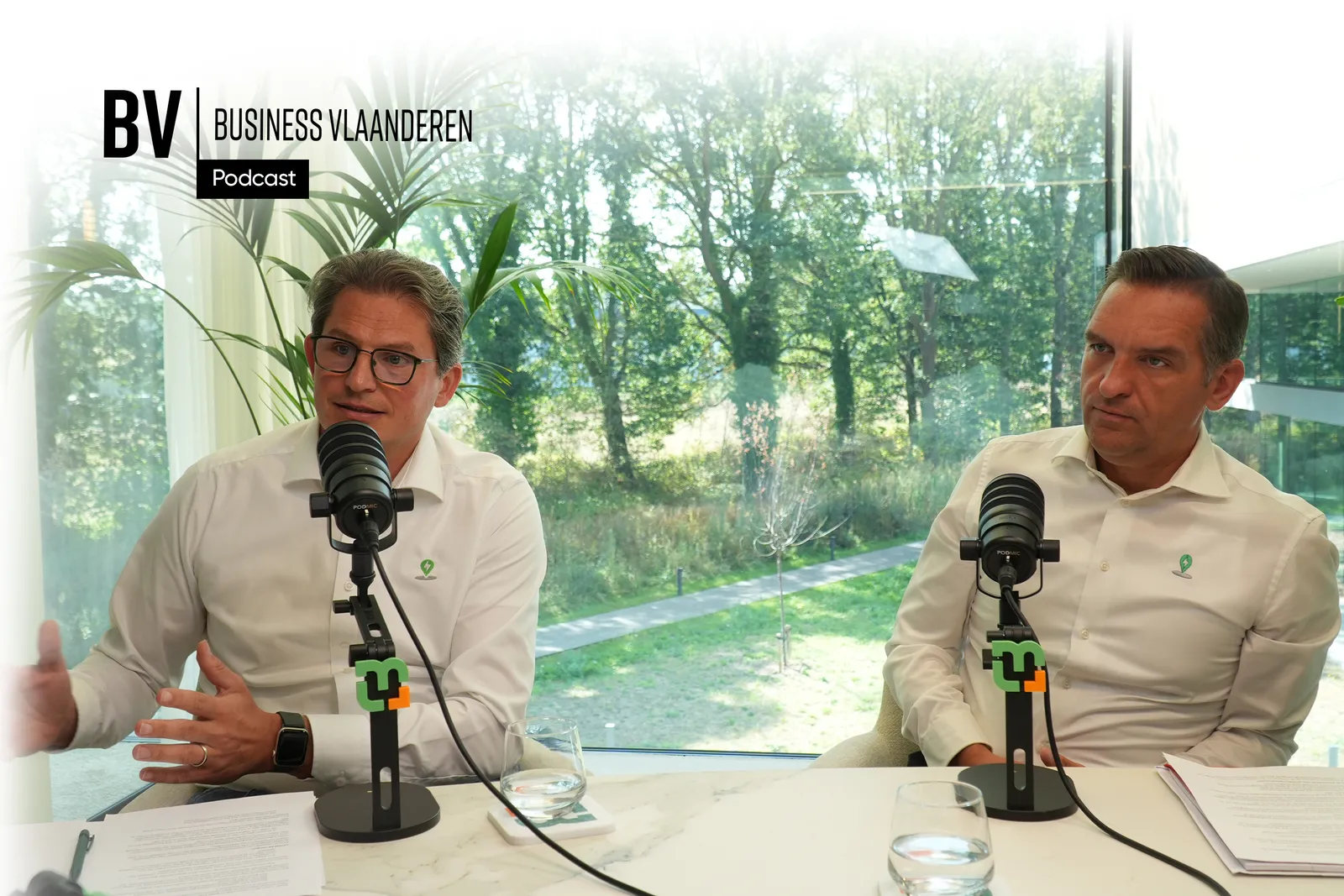
The electrification of company fleets raises new questions. Not just about charging points and infrastructure, but above all about the cost of charging at home, at the office and on the road. In this episode, Bavo Boutsen, Geert Degroote, CEO of Certipower, and Xavier De Laere, commercial manager at Certipower, discuss charging behaviour, home charging, cost control and the importance of understanding the total cost of charging.


Een zakelijke vraag aan Certipower? Get in touch
Full transcript
All chapters (16)
- Electric driving and charging costs
- Certipower’s role
- Fleet electrification
- A complete charging solution
- Cost per 100 kilometres
- Public charging versus home charging
- Different cost items
- Insight into total charging costs
- Charging behaviour and car policy
- The importance of charging at home
- When a home charging point makes sense
- Reimbursing home charging
- Case study with a major client
- Cases at smaller companies
- The next three to five years
- Closing remarks
Electric driving and charging costs
Bavo Boutsen The shift to electric driving has completely changed the way we think about business mobility. Traditional topics such as leasing costs, maintenance and the price of diesel or petrol at the pump have been replaced by terms such as rapid chargers, standard charging points, home charging and charging at the office. As these all come with different tariffs and sometimes different costs, many businesses are clearly finding it harder to answer the question: what does it cost to drive, say, 100 kilometres in our electric company car? Greater insight comes from a company that builds and manages charging infrastructure, but also looks at the charging costs behind it. I’m going to discuss this with Geert Degroote, CEO of Certipower, and Xavier De Laere, commercial manager at Certipower.
Bavo Boutsen Geert, I think we should perhaps set the scene first, so let’s start with Certipower itself. Who are you as a company? What exactly do you do? You’ve been around since 2020, so it might be worth saying a little about that.
Geert Degroote That’s right, since 2020, so we’ve celebrated our sixth anniversary. We provide solutions to accelerate the transition to electric mobility. We mainly do this for businesses, public bodies and apartment owners’ associations. We partner with clients from the initial needs analysis through to drawing up a tailored proposal. Once it’s approved, we also deliver the complete installation, inspection and aftercare services. We remain available throughout the process and provide servicing and maintenance.
Read the full transcriptCollapse transcript15 more chapters
Certipower’s role
Bavo Boutsen So are you primarily an installer, a provider of management services or an adviser? How would you describe your role?
Geert Degroote We’re a partner, so we’re involved throughout the whole process and cover all those areas. That’s also how we want to distinguish ourselves from many other players. When we started, we were more of an installer, and we’ve evolved considerably since then. We quickly realised that we were operating in a sector where […] the level of service people expect from a product is fairly rare. We’ve made that a major focus. As a result, we’ve grown increasingly in the B2B, apartment owners’ association and public-sector segments, because people really appreciate Certipower’s service and accessibility.
Bavo Boutsen So although your company hasn’t been around for very long, the way you operate has changed enormously?
Geert Degroote Yes, that’s right. We started by looking at what it costs to drive […] per kilowatt-hour or per 100 kilometres in an electric car. We saw how difficult our customers found it to work this out. Together with them, we developed tools to give them a clearer picture. So we’ve evolved from selling and installing charging points to becoming a service provider offering additional insight. Charge cards came along, as did many more services. That’s how we’ve become a full-service partner for businesses and other organisations.
Fleet electrification
Bavo Boutsen Do businesses come to you asking how to electrify their fleet or how to go about it? What does that process look like? Or what’s the first question they usually ask? At what point in their journey do they come to you?
Geert Degroote Ideally, we get involved as early as possible, so we can advise the business and understand its needs. In a company, electrification is often seen as something the fleet manager or HR manager has to deal with. They’re not particularly keen, come to us and are usually not very positive or enthusiastic, because they see a huge amount of extra work coming their way. So we like to get involved at the start and understand what they really want. Do they just want a public charging card? Do they actually want insight into their costs? Then we explain the cost drivers and how they can influence them. If we can advise clients as well as possible, we can recommend the full range of products, from public charging and home charging to charging at work. Charging at work, for example, is a very different proposition if you own the office and its electricity connection than if you rent space in a building where the landlord installs charging points at a very high tariff. That has a very different impact on how you structure your fleet and your charging solutions. So you need to understand quickly who you’re dealing with and where they’re based to find the best solution.
A complete charging solution
Bavo Boutsen Okay, Xavier, one of the key points I’m hearing is that you’re not tied to one solution or one approach to electrification. Why is that so important? Why do you cover such a broad range and try to cater for the whole spectrum?
Xavier De Laere Well, to go back to your question about when it’s best to get involved, it’s all part of one complete picture. Charging on site, at home and on the road all form part of the same whole. So the sooner we get involved and help a business with its strategy, the better we can tailor things to its needs. We then make sure we propose the right products.
Cost per 100 kilometres
Bavo Boutsen Okay, the technical infrastructure is one thing, of course. But in the end, it always comes down to the cost on the bill. So let’s focus on that. Perhaps we should start with a simple example. If we take a hypothetical company car driven 100 kilometres on electricity, […] to calculate that?
Xavier De Laere Just as a conventional fuel-powered car has a fuel consumption figure per 100 kilometres, we can apply the same approach to an electric car. If we use average figures, and we can certainly go into more detail, we see that electric driving also comes out best in terms of consumption. So it’s not the case that driving electric costs more than a litre of diesel or petrol, certainly not. […] But we still save on consumption alone. Around 5% for electric compared with…
Bavo Boutsen Compared with a conventional…
Xavier De Laere Yes, diesel. And more than 20% compared with petrol.
Bavo Boutsen And that’s regardless of how the car is charged, because that’s another important question.
Xavier De Laere No, I’m assuming the worst-case scenario here, where we charge 100% using public chargers.
Bavo Boutsen But the point we want to make is that this really is the worst-case scenario. So we try to avoid it. Even in the worst, or most expensive, scenario, there are still savings to be made.
Xavier De Laere Absolutely.
Bavo Boutsen Or is it still cheaper to go electric?
Xavier De Laere And why make that comparison? Because, of course, you can’t charge a petrol or diesel car at home. That’s a bit more difficult. Once […] in that scenario, electric driving is indeed the cheapest option.
Public charging versus home charging
Bavo Boutsen But there’s definitely a huge difference between public charging and charging at home. That’s an important point to make too. How big is the difference? What sort of scale are we talking about?
Xavier De Laere For a case covering 25,000 kilometres, if someone charges 100% in public or instead charges 100% at home, they can save a good €1,300 to €1,400 over the course of a year.
Bavo Boutsen So it’s already cheaper, and it can be much cheaper still. That’s the point. Those are the figures, that’s the reality, but they seem to clash with the general perception of electric driving and charging. I think many people still believe it’s much more expensive than driving a conventional car. Why is the perception so different from reality?
Xavier De Laere That perception applies to consumption, but also to the purchase price of vehicles. It’s generally assumed to be the case. But when we show the figures or talk it through, and I can demonstrate it with actual data, we see that it isn’t true. […] those who drive electric gain that experience, and their mindset changes very quickly. Quite apart from the facts, there’s an assumption that, in my view, isn’t really accurate.
Geert Degroote Many fleet managers are very surprised when they request a leasing quote for an electric vehicle and the equivalent petrol or plug-in hybrid vehicle. They come back surprised and say, “The electric one is cheaper.” That doesn’t surprise us any more. […] vehicles are much more expensive than electric vehicles or conventional fuel-powered vehicles.
Bavo Boutsen So, as you say, that’s not really true any more.
Geert Degroote The price difference varies from model to model, but lower maintenance and fuel costs mean that, by the end of the day, going electric always works out cheaper.
Different cost items
Bavo Boutsen So can we say that different cost items are being lumped together, or that they’re not being properly assessed?
Xavier De Laere Tax is another factor. Buying fuel is currently 0% tax-deductible. […] which you then carry through the entire cost calculation: insurance, maintenance, everything. Taking all that into account, we can say that buying an electric vehicle may still be slightly more expensive, but that’s offset by the benefits of charging electric. That’s simply a fact. That’s the reality.
Bavo Boutsen And does that mean more and more businesses are turning to you, or to other providers offering the kind of service you do? That would be the logical outcome.
Xavier De Laere We’re seeing businesses increasingly choosing electric vehicles. You hear the same thing when you talk to dealers for the various brands. Companies placing orders are going electric. A few people who can still make use of light commercial vehicles are a small exception. But passenger cars, purely […], are all going electric.
Geert Degroote I think we’re at 80% for electric vehicles’ share of new registrations across the total company fleet.
Bavo Boutsen The future looks promising, then?
Geert Degroote Absolutely, yes. There is plenty of work, and advising and informing customers properly remains a challenge. Because that is part of it too. The fleet is growing, and the complexity is certainly there. It involves different parties. People have little visibility and little control over it. Many people are not aware of it yet. The fleet is growing. They see that as a problem. And at the moment, we are getting a great many questions, indeed, about: what does it cost now? How come a recent […] is so expensive? What can we do about it? We are actually at the stage where the market is maturing.
Insight into total charging costs
Bavo Boutsen Yes, because we are in a situation where the same car covering the same number of kilometres does not necessarily generate the same energy costs. That has to do with how it is charged, as we have already said. So charging behaviour is actually a new variable that we need to factor into the total cost of ownership of a company car. If we think that through a little further, you like to compare it with the previous model, namely the fuel card. That was a contract, of course, entered into by a company, and people often debated and discussed petrol prices at great length. They would scrutinise the contract down to the last tenth. Do people think about the costs in just as much detail?
Geert Degroote People are glad that there is a solution for electric charging. When we talk to a fleet manager or an HR manager responsible for making sure that charging is possible, they are usually relieved to have found a solution. And costs are important, but they are not yet a major focus. So we are still a long way from the fuel card model. Another factor is that the cost often falls on the company. In larger companies, that comes under facilities. Charging on the road comes under the fleet manager. So no one has an overall view of those costs. No one knows whether someone who has been given a home charging point is using it properly or not. Because some people get a home charging point from their employer and do not use it. Those are exceptions, but it does happen. We see that among our own customers too. So we have worked with our customers to give them insight. We make sure we can monitor the entire flow: what an employee charges at home, at the company and on the road. And once you have that insight, we can tell a company: your total charging cost is this much. But we can also look at it by employee. We can say: employee A uses their home charging point for 90% of their charging, charges 10% on the road and never comes to the office. […] per cent at the company, those are model employees, and then you have a number of people who charge 5% at home and then 90%… Well, they do come to the company, but they arrive a little later. The charging points are occupied and they charge 90% at a rapid charger. If you see that happening, and you do not have the data, you do not know. But if you have the data, you can drastically reduce your charging costs by talking to a number of people. I think the next stage in this market is that people want insight, so they can see who charges where and what the total charging costs are.
Bavo Boutsen So, to sum up, the market and the situation have become much more complex and harder for anyone overseeing them to understand, whether that is HR, fleet or finance. So there is an increasing need for insight, and that is exactly what you are trying to provide to your customers: insight into something that is inherently too complex for them. But providing that to customers is a bit of your core business.
Geert Degroote Yes, exactly. We are evolving from being installers and service providers to actually providing data insights, giving companies the tools to manage their charging costs.
Charging behaviour and car policy
Bavo Boutsen Now, tools are one thing. The policy or behaviour associated with them also matters, of course. Can you influence that? Is it a factor you take into account?
Xavier De Laere We also try to advise on that. If certain things come up during the conversation, we have not discussed it yet, but the car policy is also a very powerful tool, and we try to incorporate certain things into it with the fleet team. Do we facilitate certain things? Is there a set budget on the charging card, for example? Can we manage things and offer employees an incentive to take charging costs into account? Just as an example: a budget of 250 euros. If we look at the cost of public charging and see that location A is a bit cheaper than B, and there is a set budget, that can give the employee an extra incentive to say: we will charge there more often, or charge at home more often, to make the most of that budget.
Bavo Boutsen So you do deliberately focus on the employee too, if it makes sense to do so.
Xavier De Laere The employee is not really the contracting party, but they are part of the overall picture. We always try to inform people through information sessions too. When we start working with a company that is beginning its electrification process, we onboard the employees or at least offer them advice. We make sure all the parties are there and that they are genuinely involved.
Bavo Boutsen So you do all this because you often come across situations where there are huge differences, or very different charging behaviours, and you think: if only they knew what all this costs, we would not approach it this way as an employer or employee.
Geert Degroote The data shows that among people with a home charging point, 80% of employees do more than 80% of their charging at home. […] saved per year for the company. So that is very good. The 20% who do not charge 80% at home charge more in public. Of course, if you have a company with, say, 100 employees, some of them will not be able to have a home charging point installed. It is normal for those people to charge more in public. But one thing you could do, and you can arrange this through the car policy, is give people who receive a home charging point a lower budget on their charging card than people who do not […]. You can nudge the 20% who have received a home charging point but do not use it much towards using it more, because suddenly, at the end of the month, they will find themselves saying: I cannot charge any more, I have run out of budget. And then the fleet manager can say: well, perhaps you should use your home charging point more, since your employer gave you one. You can definitely address things like that through the car policy. Some people only charge at very expensive rapid chargers, but they do not even know it. Very few employees check the price of a charging point.
Bavo Boutsen If the fleet manager…
Geert Degroote So if a fleet manager receives a report saying: employee X is constantly charging at a very expensive charging point, nine times out of ten that person will change their behaviour if you speak to them about it. But you have to know. And that is… So are there situations where you think: yes, the fleet manager would change their behaviour? Probably. But they need to have the information.
The importance of charging at home
Bavo Boutsen But what I hear is that home charging points are a very important consideration in your view, and in a smarter approach to electrification in general. So, if we look at that in a little more depth, how would you describe the place of a home charging point in Certipower’s strategic vision?
Xavier De Laere Yes, we are definitely in favour of them, and they are a very important tool, as you rightly said. And if I may add something to what Geert said, informing employees is important for both the fleet and for us. A home charging point is installed. If we do not inform people about everything involved, they may be more likely to feel, or say: well, we are not going to charge, because we get enough reimbursement. So that information role, or our role in guiding you and providing the employee with that information, is important. Because in a fleet of 100 employees, there will be someone who asks: have you read about it? The capacity tariff. Oh dear, what is the capacity tariff? We are going to have to pay too much. If we do not counter that, we will have a problem. Those home charging points might not be used. And we play an important role in that again. You are quite right to raise the question. It is a convenience, a kind of extra luxury for the employee. But financially, if it is technically feasible, it is still the best option to provide one at the employee’s home.
Bavo Boutsen Now, as you say, it has to be financially viable. Because installing one costs money, of course. What payback period should we expect? Or how should we look at that cost?
Xavier De Laere If we go back to the example of our consumption, we are looking at a difference of 1,300 euros. So it takes less than two years for that charging point to pay for itself.
Bavo Boutsen So it is very affordable.
Xavier De Laere And I am talking purely about the cost of the energy consumed. Let us say we are not even including the time lost to rapid charging. This is purely the cost of energy consumption.
Geert Degroote It is also much more convenient for the employee.
Bavo Boutsen Yes, of course.
Xavier De Laere That is worth something too. They come home in the evening, plug in, and the next day the car has charged enough for them to set off again. Investing in smart charging point management. We also make sure the employee does not end up in a higher capacity tariff band because of their employer’s car, for example. We can address all those kinds of issues and provide information to fleet teams and employees.
When a home charging point makes sense
Bavo Boutsen Okay, so I would think your policy is to install a home charging point for everyone. Is that right, or am I oversimplifying?
Xavier De Laere It depends on how many kilometres an employee drives. That is one consideration. If 100% of charging can be done on site, for example, if they have a high-voltage substation, charging on site is still the cheapest option. Depending on the employee’s profile, you could differentiate between profiles. In that case, not everyone would need a home charging point. Of course, often it is not possible to… Often, charging at the company is not possible. And then we are back to the home charging scenario. We see no reason not to do it.
Geert Degroote That is why we like to get involved so early in the process. The analysis of employee behaviour is important. Here’s a concrete example: we are currently talking to a company with two sites. One has a high-voltage substation and its own charging facilities, at a cost of less than 20 cents. The other is in a new-build in the city centre, with a public car park underneath where charging costs 80 cents per kilowatt-hour. That is a huge difference. The company’s initial thought was: either we give everyone a home charger or we don’t. Well, the company can still make that decision, but if you look purely at the company’s costs, the home chargers at that office tower will pay for themselves in less than a year. The chargers on site will never pay for themselves, because if people charge on site, it is still cheaper than charging at home.
Bavo Boutsen In any case, yes.
Geert Degroote So it is really important to look at the whole picture: would home chargers for everyone also work out cheaper? What are you trying to achieve in terms of costs? Is it employee convenience? Is it cost? That upfront analysis has to be done. It is crucial when deciding whether or not to recommend a home charger. We do not automatically recommend one. It is not always the best option.
Reimbursing home charging
Bavo Boutsen And as you said, you also take into account the impact a home charger has on that person’s energy consumption at home. To make this more concrete, how does reimbursement work? Or how do you ensure the money ultimately goes to the right person?
Xavier De Laere Without going into too much technical detail, the process is actually very simple. At the start of each month, the previous month is closed and the fleet or HR team receives an overview of all employees’ charging sessions, grouped by entity. It is a payment request. The funds are transferred to us, and we make sure the employee is reimbursed in full for their consumption. This is backed up by a document, with the fleet team receiving an overall summary covering all employees. The employee is reimbursed for their consumption over the previous month. So every charging session by an employee is registered.
Bavo Boutsen So the employee does not actually have to do anything themselves?
Xavier De Laere Neither the employee nor the fleet team. Well, except, of course… We pay the companies. Yes, we do that. But the whole point is to take the hassle away, as they say. When we activate split billing, as it is called, meaning reimbursement to the employee for charging at home, all parties are relieved of the administrative burden. The financial transaction is handled separately from payroll and HR. We take care of it and make sure the employee is properly reimbursed for charging at home.
Case study with a major client
Bavo Boutsen OK, that is a great message. But before we wrap up, I would like to look in more detail at two cases involving your company. Two clients you work with, to make the whole story a little clearer. […] that shows the difference you can make for them?
Geert Degroote We have made that journey together with our clients. Our launch customer was an engineering consultancy, a large one, with more than 500 vehicles. They came to us over four years ago because we are easy to reach. As I said, they are an engineering consultancy, so it was important to the person responsible for purchasing that staff could ask questions.
Bavo Boutsen They want to know everything.
Geert Degroote They want to know everything. We offer smart, controllable charge points. So those engineers… We were easy to get hold of, which is why they chose to work with us. This is also the client I mentioned earlier, with an installation at one site managed by one provider and charge cards from another provider. We worked with that client to build up an understanding of their costs and identify where they could be reduced. We also worked with them to build a complete […]. The difference between cheap and expensive charging amounts to €250,000 a year, or 25% of the total charging cost. So by helping them manage their charging and providing analytical reports, which we do, we can generate recurring savings of €5,000 to €10,000 per quarter for that business. That is what we are doing with this particular client.
Bavo Boutsen And this has been going on for years. It is a proven process. What has your company learnt from it?
Geert Degroote It is great for us too, because we keep going further. We are becoming something of an outsourced fleet desk for the company. We do not manage the employees directly, of course, as that is still the fleet team’s role. But we do make recommendations to the company. Talk to that employee. Ask them what is going on. For example, we held a webinar on the capacity tariff. That person does not charge at home. The question is why. If the answer is, “I’m worried about the capacity tariff”, perhaps they should attend that webinar. Things like that. It also makes our work more varied at Certipower. And it shows that we want to grow and evolve alongside our clients, and go further with them. We are not afraid of the challenges our clients face.
Cases at smaller companies
Bavo Boutsen Looking at this critically, I might think: well, that is a fairly large company, a major client. Are there any examples from another segment, perhaps smaller players?
Xavier De Laere I deliberately chose two cases to show how we work. One is a company providing legal and financial advice. At one point, they had ordered their vehicles but had not really thought about what to do about home charging. In a very short time, we were able to do what we discussed: advise them and draw up an action plan. The fleet was 50 or 60 vehicles, so not tiny, but still a good number. We were able to roll it out very quickly, and we were very pleased with the action plan and how quickly we implemented it. The vehicles were being delivered, and we made sure every employee had a home charge point before the first car arrived and was handed over.
Bavo Boutsen The difference you can make by the end of the day.
Xavier De Laere Absolutely.
Bavo Boutsen In terms of price.
Xavier De Laere Absolutely. Yes, indeed. The other example is related. We were contacted by a company that said: “We have a pool of five cars and would like those employees to be able to charge them too.” They were thinking of charging on site, because they assumed it would be cheapest. But they did not have a substation, so the available capacity was very limited and would not really allow them to charge five cars. We started the same discussions with them and looked at whether home charging might be worth considering. Given the employees’ profiles, home charging was actually the most appealing option. They were also very pleased that a company like ours was available to support them and help them electrify their fleet of five EVs effectively.
The next three to five years
Bavo Boutsen OK, before we wrap up completely, we should look to the future. The electrification of our vehicle fleets has only just begun, after all. It is still a fairly recent development. […] where do you see things going over the next three to five years?
Geert Degroote The number of charge points is growing… There are already a lot of them. I think rapid charging is now well established. You can charge rapidly at every exit in Flanders or Belgium these days, so we have moved beyond that. I think understanding the costs will become key. People will increasingly want to know what it actually costs them and how they can keep those costs under control and track them. That will be key. As a result, more and more people will turn to partnerships or providers that can offer everything, making it possible to gain insight into those costs.
Bavo Boutsen Providers like you, really.
Geert Degroote Not necessarily. Let’s just say that if our analysis suggests this is where the market is heading, it would not be surprising if, as a company, we did something in the opposite direction.
Bavo Boutsen And that applies to small SMEs, to pretty much every part of the business landscape in Flanders and Belgium. OK, one last thing. If someone, a fleet manager or business owner, hears this conversation and thinks, “Right, I’m going to get to grips with this and do something about it”, what should they do first tomorrow to make it happen?
Xavier De Laere Regardless of what stage they are at, whether they have looked into it or not… It may sound a little tongue-in-cheek to say: send Certipower an email or give them a call. But simply start a conversation. Invite us in or have a chat, explain your situation, and we can go through the facts together and show where the benefits and convenience lie and how to approach it.
Geert Degroote OK, and perhaps I should add something for fleet managers. We can also do this with existing installations. The analysis is not limited to charge points installed by Certipower. If you already have charging infrastructure, we can provide insight into that too.
Closing remarks
Bavo Boutsen That seems like a great message to end on. […] as electric fleets grow, the questions of when, where and at what price vehicles are charged are becoming increasingly important. Geert Degroote and Xavier De Laere from Certipower, thank you very much.
Geert Degroote My pleasure.
Companies in this story

Keep following this
Get an email when a new story is published. No account needed.
- ThemeTransforming business mobility
- SubjectGeneral
- CompanyCertipower







