Forum Jobs and G-Jobs on reintegration, long-term sickness and inclusive employment
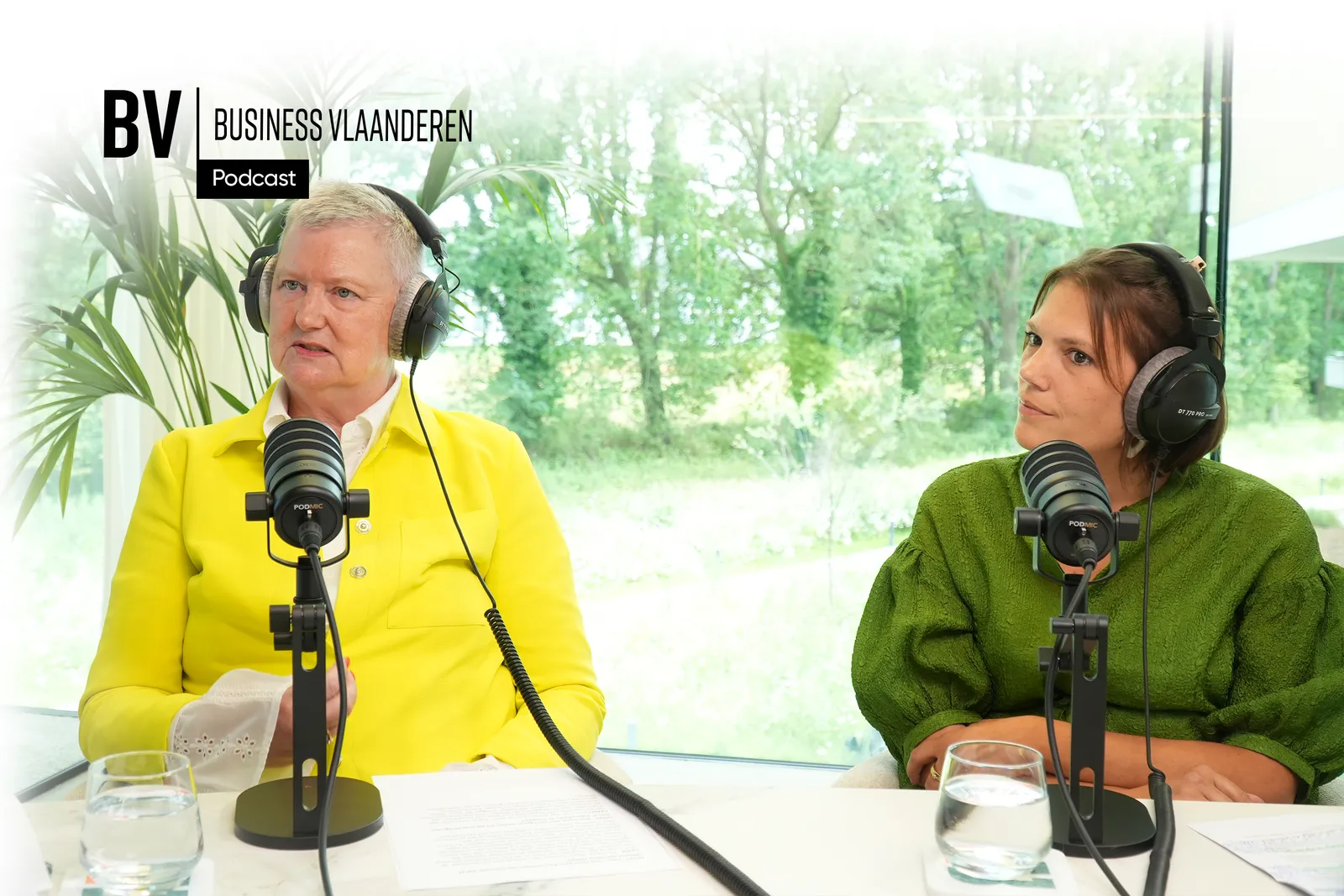
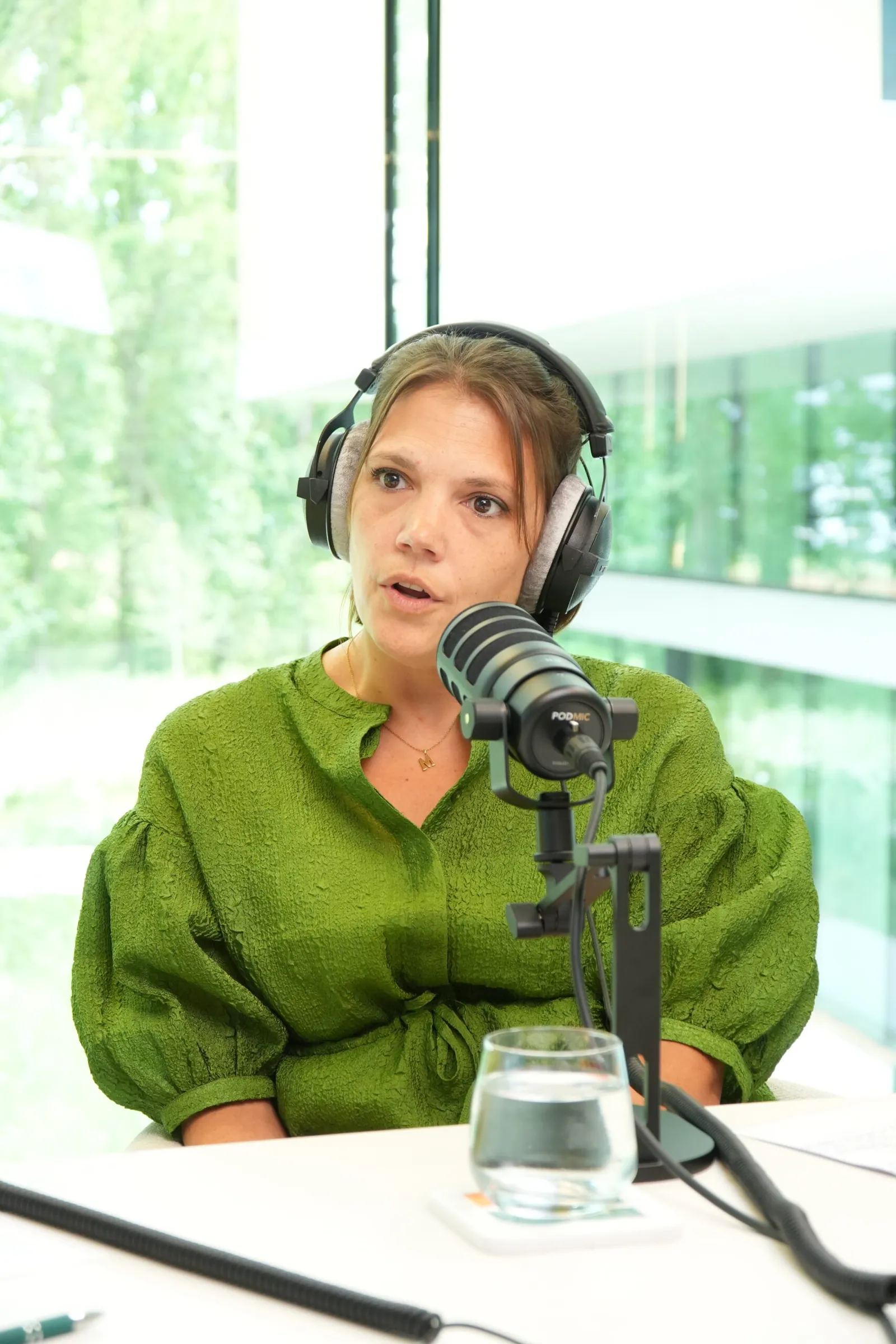
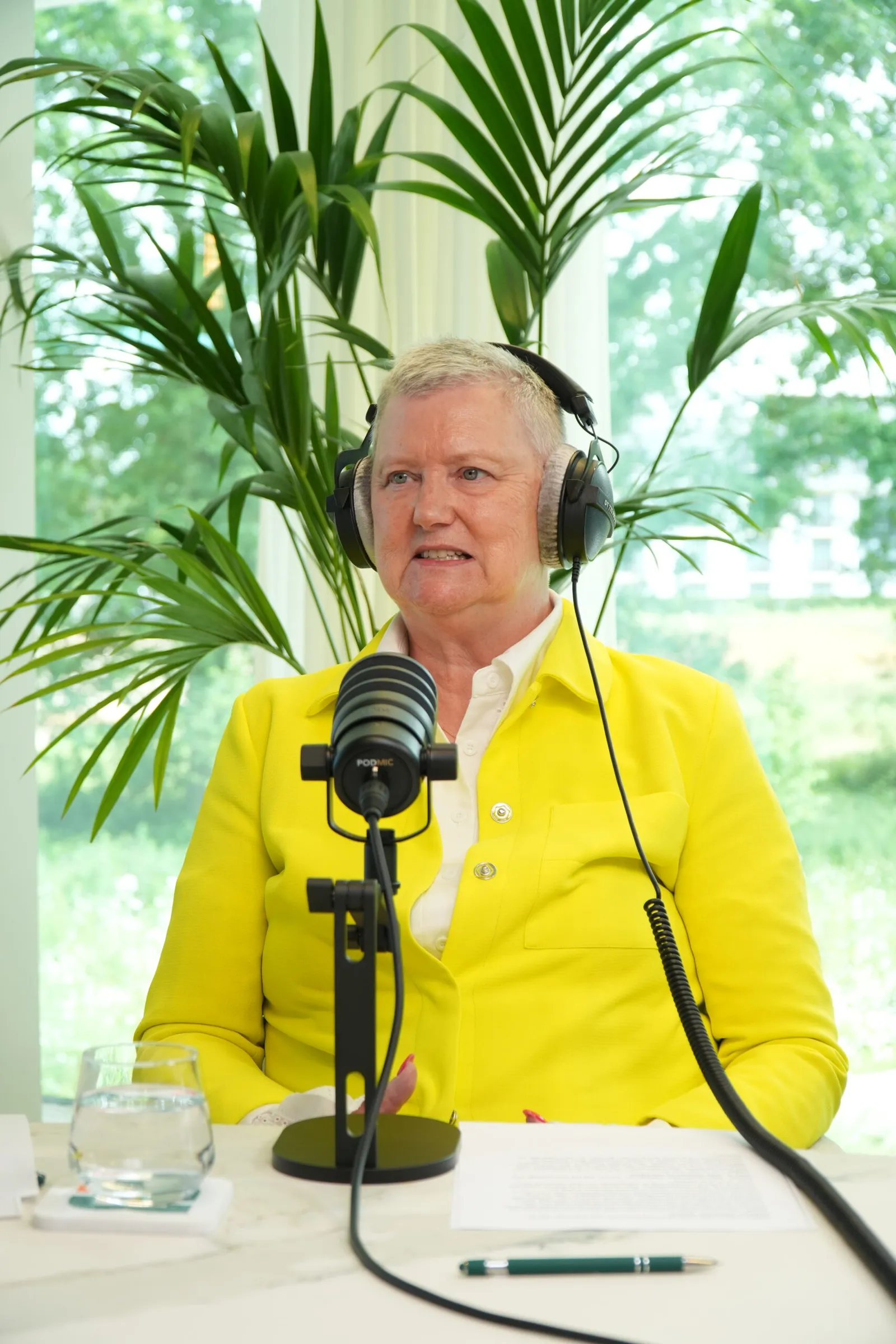
How can people who have been off sick long term return to the labour market sustainably? In this third episode of the Forum Jobs podcast series, host Bavo Boutsen talks to Leen Goossens of G-Jobs and lived-experience expert Carmen Lahaye about reintegration, talent and inclusive employment. They discuss the barriers facing employees and employers, the importance of open communication and G-Jobs’ role as a bridge between the two. They also explore why employers need to look beyond limitations and diagnoses, and how a tailored approach can help people return to work and make lasting use of their talents.
Een zakelijke vraag aan Forum Jobs? Get in touch
Full transcript
All chapters (15)
- Human talent and the role of G-Jobs
- A new organisation focused on long-term sickness and talent
- Barriers for candidates and employers
- Carmen Lahaye on returning to work after cancer
- Open communication during reintegration
- The value of a personal story of lived experience
- G-Jobs as a bridge between employers and candidates
- Employers’ questions about reintegration
- Creating a culture that makes reintegration possible
- The strengths of people after long-term illness
- How G-Jobs fits into Forum Jobs’ mission
- People on long-term sick leave as untapped labour-market potential
- A different approach to long-term illness
- Top tips for employers
- Closing the podcast series
Human talent and the role of G-Jobs
Bavo Boutsen Welcome to episode 3 of the Forum Jobs podcast series. We’re discussing what recruitment ultimately always comes down to: people. To explore that, I’m joined by Leen Goossens, an HR specialist at G-Jobs, a specialist brand within Forum Jobs Group that supports people with health challenges in finding their way back to the labour market. Also with us is Carmen Lahaye, who has worked at Forum Jobs Group for over 15 years and returned after a period of illness. Leen, Carmen, welcome. Given that introduction, I think we should start with G-Jobs. Tell us what G-Jobs is. What does it do?
Leen Goossens When people ask me what G-Jobs is, I very rarely start by telling them what we do. I prefer to explain why we exist, because that makes it clearer for the people we work with. Behind every employee who is off sick long term, there is a story: one of hope, uncertainty, resilience, loss, growth and often starting over. By the time someone comes to us, they have usually been through a long journey, and sometimes faced disappointments along the way. What strikes me time and again is what they lose. In some cases, they lose not only their job, but also their confidence: confidence in themselves, in what they can do and in the future. At G-Jobs, we don’t start with a case file or a diagnosis. We start with the person. Illness is never the whole story of a person’s life. We want to focus on the person and find out what talents they still have. We absolutely don’t start with limitations, but with talent and motivation. And when those are there, things can certainly work out.
Read the full transcriptCollapse transcript14 chapters remaining
A new organisation focused on long-term sickness and talent
Bavo Boutsen So you’ve been doing this at Forum Jobs for a while, but the G-Jobs entity itself is relatively new.
Leen Goossens The entity is relatively new because it’s a hot topic in the press. You’re constantly confronted with the figure of 500,000 people off sick long term. We’re convinced that many of them have talents to offer. We just need to help them take the step towards using those talents at work, even after a long period away. And there are companies willing to do that.
Barriers for candidates and employers
Bavo Boutsen This is obviously a story about those people, but also about their employers or potential employers. What barriers do you see them facing, and how do you help them overcome them?
Leen Goossens The biggest barrier is often not the illness itself, but the loss of confidence. That’s true of candidates, on the one hand. From a medical point of view, there may be things they can’t do. The difficulty and the risk is that, at some point, you start to believe that story yourself. You hear people say: “Who would want me now? What can I still contribute? Which employer would want me?” These aren’t exceptions. We encounter them every day.
Bavo Boutsen Those are very human questions, and I understand them.
Leen Goossens You can tell that employers often don’t really know how to handle these situations. G-Jobs acts as a bridge, helping to remove the assumptions that candidates may have, as I’ve just described, and those on the employer’s side too. We don’t focus on limitations, but on talent. We build a thorough picture of the person, starting with what drives them and gives them energy. Then we look at the company’s vacancies and how well the candidate matches them. If there’s enough motivation, there’s one last thing to consider: whether the person fits the organisation’s DNA. I’ve had employers in my network say, “We should have done this much earlier.” We’ve taken away their worries, supported them on all kinds of fronts, and they’re open to hiring more people in this situation.
Carmen Lahaye on returning to work after cancer
Bavo Boutsen Right. Carmen, we said you’d be bringing your lived experience to this conversation, so let’s talk about your personal story. How did it happen? How did you become an expert in this area through your own experience?
Carmen Lahaye It all started in December 2019, when I was diagnosed with Hodgkin lymphoma. I was off work for a year, going through chemotherapy, tests and the whole treatment process. After just over a year, I was able to return to Forum Jobs.
Bavo Boutsen You were already working at Forum Jobs in 2019.
Carmen Lahaye I’ve been at Forum Jobs for 16 years now, so we go back a long way. There was open communication. After about 14 months, I was able to return gradually, working 4 hours twice a week. There was space and time for that, and they were understanding. I was able to build up very gradually, listen to my body and, on top of that, I was given every career opportunity. That was possible. I’ve had all those career opportunities too.
Open communication during reintegration
Bavo Boutsen What was crucial to making your return a success? What made it work in your case?
Carmen Lahaye I think it was open communication, although that isn’t always easy. I know that can be difficult for employers, because it can feel remote from their day-to-day experience. They’re not psychologists, after all. The same goes for managers, and for HR professionals too. It’s better to have an awkward conversation than none at all. If you’re open with each other from the outset and say, “This isn’t easy to talk about, but we’re going to talk about it anyway,” you’ve already broken the ice.
Bavo Boutsen So I was going to ask what message you’d like to give people in the same situation. That would be it, then. Absolutely. Dare to talk about it, even if it’s difficult or embarrassing.
Carmen Lahaye Yes, exactly. And listening to my body has been important. I was off sick long term for a second period in 2025, when I was also diagnosed with ME/CFS, a chronic condition. That’s challenging medically, because it isn’t always believed either. But my employer was there for me again, fully supportive. They told me to take time for myself. Instead of talking in weeks or months, we talked in seasons, and about what might be possible when I returned. Eventually, last October, I was able to start working 4 hours twice a week again, on a gradual basis. I’m now up to 12 hours a week.
The value of a personal story of lived experience
Bavo Boutsen To put this in the wider context of G-Jobs, what should we take away from it? This example from our own ranks, you might say.
Leen Goossens What I admire most about Carmen is her courage. We often only see the outcome: someone back at work, someone functioning again. But we don’t always see the journey it took to get there: the doubts, the fear, the moments when someone no longer believes they can make it. It’s important for an employer to support them through that, as far as possible. It depends on each individual situation. What moves me about Carmen’s story is that she dares to be vulnerable. That’s incredibly valuable, because people need recognition, examples and hope. Sometimes someone else’s story is exactly what you need to take that next step.
G-Jobs as a bridge between employers and candidates
Bavo Boutsen To make G-Jobs’ work clearer, or more concrete, what should an employer know if they’re considering working with you?
Leen Goossens People who have been off sick long term don’t have to make that journey alone. Employers also need to be open to people who face barriers to entering the labour market because of health problems. They still have valuable talents, and they don’t have to make that journey alone. G-Jobs acts as a bridge and provides full support, not only to the candidate but also to the employer. We answer questions and help build bridges. Most importantly, we tailor our approach. Every situation and every organisation is different. So we first talk to the client and the employer to understand their needs, their concerns and how we can take the pressure off them. We do exactly the same with the candidate, so they know what to expect. The employer also knows that we carry out a thorough assessment. They have a vacancy to fill, and we’re not simply going to send someone in without thought. We assess the candidate carefully and match their CV against the requirements of the vacancy. If there isn’t a strong enough match, we won’t throw the candidate in at the deep end just to place them as quickly as possible. Our aim is sustainable employment.
Employers’ questions about reintegration
Bavo Boutsen Take us through a typical conversation or a typical process. What are the most common questions employers bring to G-Jobs?
Leen Goossens The most common questions are: “Will it work? How do I integrate them into my team? What should I have them do? How many hours can they work? What if it doesn’t work out?” Those are some of the main questions. We have answers to them in this context. For example, the candidate can return gradually. Government support is available to offset productivity losses. I don’t like using that term when talking about people, but we know only too well, as Carmen will too, that your energy levels may not be where they need to be straight away, and your short-term memory may let you down from time to time. These are normal things that happen, but they can also improve over time. We can help you access certain forms of support to compensate for that.
Creating a culture that makes reintegration possible
Bavo Boutsen So it’s also a question of creating a culture. You have to foster a certain mindset among everyone involved.
Leen Goossens Yes, it’s about creating a culture. What we see is that employers are mainly afraid of all the administration and don’t really know how to get started. The work involved, let me put it that way. But for an employer, it can feel very remote. And when something is unfamiliar, resistance sets in. So the first thing we do is completely remove that resistance, both for the employer and for the employee. Because they come from different contexts. But we do have to make sure they can work together. And employers who say, “I gave it a chance,” are glad they did. They get started. It’s also a great thing to showcase as part of your employer brand. Employers are giving people with a disability, or people who are distant from the labour market because of long-term illness, a chance.
The strengths of people after long-term illness
Bavo Boutsen But there’s more to it than that, because people who join a company through G-Jobs also have specific strengths or characteristics that can benefit the business. What might those be? What does someone who has been through this kind of process bring that someone else might not?
Carmen Lahaye First of all, we have to recognise that, even though someone has been ill, they still have talents. So we look at things from the individual’s perspective. But someone coming out of long-term illness, you know, has been living in a completely different reality. Often in survival mode. You’re not really part of society for a while. I’m speaking from my own experience, but I also know others who have been through the same thing. It takes drive, it takes will. Don’t forget, part of your identity has been taken away by physical problems, sometimes compounded by mental health problems. And having a work identity can also help you rebuild part of your own identity. But a company that is open to this, or is starting to open up to it, won’t get there overnight. You need everyone on the shop floor to help adapt the company culture to this new mindset. But you should know that you can do a great deal to help talented people who are now labelled as long-term sick, because your company is worried about administrative frameworks and the like. For them, it’s very often…
Bavo Boutsen No, it makes an enormous difference.
Carmen Lahaye Absolutely. It’s the first step back into normal society.
How G-Jobs fits into Forum Jobs’ mission
Bavo Boutsen Yes, because what we haven’t really discussed yet is how G-Jobs fits into the broader story of Forum Jobs. How it contributes to what the company wants to be. But that seems to me to be the key point.
Leen Goossens For me, it all comes down to one belief: seeing people and helping their talents grow. That applies to Forum Jobs, but it applies to G-Jobs too. We believe that people who are harder to get into work can still find a place in the world of work, based on their talents and motivation. Those people are needed, and companies need them too. That’s why we choose a different approach. A tailored approach, tailor-made for both sides. More listening, more connecting, and more focus on possibilities. Because behind every person, behind every file, there’s a person, and behind every person there’s talent. That’s what we focus on.
Bavo Boutsen Yes, because a job is about much more than work. I think that’s an important point too. It’s a way of life, an identity, a source of strength for social participation, a place in society.
Leen Goossens It’s also very important that we find these people sustainable jobs, where they can fulfil their ambitions, put their talents to use and realise their dreams. We see in practice that people sometimes make a career change after a long absence. We give them as much support as we can with that too.
People on long-term sick leave as untapped labour-market potential
Bavo Boutsen We’ve said that the G-Jobs story is still fairly new. You only started out relatively recently. And we’ve also said that the newspapers are full of stories about the labour market suffering. How do you fit into that picture? Those two realities seem to clash a little, so how should we look at it?
Leen Goossens The figure of 500,000 people on long-term sick leave is just a number. Behind that number are people, and behind every person there’s a story. People with experience, people with ambitions. And if we manage to help even a third of them get into work, I think we’ll have accomplished a great deal.
A different approach to long-term illness
Bavo Boutsen So are the people already working in this area completely missing the point, or how should I understand it?
Leen Goossens Well, the focus is mainly on the government asking, “What does it cost us?” People keep throwing that figure of 500,000 at us and putting a price tag next to it, but who is looking at the people behind those 500,000? Who are they as individuals? What talents do they have? How can we match them with the labour market? We need to open things up much more, take a different approach and stop treating everyone as if they have the same story. No, listen carefully to each person’s story and place them in an environment where they feel good, so they can work sustainably. If you simply place people in jobs without taking account of their intrinsic motivation, what they enjoy doing and what gives them energy, it will only work in the short term. We all benefit when things work in the long run, for both the employee and the employer.
Top tips for employers
Bavo Boutsen That’s a really powerful message. To wrap up this episode, I’d like to ask for some advice for employers. As with all the other guests in this podcast series, I ask everyone for one specific tip they would give an employer about HR policy and how it fits into the broader Forum Jobs story. So perhaps we can start with Carmen. What would your tip be?
Carmen Lahaye Speaking from my own experience, of course. Everyone cycles or runs for miles. They walk to raise money for good causes. During De Warmste Week, we wave to the cameras. Take that same spirit into your workplace too. We want to support good causes. We want to help people. We want an inclusive society. But for someone who has been ill for a long time, that often starts on the shop floor. And with open communication.
Bavo Boutsen That’s what matters most.
Leen Goossens I have a very simple message. Don’t wait until everything is perfect. Take the first step. Start a conversation. Dare to ask questions. Dare to explore the possibilities. Every employer who takes that step discovers just how much talent is out there. And every employee deserves the chance to be seen again, not in terms of limitations, but in terms of possibilities. Because ultimately, this isn’t just about work. It’s about humanity. It’s about believing in yourself again. At Forum Jobs and G-Jobs, we don’t believe that people with a work-related disability are hard to get into work. We believe that the standard approach simply doesn’t reach them. They need a different approach, and that’s what we offer at G-Jobs.
Closing the podcast series
Bavo Boutsen That’s lovely. Thank you both very much for such an open and hopeful conversation. I’d say: long live human talent. And that brings this podcast series to a close. All that remains for me to say is that you can listen again to all the other episodes in the series via the Louwers Mediagroep channels or your favourite podcast platform. Thanks for listening, and hopefully see you next time.
Companies in this story

Keep following this
Get an email when a new story is published. No account needed.
- ThemeAttracting and retaining people
- SubjectHR, finance & IT
- CompanyForum Jobs