Circular Materials Center in Kortrijk helps industry make the circular transition
Text Anse KeisseImage POM West-Vlaanderen
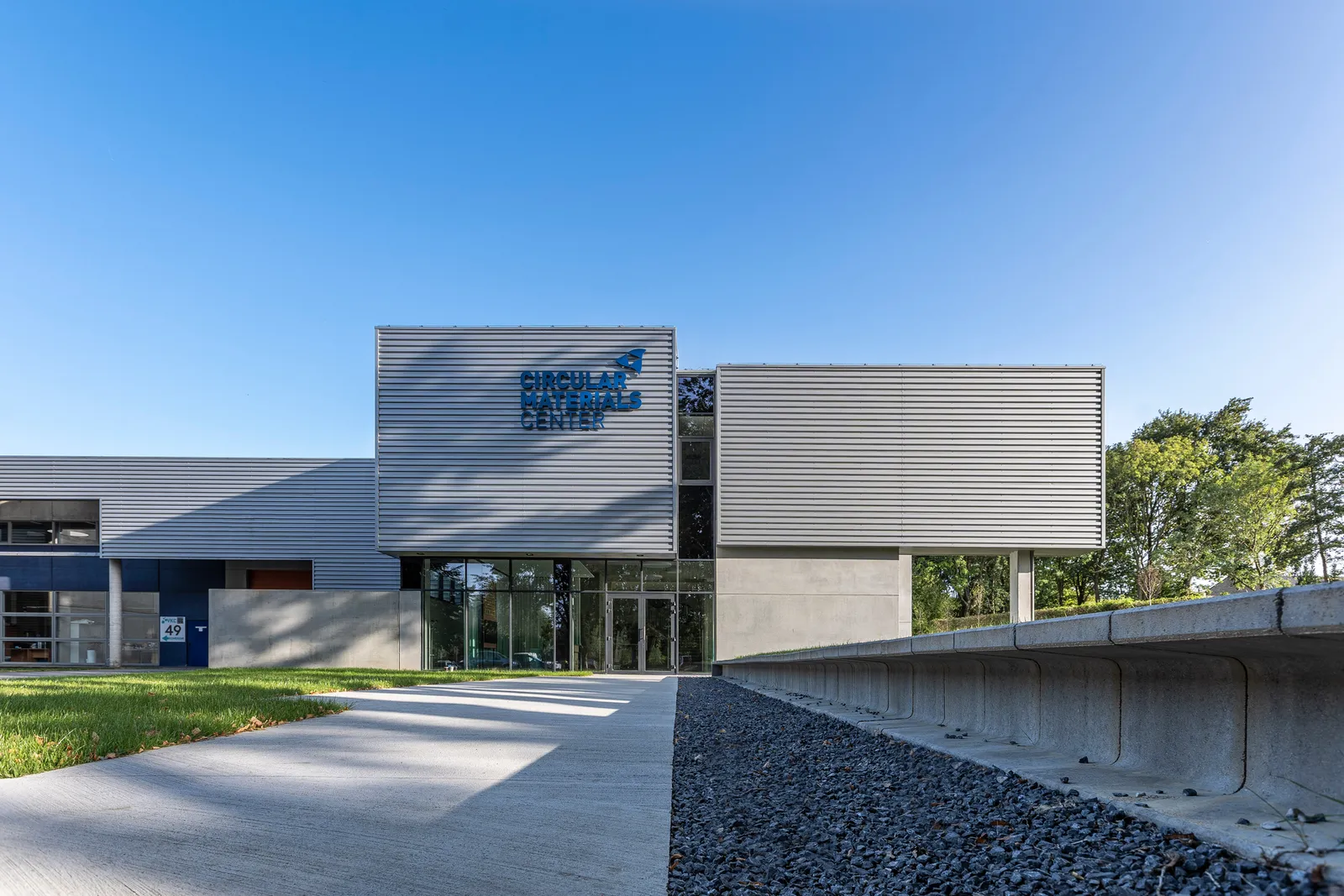
West Flanders has a strong history in textiles and plastics, but these sectors are now under pressure. European regulations are becoming stricter, raw materials more expensive, and customers are increasingly expecting circular solutions. In Kortrijk, Circular Materials Center helps companies make this transition a reality through testing, training, machinery facilities and collaboration between industry and knowledge institutions.
Based on KU Leuven’s Kortrijk campus, the centre brings companies, researchers and knowledge partners together to drive circular innovation in textiles and plastics. According to Lieven Tack, managing director of POM West-Vlaanderen, Circular Materials Center is fundamentally about one thing: helping companies innovate faster. “We bring partners together here so that companies can produce more efficiently, design for circularity and recover more raw materials from waste streams.”
This is no niche issue: the new materials sector alone accounts for thousands of jobs and considerable economic value in West Flanders. “At the same time, the challenges are mounting rapidly. Companies need to make products usable for longer, build recyclability into their designs and meet stricter European requirements for circularity and material use,” Lieven Tack explains. “If we want to remain industrially relevant as a region, we need to invest in circular innovation today.”
Machinery, expertise and testing under one roof
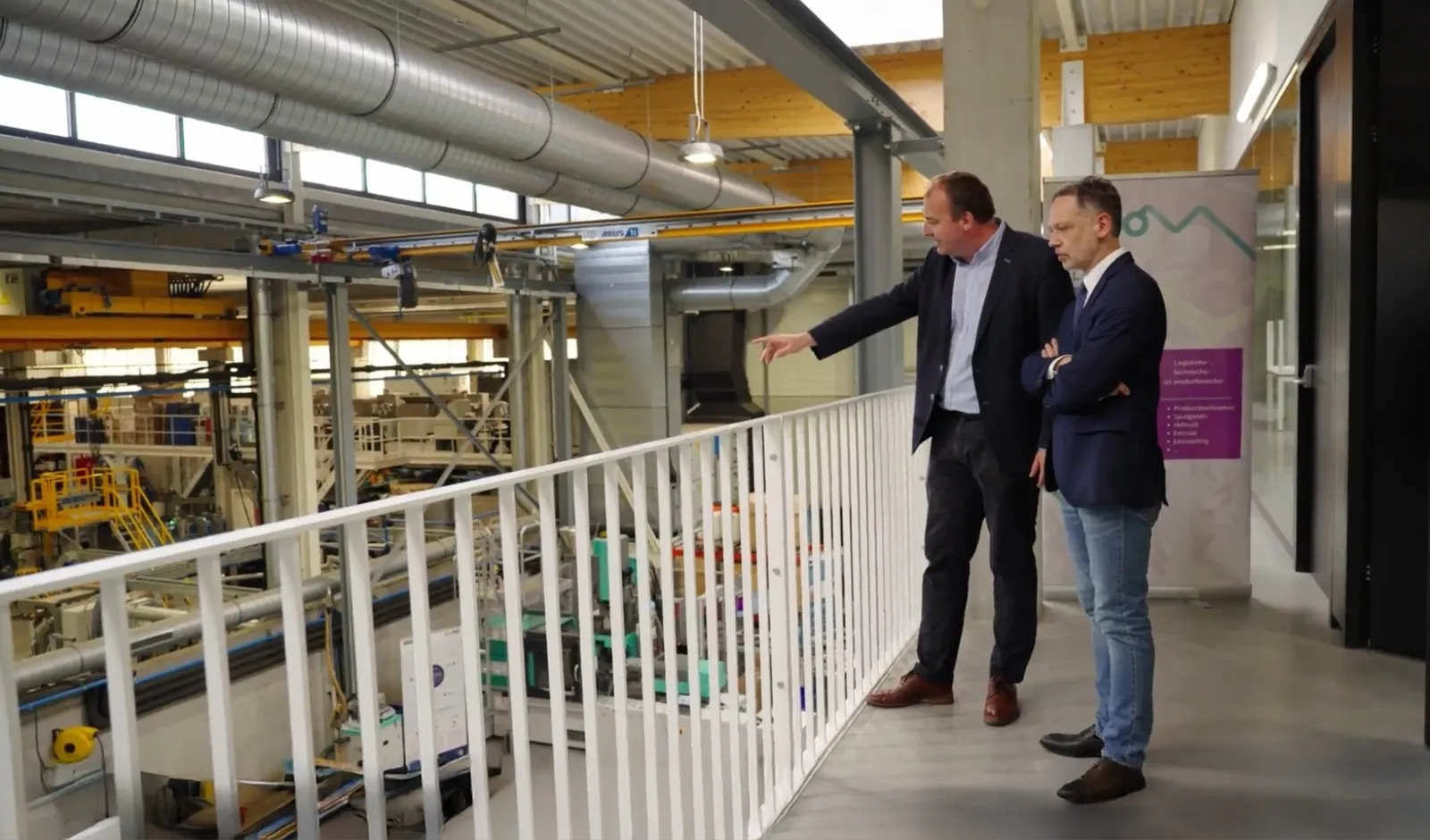
Circular Materials Center aims to be more than a conventional research environment. Companies can test new materials, optimise production processes and experiment with circular applications that remain economically viable. For Stefaan Verhamme, cluster manager at POM West-Vlaanderen, the centre’s strength lies in combining infrastructure with expertise. “Companies can come here to carry out tests using state-of-the-art machines, as well as to find inspiration and guidance on eco-design, recycling techniques and circular business models,” he says. This infrastructure is a particularly important resource for SMEs, which often cannot develop such investments or expertise in-house.
Circular Materials Center is part of POM West-Vlaanderen’s wider ‘Factories of the Future’ strategy, which also promotes innovation and testing infrastructure in other sectors. “Off the coast of Oostende, for example, we have the Blue Accelerator maritime test platform, where companies and knowledge institutions can test innovative technologies in real offshore conditions. These range from drones to floating solar panels, wave energy and corrosion monitoring. At Food Innovation Park in Roeselare, companies and researchers work on innovative food products and technologies that contribute to healthier, safer and more sustainable food. At House of Manufacturing in Kortrijk, companies, researchers and educational institutions develop, test and demonstrate smart manufacturing technologies that help the manufacturing industry become more digital and productive,” Lieven Tack lists.
Market demand is growing
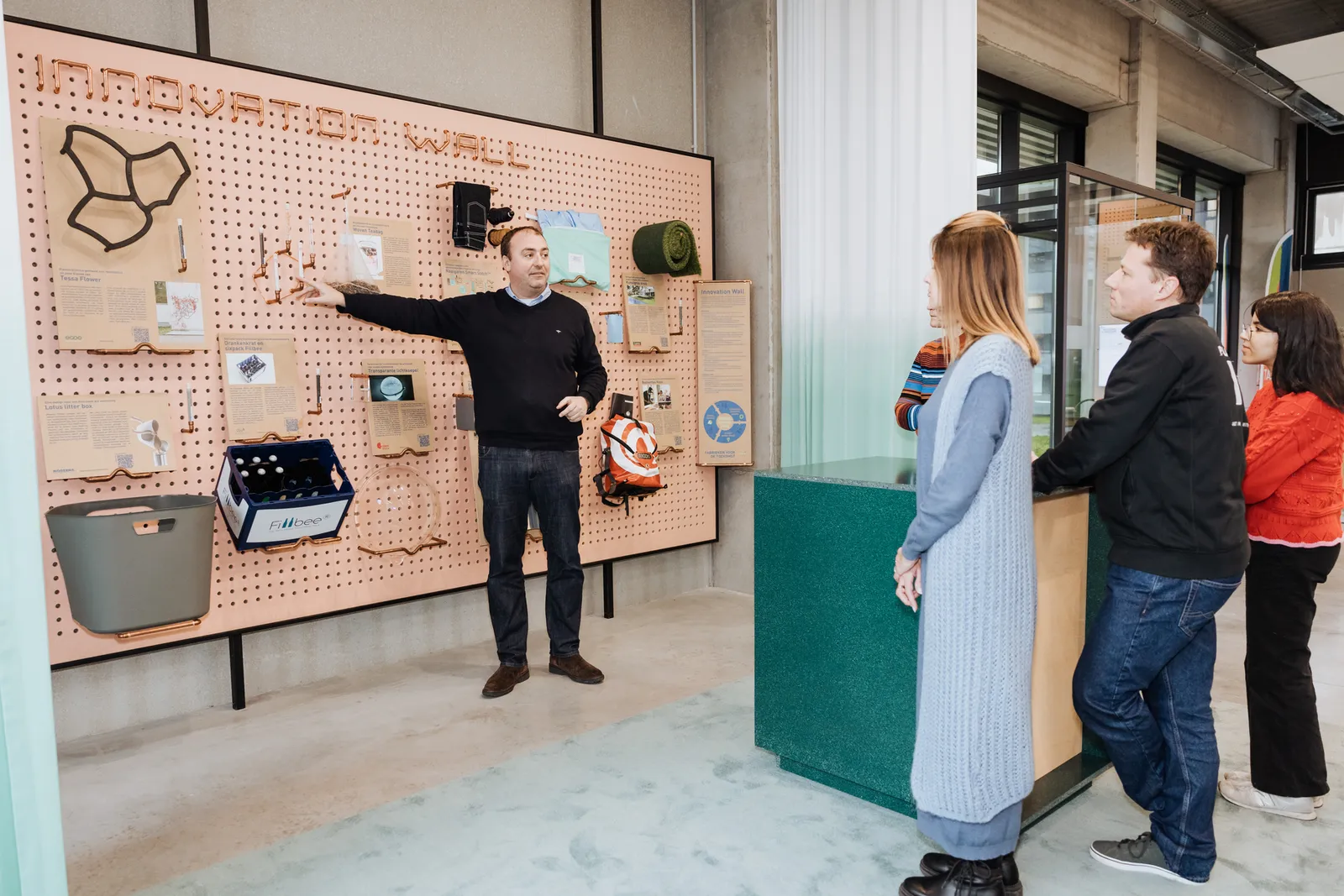
The fact that companies are taking this transition seriously is also evident from the collaboration with industrial players such as Sioen, the international technical textiles specialist from Ardooie. “We are receiving more and more enquiries about biodegradable and recyclable materials,” says Frank Veranneman of Sioen. “Applications such as firefighters’ suits, military clothing and bulletproof vests involve complex products. Yet Europe expects us to be able to recover materials and reuse them as raw materials.”
Sioen is working with Circular Materials Center on recycling and the development of biodegradable applications. Previous work has included biodegradable alternatives to polyester for specific applications. Veranneman says this collaboration is crucial to bringing innovations into industry more quickly.
Investing in people too
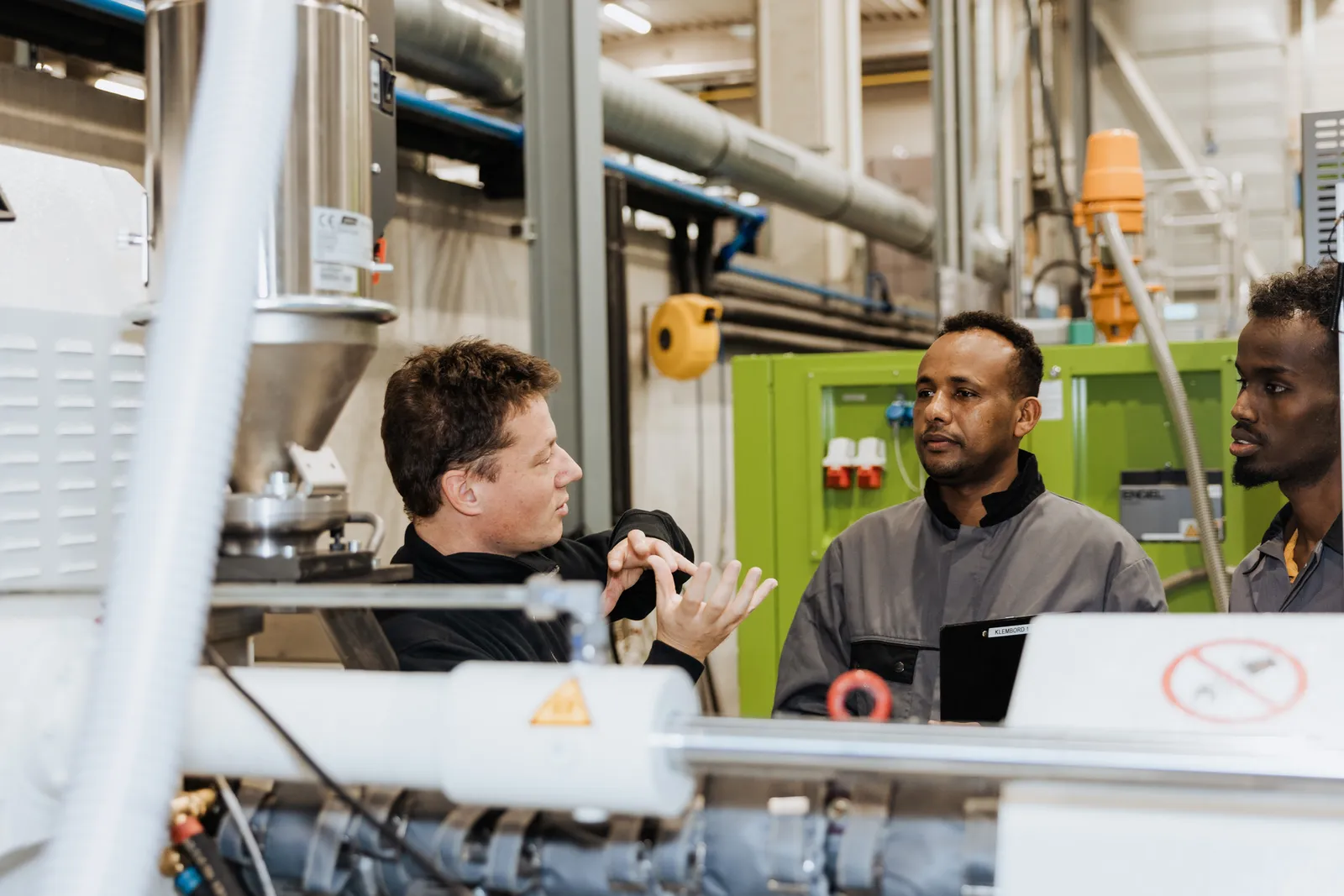
Alongside technology, Circular Materials Center places a strong emphasis on training. Companies need employees who are familiar with circular materials, recycling techniques and new production processes. The centre therefore organises training tailored to companies and workshops for schools. More than a thousand pupils learn about the principles of the circular economy there every year. This is an investment in the talent industry will need in the years ahead.
According to Stefaan Verhamme, the challenge today is no longer whether companies need to operate circularly, but how to make the transition viable in a competitive industrial context. “Circular innovation must not remain a theoretical concept,” he concludes. “Companies need to be able to test, learn and experiment in ways that are also economically viable and scalable for industry.”
Question about this story? Ask your question
Keep following this
Get an email when a new story is published. No account needed.
- ThemeEnergy security and the circular economy
- SubjectIndustry