Environment, energy & waste management
The energy transition in Flanders: how do we prepare our energy system for the future?
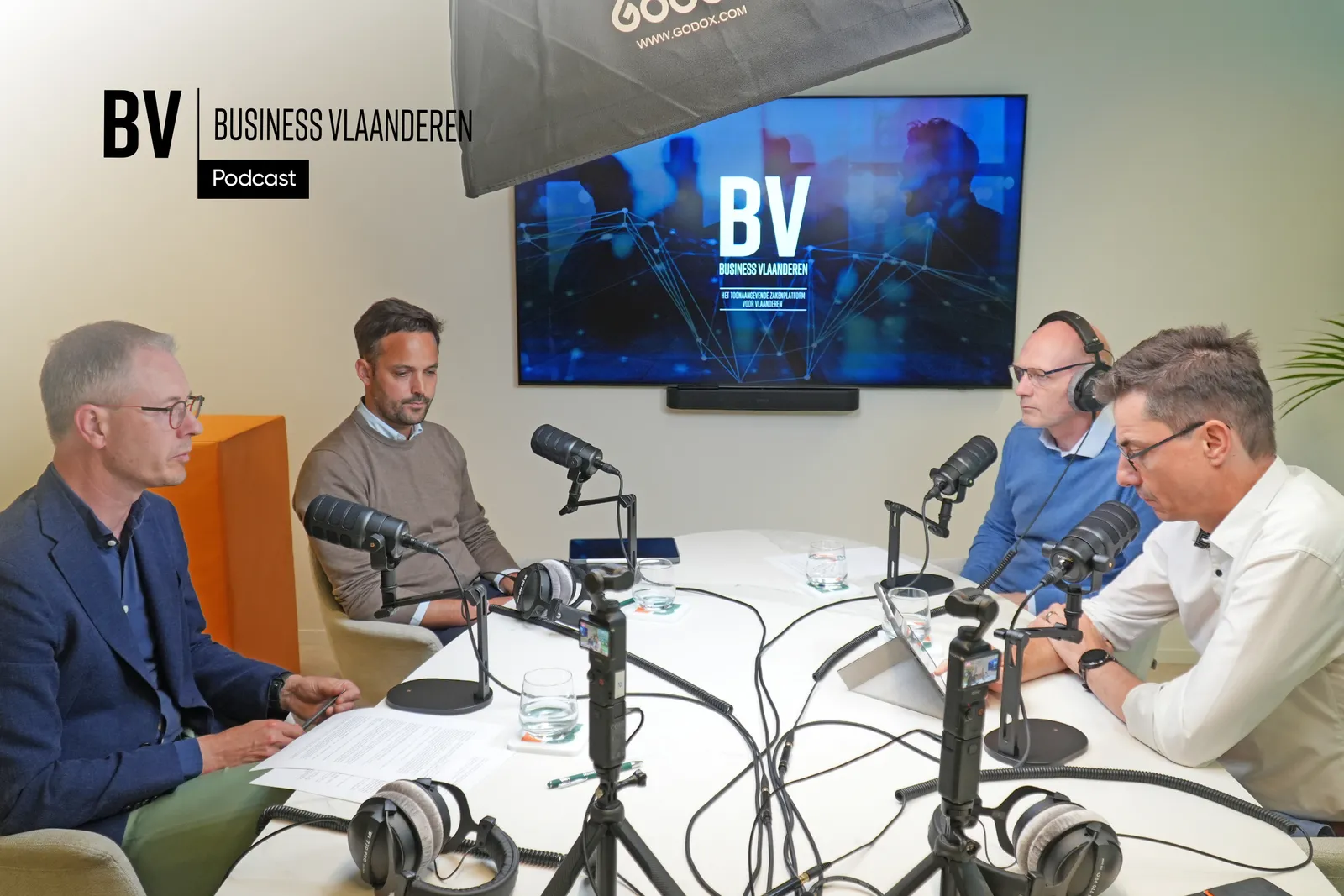
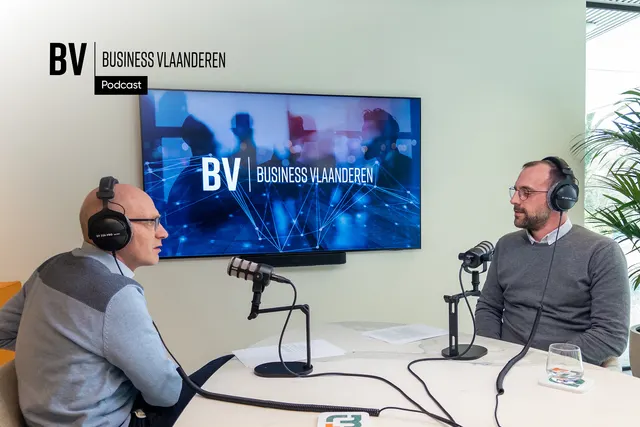
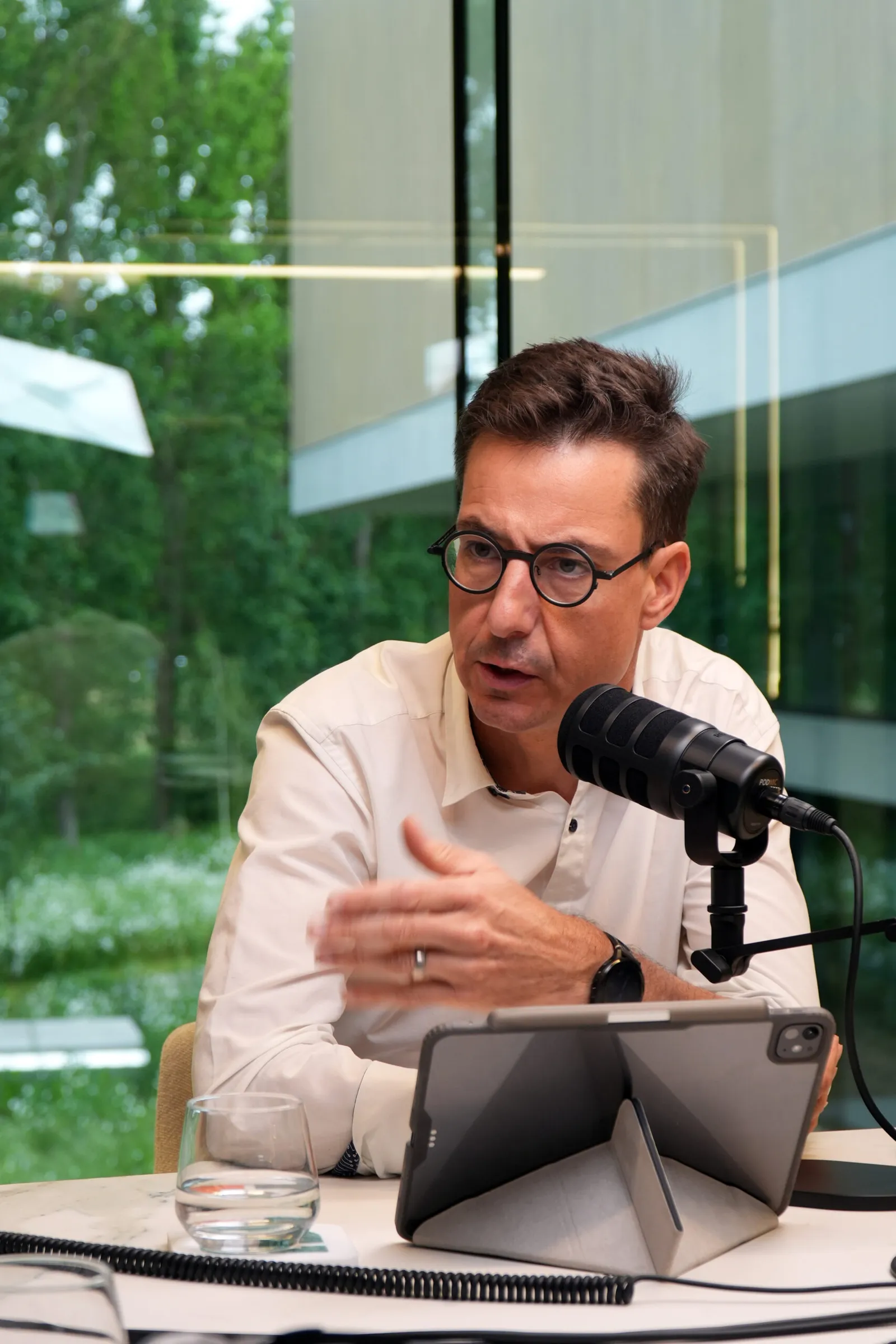
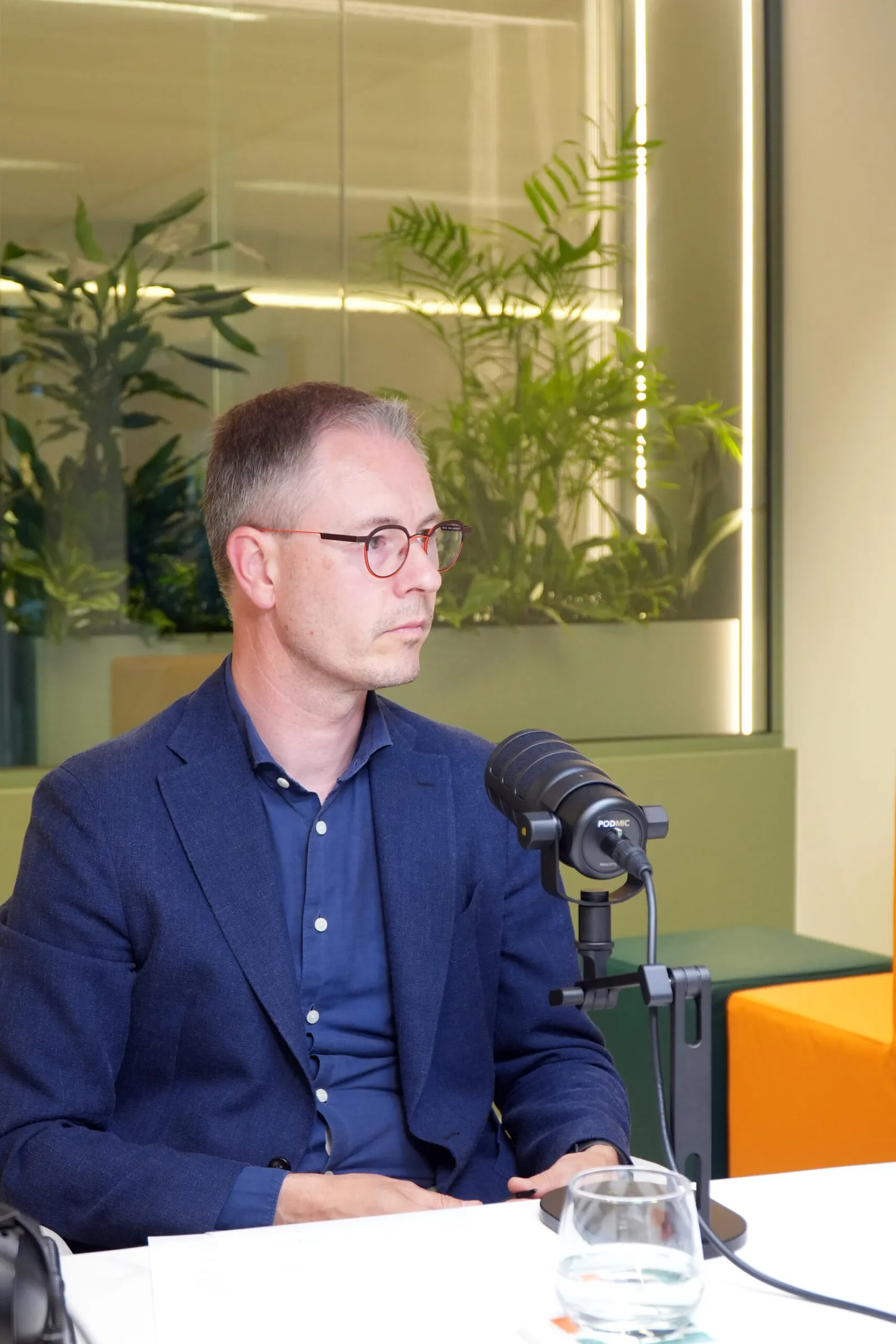
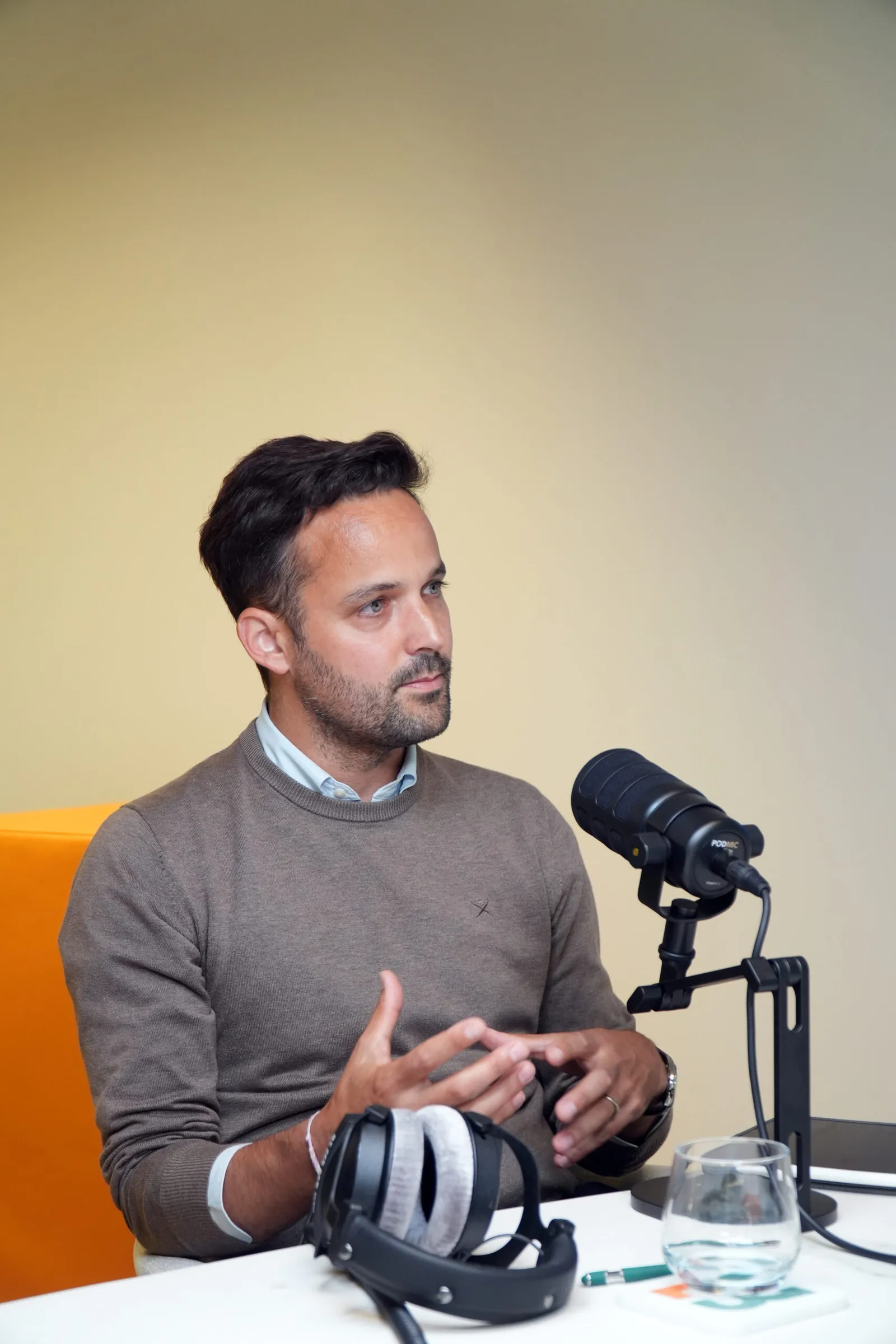
In this episode of the Business Vlaanderen podcast, host Björn Crul talks to Pieter Lodewijks (VITO/EnergyVille), Frederik Hindryckx (VEB) and Matthias Masschelin (bnewable) about the impact of geopolitical tensions, grid congestion, electrification, battery storage and flexibility. They discuss the investments and policy choices needed to future-proof the Belgian energy system, and how businesses, governments and industry can start preparing today for tomorrow’s challenges.
Full transcript
All chapters (28)
- The impact of geopolitics on the energy transition
- Lessons from the energy crisis
- Subsidies versus structural transition
- Businesses seek control over their energy costs
- Flexibility as a service
- The public sector and the energy crisis
- A different dynamic from the Ukraine crisis
- The biggest bottleneck in the energy transition
- Investing in the electricity grid
- Businesses prepare for future bottlenecks
- Regulation hinders investment in batteries
- Collaboration between research and policy
- Investing despite budget constraints
- Renovations with a clear business case
- Everyone must be able to take part in the energy transition
- Electrification, data centres and grid capacity
- Choosing on the basis of social value
- Flexibility must become an integral part of the system
- When does flexibility become profitable?
- Pilot projects in the public sector
- The levers for greater flexibility
- The tariff structure must evolve too
- Market design is key to flexibility
- Which technologies will make the difference?
- Technologies for buildings and industry
- Electrification remains the common thread
- What will determine success in 2030 and 2050?
- Closing remarks
The impact of geopolitics on the energy transition
Björn Crul Hello listeners, and welcome to the new Business Vlaanderen podcast. There has been a lot of discussion in recent weeks about the impact of geopolitics on our energy supply and energy prices. A crisis, primarily affecting fossil fuels, has raised awareness that the energy transition, focused on electrification and greater use of renewable energy sources, needs to be accelerated. Where do we stand today, and what is needed to future-proof our energy system? That is what I will be discussing in this podcast. My guests are Frederik Hindryckx, CEO of VEB, the Flemish Energy Company, which supports the public and social sectors in the energy transition; Matthias Masschelin, General Manager of bnewable, which provides energy storage and energy management services to businesses; and Pieter Lodewijks, energy expert and researcher at VITO/EnergyVille. Gentlemen, welcome. Pieter, let me start with you. We had an energy crisis following Russia’s invasion of Ukraine. There is a lot of discussion about grid congestion and possible difficulties connecting businesses in Flanders. There is talk of industrial stagnation, and some even speak of an industrial crisis. And then there is the war in Iran. Which of these factors do you think has had the greatest impact on how people think about the energy transition and the need for it to happen?
Lessons from the energy crisis
Pieter Lodewijks The Russian invasion of Ukraine has undoubtedly had the greatest impact. I think we all remember gas prices rising to more than €300 per megawatt-hour at the time. Its significance should not be underestimated, because energy policy, which had previously focused mainly on climate and the market, once again acquired a strategic dimension. We saw that energy is also a matter of security policy. It is worth looking back briefly at what we learned from that crisis. At the time, we began handing out subsidies on a large scale to keep energy affordable. Here are a few figures: between September 2021 and January 2023, around €650 billion was spent in Europe. In Belgium, the figure was €9.4 billion, about 2% of GDP, distributed with little targeting.
Read the full transcriptCollapse transcript26 more chapters
Subsidies versus structural transition
Björn Crul Perhaps we backed the wrong horse during that crisis.
Pieter Lodewijks Exactly. I do not think handing out subsidies at a time like that is the right way to set a transition in motion. I believe we have learned from that. You can see it in the current crisis around the Strait of Hormuz, which is essentially an oil crisis. There is now much less haste to reach for subsidies. The important lesson we have learned is that we need to use resources more intelligently. Of course, vulnerable households need support, but not in the way we provided it four or five years ago.
Businesses seek control over their energy costs
Björn Crul Matthias, looking at the business market you operate in, are you seeing these successive crises raising awareness among businesses? Do they want to take more control over their energy themselves?
Matthias Masschelin We see that many businesses are mainly focused on their energy bills. How can they keep them under control, keep costs down and, above all, make them predictable? This has a huge impact on industry. It is not just the size of the bill, but above all its unpredictability. Businesses are willing to take action and are considering various options, but they often cannot see the wood for the trees. They compare suppliers, consider investments in solar energy, which often do not make a good business case for them, and look at flexibility. But that immediately raises the question of how it actually works. That makes it very complex.
Flexibility as a service
Björn Crul Perhaps that is where you make the difference: taking the complexity away for businesses.
Matthias Masschelin Absolutely. We want to take the burden of the energy transition off businesses. We do this by investing in flexibility ourselves. We take on the entire investment, which is not part of our customers’ core business. We finance the whole project, both CAPEX and OPEX. We cover the cost of batteries and other flexibility solutions to reduce our customers’ energy bills.
The public sector and the energy crisis
Björn Crul Frederik, let’s look at the public and social sectors. Are high energy bills also an issue for VEB’s clients?
Frederik Hindryckx We saw it particularly after Russia invaded Ukraine. As Pieter said earlier, the price shocks were exceptionally large. As a result, many organisations began looking for ways to reduce their energy consumption. I am thinking, for example, of municipal sports halls where hot water was suddenly no longer available after people had exercised. We also see that once prices stabilise again, some of that attention fades. That is the challenge of the energy transition: continuing to invest for the long term, rather than responding only to short-term incentives. The price shocks generated a lot of attention, but it is gradually fading again.
A different dynamic from the Ukraine crisis
Björn Crul Is that attention returning today, for example in response to tensions around Iran and the Strait of Hormuz?
Frederik Hindryckx This is a completely different situation from the Russian invasion. The price shocks are much more limited today. President Trump is helping to keep the markets relatively calm. It was quite different during the Russian invasion. What we are seeing today is that our clients are keeping an eye on the situation, but are far less stressed about it than they were before. Everyone is better prepared. Energy markets and industry players also have scenarios ready to deal with it. That was much less the case during the first crisis. Back then, everyone was looking for solutions. President Putin intended to hurt Europe, and to some extent he succeeded.
The biggest bottleneck in the energy transition
Björn Crul Pieter, there seems to be a consensus today that we need to accelerate the energy transition. We need to get more renewable energy onto the grid more quickly and electrify faster. Of course, that cannot happen overnight. Where do you think the biggest bottleneck is in Flanders today? Is it renewable energy production, the grids, permits or affordability?
Pieter Lodewijks We are seeing a paradox today. All the scenarios show that we need to electrify to become less dependent on fossil fuels and more energy-efficient at the same time. Overall energy demand will fall, but electricity consumption will rise. At the same time, electricity consumption has stagnated over the past twenty years, even as we have become much more efficient. The challenge is to grow supply and demand simultaneously. From a system perspective, that is the crucial challenge. We need to prepare our grids so that demand growth keeps pace with the expansion of generation capacity and grid infrastructure.
Investing in the electricity grid
Björn Crul Looking at the grids, there is a huge amount of investment going into them now. Elia has a ten-year plan that will cost €11 billion. That raises the question of whether we can afford it, given that there are already concerns about the high public contribution to energy bills. Those grid investments will also have to be paid for, of course.
Pieter Lodewijks That is why our tariff structures and the way this funding is arranged will have to change. These are long-term investments. We can already see that our tariff systems are based not only on the variable component, consumption, but increasingly on the fixed component too. This allows us to make better use of the grid based on capacity rather than consumption alone. For example, we could also consider long-term commitments for large consumers, for fifteen years or more. We will also need to take a different approach to financing these investments. We need to think across generations, not just within a fifteen- or twenty-year horizon.
Businesses prepare for future bottlenecks
Björn Crul Thinking long term, Matthias. I assume clients who work with you also take that kind of long-term view, since these installations are not just temporary.
Matthias Masschelin I am not sure they have a real long-term vision yet. They do see a range of problems and challenges starting to emerge. Think of price volatility, which can cause energy bills to rise sharply. And grid congestion. We have clients who apply for a grid capacity upgrade and are told in response that their connection will only be flexible, which is not workable for their industry. That is why they want to start building an installation today that is future-proof and can address challenges around the grid and energy supply. That is why they are already making long-term commitments, even though they do not yet know exactly what problems they will face in the future.
Regulation hinders investment in batteries
Björn Crul You solve these problems for businesses. What obstacles do you face yourselves today?
Matthias Masschelin Batteries are often mentioned in the same breath as data centres as a cause of congestion. But if batteries are installed in the right places on the grid and given the right incentives, they can actually help solve system problems. They can provide balancing, help match supply and demand more effectively, and reduce congestion. What is entirely lacking today is the right regulation. It is blocking investment. You pay double charges on the energy you draw from the grid and then again on the energy you put back onto it. The current tariff structure is absolutely not designed to help the grid. If you use a battery to manage peaks, you pay for that, even though you are supporting the electricity grid at that moment. What is lacking today is a clear vision and appropriate policy to enable investment in the right places.
Collaboration between research and policy
Björn Crul Pieter, I hear Matthias clearly saying that we need a different policy, a new energy system with adapted tariffs. Is our policy sufficiently aware of that today? For example, are policymakers open to the research you are doing into the energy system of the future?
Pieter Lodewijks Absolutely. A good example is the PACTS 2050 Coalition, a partnership we launched two years ago. It is a coalition of companies. We now have around nine partners, including Elia, Fluxys, ArcelorMittal, BASF and Luminus. The aim is to develop long-term scenarios for the Belgian energy system together. We have found it extremely valuable to hold these discussions in such a diverse group, because everyone is then looking in the same direction. We have also seen a great deal of interest from politicians in our work. In this way, we are trying to develop a shared vision that will stand the test of time across different parliamentary terms. It helps us bridge the gap between business and politics.
Investing despite budget constraints
Björn Crul Returning to the public sector, local authorities, schools and hospitals can also play an important role in the energy transition. At the same time, they face budget constraints. Are you seeing this financial pressure having an impact on the projects you support?
Frederik Hindryckx That’s right. There is less room in budgets than there was a few years ago, and financing costs have also risen. This risks shifting budgets from investment to operational spending. We therefore try to help our clients by taking a strategic look at their building portfolios. Buildings no longer need to serve just one purpose. By combining different functions across a portfolio, you ultimately need fewer square metres. This means that some buildings can be disposed of, freeing up resources to target the core portfolio: the buildings that will continue to fulfil their social purpose sustainably through to 2050 and beyond.
Renovations with a clear business case
Björn Crul What is the most successful service you offer today?
Frederik Hindryckx These are mainly renovation measures with a clear business case and a relatively short payback period. At the same time, we have to recognise that many investments in the energy transition do not, in themselves, have a purely economic business case. For example, if you want to carry out a major renovation of a building, you need to upgrade the building envelope. You cannot recoup that investment through energy bills alone. The same applies to measures that improve comfort, such as better lighting or ventilation. That is why we also look at measures that do pay for themselves, such as relighting, replacing lighting with energy-efficient alternatives, installing solar panels or optimising building services. But achieving the energy transition also requires more fundamental investment in the building stock. We need to find ways to create sufficient investment capacity for this.
Everyone must be able to take part in the energy transition
Björn Crul One major challenge, of course, is getting as many people as possible on board with the energy transition. Those who might benefit most, such as vulnerable households in poorly insulated homes or smaller businesses with limited resources, often lack the financial means to invest themselves. What can we do about that?
Pieter Lodewijks By definition, the energy transition is also a socio-economic transition. If it is based exclusively on individual investment, it will mainly benefit households that can afford a heat pump, solar panels, insulation or an electric car. That is why we also need measures such as interest-free loans, so that households experiencing energy poverty can take part in the transition too. Information also remains extremely important. Many households are still not sufficiently aware that these kinds of investments can also generate significant savings over the longer term. We need to keep working on that as well.
Electrification, data centres and grid capacity
Björn Crul Looking at the business market, there are a lot of questions about electrification today. AI is on the rise, with data centres having a major impact and many applications for new data centres. As part of the energy transition, some companies also see opportunities in large battery parks to support the grid. Then there is industrial electrification and the market you operate in, ensuring security of energy supply. Can all of this happen at once?
Matthias Masschelin I don’t know that doing everything at once is impossible. I think we first need to look at how we can use the grid more efficiently. We already have a great deal of infrastructure in place. By investing in flexibility in the right locations, we can make significant progress. We will also need to develop a framework for deciding where to reinforce the grid, so that further electrification remains possible. Batteries can support the grid with their flexibility and should not, in principle, cause congestion. On the contrary, they can help solve part of the problem. I find it difficult to judge whether we should choose between data centres and industrial electrification. That is a policy decision. Nor do I think grid operators should make that choice by, for example, prioritising industrial electrification because their investment plans are based on it. We will need to keep assessing who is connected where, how, and how to organise this as efficiently as possible. If choices have to be made, they should be made at policy level.
Choosing on the basis of social value
Björn Crul Pieter, the same question for you. We need industrial electrification, there are many applications for data centres, and there are also battery projects to support the grid. Doing all of this at once sometimes seems to lead to congestion. Where do choices need to be made, and who should make them?
Pieter Lodewijks I think it is important to consider the system value of electrification. These decisions should not be made on the basis of lobbying power or simply on a first-come, first-served basis for applications to Elia. We need to look at which investments deliver the greatest value to society. Will a project reduce CO2 emissions? Will it help secure jobs? Does it contribute to strategic value chains in our energy system? I believe those are the criteria on which to build such a framework.
Flexibility must become an integral part of the system
Björn Crul One of the major challenges is that our electricity grid and our consumption will need to become much more flexible. Flexibility is also an important part of the business case you develop for companies. Are we doing enough on that today?
Matthias Masschelin No, actually, we are still doing too little. Awareness is high today. Many companies are working on it, and grid operators also recognise the need. Flexibility has been around for some time in balancing, but we are not doing enough to create the right framework for actively bringing that flexibility to market. As a result, we are still making far too little use of all the available assets. For a company like bnewable, which wants to invest in flexibility, we often hear that everyone considers it important and necessary, but then we see that the regulatory framework barely evolves. It is simply moving far too slowly.
When does flexibility become profitable?
Björn Crul Can flexibility already generate revenue for companies today?
Matthias Masschelin For some companies, yes. It depends greatly on their consumption profile and the generation they have on site. In some cases, a battery can already offer an attractive business case. But that is not yet true for many companies. A battery that is available at weekends, for example, when demand is low and there is no solar generation, generates too little revenue today, even though it could support the system perfectly well at that time. As a result, a great deal of value is still being lost. The battery creates value for the energy system, but under the current regulations and tariff structure, that value is not remunerated. So the challenge is to identify the companies for which a profitable model is already possible today.
Pilot projects in the public sector
Björn Crul Frederik, are you already working on flexibility with your clients? If so, how?
Frederik Hindryckx We are currently working with a number of pilot clients on flexibility projects. The aim is then to scale up the proven business cases and the experience gained to our other clients. We are doing this for two reasons. On the one hand, our clients can benefit financially through lower energy bills. On the other, our clients are public authorities and, in their role in society, they also want to contribute to the energy transition. That is why we believe it is important for them to be involved in the flexibility agenda.
The levers for greater flexibility
Björn Crul Pieter, flexibility will inevitably have to play a greater role in our energy system. What do you see as the main levers for making that happen in practice?
Pieter Lodewijks For some major players, flexibility is already clearly a business case. But for many smaller companies and SMEs, flexibility mainly means added complexity. VITO/EnergyVille is currently involved in several research projects on flexibility. We are working with companies such as Aperam, Tiense Suikerraffinaderij and Nyrstar to explore how to maximise the value of flexibility. At the same time, we are mapping the existing barriers. These include regulation, investment opportunities and the need to adapt the market. We are also looking at how energy procurement can be organised in more innovative ways.
The tariff structure must evolve too
Björn Crul Our tariff structure also plays an important role here. Some companies could take on a flexible role today, but are held back by factors such as the capacity tariff.
Matthias Masschelin Absolutely. I hope we move towards a capacity tariff that allows a certain share of capacity to be used flexibly at all times. For a battery, that could even be 100 per cent. When there is no problem on the grid and unused capacity is available, you should be able to use it free of charge to solve another system problem. That creates value without additional investment in the grid. Time-of-use tariffs are another good example. In this way, you reduce industry’s energy bills and use the energy system more efficiently, ultimately benefiting everyone.
Market design is key to flexibility
Björn Crul So the way the market currently operates is still doing too much to discourage flexibility?
Pieter Lodewijks Absolutely. The research we carry out with our market design team is specifically intended to explore how we can adapt market design so that flexibility can create more value. We also need to ensure greater stability and predictability, so that companies can better assess the value flexibility will deliver in the long term.
Which technologies will make the difference?
Björn Crul Looking ahead, there are many technologies in the pipeline. Think carbon capture and storage, the breakthrough of home batteries, new forms of nuclear energy, larger district heating networks and perhaps even e-fuels. Where do you see the greatest potential? Pieter, perhaps you could start from a research perspective.
Pieter Lodewijks This may be stating the obvious, but I don’t think there will be a single technology that provides a miracle solution. The key is to combine different technologies intelligently. Once again, we need to look at the energy system as a whole. That is precisely what we do with the PACTS 2050 models. Electrification remains crucial, as do flexibility and energy efficiency. CCS will also be necessary for specific applications, such as process emissions in the cement and chemical industries. The necessary transport networks and storage infrastructure will also need to be developed. Molecules will have a role to play in the longer term too, particularly in international transport and as feedstock for certain chemical production processes. But not in residential applications. In recent years, we have learnt that hydrogen is not the right solution for those.
Technologies for buildings and industry
Björn Crul Frederik, what is your view of these technological developments?
Frederik Hindryckx I expect plenty of innovation in buildings. Energy systems will become more intelligent, and connecting to flexibility platforms will become easier. Electric vehicles charging at home or at a building will also be able to play an important role. More broadly, I share the view on CCS. It will be part of the solution. Nuclear technology could also be of interest to industry, as it can provide high-grade heat. I see hydrogen, district heating networks and e-fuels as niche applications. They will be very useful in certain situations, but I don’t expect them to be widely used by everyone for everything. Molecules will be valuable mainly as feedstock, rather than as a general energy carrier.
Electrification remains the common thread
Björn Crul Matthias, what is your view?
Matthias Masschelin I find it difficult to assess all the technologies individually. Our main focus is electrification. We are developing flexibility solutions today, but these will become much broader in the future. For example, we are looking at bidirectional charging of electric vehicles, and we already control solar parks. I also see a lot of potential in heat pumps and e-boilers, particularly in industry. Demand is growing strongly there. As a service provider, we can control heat production flexibly and create additional value as a result.
What will determine success in 2030 and 2050?
Björn Crul Pieter, one final question. Looking ahead to 2030 and 2050, Europe has set some particularly ambitious targets. Where do you think the greatest uncertainty lies when it comes to achieving them?
Pieter Lodewijks Ultimately, it makes little difference which political perspective you start from. Whether you want to reduce CO2 emissions or bring down high energy costs, the direction of travel is the same. In the short term, on the way to 2030, the greatest uncertainty lies mainly in how quickly we can make progress. Think permits, grid expansion, connections, renovations and investment. Energy prices and the availability of critical materials also play an important role. But the pace remains decisive. Our analyses show time and again that in the end, not making a choice is usually the most expensive choice.
Closing remarks
Björn Crul I can see Matthias and Frederik nodding in agreement. Do you agree?
Frederik Hindryckx Perhaps one final point. In addition to everything Pieter has mentioned, society will also need to build up sufficient capacity. I mean investment capacity, but equally the capacity to innovate and deliver. There is still an enormous amount of work ahead of us. We will need to commit ourselves wholeheartedly to the task.
Björn Crul Gentlemen, thank you very much for this conversation. Until next time.
Keep following this
Get an email when a new story is published. No account needed.
- ThemeEnergy security and the circular economy
- SubjectEnvironment, energy & waste management