Environment, energy & waste management
150 organisations sign the Bio-Circular Construction Charter
Text Björn CrulImage Embuild
Bio-based building materials: good for the climate and the local economy
By 2030, bio-circular building materials should be widely used in new-build and renovation projects. That is the commitment signed by 150 organisations from the construction and agriculture sectors. The Bio-Circular Construction Charter was launched at the initiative of Embuild Vlaanderen and research centre Buildwise. “Bio-based building materials deliver significant climate benefits, while also creating opportunities for the local economy,” was the unanimous message at the formal signing ceremony.
The construction sector faces the task of becoming more sustainable and reducing its CO2 emissions. One way to do this is to use more bio-based materials, such as wood, cork, flax, straw, hemp and shells. These materials do not deplete the earth’s resources, as they can be grown or cultivated again and again.
Building a broad ecosystem
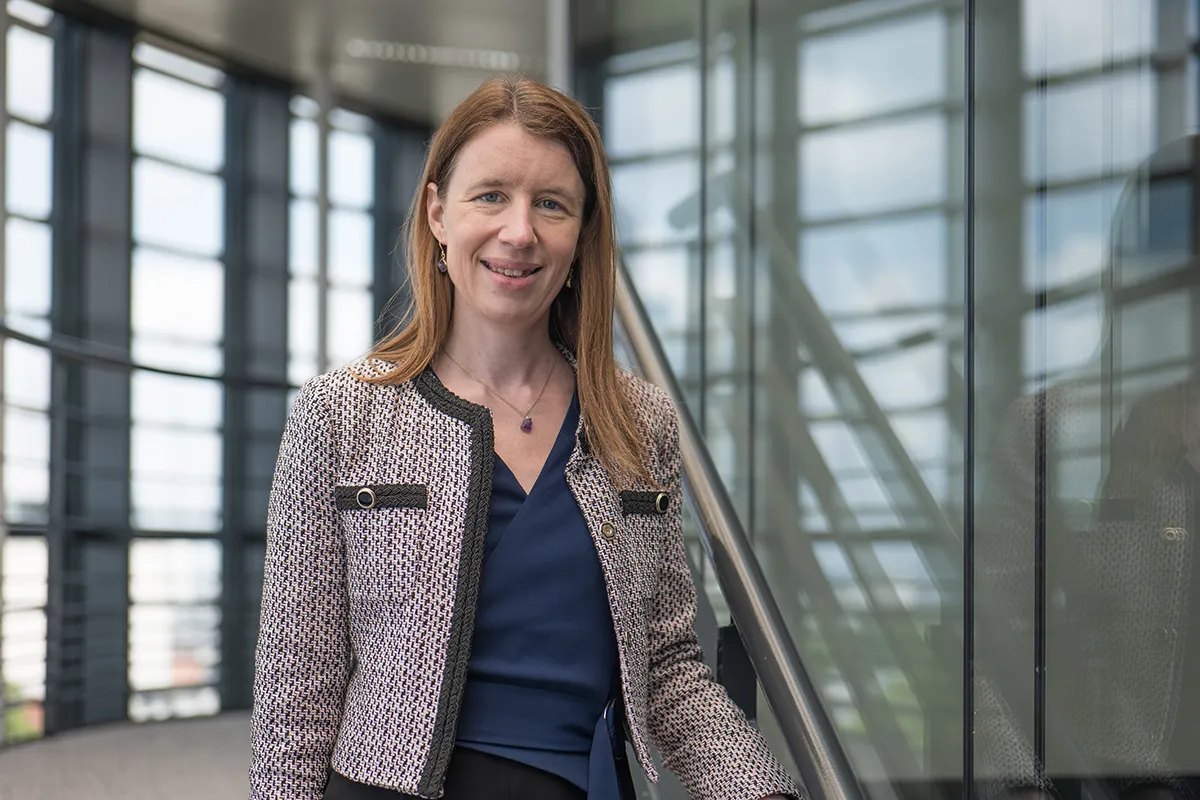
“The benefits of these natural materials are considerable. First, they are grown and produced locally, reducing our dependence on imported raw materials,” says Caroline Deiteren, Director-General of Embuild Vlaanderen. “These materials can often be easily reused or recycled, which increases their value. Bio-circular construction also makes it possible to store CO2 during the production of building materials rather than emit it. That is good news for the climate.”
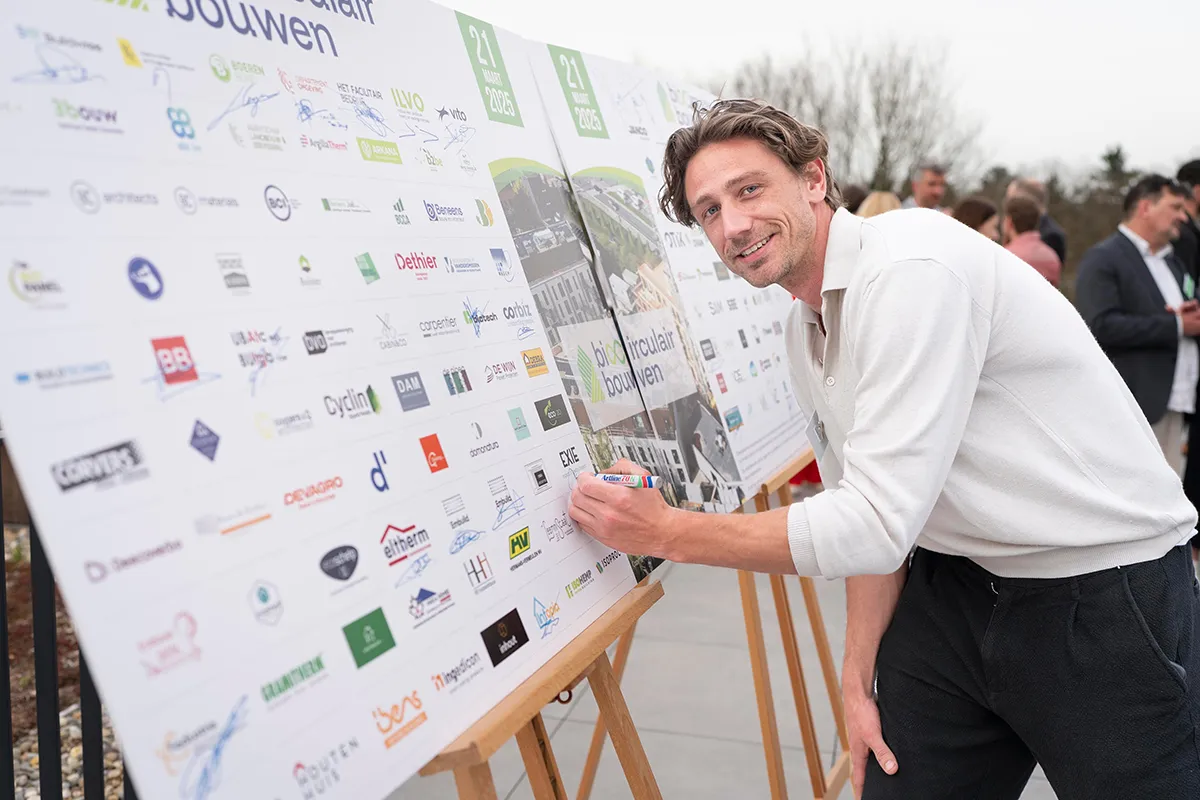
Using these materials on a large scale requires the entire construction supply chain to work together, as well as a broad ecosystem in which building-material producers work closely with the agricultural sector. “We need every link in the chain: from farmer to producer, and from client and architect to contractor. That is why we took the initiative, together with Buildwise, to launch the Bio-Circular Construction Charter. 150 companies and organisations have committed to supporting this effort.”
The ambition has three parts. Caroline Deiteren says: “We want 20% of material choices in new-build projects to be bio-circular within five years. By 2030, renovations should be carried out mainly using bio-circular materials. In the longer term, by 2050, Flanders aims to have a climate-neutral construction sector in which bio-circular materials are the norm.”
Hemp, the ideal insulation material
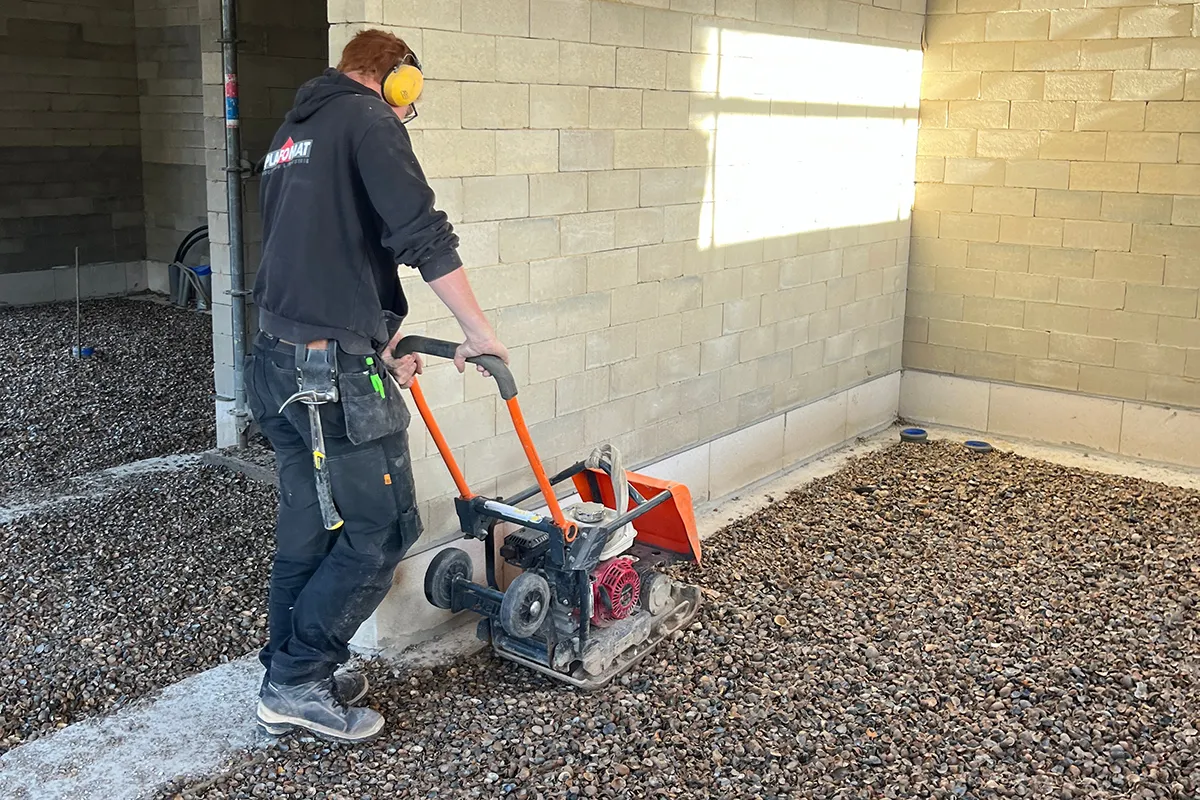
One example already widely used today is hemp-lime as an insulation material. It insulates, regulates humidity and creates a comfortable indoor climate. Roel Coose of Eltherm Isolatietechniek in Kampenhout says: “We already install hemp-lime floor insulation, but we also make extensive use of shells and cellulose. Insulation makes it relatively easy to use more bio-circular materials in a building. We want to lead the way in changing practices in our sector, which is why we signed the charter with conviction.”
Bio-circular materials and concepts offer the construction and agriculture sectors opportunities to drastically reduce their environmental footprint, while also continuing to modernise and industrialise. Exie produces bio-based insulation materials. The company was founded in 2014, when farmer Matthieu Hendrickx swapped livestock farming for hemp. “By harnessing the unique properties of hemp and straw, we can supply high-quality, renewable and energy-efficient building materials,” explains Axel Segers. “They not only contribute to a better climate, they also offer significant opportunities for employment and local manufacturing.”
This is music to the ears of Jo Brouns, Minister for the Environment and Agriculture: “The transition to bio-circular construction offers enormous opportunities for innovation and economic growth. This charter creates new market opportunities for farmers. The fact that crops such as hemp require fewer fertilisers, pesticides and less water is a win-win for both agriculture and the environment. For all these reasons, the construction sector’s shift towards renewable, bio-based materials and more efficient use of raw materials is a step in the right direction.”
Question about this story? Ask your question
Keep following this
Get an email when a new story is published. No account needed.
- ThemeEnergy security and the circular economy
- SubjectEnvironment, energy & waste management