Environment, energy & waste management
UAntwerpen and UHasselt join forces to study climate change
Text Bavo BoutsenImage UAntwerpen
“We want to work even more closely with industry”
By simulating changing climatic conditions in physical test facilities, scientists can study in detail the effects of climate change on natural ecosystems. A new €3.7 million funding round from the Research Foundation Flanders looks set to secure the future of this research in Belgium. New partnerships with industry are now within reach.
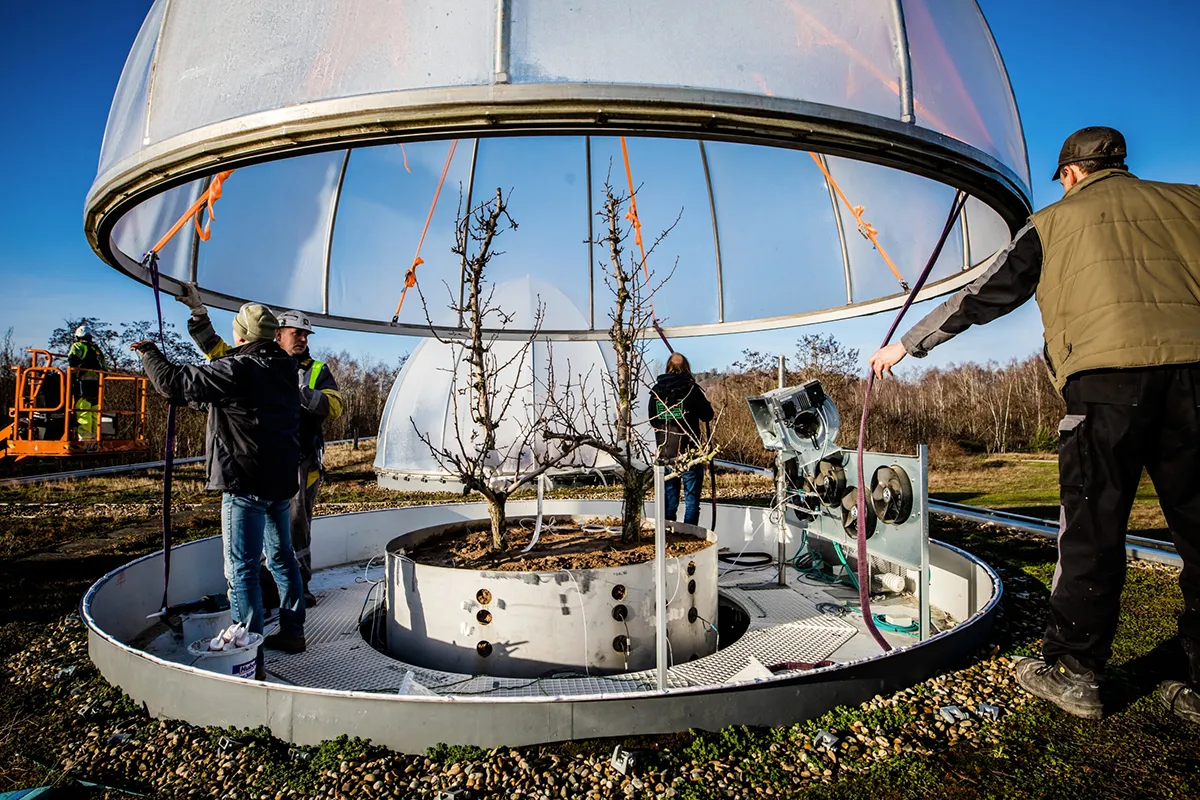
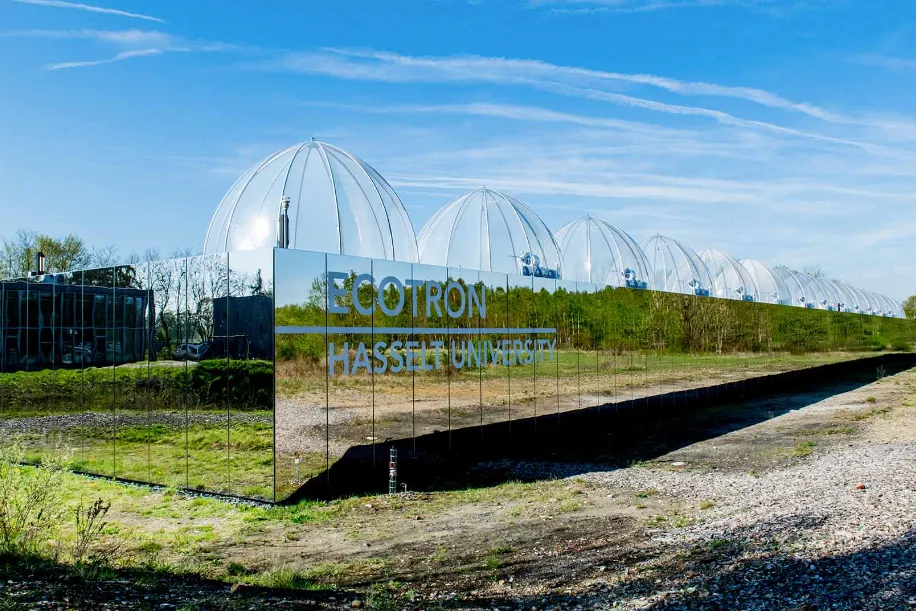
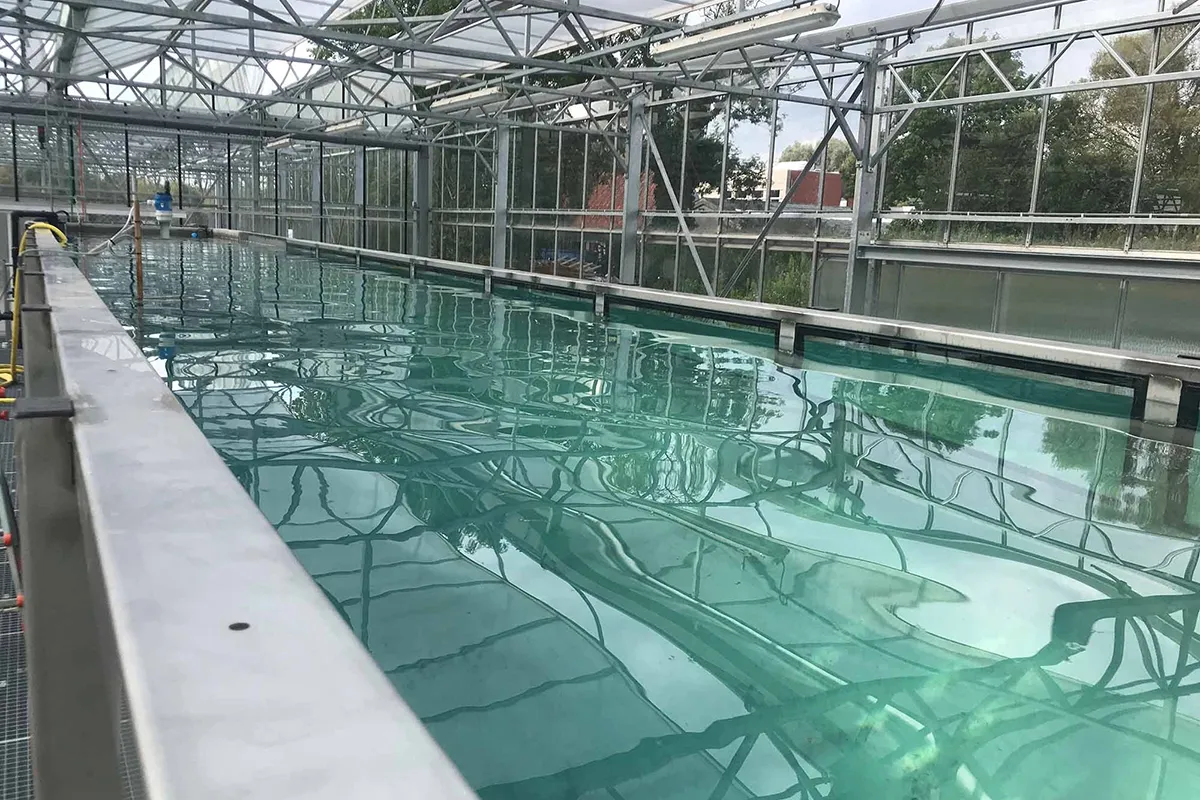
Climate change has a direct impact on the ecosystems that make up our living environment. The precise nature of this impact has been the subject of research for many years. The AnaEE-Flanders consortium (Analysis and Experimentation on Ecosystems), part of a wider European network, plays a leading role. “In experiments in the climate domes of the Ecotrons at Hasselt University and the University of Antwerp, and in UAntwerpen’s aquatic Mesodroom facility, we study the impact of climate change and pollution on agriculture, heathlands, orchards, lakes and rivers, among other things,” says Professor Nadia Soudzilovskaia of the Centre for Environmental Sciences at UHasselt.
“On this basis, we develop mitigation and adaptation measures to safeguard the functioning of natural ecosystems,” she continues. The importance of this applied research is clear. Professor Ivan Nijs of UAntwerpen says: “By simulating more extreme climatic conditions in our facilities and examining how ecosystems such as grasslands respond, we want to develop a strategy and toolbox to help society deal with climate change.”
Expansion in the pipeline
One of the proposed measures is to enrich the soil with organic matter. “This increases the amount of soil carbon and allows more water to be retained, protecting grasslands and crops from drought for longer. That works today, but we want to find out whether it will still work under more extreme conditions,” Nijs continues, also pointing to the nitrogen issue. “We know that farms can reduce their fertiliser use by growing nitrogen-fixing plants such as clover. But, naturally, farmers want to know what the conditions are so they can assess whether investing in this approach is worthwhile.”
Because of its importance to society, the consortium has continued to expand its facilities in recent years. This year, eight new climate-controlled domes are being added to the UHasselt campus in Maasmechelen. They will allow us to expose ecosystems for several months to phenomena such as nitrogen deposition, climate change and various types of soil amendment. “This will expand our long-term research while also allowing us to answer more urgent research questions over a shorter timeframe,” says Professor François Rineau of the Centre for Environmental Sciences at UHasselt.
Strengthening ties with industry
The new investment follows support from Flanders. Ivan Nijs says: “The Research Foundation Flanders (FWO) is providing €3.7 million in funding for the 2025-2028 period, and the Flemish Government is fully backing our accession to the European AnaEE network. This was make-or-break for our consortium. We can now focus not only on fundamental research but also more on applied research in collaboration with industry.”
“Take the collaboration between UAntwerpen’s aquatic team and Umicore on pollutants in water, or our ties with dredging companies DEME and Jan De Nul on coastal protection,” Professor Nijs continues. “We also work with research organisations such as the Flanders Research Institute for Agriculture, Fisheries and Food (ILVO), which can help us translate research into practice and apply it on individual farms. The specific questions of which crop varieties are most resilient to a changing climate, and how soil nutrients will behave in the future, are of interest to seed companies, the fertiliser industry and producers of biostimulants that can increase plant resilience.”
The aim is to encourage more individual companies to make use of the facilities. This offers new economic opportunities, but above all should better equip industry to respond to the effects of climate change and improve climate resilience. “We can simulate a changing climate and test which societal adaptations are likely to work in the future. We are unique in this respect, making us a very interesting partner,” concludes Ivan Nijs.
Question about this story? Ask your question
Keep following this
Get an email when a new story is published. No account needed.
- SubjectEnvironment, energy & waste management