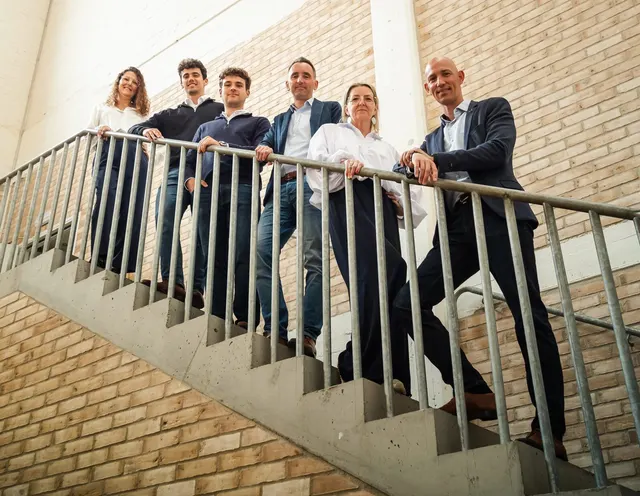
Mark Caelenberghe: CEO of KIXX
Text Christina Van GeelImage KIXX
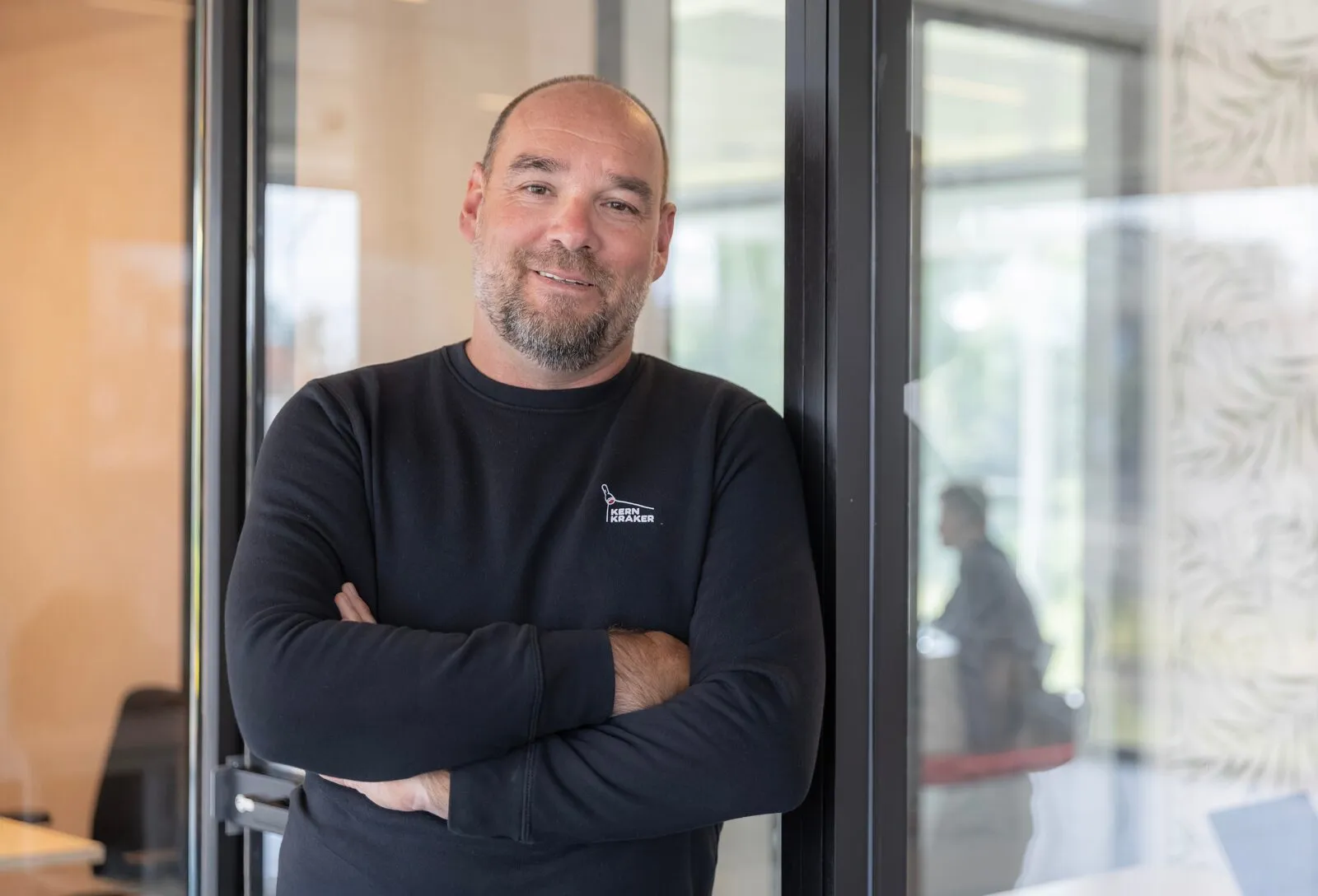
In 2008, Mark Caelenberghe founded KIXX on his own, in his living room. “The greats started their businesses in their garages. But I didn’t have a garage.” Today, his company has more than 50 employees. He aims to build the best marketing group in the Benelux.
If only I’d known then what I know now …
… I’d have started properly running a business sooner. For the first seven years, I was too cautious. Mainly out of fear: losing clients, not turning over enough, charging too much or simply failing. As a result, I held myself back, including on pricing. Clients can sense that. If you’re not convinced of your own value, they’re more likely to ask for a discount or expect more than agreed.
In 2015, I changed tack. From then on, running a business was about creativity and courage for me: having a vision, daring to take risks and really working on your business. I come from a family of hard-working manual workers. My parents were very risk-averse. My mother would have preferred me to become a police officer: a uniform, a car and a secure pension. Perhaps that’s why it took me a little longer to dare call myself an ‘entrepreneur’.
Nobody told me this
That financial literacy is a fundamental skill for entrepreneurs. At first, like so many business owners, I took my paperwork to the accountant. He’d take care of everything. Then a new accountant said: “Mark, you need to enter the figures yourself.” I spent weekends inputting the accounts, but in hindsight it was a gift. I finally understood what turnover, costs, depreciation, returns and free cash flow meant. Today I can read a balance sheet, and I also know that rising turnover can still leave you bankrupt. That knowledge gave me much more control and helped me make more considered decisions.
My gut feeling was right
From my first contact with a new employee, I can tell whether they’ll click with KIXX. That gut feeling has never let me down. Fix your shit, that’s our mindset. No moaning or complaining, just taking responsibility, communicating, working together and not immediately reaching for the umbrella when something goes wrong. A real team player doesn’t pass the blame and certainly doesn’t throw a colleague under the bus.
At the same time, I have enormous admiration for colleagues who give 150 per cent, even though the company isn’t theirs. Their commitment and sense of ownership never cease to amaze me.
This made me a better leader
For the first seven years, I was more someone who sold, delivered and started all over again. I grew as a leader mainly when I looked beyond day-to-day operations and set a clear direction for KIXX. A plan forces you to look ahead. Where do we want to be in one, two or three years? Which clients do we want? What processes and employees will we need? A roadmap like that gives you direction. Of course, you sometimes stray from it along the way, but you know where you want to go.
I also had to learn that I don’t always have to be right. I used to be the first to speak in meetings, often out of enthusiasm. Now I try to speak last. Once the leader gives their opinion, there’s a risk that everyone will tailor their answer to it. I want to hear what others think first. You need to surround yourself with people who are better than you, not people who confirm what you already think.
My biggest mistake and what I learned from it
Panic, twice over. When the pandemic began, I expected a lot less work and put people on temporary unemployment as a precaution. But the work kept coming, so I took on too many operational tasks again. It took me almost a year to let them go again. That slowed our growth. Later, after years of growth, our figures fell for the first time. Panic again. I became a micromanager who talked almost exclusively about numbers. In six months, I damaged a working atmosphere we had spent years working hard to build.
We put things right by acknowledging what had happened. I simply said: I panicked, and that wasn’t good. Now we hold a town hall every six weeks where we talk about the company with complete transparency. My most important lesson? Don’t panic. Trust the process. As a leader, you can be worried, but you mustn’t let your panic spill over into the organisation.
It seemed like a good idea. Until it wasn’t
When I started out, I thought: an agency with six people, then you’ve made it. In 2015, there were six of us. So we held a meeting: goal achieved, what next? The answer was clear: next stop, London! I joined the International Chamber of Commerce and went to London a few times with a firm plan to open an office there. Then I saw which agencies were based there and what everything cost. I thought: “Well, there’s still plenty of room to grow back home.” London was crossed off the list. In hindsight, especially given Brexit, that was probably for the best.
My dream for the future
To build a group of agencies with the ambition of becoming the best marketing group in the Benelux. But my real dream is for KIXX to become bigger than its founder. To be able to say one day: I founded KIXX, but the company no longer needs me. For it to continue to exist and grow when I retire, or when I’m no longer here.
Een zakelijke vraag aan KIXX? Get in touch
Companies in this story
Keep following this
Get an email when a new story is published. No account needed.
- SubjectGeneral
- CompanyKIXX