




Family First: Passing on a family business starts with clear agreements
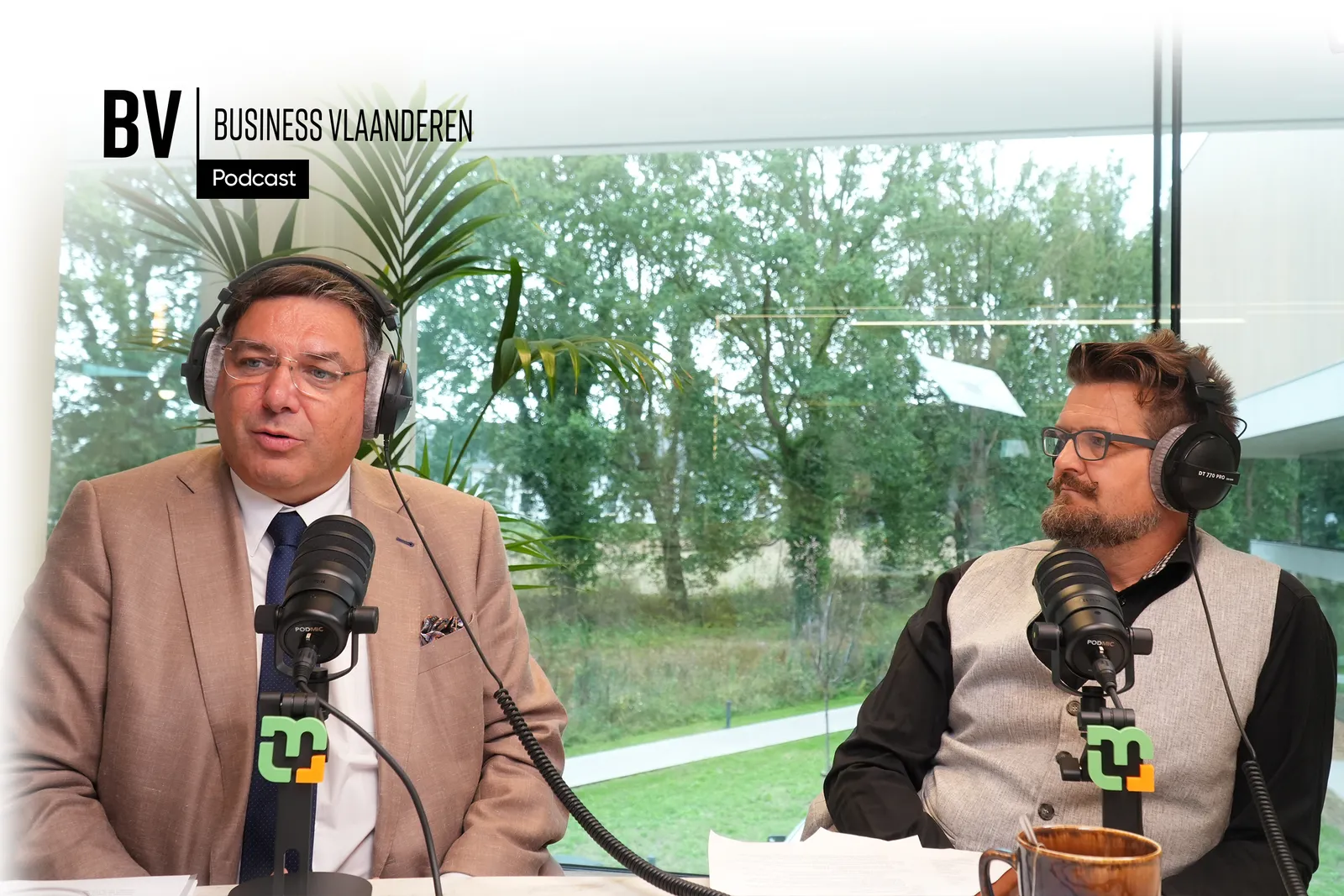
Passing on a family business involves far more than ownership and figures. In this episode, Bavo Boutsen talks to Stijn Ameye of The Chickenman and Kurt Vannieuwenhuysen of Family First about succession, trust and the role of a family charter. They discuss how to make expectations between generations a topic of conversation, what place partners and other family members have, and why a successful handover starts above all with open conversations and clear agreements.
Een zakelijke vraag aan Family First? Get in touch
Full transcript
All chapters (23)
- Succession at The Chickenman
- The story of The Chickenman
- From family charter to business succession
- More than a handover on paper
- Seeking support early
- The role of an independent external party
- A new generation with a fresh perspective
- The value of the process
- Agreements for future generations
- The family charter as the family’s constitution
- The process matters more than the document
- Trust between generations
- The generation gap
- Work ethic and room to make mistakes
- Can entrepreneurship be measured?
- The charter as a living working document
- The Family Forum
- Keeping work and family separate
- Family First’s role alongside other advisers
- A specialist field
- Advice aligned with the family’s DNA
- Family First as a family business
- Looking back on the process
Succession at The Chickenman
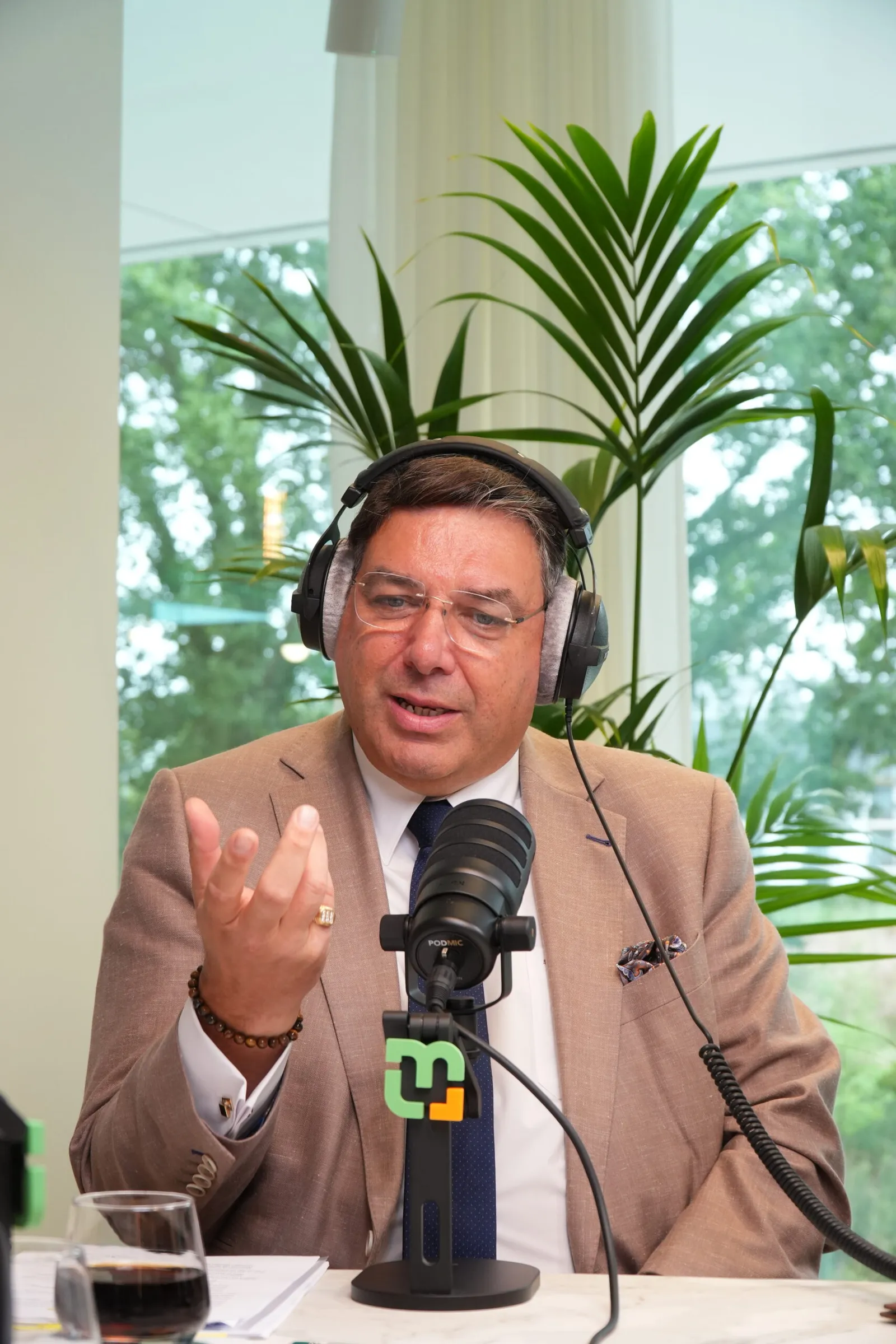
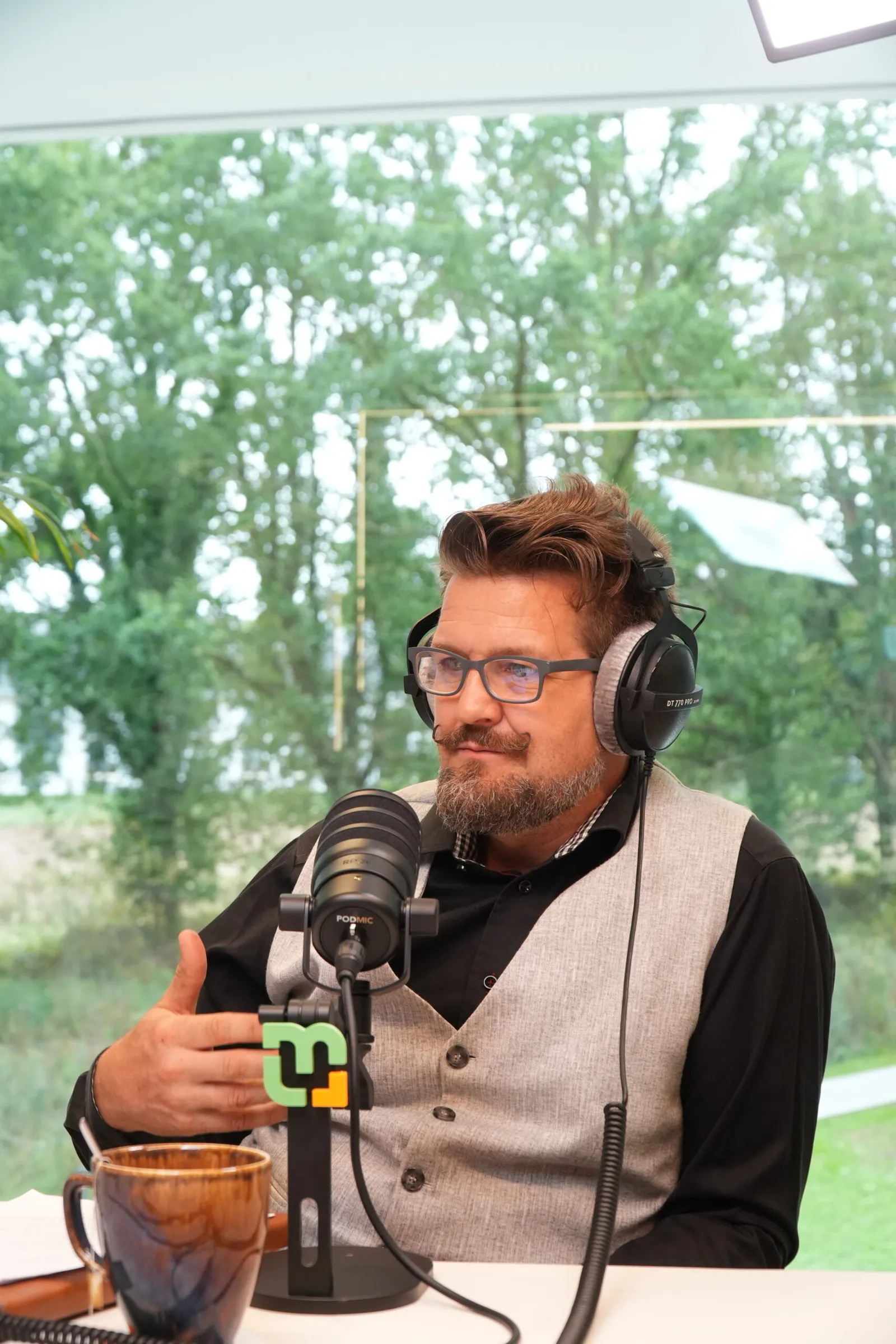
Bavo Boutsen Welcome to another podcast in association with Family First. In theory, passing on a family business means that, at a certain point, one generation steps aside and the next takes over. But when is a son or daughter ready to become an entrepreneur? And what exactly does the parent expect of the next generation? What role do partners play in the business? And how can you agree on growth, ownership and wealth without damaging relationships around the family dinner table? These questions also came up at The Chickenman, the family business run by entrepreneur Stijn Ameye. He is now preparing to hand it over to his two sons and has enlisted specialist support from Family First. Together with his family, he went through a process lasting almost a year, which culminated in the signing of a family charter. Stijn is here at the table with me today, along with Kurt Vannieuwenhuysen, founder of Family First.
The story of The Chickenman
Bavo Boutsen Stijn, I think we should start with you. I’ve already given some background, but we need to delve into it a little more. So, Stijn, tell us about The Chickenman. Who exactly are you as a business? What do you do?
Stijn Ameye We sell chicken, so we’re market traders. About 26 years ago, I took over the business where I’d started as a holiday job. We now have four sizeable lorries, and we currently sell rotisserie chicken around Brussels.
Bavo Boutsen And how many chickens do you sell?
Stijn Ameye At the moment, we get through about three tonnes of chicken meat a week.
Bavo Boutsen What would that mean to someone who doesn’t know the industry?
Stijn Ameye About 2,500 chickens a week, something like that.
Bavo Boutsen Does that make you a major player in the market-trader chicken business?
Stijn Ameye We’re getting there, yes. We’re now above the halfway mark, you could say.
Bavo Boutsen And do you still eat a lot of chicken yourself, given that it’s your job?
Stijn Ameye Here’s a little anecdote. I’m allergic to chicken.
Bavo Boutsen Oh, wow, OK. I wasn’t expecting that.
Stijn Ameye Yes, that’s right. I’ve been allergic to all poultry since I was 13.
Bavo Boutsen Even one piece is a problem?
Stijn Ameye One piece is a problem, yes, that’s right.
Bavo Boutsen So you’ve never eaten any of your own products?
Stijn Ameye I’ve never eaten any of my own products. But of course, we have other products too: ribs, ham hocks. We have more than enough, that’s no problem.
Read the full transcriptCollapse transcript21 chapters remaining
From family charter to business succession
Bavo Boutsen We’re here today to talk about your succession, passing on the family business. Is this something you’ve been thinking about for a while? How did the subject come up?
Stijn Ameye How did it actually come up? My dream is to be able to pass the business on to your children, to see the business you’ve built, your baby, continue. I once met Kurt on a programme I was doing elsewhere and heard about a family charter. The idea was to put the issues within a family into a family charter, even if the business isn’t taken over. What happens later? What happens to the money if you sell? How is everything passed on? And so I started the process, without really focusing on succession. Kurt then interviewed my wife and me, and spoke to the children separately as well. That’s when the spark was lit for the children: yes, could we take it over, and what would that involve? What does it mean? So the process shifted from focusing purely on a family charter to one aimed at the children taking over.
Bavo Boutsen You have two sons, right?
Stijn Ameye Yes, two sons.
Bavo Boutsen And how old are they now?
Stijn Ameye 21 and 22.
Bavo Boutsen So they’ve only recently joined the business.
Stijn Ameye They’ve only recently joined the business, yes. They started working in it properly halfway through the process.
More than a handover on paper
Bavo Boutsen So you’re saying that succession is about more than just calling the accountant and sorting out the paperwork. Did you always realise that it involved more than that, or is that something you’ve come to understand over time?
Stijn Ameye We always realised that, of course. My wife also comes from an entrepreneurial family, where a few things went wrong. So we’ve seen how not to do it. I’ve always told my children that I don’t want that to happen. We’ve always been open-minded about it. The idea isn’t simply to give them the business. I’d also like to have some money for myself when I eventually exit. Otherwise, I might as well sell it to someone else. But you do want to pass it on to your children. So we’ve always talked about it with them, with a very open mind. They know where they stand. But it’s still me telling them something. And yes, putting something like this in writing gives both sides peace of mind.
Seeking support early
Bavo Boutsen OK, in Stijn’s case, nothing has gone wrong. They started the process at the right time, in a sense. I can imagine that’s often not the case in practice. At Family First, do you often see cases where things go wrong first and people only then seek support through a process like this? Or am I mistaken?
Kurt Vannieuwenhuysen No, you’re right. We track this constantly, and the split is roughly 50/50 between parties who come to us in time and those who come too late. Coming too late can mean that there’s already been a serious falling-out, that children no longer come home, or that the family can’t sit around the table together at Christmas or a summer barbecue. Then we’re contacted either by the outgoing generation or by the successor generation. That split is also roughly 50/50. We keep track of it, and I think the figures are around 42/58. It’s much more enjoyable for us when people come in time, because then we can work constructively and start with a clean slate. But even if we come in too late, it’s never too late to put things right. If there’s already tension within the family, though, it’s much harder to get everyone on the same page before we can begin.
The role of an independent external party
Bavo Boutsen Do people generally feel comfortable discussing this with an outsider, and are they happy to bring you in? It seems like it might be a bit of a taboo to involve someone else.
Kurt Vannieuwenhuysen You’re absolutely right, Bavo. It is a bit of a taboo. You come in as an outsider, as a third party. You’re not the person they already trust, such as the entrepreneur’s accountant or banker. So you notice that going to an independent expert is an extra step for them, to find out whether they really need that help. We noticed this at the beginning, too, when we asked clients to share their experiences. They found it very difficult. People felt embarrassed to admit that they hadn’t managed to do it themselves. I think that’s a shame. That’s why I’m very grateful that Stijn from The Chickenman is here today. It was a really positive process. By involving the children in the conversations, certain things came to light, and some issues needed to be talked through. That’s precisely what makes it valuable: at a certain point, you say, ‘Look, we’re not going to shy away from difficult questions.’ Sometimes these conversations don’t happen around the kitchen table because they’re too difficult. As an independent third party, we can say, ‘Look, we’re going to have these conversations.’ It’s a bit like being a moderator, helping people talk things through and setting the emotion aside.
Bavo Boutsen So that’s your role as an outsider? And I think that’s exactly why having an outsider involved is valuable, to help manage the emotions.
Kurt Vannieuwenhuysen Yes, absolutely. We can really help take the emotion out of it, and we always act in the family’s best interests. That makes our job easier... We have just one goal: the family business. Our focus is the family, and making sure it gets the support it needs. The aim is for the business to be passed on over the long term and remain successful. That’s one of the great things about the job, too: seeing businesses and families grow closer. We help families grow closer, and we help family businesses grow. We believe that growth is part of the DNA of a family business, because every generation brings new ideas and knowledge. The older generation has its experience, of course, but the younger generation also has knowledge and is sometimes quicker to adopt new things and new technologies, think of everything around AI. That’s what makes a family business unique. Every generation helps the business grow by bringing in new knowledge.
A new generation with a fresh perspective
Bavo Boutsen Does that ring true? The idea that the new generation brings a fresh perspective, a new outlook, and therefore growth?
Stijn Ameye Yes, definitely. Especially when it comes to social media. My son sometimes calls me a dinosaur when we talk about things like that. But they’re much quicker to get to grips with it. And they can... They’re also targeting a different audience. I’m not going to make TikTok videos. For them, it’s part of everyday life. So they definitely have a head start there.
The value of the process
Bavo Boutsen And setting marketing aside, the process you went through to draw up the family charter took about a year. Looking back on it now, what was the experience like? Or what did you find most valuable about it?
Stijn Ameye The most valuable things are actually lots of very small things that add up to something extremely valuable. One example is the in-laws. I said earlier that my wife also comes from an entrepreneurial family. I was the in-law there, and I stayed completely out of it. I also felt it was my job to stay completely out of it, that it had nothing to do with me. But Kurt taught me that the in-laws are actually very important. If your husband works seven days a week, ten hours a day, you have to expect him to have your support too. If you then involve your spouse in a family council or whatever, they are involved, they feel included and are less likely to have a problem with it. Those are the kinds of small details that opened my eyes, also with a view to the children in future. One of them is already in a relationship. We are talking openly about this, already looking ahead.
Agreements for future generations
Bavo Boutsen So that ultimately led to a charter in which all of this is set out. Looking at the result, at what you have now, are there things in it that you never imagined could be included when you started?
Stijn Ameye Yes, indeed. Especially everything to do with family councils and so on. The way additional family members, cousins, for example, will be involved in the business has been set out. These are all things you do not think about now, but they are now in black and white. So there can be no discussion about how they will be involved in the business, where they start or what they will be paid. It is all laid down, and that gives us tremendous peace of mind as we grow the business as a family, as a family business.
Bavo Boutsen But this is about much more than purely business-related agreements.
Stijn Ameye Yes, of course. Absolutely.
The family charter as the family’s constitution
Bavo Boutsen Looking at this more generally, what do you, as experts in this field, see as the purpose of a family charter? How should we understand it?
Kurt Vannieuwenhuysen The family charter is essentially the family’s constitution, in the sense that it makes everything open for discussion. It is by asking difficult questions, which might otherwise simply go unspoken, that we achieve a great deal of clarity. We make clear agreements within the family, in the interests of the family business. That is what the charter is there to do: make sure everyone knows what to expect of one another. It can be very comprehensive. Our charter has 24 chapters, so it is quite extensive. I think that is important too. One topic that always comes up, for example, is the one Stijn has just mentioned: what role do the in-laws play? Can they take part, or not? To what extent? Can they have a role in the family business? What are the conditions? What process should be followed if, for example, a family member, whether an in-law or a blood relative, and an outsider apply for the same job? That process is set out in full in the family charter. All those expectations have then been made clear. So if that situation ever arises, there can be no disagreement. Everything was properly discussed at the time, before there was anything to disagree about.
The process matters more than the document
Bavo Boutsen It strikes me that the process of drawing it up is at least as valuable as the end result. The result is very important, as we have already said. But why is the process at least as important?
Kurt Vannieuwenhuysen The process is actually much more important than the charter itself. The charter is the final piece, the outcome. But the process matters much more because it gives us the confidence to put important, and sometimes difficult, questions on the table. By raising certain issues, we make sure they are openly discussed. That is precisely the strength of the charter. We see families keeping certain topics quiet simply because they are afraid of conflict. That only makes things worse, because sooner or later the time comes when they have to be discussed. And very often, that leads to conflict. So, think before you act. That is really the charter’s motto.
Trust between generations
Bavo Boutsen Trust seems to me to be a key building block in all this. Trust from the business owner in the next generation, and vice versa. Stijn, was building that trust in the next generation something you had to work on?
Stijn Ameye Trust is… I think it is something they will have to earn too. But this is a perfect guide for both them, the next generation, and the current generation to follow, because it takes mutual respect to earn that trust. I cannot say now that they are going to do everything perfectly. This is the start of the story. But we now have a perfect guide for them to follow, and for me to follow too. I am not some all-seeing patriarch who decides that everything has to be done a certain way. We drew it up together. They also had a say in it. And in the past, things were often done very differently. The patriarch made all the decisions: the children just had to follow, and one day they would get the business. Then, forty years later, they are still working, the old man is still at his desk at eighty, but he will not let go. We have addressed those things. So the next generation can trust that this will happen. And I think that is very important.
The generation gap
Bavo Boutsen During the process, did you find that expectations differed? There is also a kind of generational conflict. Or is it almost inevitable that different generations see these things differently?
Stijn Ameye Yes, definitely. And now that the lads have joined the business, you really notice the generation gap. It is something we need to work on, and there is still a lot of work to do. But I think every generation has that gap. We used to complain about our parents too. I think it happens with every generation. I think of myself as modern, but my children probably do not. That is why we have this guide, to make it a little easier to bridge the generation gap.
Bavo Boutsen Where do you see them looking at these things differently? Can you give a specific example?
Stijn Ameye They do not have the work ethic we had, at least not yet.
Bavo Boutsen That is a stereotype confirmed, then, but it is true.
Stijn Ameye It really is, yes. The current generation has a different attitude to getting up and taking responsibility: “It’ll all work out.” I do have confidence in them, though. I talk to lots of other business owners too, including someone who has just taken over from his father. I asked him: “What was it like for you? You’re now where my sons are. What was it like? Did you dive straight into the business too?” He said: “For the first seven years, my father and I did nothing but argue, because I did nothing, I was lazy and I did not get up. Then suddenly something clicked and I found my drive.” So I do have every confidence that it will happen for them too. But they are still very young, and it will come.
Work ethic and room to make mistakes
Bavo Boutsen This seems a bit like a textbook case to me. Is that right? Do these clashes between generations, and their different attitudes to work and how they think about it, come up quite often?
Kurt Vannieuwenhuysen That is stating the obvious. You see it all the time. Sometimes it is to do with age, but not always. That passion for the job, that work ethic, the fire that keeps burning, can take until someone is in their early thirties to develop. I find it depends a great deal, on the one hand, on how they were brought up, but also on the times we live in more generally. I think this generation is saying that work-life balance needs to be different.
Bavo Boutsen Different from the previous generation’s.
Kurt Vannieuwenhuysen Different. But actually, I do not think work-life balance exists. It is a term someone made up. Work, life… If your work is your passion, you give it your all as an entrepreneur. But perhaps that is a separate discussion about how they approach it. I think it is very important to appreciate young people for their strengths. It is not easy to get all those expectations aligned. And yes, sometimes it is about punctuality or respect, and so on. Sometimes it comes down to the little things. But I have always been in favour of seeing the best in people, highlighting it, encouraging it and building their enthusiasm. Of course, we have to address the other points too. I tend to favour letting them learn for themselves by letting them hit a wall, figuratively speaking, when their behaviour is unacceptable. That is something we see very often in family businesses too: parents are afraid to let their children make mistakes if it is going to cost money. But if you let your child make a mistake, they will remember it much more easily. Think of a parent teaching a young child to ride a bike. They have to fall over sometimes too.
Bavo Boutsen They have to fall over sometimes too.
Kurt Vannieuwenhuysen They have to fall over sometimes too. Then you say: come on, a plaster on that little leg and off we go again. If you always keep them upright, they stay in a safe comfort zone. They will still fall when you let go. We often see parents in family businesses step in at the last minute because otherwise it will cost them money. But then you give the children a certain guarantee: yes, we can make a mistake, but they will cover it up out of love, because it will not cost you anything. And that is not really… You have to let them hit a wall and feel the consequences. That does not necessarily have to be financial, though there could be a financial penalty. It could also mean that the whole group, the team, makes it clear: “Look, mate, you really got that wrong.” These are things we actively encourage in our advisory work: let them make the mistake. If they are clearly in the wrong, they will learn and improve much faster.
Can entrepreneurship be measured?
Bavo Boutsen We have been saying that entrepreneurship is something that needs to develop. It has to grow within you. Can you test whether someone has potential? Can it be measured to some extent?
Kurt Vannieuwenhuysen I think entrepreneurship itself is difficult to measure. But I do think you can assess someone’s willingness. I think you always need to have some entrepreneurial spirit in you. You can fan the flames a little, build enthusiasm and encourage it. It is difficult to measure. What we do have, for example, is my 3B test, which I developed to assess whether the next generation is willing, involved and capable. It is a test we developed based on thirty years of experience. We often ask the same question in different ways, to really find out how willing the next generation is to carry on the business, whether they are sufficiently involved and whether they are capable.
The charter as a living working document
Bavo Boutsen Right, I think if we go back to the story of The Chickenman, we’ve established that the family charter is in place. It took about a year to put together, and now it’s there. That’s one thing, of course. The next step is: how do you make sure the agreements that have been set down become reality, that they live on and continue to evolve? How does that work?
Stijn Ameye The most important thing is that we officially signed the charter. We met several times and read it through together several times. Then there was a formal reading, and we signed the charter. At that point, we also agreed on a date and put it in the diary: look, this is when we’ll get together again for the first time.
Bavo Boutsen So, straight away?
Stijn Ameye Straight away. We fixed the date there and then: look, we’ll get together again then and review the charter. You could call it a constitution, but it’s one that is constantly being amended. Your business evolves, your household evolves, the family evolves, everything around it evolves, and so does the economy. The charter isn’t set in stone, it’s a guideline. So it can be amended at any time. We set dates for those reviews in advance so we can work on it, read it through again each time and be reminded of it. That’s how you put it into practice.
Bavo Boutsen So it’s certainly not a document that’s now sitting in a cupboard somewhere and never gets looked at.
Stijn Ameye In principle, it’s a working document.
Bavo Boutsen And that’s what it should be.
Stijn Ameye That’s what it should be, yes, absolutely.
Bavo Boutsen I imagine that fits with the Family First philosophy, since you guided them through it.
Kurt Vannieuwenhuysen Of course. It fits perfectly. I certainly can’t disagree with him.
The Family Forum
Bavo Boutsen And as part of your efforts to bring that document to life, you’ve also established a second kind of body, or are looking to establish one, namely the Family Forum.
Kurt Vannieuwenhuysen Yes, that’s right.
Bavo Boutsen How should we understand that? What exactly is it?
Kurt Vannieuwenhuysen The Family Forum is something we offer our clients, giving them the chance to meet once or twice a year. It’s designed to involve not only active family members, but also those who don’t work in the business, in what’s going on at the family business. We usually facilitate the meetings ourselves, so we can make sure the right questions are asked and the right information is presented to everyone there. We also make it an enjoyable occasion. Information is shared, and there’s a Q&A, giving family members who are involved but don’t actively work in the business the chance to ask questions. To find out what their husband or wife does every day. What are the prospects? The whole picture.
Bavo Boutsen So it’s also about family relationships, as well as the business itself.
Kurt Vannieuwenhuysen Yes. Family First.
Bavo Boutsen Does that sound familiar?
Stijn Ameye Yes, absolutely. If you can’t agree around the work table, things won’t work around the family table either. It works both ways. If one doesn’t work, neither does the other. So both relationships are very important to maintain. That’s why it’s not just about business, but about everything around it too. And that’s why the Family Forum is so important.
Keeping work and family separate
Bavo Boutsen And has the Family Forum got under way in your case, or are you still planning it?
Stijn Ameye The first meeting is actually next week. That was the plan, so now it’s happening. We only have one daughter-in-law involved so far, so it’s still a fairly small group. But we hope it will grow soon. We’re optimistic. I hope that in a few years, and over the coming generations, we’ll have a lot of people at the Family Forum and it’ll be a lively crowd.
Bavo Boutsen Being a family, rather than just a group of business owners in the same company, sounds like an added challenge.
Stijn Ameye At the moment, the two are still too mixed up. You have that work-life balance, but in our case everything is mixed together. We’re constantly talking about the business over dinner. That’s one of the things we’ll discuss at the Family Forum: when do we talk about the business, and when don’t we? We’ll start setting some boundaries, so we can have a bit of peace of mind and set aside times when we get together just to talk about family matters, not business. We’re a family involved in the business, so it’s only natural that we talk about it all the time. But we’d like to have a bit more separation.
Family First’s role alongside other advisers
Bavo Boutsen Right, that’s a good illustration of how it needs to be kept alive and is a long-term commitment. Going back to Family First’s work with the family, a family business will usually already have plenty of advisers: an accountant, a banker, a lawyer, helping them get things done. In general terms, what role do you play? What do you add that those people don’t already provide, or can’t provide, to the business?
Kurt Vannieuwenhuysen We’ve obviously been asked that question many times. The answer is very clear: we don’t replace anyone. These are all trusted advisers who have often worked with the family business for years, sometimes decades. We certainly don’t replace them. Instead, we bring everyone together. Everyone sits around the table, but there’s always one empty chair: the person representing the family. At that intersection, where everyone offers their advice, we make sure things are steered in the right direction for the family, independently. Sometimes advice is fragmented across different firms, whether a bank, an accountant or a lawyer. During our engagement, we bring that advice together and help the family move forward. That’s the key difference. Thanks to our involvement, the accountant can focus more on the figures because they also understand the stories behind them. Our involvement also helps the lawyer draw up better contracts, because everything has already been discussed clearly. And the banker can finance a potential buyout with much greater confidence, knowing there is continuity in the family business thanks to our involvement.
A specialist field
Bavo Boutsen That sounds good on paper, of course, but are the other advisers happy to see you? Or are they always happy to see you, in every case? It sounds difficult.
Kurt Vannieuwenhuysen No, not always. We find that some can be very protective of their clients, which is understandable. Others say: look, perhaps we could do this better ourselves. I used to be an accountant and tax adviser. I did that for 25 years. And based on that experience, I’ve come to realise that, just as accountancy is a profession in its own right, and banking is a profession in its own right, passing on a family business is a specialist field in its own right too. It’s not something you can just add to your workload. It takes real expertise, in my view. It’s our sole focus. We work on these matters, and there are ten of us, so we know what we’re doing. It really is a specialist field. That’s what I believe.
Stijn Ameye I’ve also noticed that Family First talks in terms of the family’s DNA. A lawyer has their own area of expertise. They’ll defend your case from a legal perspective, but they don’t look at it through the lens of the family’s DNA. A family charter really defines that DNA: this is how we operate as a family. If a lawyer, or anyone else, takes a particular step, it should follow the DNA of the family and the business.
Advice aligned with the family’s DNA
Bavo Boutsen So in practice, do you find that other advisers can do their jobs better thanks to Family First’s support?
Stijn Ameye I wouldn’t say better, but they can do them in the way you want. It’s very easy to let a lawyer walk all over you, because it’s their area of expertise and they’ll say: no, it has to be this way, it has to be that way. But you know what the DNA of your business should be in the future. And once you’ve made it clear that this is the direction you want to take, that this is where the family business is heading, you can also be more assertive.
Bavo Boutsen So it helps you stand your ground too.
Stijn Ameye Yes, absolutely.
Family First as a family business
Kurt Vannieuwenhuysen It’s also important to mention that I’m an entrepreneur myself. I’ve been in business for 30 years, and we’re also a family business. My sons are involved in the company too, so I find myself at that intersection between family and family business every day. Stijn mentioned earlier that it can be difficult to find a moment when you don’t talk about the business. I’m very conscious of that and sometimes even have to stop my sons during lunch or on a Sunday afternoon. Guys, not now. They can be so enthusiastic that they just keep going: Dad, this, Dad, that, we should do this. I tell them: guys, not now. It’s great, it’s really good, but let’s do that at work. What I do sometimes is say: look, I’m still a bon vivant, as you can tell. Or they’ll arrange it themselves and put it in my diary, so we can go out for lunch together.
Bavo Boutsen And that’s specifically to talk about the business?
Kurt Vannieuwenhuysen Yes, we do that about every five or six weeks, I see it in my diary. Or I’ll say: look, guys, let’s make time for it. Then we’ll go out for lunch together, with both of them or sometimes just one, depending on what they want to discuss. And we’ll have an in-depth conversation about their roles in the family business. I think that’s really valuable. Of course, I know how it works, but that’s what you want to pass on. It’s my area of expertise, after all, so practise what you preach. That’s something I definitely want to emphasise. You need to make time for it. So put it in the diary.
Stijn Ameye Good tip.
Kurt Vannieuwenhuysen Go and do something together again. Go and have some chicken.
Bavo Boutsen No, he can’t eat it, he’s allergic.
Looking back on the process
Bavo Boutsen Right, we’re nearly out of time, but looking back at your story with The Chickenman over the past year, what’s one moment from the whole process that will always stay with you?
Stijn Ameye For me… Well, at the start of the process, Kurt spoke to the children separately, and things came up that I hadn’t expected. Including how interested they were in the business. And as a father, that makes you think: gosh, I must have done something right. Both of them asked to join the business. Yes, that really means a lot to you.
Bavo Boutsen And that was really where it all began.
Stijn Ameye Exactly. [33:45] Advice for other family businesses
Bavo Boutsen If you could give one piece of advice to a family business owner thinking about setting up a process like this, what would it be?
Kurt Vannieuwenhuysen Don’t shy away from the difficult questions, and talk to each other.
Companies in this story
Keep following this
Get an email when a new story is published. No account needed.
- ThemeBusiness transfers and acquisitions
- SubjectGeneral
- CompanyFamily First







