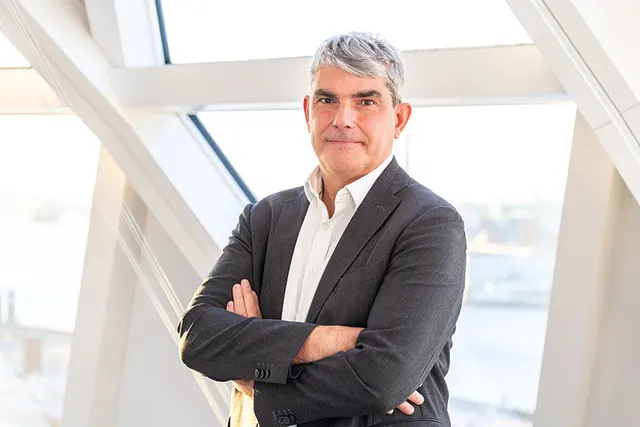
Tech entrepreneur, investor and coach Jürgen Ingels
Text Björn CrulImage Joren De Weerdt
“The future can be shaped, provided we make the right choices”
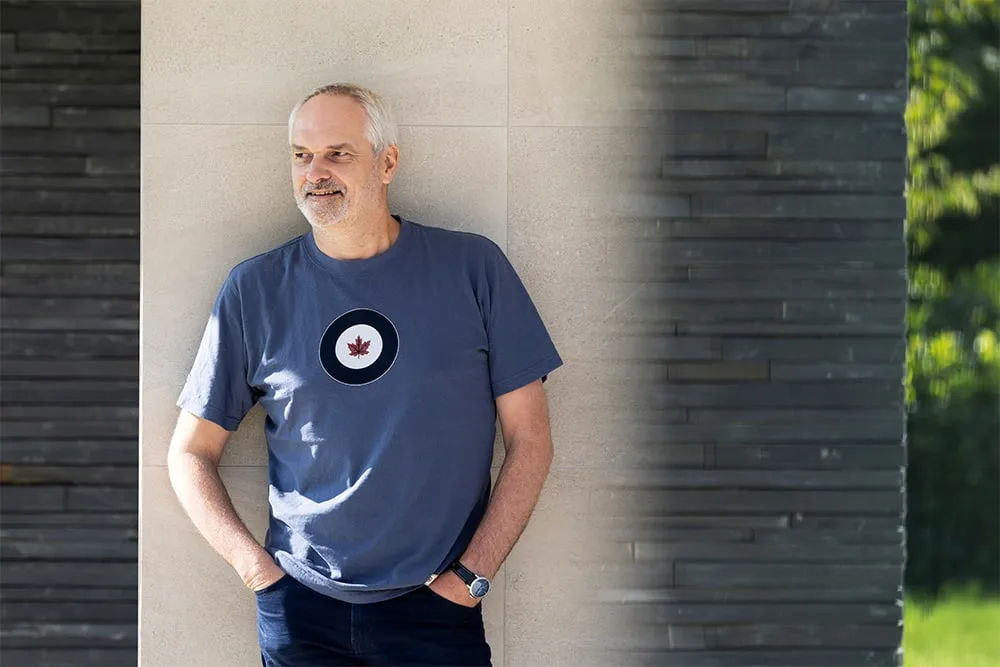
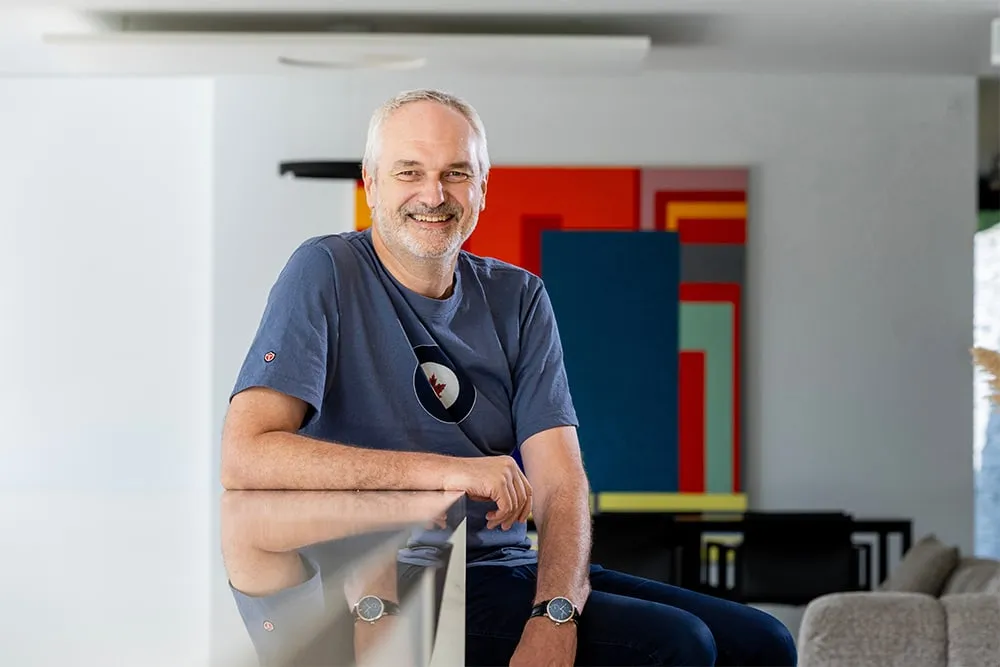
Jürgen Ingels is one of the most influential investors in the Flemish tech ecosystem. Originally from Roeselare, Ingels is 53 and rapidly built up the SmartFin fund after selling his company Clear2Pay. The fund invests in numerous tech start-ups and scale-ups. We take stock with him of his own career, as well as the policies affecting tech companies in Flanders.
You were a successful tech entrepreneur, and today you are an investor, board member and coach. What do you find most rewarding?
Jürgen Ingels: I’m still a dreamer, mulling over ideas and hoping to bring them to life. That takes quite a lot of time, and can even be exhausting at times. But helping to make new things happen gives you so much energy! Another factor is that I was very lucky when we were able to sell Clear2Pay. But I wondered whether I could do it again. That’s why we set up our investment fund, SmartFin. When I look at how, 10 years later, we’ve helped take companies such as Deliverect, Guardsquare, Silverfin and Unified Post to the next level, both by providing funding and sharing our experience, I feel like a happy man. And speaking of fulfilment, the coolest thing I’ve done is still writing a book myself. That’s something that will last for eternity.
Where does your entrepreneurial drive come from?
Jürgen Ingels: My father was a great guy, but strict. So I wasn’t allowed out very often, unless I organised the party myself. That’s how it started, with organising parties. First on a small scale, then in different cities, and later with live performances too. I learned an enormous amount from it: how to do marketing, deal with sponsors, draw up and manage budgets, motivate a team… That’s really where the foundations were laid. The upshot was that I couldn’t always make it to class, so I had to get hold of notes from other students. That gave me the idea of selling copies of lecture notes through a student course service. I’m quite proud that it grew into something big, serving all faculties, and that it still exists today.
You began your career in finance. How did you end up becoming an entrepreneur?
Jürgen Ingels: Clear2Pay was a fluke, what I call an ‘accident de parcours’. I was working in the US as an investment manager for what was then Gemeentekrediet. Whenever we wanted to invest in an American company, the money had to be transferred from Belgium to an account in the States. It was very expensive and the money took a long time to arrive. When I asked my colleagues in Brussels why that was, they replied: “The money will come, it’s somewhere in the system”. That made me curious. I looked into it and wanted to find out how things could be improved. In the end, I took a year’s career break to develop a new transaction system. We really did start with a blank sheet of paper. Perhaps that was naive, but it turned out to be the right choice.

You decided to sell Clear2Pay in 2014. How do you look back on that now?
Jürgen Ingels: It was an euphoric moment. From nothing, we had built a company that was worth 375 million euros when it was sold. In hindsight, perhaps we took that step too early. Two years later, it would have been worth twice as much. But I have no regrets, because the sale gave me the chance to do new things. And I’ve been able to throw myself into them, because the pace and pressure at Clear2Pay were high. I’m having much more fun now. And you have to enjoy yourself, because life is short.
The start-up and scale-up ecosystem has had a real boost in Flanders over the past decade. Is this still a good region in which to launch new tech companies?
Jürgen Ingels: Flanders certainly has a number of strengths. Just look at the wide range of courses and the quality of our engineers: our people are incredibly well educated. Secondly, the cost of living here is manageable. Just compare it with Amsterdam, London or Paris… Another factor is that people in Flanders tend to put down roots. That makes it easier for companies to retain their talent. The downside is that people in Flanders still don’t think internationally enough. We are conservative by nature. And if you’re trying to sell new things, that doesn’t make for the best market. That’s why I push companies to look at the rest of the world. There’s no reason why we couldn’t build a major new tech company here, like Google. Look at how far Collibra, team.blue and Odoo have come!
What could governments do to give start-ups even more opportunities?
Jürgen Ingels: I hope our politicians will learn a bit more about how the economy really works. People who manage to sell a successful company reinvest most of the proceeds in the ecosystem. Look at what we’re doing with SmartFin, or think of Pascal Vanhalst and Marc Coucke, for example. There are around 30 active venture capital investors like that in our country today. We should really be aiming for 200 such entrepreneur-investors. But the more tax is levied on the capital gains from selling a company, the less inclined those sellers will be to take risks and invest in start-ups and scale-ups. In the longer term, that will mean the government has to provide more support to start-ups through grants. I don’t think that’s the right choice. A tech entrepreneur who invests also guides their companies and advises them based on their own experience, increasing their chances of success. That creates a much stronger ecosystem. That’s also why I founded SuperNova, the tech festival that brings international investors to Flanders to introduce them to the valuable scale-ups based here that are looking for fresh capital. I’m convinced that this will give these young companies a boost to their growth.
Meanwhile, the manufacturing industry is taking a battering: Van Hool, Audi Brussel, Balta, Sappi, and so on. Are we facing a structural problem?
Jürgen Ingels: Companies that don’t perform well go under. The global economy is unforgiving: you have to perform and deliver quality. Manufacturers have no choice but to digitalise, automate and introduce robotics. Increasingly, in markets with around 10 competitors, the one that manages to set the trend captures the market. The winner takes all, that’s how ruthless it is. As a region, we need to create winners in a number of sectors that can become global players. Let’s aim for 100 strong niche companies. But that will require a very different approach to enabling, financing and subsidising them. In any case, our subsidies need to be much more targeted. Too often, they currently go to companies or projects that don’t really need them.
Which sectors do you see potential in?
Jürgen Ingels: We certainly have opportunities in financial technology, biotech and everything involving platform technology. We’re very good at building infrastructure. Look at what Silverfin does for accountants or Deliverect for restaurants. We have a great deal of knowledge and expertise when it comes to building critical application platforms that can deliver significant added value beyond our own market. The key question, it seems to me, is how many engineers and developers we’ll need in the future, when computers are increasingly able to write code automatically. I believe we should focus above all on encouraging creativity, because that’s where we can make an even bigger difference. On the other hand, even in the tech sector, the sky is no longer the limit. All the major players have made redundancies over the past year to improve their profitability.
Are investors and shareholders becoming more critical or more realistic?
Jürgen Ingels: I think it’s more of a cyclical movement. You always have to weigh investment in growth against profitability. If you invest in more growth, profitability comes under pressure. And when money becomes more expensive, profitability gets more attention. To me, what we’ve seen over the past year is also the result of tech companies being organised differently. They need to prepare for the future, when technology will automate a large part of the back office. Companies will inevitably become more ‘slim-fit’.
Let’s talk a little more about the SuperNova event. The latest edition was part of the Flanders Technology & Innovation festival, which was launched by the Flemish government. How do you look back on it?
Jürgen Ingels: The aim is to have a top-notch tech festival that is also much more than that. We want to build a community of entrepreneurs, for entrepreneurs. And because many companies are looking for funding, we want to open doors by connecting them with VCs from the US. Our greatest added value is enabling them to make contact with those investors. We welcomed 5000 visitors at the last edition, and 250 investors were there, including all the top names from the US. It won’t be easy to repeat that in 2025, but that’s the ambition. And ideally, we’ll do it together with the Flemish government. We can become the Tomorrowland of tech scale-ups and serve as a showcase. It’s great to be able to prove that Clear2Pay wasn’t a lucky shot, and that the future can be shaped. If we can establish a structure with the right support, we can achieve great things in Flanders.
You got to interview Barack Obama at FTI SuperNova 2024. Are there still ambitions on your bucket list?
Jürgen Ingels: To be honest, he was the most inspiring person I’ve ever spoken to. Interesting and intelligent. Apart from the interview, it was also fascinating to experience the whole organisation of what was quite a complex event. And I still have dreams, you know. Everyone knows I have a large collection of space memorabilia. I’d love to build a museum around it. I also want to keep growing both Smartfin and SuperNova. I feel privileged to be able to do these things. When I die, at least I’ll have done something useful, moved a stone in the river.
Question about this story? Ask your question
Keep following this
Get an email when a new story is published. No account needed.
- ThemeFinancial and legal decisions
- SubjectBV Antwerp