




From networking to a genuine community: when does real value emerge?
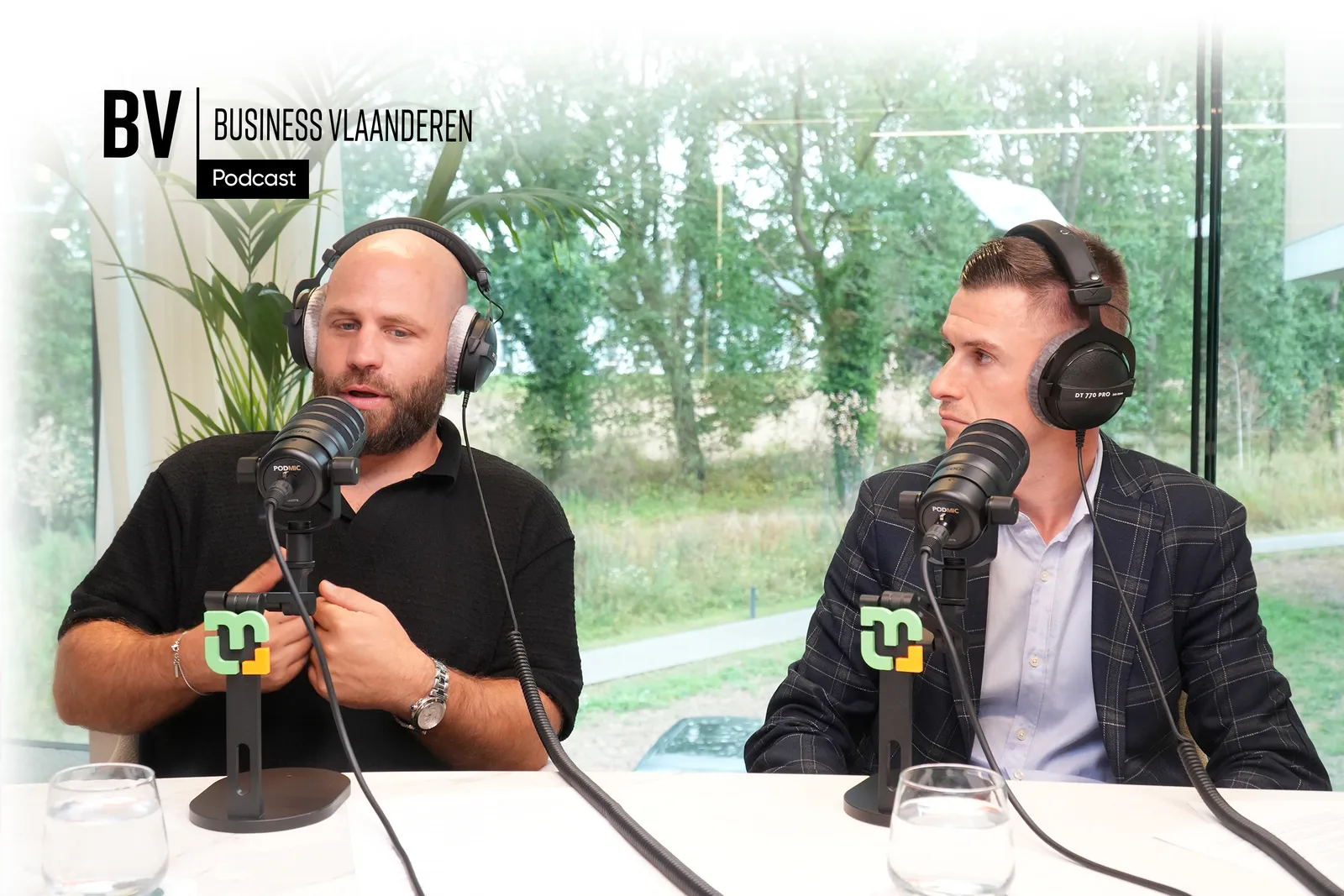
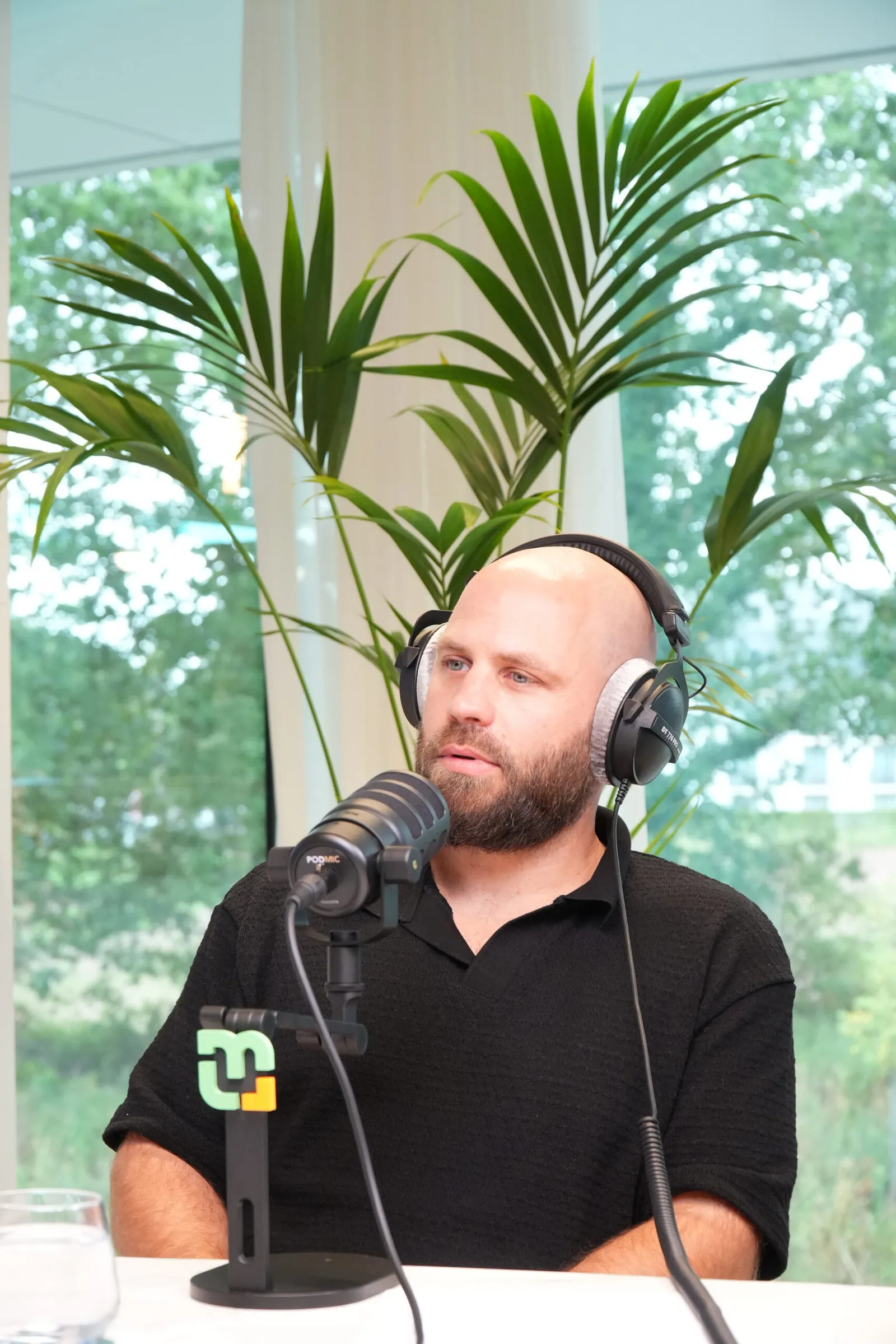
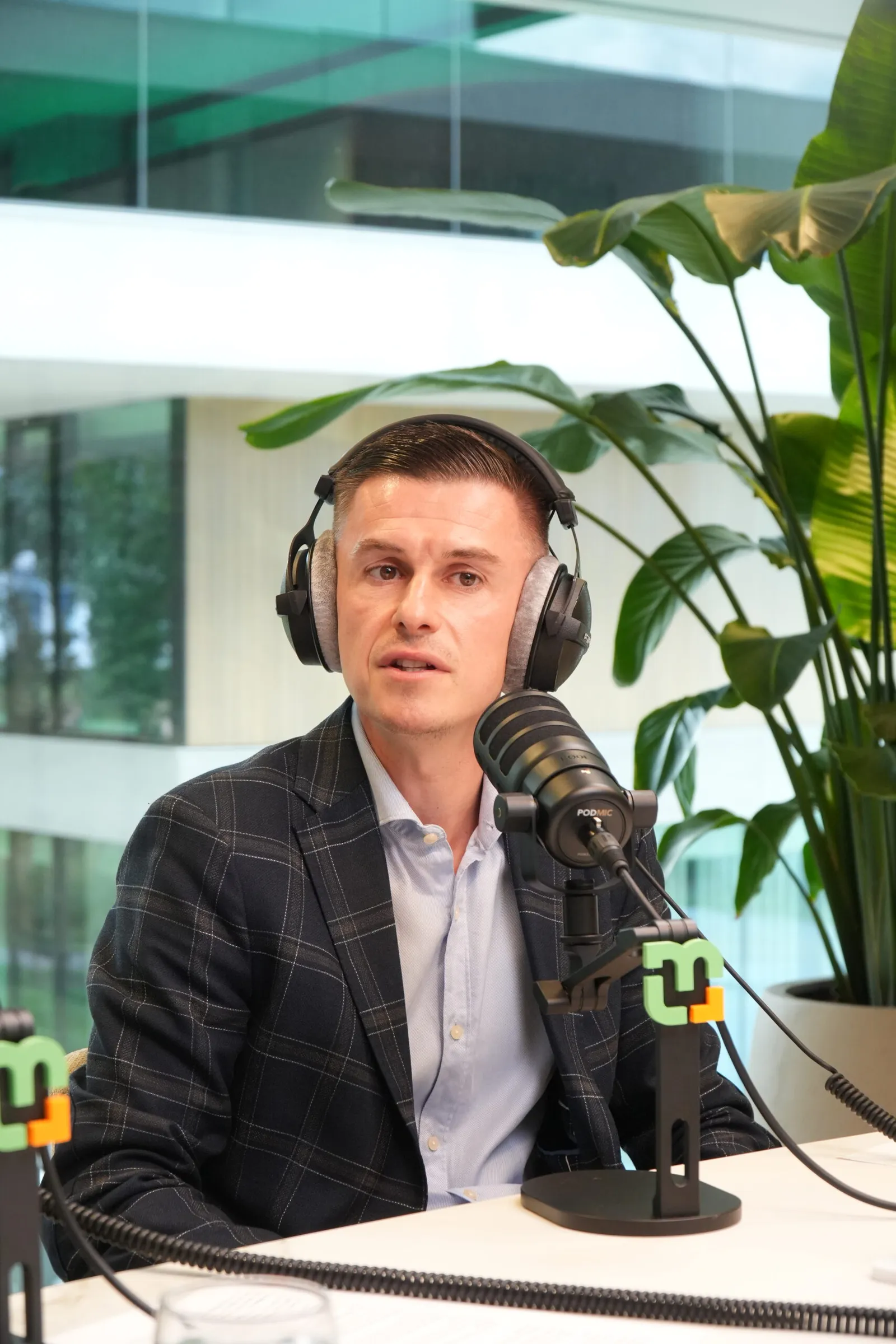
A good network is not about how many people you know, but what comes out of those connections. Robbie Creytens and Geoffrey Hamerlinck built Envision on precisely that belief: bringing entrepreneurs together in a community where connection, knowledge and enjoyment go hand in hand.
In this episode of the BUSINESS VLAANDEREN podcast, they explain why they wanted to create an alternative to traditional networking events, how they decide who is a good fit for their community, and why getting to know people personally and matchmaking are so important. They also tackle the difficult question of growth: how do you make a network bigger without losing its personal touch and quality?
The conversation covers entrepreneurship, trust, warm introductions and why twenty of the right people can sometimes deliver far more than a room full of hundreds.
And for anyone who wants to experience the community in person: on 5 December 2026, Envision is once again holding its annual gala for entrepreneurs at De Peignage in Eeklo, with Dirk Deroost among the keynote speakers. Want to know more? Click here!
Full transcript
All chapters (14)
- From networking to a genuine community of entrepreneurs
- How Envision came about
- Two entrepreneurs with complementary skills
- What does Envision membership involve?
- Selecting new members
- Demonstrating the value of a network
- Personal support versus scalability
- The power of small-scale networking events
- Bringing the right people together at the right time
- Networking across provincial borders
- Events tailored to members’ needs
- What sets Envision apart from traditional networking?
- Envision’s ambitions for the next five years
- Closing the conversation
From networking to a genuine community of entrepreneurs
Kris Vandekerckhove Networking. For some entrepreneurs, a necessary evil; for others, an essential part of running a business. But when does a network become a genuine community? With Envision, Robbie Creytens and Geoffrey Hamerlinck are trying to build just that: a community of entrepreneurs centred on connection, knowledge and enjoyment. I’m talking to them about how Envision came about, the business behind a community, the art of bringing people together, and how to grow a network without losing what makes it special. Robbie and Geoffrey, welcome to the podcast studios of Louwers Mediagroep in Oostkamp.
Robbie Creytens Thank you for inviting us.
Kris Vandekerckhove It’s a pleasure. Let’s get straight into it, guys. When did Envision really begin for you, and what challenge did you want to solve?
How Envision came about
Geoffrey Hamerlinck Let’s say we’ve been going for almost three years now. So I think Envision had already started for us about five, five and a half years ago. Partly because we’re both passionate about networking, meeting people and getting to know them. But we quickly realised that the various events around at the time, or on the scene, weren’t really our thing. It’s very simple. When you walk into a traditional, standard networking event, you often see the same familiar groups. The attendees are often older, and when you’re two young guys coming in wanting to learn from those people, that can be very difficult. They’re so closed off, sticking to their own groups and so on. So Robbie and I both thought there must be another way. There must be a way to give young, driven entrepreneurs more of a say, more opportunities to connect and, of course, more opportunities to learn. Then we thought: it’s simple, if we can’t find what we have in mind anywhere, something that would add value for us, then we should try to build it ourselves. We started with young entrepreneurs in mind. That was very much our vision at first: to bring young entrepreneurs together. Naturally, it’s starting to grow now. We’re getting older too, of course, so the age groups are expanding along with us. But the idea was that networking events should be socially accessible, yet in practice they felt closed off.
Read the full transcriptCollapse transcript12 more chapters
Two entrepreneurs with complementary skills
Kris Vandekerckhove So you built what you wanted for yourselves. How did the two of you find each other, as two different profiles, if you like?
Robbie Creytens We met through shared interests. We realised that our skills were very compatible. In marketing terms, I’m a real hunter. I like getting out and about, meeting new people. Geoffrey does too, but I think his strengths are more those of a farmer. If I introduce you to Geoffrey, he’ll find it very easy to have a conversation with you, but he won’t necessarily walk straight up to you, so to speak. So we’re very compatible. I also spend a lot of my time on sales, every day: phone calls, follow-ups and things like that. Geoffrey is very creative, which is something I’m less good at in certain areas. We complement each other really well there too. So within the business, I’m more of the front man, while Geoffrey is more behind the scenes. But of course, one can’t work without the other. That makes us very compatible.
Kris Vandekerckhove A match made in heaven, then?
Robbie Creytens Yes, I think our styles are a good fit too. That’s fun as well. When people come to us, if they have a slightly more professional Belgian approach, with a shirt and jacket, I’m someone who likes to wear that. Geoffrey is a bit more laid-back. So even in that respect, everyone who comes in thinks: OK, which of the two of them do I have more in common with?
Kris Vandekerckhove Yes, exactly. That’s how networking works, of course. You gravitate towards people like yourself.
What does Envision membership involve?
Kris Vandekerckhove If someone approaches Envision and becomes a member, what exactly are they buying?
Robbie Creytens First of all, before anyone becomes a member, I always have an introductory meeting with them at the moment. That means we put a lot of time into getting to know them. People literally come and have a coffee with me, so to speak. We want to find out what their values and standards are, what they’re looking for, and what we might be able to do for each other. I think it’s important that joining a community is a win-win. It shouldn’t just be a financial win for us; it should also be a genuine win for the person joining. We want to see whether we can help them move forward. That could be professionally, or personally, through the growth they can experience. So we really invest a lot of time in working out whether someone is right for our community.
Selecting new members
Kris Vandekerckhove You describe yourselves as gatekeepers. How strict is that gate?
Geoffrey Hamerlinck Yes, we do screen people a little in advance.
Kris Vandekerckhove But do you turn people away too?
Geoffrey Hamerlinck Yes, we do turn people away if, for example, we feel that our community, or the value of that community, is already a little beyond where that person is today. That doesn’t mean they couldn’t join us in the future, once their business has grown. To give a simple example, at the beginning, we obviously had a vision of building this community. And when you want to grow, you can be a little less likely to turn people away.
Kris Vandekerckhove You want to grow too, don’t you?
Geoffrey Hamerlinck Exactly, so we were quicker to take on freelancers as well. We have nothing against freelancers, of course, because they too can grow and take on their first employee, for example. So we’ve been very grateful to them. But today, we’ve noticed that the type of member we have now has moved on a step, especially after three and a half years. In other words, they’re starting to have staff and are actively building a small or medium-sized SME. And we’ve started to notice that profiles such as freelancers can sometimes find it harder to fit into the conversations. Those are the kinds of things we try to screen for. Someone might, for example, be a freelancer but be very open in their communication and have a clear sense of where they’re heading, telling us: yes, I do want to grow. That could be a very strong potential match for the group. So we’re constantly weighing things up. I’ve used freelancers as an example, but the same principle can be applied much more broadly. We try to be deliberate about it. Why does someone join a community? Because they’re looking for value. And if you can show that your community has people with those kinds of profiles, that creates the added value that makes others want to join.
Demonstrating the value of a network
Kris Vandekerckhove You also want to have common ground, of course. A global player, an SME or a freelancer needs to be able to talk about something they have in common. Most freelancers don’t have to funnel their money to the Cayman Islands, whereas the very large company probably does. That’s beside the point, of course. But what fascinates me is this: I know most networking organisations, or I’ve been involved with them over the years, or at least got to know them for a while. But the question I’ve always had is: how do you actually prove that a network is worth the money? Because it really is. But how do you explain that to someone who doesn’t come in with the same understanding?
Robbie Creytens That’s where the coffee comes in. I talk to people about it. In life, it’s often not just about what you can do, but also about who you know. Doors open that would otherwise stay closed. Here’s a good example for the listeners. We’re here today because I took the initiative to attend one of your in-person events and met someone from Business Vlaanderen there. And that’s how we ended up here today, recording this podcast. So I think building a network is one of the most important things to focus on, especially as a start-up entrepreneur. Doors simply open that would otherwise remain closed.
Personal support versus scalability
Kris Vandekerckhove Yes, you’re two very ambitious young guys. Is your greatest strength right now also what could hold you back? You take a very personal approach with all your members. In a way I’ve never seen before, which apparently works brilliantly. But could that personal approach to all your members also be the thing that stops you from getting bigger in the future?
Geoffrey Hamerlinck I think that will indeed be a double-edged sword. We have already had several conversations about it among ourselves, of course: how do we see things developing in the future? At first, our dream was to have a thousand entrepreneurs at an event and build a community from that… We soon realised that this was not really the way to go. Because then you have all sorts of people, so to speak, and it creates chaos. So we started filtering ourselves and asking: OK, who is our ideal target audience? And so on. We began to scale things back. Then we thought: OK, a community does not have to become enormous. Of course, we wanted to generate revenue. But you can perfectly well build a smaller community with much more valuable profiles in it. That means you can balance that against your annual subscription, as we’ll call it. So that is another way to determine the revenue we need to make a living. If you really want someone with a particular profile in the community, and that profile has a certain value, they know the value our community offers, so they will obviously be willing to pay for it, because they want those specific contacts. So we can strike a balance that way. We do not need a thousand members to generate a certain amount of revenue. You can create the same revenue over time with a smaller group. That is more or less our vision. And when people ask us today how big the community will become, we say: big in terms of the value of the network, not in terms of the number of members. I think that is where we make a huge difference.
The power of small-scale networking events
Kris Vandekerckhove But that is how your events are structured, isn’t it? I’m absolutely sure of it, I’ve studied them, of course. And you can see that your events don’t make a big thing of having 200, 400 or 500 people. No. You prove perfectly well that, if you bring the right people together, you can put on the event of the year with 20 people. And everyone gets exactly what they were hoping for.
Robbie Creytens I think more and more people are moving in that direction. We are looking for it. That was one of the reasons we started Envision. We often went to events run by certain organisations where 200, 300 or 400 people got together. That is indeed a great group of people, with different types of attendees, from a larger SME entrepreneur to a freelancer, for example. I often noticed that at bigger events, people tend to stand with those they already know. It is very uncomfortable to approach someone new in a group of 200, 300 or 400 people. And then they most likely go home to their partner. Their partner asks: “So, how many new connections did you make today?” “Well, I spoke to my supplier and my customer again. But the food was good.” We try to do things a little differently, by organising smaller events and facilitating introductions. People are also more inclined to talk to someone new in a group of 20, 30 or 40. That is especially true in a community, because people see faces they have spotted at our events before, but have not yet spoken to. They often say: “I’ve seen you at an Envision event a few times, but we haven’t spoken. Who are you? What do you do?” And that is how things get started.
Bringing the right people together at the right time
Kris Vandekerckhove But that really does work perfectly. As you know, we also have Meet the Architect here. It is all about an architect who is working on a project that has not yet got under way, and putting them in touch with a number of potential suppliers. They can then immediately contribute to what the architect is still designing. So they come together before the construction team is assembled. And that leads to genuine connections that work and last for years. So that is what you do too: bring together the right people, not too many. You have had a chance to talk to everyone and meet everyone, and everyone has mentioned this or that. Yes, indeed. Right, I assume you are mainly based in Flanders. Are you making any moves across the borders, or not for now? That is fine too, isn’t it?
Networking across provincial borders
Robbie Creytens That was something we had noticed too, of course: the local network. There are lots of local initiatives in Flanders run by various organisations. And having strong local roots is extremely important. Say I’m a painter and my neighbour needs their living room painted. It would be strange for me to bring in someone who lives 50 kilometres away, of course. So local roots are extremely important. But then you are always fishing in the same pond, so to speak. So we immediately thought: yes, let’s organise events, but let’s do so across provincial borders. We started, naturally, with people we knew, and we were based in Bruges and the Ghent region, so often in West and East Flanders. But over the years we have expanded a little. Now we are in Flemish Brabant, Antwerp, West Flanders and East Flanders. Someone from West Flanders might drive to Antwerp once a month or once every two months, or someone from Antwerp might go to West Flanders. That is another barrier people have to overcome. Once you know someone is willing to spend an hour in the car, you already know they are a certain calibre of person and entrepreneur. We have found that this is a major barrier for many people.
Events tailored to members’ needs
Kris Vandekerckhove And when it comes to organising events, do you decide on the themes, venues and attendees? Or can one of your members say: “I have a very specific request. Could you organise something around this so I can meet…”?
Geoffrey Hamerlinck No, that’s right. We build an event from A to Z. But if suggestions come from the community, for example, someone might say: “I have a fantastic venue here. Why don’t you come here sometime?” Perhaps with a company visit or something similar as part of it. We would certainly consider that. It can also be about topics. At the beginning of the year, some members asked about new legislation on companies and so on. They would really like to get some information on it. We simply looked within our community. We have a very good accountancy firm there, and they were very well informed. So I thought: easy, we’ll just ask them to give a brief overview of the topic that people in the community are interested in. For 30 or 40 minutes. Nothing too heavy, just a relaxed session. Then we follow it with some informal networking over food and drinks. That person is part of the community and mingles with everyone, which helps people feel at ease and ask questions afterwards. So we always try to think strategically about it. You can certainly bring in someone from outside too, there is no problem with that. But sometimes people in the community may feel more inhibited when it comes to certain topics or questions. So we always try to strike the right balance. But an event can indeed be created by us from A to Z. It can take many different forms, from a talk to a fun activity. It does not always have to be formal. It can also be informal, because it is in those informal settings that you create deeper connections. People are more relaxed and start to relate to each other more as friends. And that is where business happens, because the more someone trusts you, the sooner you can do business together or help each other out. In our view, that is where we make a huge difference compared with an ordinary, traditional networking event, where you turn up, go home and have usually forgotten who you saw, although the food was good.
What sets Envision apart from traditional networking?
Kris Vandekerckhove Yes, I completely understand. To wrap up and bring things full circle, let’s say you disappeared tomorrow, which we obviously don’t want. What would disappear that entrepreneurs cannot find anywhere else today? That is a kind of summary of our whole conversation.
Robbie Creytens I think it comes down to what we started with. When I explain to people what sets us apart, I say that we really seek out committed entrepreneurs from across different professions, and provide warm introductions and matchmaking in an intimate setting, in an enjoyable way. Not too professional, professional, but not too formal. Sorry, that was the right word. In an informal, enjoyable way.
Envision’s ambitions for the next five years
Kris Vandekerckhove Where do you see yourselves in five years?
Robbie Creytens In my vision of where I would like us to be, and I think this applies to both of us, though I’ll have to give it some thought, I’d like us to be the number one network in Flanders for inspired, committed entrepreneurs. I want people to say: “I have to be part of that network. I have to join.” Because the people there are not the kind you find at a standard evening event run by traditional networking organisations.
Kris Vandekerckhove Is that your ambition too, Geoffrey?
Geoffrey Hamerlinck Yes, perhaps a little foothold in the Netherlands too, eventually.
Kris Vandekerckhove Just across the border too.
Geoffrey Hamerlinck Yes, because we have noticed that the Dutch are very direct and straightforward. And that makes an even bigger difference in business. So, to sum it up, we have said this to each other before. We think that if we had started Envision in the Netherlands, we would have grown much faster there than here in Flanders, because people here are more reserved.
Closing the conversation
Kris Vandekerckhove Gentlemen, you have made it here to Louwers Mediagroep. As you know, we are a Dutch-Belgian company, so it all works out. Robbie, Geoffrey, thank you for the conversation. Envision is not simply about bringing entrepreneurs together, but about building a community where encounters lead to genuine relationships, collaborations and business. We will have to see over the coming years how large that community can grow without losing its identity. Thank you for listening, and we look forward to seeing you in the next episode.
Keep following this
Get an email when a new story is published. No account needed.
- ThemeReaching and connecting with customers
- SubjectGeneral







