




Everyone wants to get on board with automated trains
Text Bavo BoutsenImage Ilias Teirlinck, De Lijn

How a Belgian startup is reshaping the future of rail
In a more sustainable world, public transport must play an even greater role. Achieving that goal will require far-reaching automation and self-driving trains. Belgian startup OTIV has made this its mission and is already making waves.
While driverless metros are already commonplace in many cities, this is not yet the case for other rail services in Europe. Driven by the ambition to make mobility more sustainable, but faced with a rail network that is sometimes already over capacity, there is still a way to go. Autonomous trains could make better use of existing rail infrastructure. They could also help address the shortage of train operating staff.

Explosive growth
It was this very need that led to the launch of Ghent-based startup OTIV in 2020. By combining sensors with advanced data analysis and in-house AI systems, the company is developing innovative driver assistance systems to facilitate the automation of rail traffic.
OTIV is developing several systems to modernise rail traffic. The first is driver assistance, a system that issues warnings to help the driver operate more safely. The next step is remote control, where the driver is removed from the cab and can operate the train remotely. Then comes the stage at which trains run autonomously. “In that case, the train can drive itself for up to 80 per cent of the time, but in certain areas we will switch back to human control. Think of an air traffic control system, but for trains,” explains co-founder Sam De Smet.
The startup is growing explosively. Over the past four years, its revenue has grown by more than 4,300 per cent. This earned it an accolade in the Deloitte Fast 50, which recognises the fastest-growing companies in Belgium. “Its innovative approach showcases the strength of Belgium’s tech landscape like no other. OTIV is a textbook example of how technology can transform traditional sectors,” says Yannick Van den broeke, programme director of the Deloitte Technology Fast 50.
“This recognition is a boost for the whole team,” says Niels Van Damme, co-founder of OTIV. “It is not just a vote, the hard figures show that we are growing the fastest. That is no small thing for a startup I launched in my bedroom five years ago.” The company believes the award will help it win over new partners. “Credibility is very important in our sector, and now we can build on it,” says De Smet at the awards ceremony.
In demand from Belgium to Asia
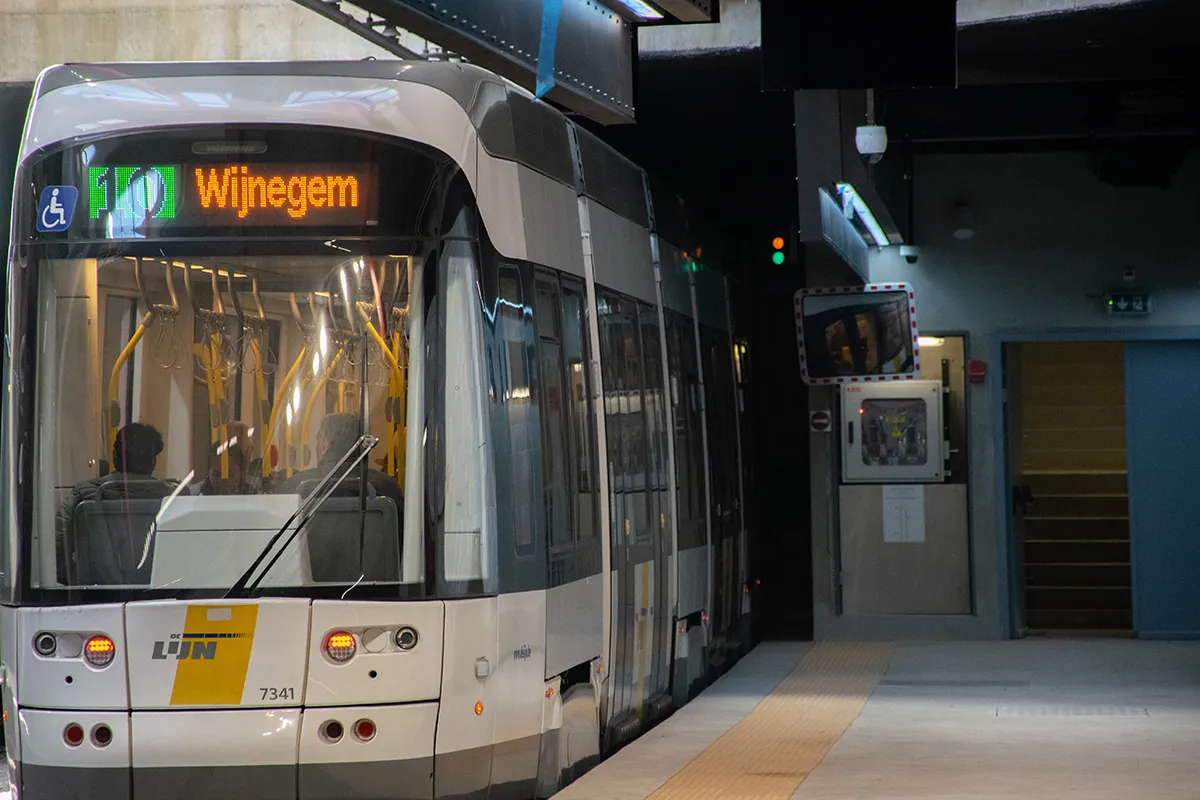
In Belgium, the young company works with ArcelorMittal, Lineas and De Lijn. “Our first contacts with them date back to 2021. They then installed the sensors externally on a PCC tram from the Vlaams Tram- en Autobusmuseum and ran a few journeys through Antwerp. This was probably their first real test in urban traffic,” says De Lijn spokesperson Marco Demerling. “After another successful collaboration, De Lijn joined the European ARISE project (Advanced Rail Innovation for Safety and Efficiency).” The project brings together universities, transport companies and industrial players from Spain, Belgium and the Netherlands to investigate how OTIV technology can improve tram safety.
“We have not yet received extensive feedback, but everyone is enthusiastic about the system. We expect the report at the end of 2025. If it shows that the number of accidents can be significantly reduced, we can certainly develop a business case for partially equipping our existing fleet with a collision warning system,” Demerling continues. The further roll-out of this technology should eventually make it possible to operate rail traffic using remote operators. “This is not currently on the agenda for trams, but it is certainly possible for rail traffic running on a completely segregated track, as trains do.”
OTIV is equally enthusiastic. “Our projects in ports and large industrial sites show that our system, with a remote operator stepping in when needed, offers enormous advantages. We work with the biggest players in Europe. And recently we signed a deal with a major railway company in South Korea. More and more people are realising that making trains and trams more autonomous can increase efficiency, boost capacity utilisation and improve punctuality,” concludes Niels Van Damme.
Question about this story? Ask your question
Keep following this
Get an email when a new story is published. No account needed.
- ThemeDigital business and automation
- SubjectGeneral







