Environment, energy & waste management
Recycling: lower costs, lower CO2 emissions with Simon Yzerbyt
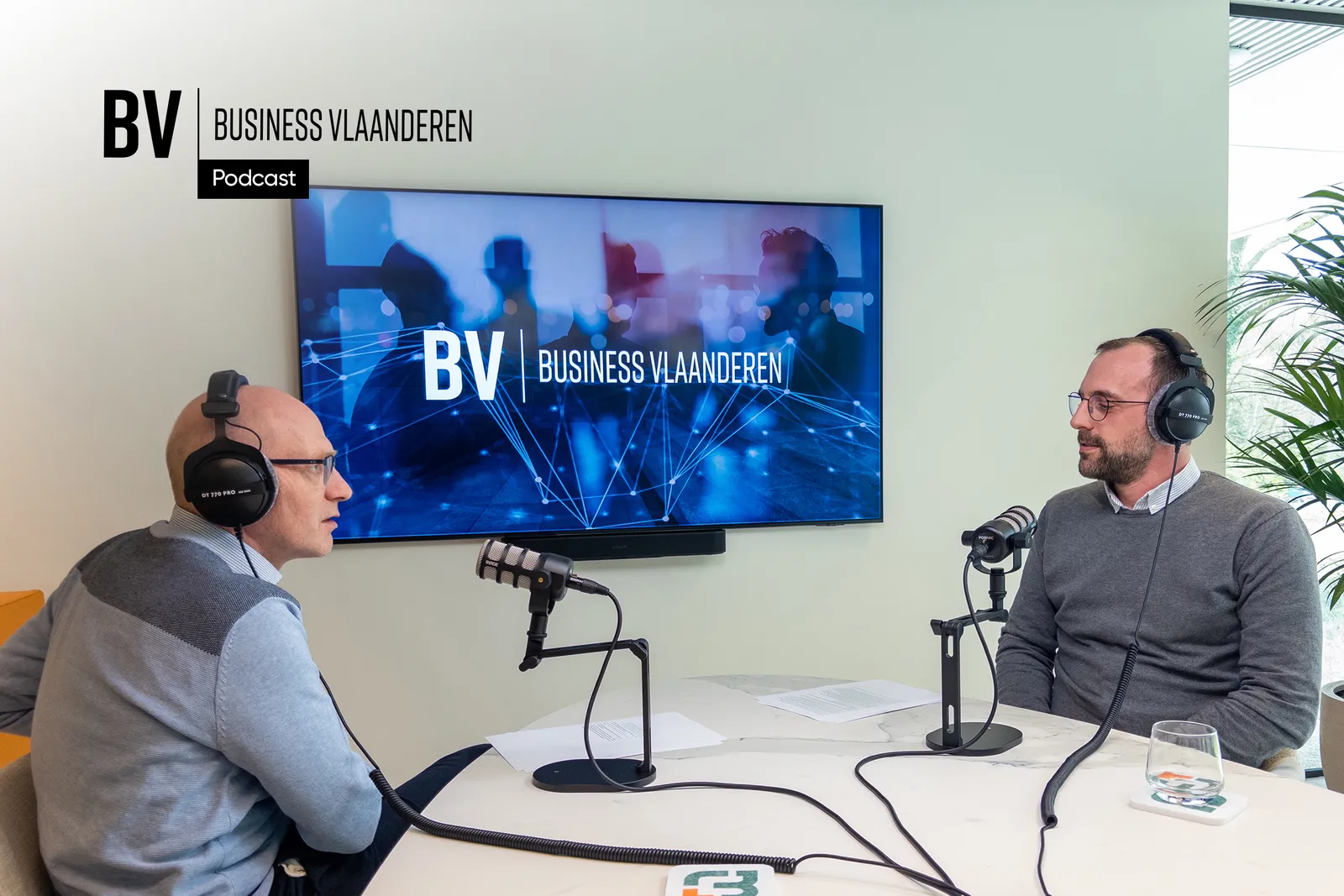
How companies can cut costs and reduce CO₂ emissions through recycling
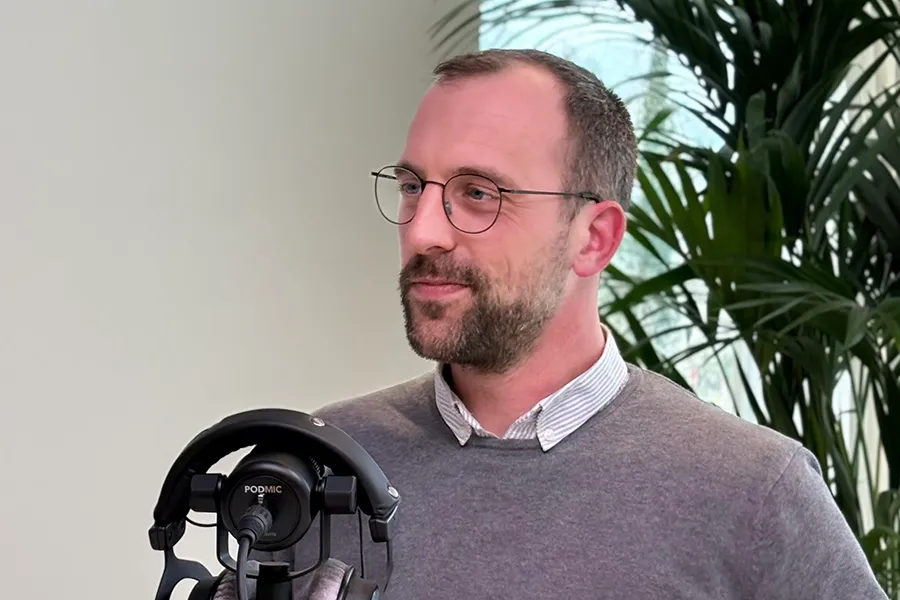
Interview with Simon Yzerbyt, Manager Continuous Improvement at RENEWI
Host: Björn Crul
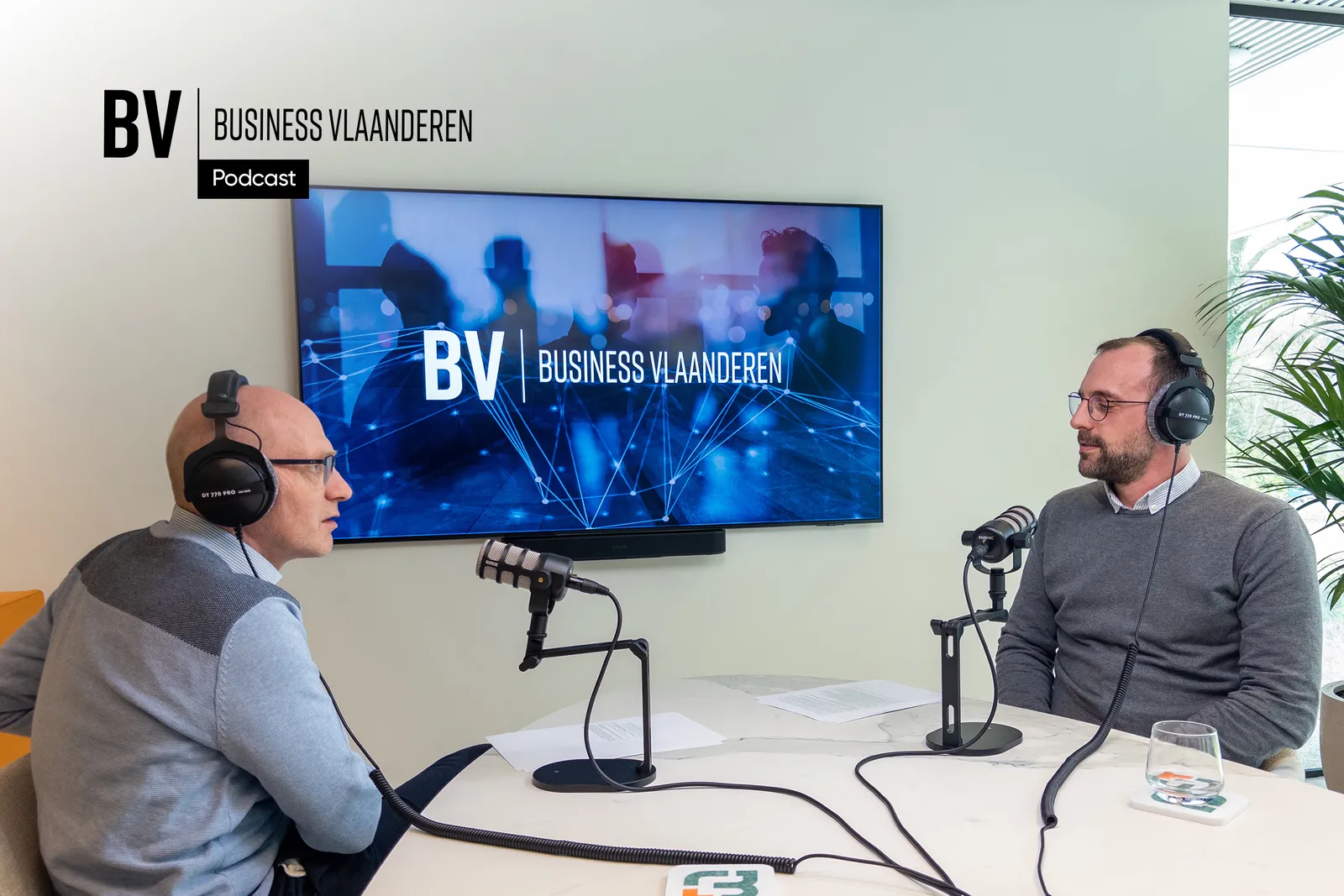
How can companies turn their waste streams into valuable raw materials while also saving costs and reducing CO₂ emissions? In this Business Vlaanderen podcast, presenter Björn Crul talks to Simon Yzerbyt (Renewi) about circularity, CSRD reporting, VLAREMA regulations and the role of data in sustainable waste management. Discover how recycling can be an economic as well as an environmental lever for businesses.
Full transcript
All chapters (25)
- Introduction and background to sustainability
- Renewi’s role and mission
- Types of waste streams
- Resource scarcity and geopolitics
- The sector’s role in the solution
- The impact of recycling on CO2 and the business case
- A micro perspective and data analysis
- European targets and circularity
- Declining circularity and European ambitions
- CSRD and sustainability reporting
- The impact of CSRD on SMEs
- Using data in customer relationships
- Flemish regulations and their impact on companies
- Extension to VLAREMA 9
- The ‘polluter pays’ principle
- Why progress can be slow
- What motivates companies
- A roadmap for companies
- Reducing CO2 emissions at Renewi
- Targets and challenges
- Logistics and electrification
- Scope 3 and value-chain impact
- The future of the circular economy
- Demand for recycled materials and policy recommendations
- Final advice and closing remarks
Introduction and background to sustainability
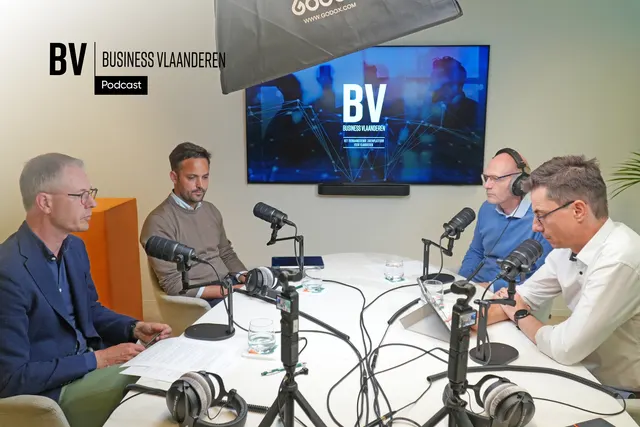
Björn Crul Hello listeners, and welcome to a new Business Vlaanderen podcast. Although some businesses are less vocal about their sustainability ambitions today, reducing their environmental footprint remains important for many companies. Cutting energy bills, lowering CO2 emissions and the pressure of regulations, both from Flanders and from Europe, all play a part, of course. Renewi, which specialises in waste processing and resource management, is a partner that helps businesses valorise their waste streams and take further steps towards recycling and circularity. In this podcast, we take the time to discuss these developments in more detail. My guest is Simon Yzerbyt from Renewi. Hello Simon, and welcome. For listeners who may not know Renewi very well, could you explain your role in the whole process of turning waste into raw materials?
Renewi’s role and mission
Simon Yzerbyt Certainly. Renewi is a leading waste-to-product company in the Benelux. Our mission is to give old materials a new lease of life. That means we manage waste streams in a circular way and offer a comprehensive range of services, from collection and pickup to sorting and processing into new, high-quality materials. We also play a connecting role in the circular economy, bringing partners and industry players together to develop new solutions. This helps our partners and customers achieve their sustainability ambitions, with a tangible impact on people and the environment.
Types of waste streams
Björn Crul What types of waste streams are we talking about?
Simon Yzerbyt We really deal with all kinds of waste streams. They are very diverse, from organic material such as wood and green waste to hazardous waste, plastics, metals, residual waste, construction and demolition waste, you name it. We handle almost everything except nuclear waste. To put that into perspective, in our financial year 25, we put 6.4 million tonnes of circular, low-carbon materials back on the market. In doing so, we avoided more than 2.5 million tonnes of CO2 emissions. Today, we have more than 6,000 colleagues across 120 sites in four countries: the Netherlands, Belgium, France and Portugal.
Read the full transcriptCollapse transcript22 more chapters
Resource scarcity and geopolitics
Björn Crul The subject we’re discussing today is very topical. Geopolitical tensions, including developments between the US and China, have put resource scarcity and the need for security of supply high on the political agenda. Are you seeing this issue resonate with your customers in Belgium?
Simon Yzerbyt Yes, absolutely. We are seeing growing awareness of this issue in Europe and Belgium. You notice it particularly in streams such as metals, which are crucial to the energy transition, but also in other areas such as waste-to-energy for biogas production, or the recycling of plastics themselves. The trend is very tangible.
The sector’s role in the solution
Björn Crul And how can your sector be part of the solution to these challenges?
Simon Yzerbyt Our sector plays a very direct role in the solution. As I said, our core mission is to give a new lease of life to materials that society has used. By valorising waste streams, we put more recycled materials back on the market. This has two major effects. First, we reduce our dependence on raw materials that have to be imported from outside the EU. Second, we build a much more robust, local supply chain. In other words, the more we recycle and reuse materials here, the less vulnerable we are to geopolitical tensions and price fluctuations on global markets.
The impact of recycling on CO2 and the business case
Björn Crul That is one aspect, of course. On the other hand, if we look at the impact that thorough waste sorting and recycling can have on CO2 emissions, how significant is it, and does the business case stack up in this respect too?
Simon Yzerbyt Yes, it certainly does. You can look at this on two different scales. From a macro perspective, I really recommend that listeners read the Circularity Gap Analysis. The analysis clearly shows that a large proportion of greenhouse gas emissions can be avoided by becoming more circular. And this is no small figure: it amounts to a 30 to 40% reduction in global emissions. That is because we avoid extracting and transporting materials and transforming them into products, but also because circularity leads us to reduce our consumption more broadly. So this is one of the most powerful levers we have for decarbonisation.
A micro perspective and data analysis
Björn Crul That’s the macro perspective. What about the micro perspective?
Simon Yzerbyt From a micro perspective, we can look more specifically at the level of recycling. To do that, we make extensive use of data. We use it to assess product carbon footprints, carry out CO2 footprint studies and even conduct life cycle analyses, so that we can see the impact and compare a scenario in which recycling is used with one in which it is not. This means we can quickly see whether recycling is more beneficial for particular impacts. The results depend on many factors: the local context, the quality of the material streams, the types of streams, and so on. At Renewi, we have commissioned studies to gain a better understanding of this. What they show is that recycling is beneficial in many cases compared with primary raw materials. In short, the business case absolutely stacks up.
European targets and circularity
Björn Crul Another factor is everything happening at European level. I’m thinking, for example, of the Clean Industrial Deal, the path towards making Europe a climate-neutral continent by 2050. The Von der Leyen Commission links sustainability ambitions with strengthening the competitiveness of our industry. Recycling and the reuse of raw materials are among the plan’s strategic pillars. The aim is for circular materials to account for 24% of materials in the European Union by 2030. That seems very ambitious. How far along are we today?
Simon Yzerbyt First of all, this is a very important and positive signal for our sector. Looking purely at the figures, the Circularity Gap Analysis shows that global circularity stood at 9.1% in 2018. That is at global level, again. By 2025, it had fallen to 6.9%.
Declining circularity and European ambitions
Björn Crul That’s striking, a decline.
Simon Yzerbyt It is indeed a decline, mainly due to economic growth in the BRICS countries. We see that countries with a more mature recycling sector and established circularity, such as Belgium and the Netherlands, are actually leading the way. According to the study, the Netherlands is 24.5% circular, for example, and Flanders is not far behind. So, at European level, we are somewhat lower, and that makes the ambition worthwhile and important. Ambitions are all well and good, of course, but Europe now also needs to provide the means to achieve them. That is not yet happening sufficiently. We need investment, clearer regulations, infrastructure and innovation. If we roll this out on a large scale, 24% by 2030 is not a utopian goal, but a realistic target.
CSRD and sustainability reporting
Björn Crul The European Union is also active in other areas. It has introduced a great deal of legislation intended to encourage companies to make faster progress on sustainability and take practical action. One example is the CSRD, mandatory sustainability reporting, initially for large companies. Renewi has already been through the whole process. What has that meant in practice? What have you learned from it?
Simon Yzerbyt Yes, that’s right. Renewi was initially a wave 1 company and was due to report in 2026. The Omnibus legislation eventually pushed that back to next year, making us a wave 2 company. Nevertheless, as you said, we went through the whole process, and it taught us a great deal in many areas. First, I would point to the analysis we carried out through the DMA, or Double Materiality Assessment, to identify what really matters to us as a company and to our customers in terms of impact. We found that climate and circularity are our most important issues. This helped us align our ambitions and targets more effectively. We gained a clearer picture of how mature we are in terms of data collection, data analysis and transparency across the business. Ultimately, all of this benefits our customers. The whole process has brought us closer to them, because we need to report on these issues to our customers more transparently and proactively.
The impact of CSRD on SMEs
Björn Crul There has been a lot of discussion about sustainability reporting. Following criticism from the business community, among others, the deadlines were indeed changed under the much-discussed Omnibus legislation. For now, the reporting requirement applies only to larger companies. What we often hear from SMEs is that the requirement still filters down to them, because larger companies need data from SMEs. Can you also help your customers with their reporting?
Simon Yzerbyt Absolutely. Through the CSRD process, we commissioned analyses and studies of our main waste streams to clearly map the associated climate and circularity results of our own in-house processing. This means our customers can now see clearly how much waste they produce, what type it is, and the climate and circularity impacts of each stream. That is very important, of course. It is what customers expect in terms of reporting, but it also gives them a completely different perspective on waste.
Using data in customer relationships
Björn Crul Yes, they can almost use that to shape their own strategy.
Simon Yzerbyt: Exactly. That means they can take a closer look at their results, see where things are going well, where they may be producing too much waste in their process and where they can sort more efficiently to reduce their impact. This also makes it much easier for SMEs to strengthen their internal waste policies and reporting.
Björn Crul: Does having access to data also mean that you talk to customers differently, focusing on waste and raw materials?
Simon Yzerbyt: Yes, exactly. We no longer sit down together just to talk about waste collection or processing. Instead, we work together to see how we can reduce those waste streams, improve quality and help customers with their own improvement programmes in relation to climate and circularity. In that sense, we have now truly become a strategic partner. We help companies not only meet their legal obligations, but also define their own ambitions and concrete action plans. This can range from small improvements in waste sorting itself to major circularity programmes in which materials are put to use again. In short, good data helps with reporting, but above all with making improvements. And that is precisely where we want to support companies, large and small.
Flemish regulations and their impact on companies
Björn Crul: Simon, we have talked about European regulations, but of course there is also the Flemish level. New environmental regulations have been introduced there too. VLAREMA 8 has been in force since 2021 and VLAREMA 9 since 1 July 2024. What impact do these new Flemish rules have on your customers? And how are you adapting as a company to these new obligations?
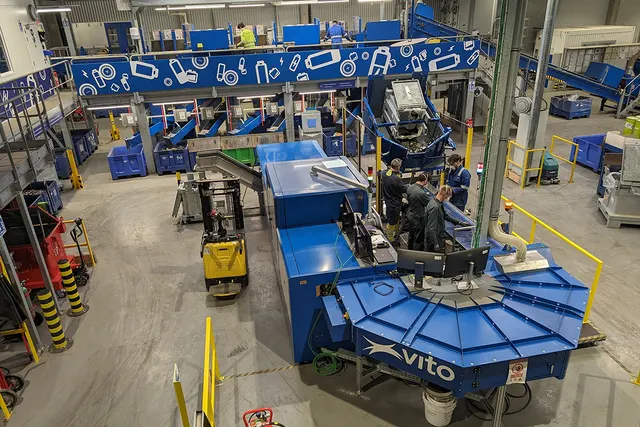
Simon Yzerbyt: Yes, exactly. To start with VLAREMA 8, it primarily strengthens the obligation to sort, separate collection, producer responsibility and recycling requirements. In practical terms, this means that Flanders aims to prevent the loss of valuable materials to landfill and, above all, incineration. It does so by working across the entire chain, from the producer of the waste through to the processor and, for example, incineration. For our customers, this means closer monitoring of their own sorting performance. Renewi helps its customers meet these targets. We have installed a high-tech sorting line at our site in Ghent, specifically to ensure that all the different waste streams are sorted in line with the VLAREMA 8 framework, using various processes including mechanical and optical sorting.
Extension to VLAREMA 9
Björn Crul: And then there is VLAREMA 9 on top of that, with even stricter requirements.
Simon Yzerbyt: Yes, exactly. More waste streams are being added to the sorting obligation. The number rises from 24 under VLAREMA 8 to 32 under VLAREMA 9, mainly in connection with the construction sector. There is also the separate collection of bio-waste and, for example, the weighing of collected waste. On the one hand, all these measures reflect greater ambition on circularity. On the other, they also create obligations for companies, customers and ultimately all market players.
The ‘polluter pays’ principle
Björn Crul: And there is something else new on the way, Simon. VLAREMA 9 provides for the polluter pays principle. Do you think that will be a game changer?
Simon Yzerbyt: Yes, exactly. This means that all collected waste will have to be weighed. This has two implications. Firstly, it will make the collected waste more traceable, in terms of its weight and quality. This is already included in VLAREMA 8 and will help with enforcement by making it easier to identify whether quality requirements are being met. In addition, many customers will become more aware of how much waste they produce themselves, and will therefore be directly incentivised through costs to sort better and produce less residual waste. Companies that are already making an effort will also be rewarded for it.
Why progress can be slow
Björn Crul: The better the sorting, the less a company pays and the higher the recycling rate. That seems entirely logical, of course. Yet many companies still have a long way to go. Why isn’t progress faster?
Simon Yzerbyt: We are aware that many companies, both small and large, still too often see a well-considered waste policy as a necessary cost. That is a bit of a misconception. For most companies, it actually delivers more than it costs. But if we look specifically at SMEs, for example, I think they mainly run up against the realities of their day-to-day operations. Their schedules are already full, and sustainability and waste sorting often end up on an already very long to-do list. Not because they are not interested, but because they simply lack the time, knowledge or people to look into it properly. Larger companies often have specialist teams and roles to drive forward their reporting obligations. And yes, I think that is precisely where we at Renewi come in. It does not have to be difficult. We need to show SMEs that it can be simpler and more cost-effective, by guiding them, simplifying the process and making it very clear what steps they can take and what benefits they will bring.
What motivates companies
Björn Crul: Looking at the companies that are already very active in this area, what is their main motivation? Is it legislation, financial incentives or sustainability ambitions?
Simon Yzerbyt: What we clearly see today is that there are many different reasons for focusing on circularity and waste policy. That is also borne out by our Circular Reality Scan. This is a large-scale IPSOS study of more than 200 B2B companies in Belgium, over 80% of them SMEs with at least 10 employees, which we carried out at national level. We explicitly asked companies why they sort their waste streams. 7 out of 10 companies say they sort mainly because of their sustainability ambitions. Around 30% do so to reduce waste, and 25% to meet legal obligations. That is what companies themselves say, but it shows that the motivation goes beyond compliance alone. We also find that companies increasingly understand the value this creates for their own customers and partners. Sustainable conduct is now an explicit expectation, both among consumers and in B2B relationships, and it also plays a role in the labour market. For young jobseekers, sustainability is often a decisive factor when choosing an employer.
A roadmap for companies
Björn Crul: For companies that are just starting out with their waste policy, what steps do they need to take? What does the roadmap look like?
Simon Yzerbyt: I think there are three main steps. Step 1 is to measure, because what gets measured gets managed. That means mapping exactly what you produce today: how much waste you have, what types of waste streams and where the volumes are generated. It sounds simple, but it really is the starting point. Smaller companies also have an additional consideration. Large B2B customers are increasingly asking for CSRD information, and those demands will continue to grow in the coming years. So gaining insight is essential. The second step is to look at the opportunities for improvement. Where can you reduce residual waste? Which streams can you separate, and what quick wins are available? Companies do not have to do this alone, of course. We at Renewi can help with that. Often, the benefits come from a few targeted changes. The third step is to take concrete action. Once you know where the levers are, you can take tangible steps. And you will feel the benefits straight away in your pocket. Better sorting means less residual waste and therefore lower costs. It also increases your recycling rate, which is becoming increasingly important for customers and reporting. So go from insight to improvement to action. That is all you need to make rapid progress.
Reducing CO2 emissions at Renewi
Björn Crul: I would like to return briefly to Renewi itself. You are a large industrial company. How are you working to further reduce your own CO2 emissions?
Simon Yzerbyt: We have been working to reduce our own CO2 emissions for some time. We currently report in line with the Greenhouse Gas Protocol and have made a commitment to SBTi, the Science Based Targets initiative. We report against all three scopes within that framework. Scope 1 covers all direct emissions, such as gas consumption at our sites, as well as emissions from our own vehicles. Scope 2 covers indirect emissions associated with purchased electricity. Finally, Scope 3 covers everything that happens in our value chain, from purchased materials to the processing and recycling or incineration of the output materials we produce.
Targets and challenges
Björn Crul: Those are the three different areas in which you are taking action. What are your ambitions? What targets are you working towards?
Simon Yzerbyt: For Scope 1 and 2, in line with SBTi expectations, we aim to achieve a 42% reduction by fiscal year 31, compared with fiscal year 22. For Scope 3, we aim for a 25% reduction in fiscal year 31 compared with fiscal year 23. How difficult or easy is it to keep making progress? Our Scope 1 and 2 emissions are often grouped together and have been falling for years, but we are seeing that the easiest reductions are already behind us. Our biggest challenge at Renewi is that we have many process emissions associated with treating or cleaning the waste streams we receive to the required quality. For example, at our ATM process in Moerdijk, we clean contaminated soil. We recover oils and fossil fuels from it, which we then use ourselves to thermally clean the soil. That is a very circular, local process, but there are few ways for us to reduce its emissions. This would require carbon capture on a very large scale, which is a major challenge.
Logistics and electrification
Björn Crul: And then there is logistics, because you have a large number of lorries on the road collecting all that waste from companies.
Simon Yzerbyt: Absolutely. We have one of the largest fleets in Belgium and the Netherlands combined, and a quarter of our emissions come from logistics. Electrification is therefore hugely important, but it takes time given the size of our fleet, and it is also very costly. There are also many uncertainties, for example due to grid congestion in the Netherlands. We now use green electricity at our own sites, but electrifying larger installations, sorting lines and equipment such as bulldozers and cranes remains a challenge today.
Scope 3 and value-chain impact
Björn Crul: That was Scope 1 and 2, which you have a great deal of control over yourselves. Then there is Scope 3, everything linked to your value chain, including further processing. How do you see further reductions in CO2 emissions being achieved there?
Simon Yzerbyt: Yes, just to clarify that as well, our Scope 3 emissions are around ten times greater than our Scope 1 and 2 emissions combined. This is often the case for very similar companies, and it is also the most challenging scope. The biggest opportunity lies, and this is a positive point, in sorting the waste streams we process more effectively and to a higher standard. If we sort them better, we can avoid incineration and put materials back into circulation in society. So it is very positive that we have an aligned strategy focused on the circular economy and climate action. And yes, this is clearly the biggest challenge. But what is clear is that we cannot do this alone. Action will be needed throughout the entire value chain, and we will have to work together to find solutions. That is precisely where our role comes in. We are continually looking for the most impactful ways to further reduce our own emissions and those of our customers.
The future of the circular economy
Björn Crul: Simon, during this conversation you have referred several times to the circular economy and closing the loop, which reduces the need to extract new raw materials. This is also high on the agenda for policymakers in Flanders. What is your vision? How will things develop over the coming decades? And what, in practical terms, is Renewi’s role in the transition to a circular economy?
Simon Yzerbyt: As mentioned, I think there is an entire sector working to recover valuable raw materials. This is absolutely fundamental, but unfortunately it is not enough. It needs to be supported. We can see that several incentives are needed to make our society more circular. I’ll start with the eco-design stage itself. We need to move away from complex products and use products that are easier to dismantle. For example, removing batteries from phones sounds simple, but today there are many products that are genuinely difficult to take apart. This requires a great deal of technical expertise within our sector to dismantle them at the end of the process. Simplifying products and the materials they contain is an important step. Secondly, the European market for recycled materials needs to be protected, and Europe needs to become less dependent on imports. The European market for recycled materials is under pressure from cheap virgin raw materials from countries with lower environmental standards. Fair competition requires, for example, a tax on virgin raw materials and significant investment in European recycling capacity.
Demand for recycled materials and policy recommendations
Björn Crul: And is there already enough demand on the other side of the equation?
Simon Yzerbyt: Yes, this is also a very important aspect. Without a mandatory recycled content share in products, the circular economy will remain little more than fine words. We are calling for ambitious European targets for recycled materials across all sectors, and for circularity criteria to be routinely included in public procurement. This would create direct demand and encourage manufacturers to innovate and use recycled materials. Finally, it is crucial to ensure that national taxes do not undermine the circular economy. National tax measures without European coordination are counterproductive. They shift waste streams across borders, increase costs for forward-thinking recyclers and threaten our circular infrastructure. We are therefore calling for European harmonisation of taxes and regulations based on facts, and for circularity to be pursued across Europe, rather than through ad hoc political responses in individual countries.
Final advice and closing remarks
Björn Crul: Finally, if you could give our listeners one piece of advice about their waste and sustainability policies, what would it be?
Simon Yzerbyt: Yes, I think every effort counts. So start by analysing your current situation, contact Renewi to develop an action plan and identify clear, tangible steps for your business and your customers.
Björn Crul: Simon Yzerbyt, thank you for this conversation. These topics will certainly remain relevant for some time to come. Dear listeners, I hope you have found some inspiration and perhaps can take the information from this podcast further. Thank you for listening, and I look forward to speaking to you again. For more business news and inspiration, you can also visit our website, businessvlaanderen.be. See you soon.
Keep following this
Get an email when a new story is published. No account needed.
- ThemeEnergy security and the circular economy
- SubjectEnvironment, energy & waste management