Environment, energy & waste management
Flanders sets the global standard for battery sorting
Text Bavo BoutsenImage VITO
“Smart vision technology could revolutionise the recycling sector”
Batteries have become an indispensable pillar of modern life. Climate challenges and geopolitical tensions bring a number of major challenges, including those relating to raw materials. At the same time, opportunities are emerging in battery sorting and recycling. Thanks to research by VITO, Flanders is increasingly establishing itself as an international frontrunner in this sector. The resulting technological innovations have the potential to fundamentally change the landscape.
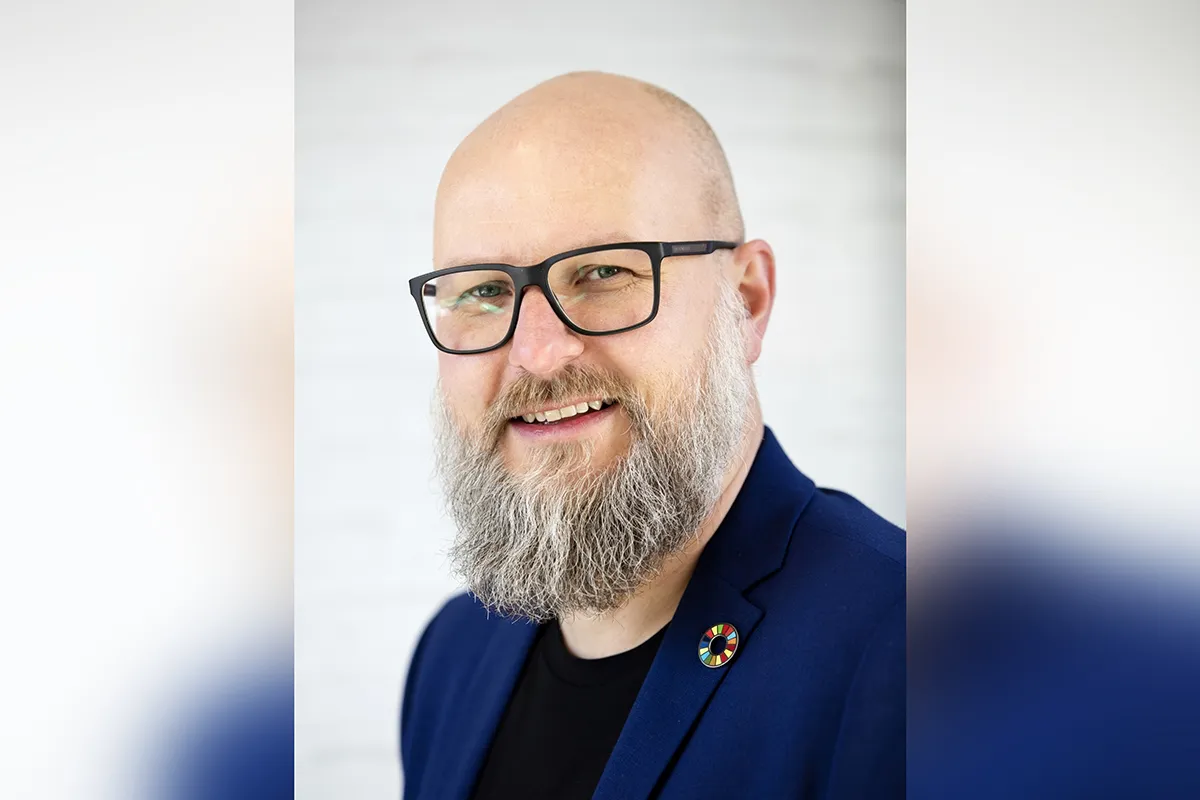
Batteries are everywhere in our daily lives. What is more, their numbers will continue to grow in the years ahead. “In Belgium, more than 268.5 million batteries were placed on the market in 2023. That is around 23 batteries per person. What’s more, not only is the number of batteries in use continuing to rise, they are also becoming increasingly diverse and complex,” says Kris Broos, sustainable materials expert at the Flemish Institute for Technological Research (VITO).
“Alongside conventional alkaline AA batteries, we are also talking about, for example, different types of lithium-ion and nickel-metal hydride batteries. All the batteries placed on the market must, of course, be recycled at the end of their life cycle,” Broos continues. Belgium is a frontrunner in battery recycling. We owe this leading position primarily to our pioneering efforts in collection and sorting.
Characterise-to-Sort
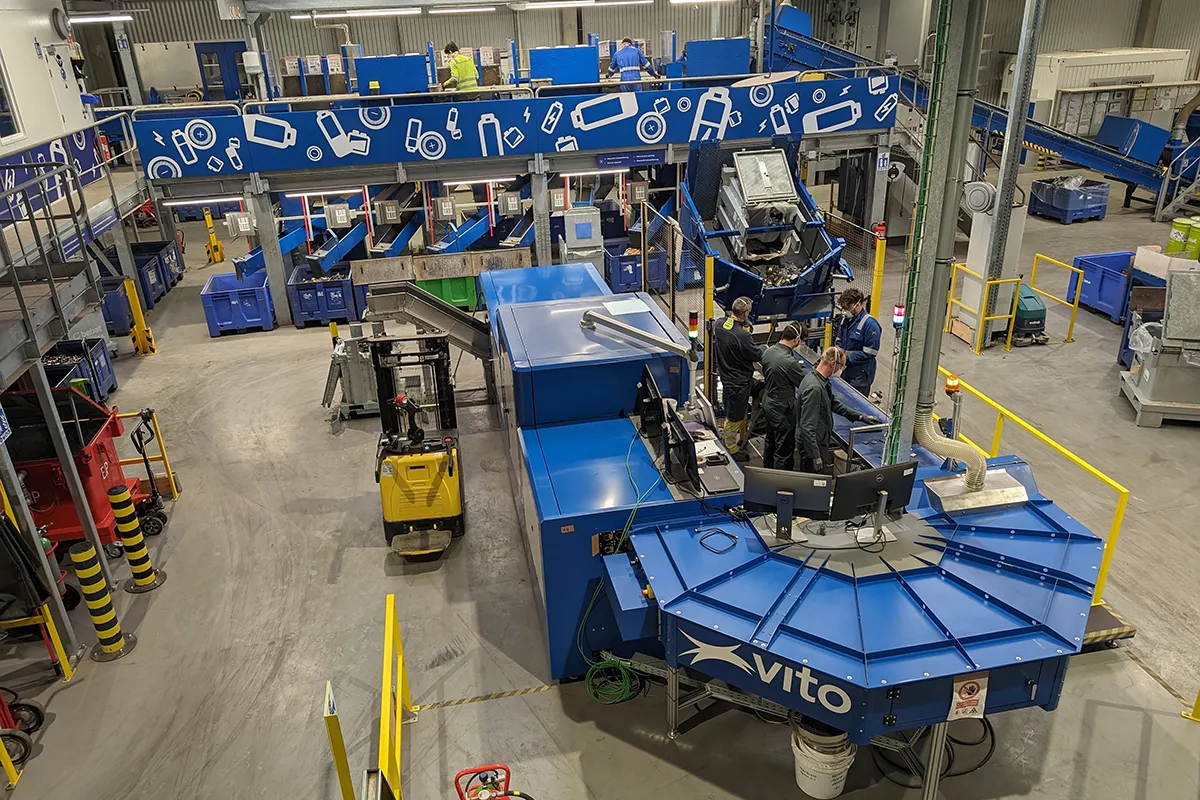
“As batteries become more complex, their chemical compositions vary considerably, and it is not possible to recycle a mixture of chemistries,” Broos continues. Faced with the growing importance of batteries and their increasing complexity, work is under way on new ways to make sorting and recycling even more efficient. This is taking place first and foremost at Sortbat’s state-of-the-art sorting facilities in Tienen, where a close collaboration with VITO has been built up over the past few years.
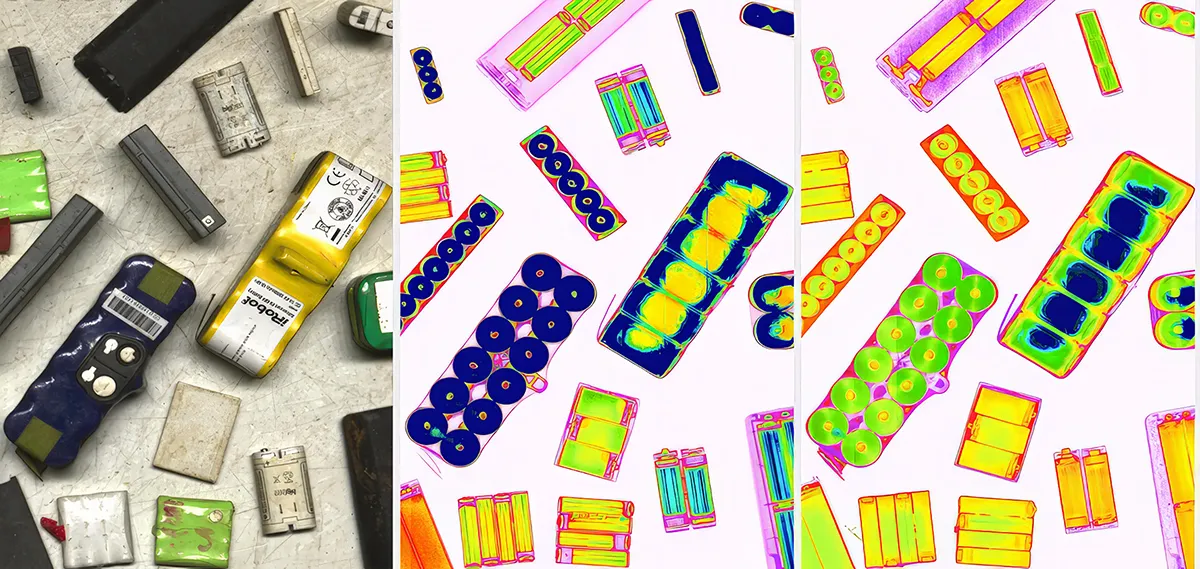
Until recently, sorting was based primarily on the human eye and therefore on the expertise of Sortbat employees. This requires months of training. “Today, however, we have developed smart vision technology with VITO. It combines X-rays, a 3D laser and a colour camera, allowing us to see the chemical composition of a battery in real time. This is the result of an AI system based on machine learning, which we have trained using data from millions of batteries,” says Kris Broos.
“I often call this Characterise-to-Sort technology (CtS) ‘Terminator vision’, because as an operator you literally get to see the chemical reality,” he continues. “This achievement is attracting a great deal of international attention. There is considerable interest, both from foreign companies and from schools that come to visit. The industrial line we are currently building using this technology will give us a platform to showcase it to the world. This is extremely important if we are to tap into its economic potential.”
Revolutionising the recycling sector
With this in mind, Sortbat and VITO are launching a joint venture: XBAT.ai. “By pooling our strengths and expertise even further, we want to bring the technology into industrial use,” says Broos, who also highlights the project’s considerable societal relevance. “This is partly due to the growing importance of batteries, but it is also linked to raw material scarcity and Europe’s strategic autonomy. Raw materials for batteries are crucial in the geopolitical arena,” he adds.
In time, smart vision technology could also be used to sort other materials. “Besides separating batteries from other waste streams, we are particularly interested in metals such as aluminium and copper. Smart characterisation and sorting can add considerable value when it comes to recycling these materials, and we are already taking the first steps with a new pilot plant being built by engineering company Absolem. At VITO, we believe that commercialising this technology could revolutionise the recycling sector,” concludes Kris Broos.
Question about this story? Ask your question
Keep following this
Get an email when a new story is published. No account needed.
- ThemeEnergy security and the circular economy
- SubjectEnvironment, energy & waste management