




Circular fashion seeks a new economic model
Text Anse KeisseImage Fedustria, Flanders District of Creativity, The Or Foundation
“Those who start experimenting today will build up a learning curve”
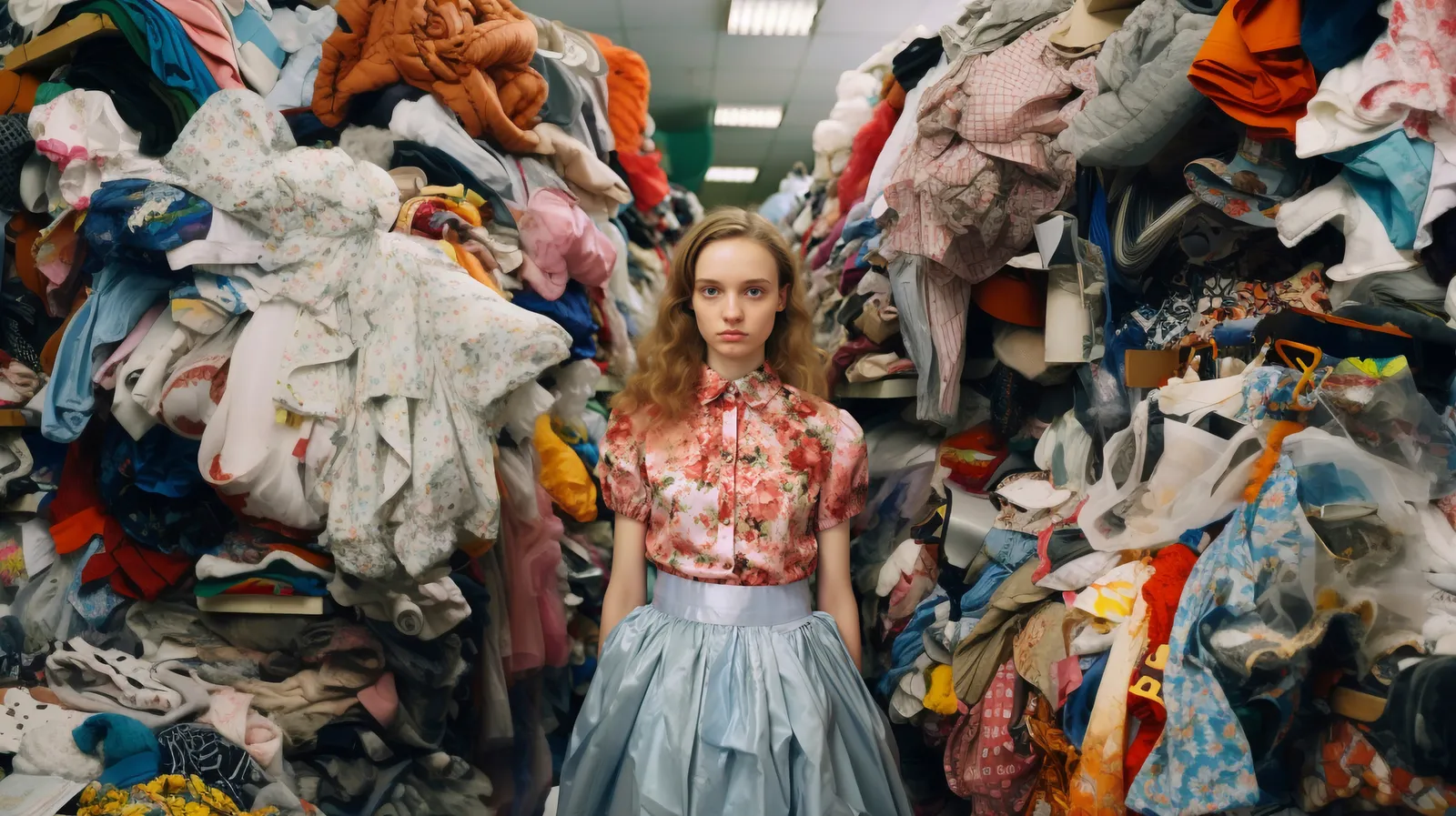
The fashion industry is under pressure worldwide to rethink its linear production model. Huge quantities of textiles end up in landfill or incinerators every year, while raw materials are becoming increasingly scarce and international supply chains are under strain. In Flanders, too, there is growing recognition that the sector needs to be fundamentally reorganised, driven in part by European legislation.
In our country, textile companies (excluding clothing manufacturers) generate around €5 billion in turnover and employ more than 16,000 people, often in high-value-added niches. This economic significance makes the transition all the more urgent: the question is not only how to make the sector more sustainable, but also how to keep it competitive. “When it comes to collection and sorting, we are among the leaders in Europe,” says Karla Basselier, CEO of Fedustria, the federation of the textile, wood and furniture industries. “Textiles have been collected separately here for years through the familiar containers. Sorting systems have also improved significantly in recent years, partly thanks to technological innovations such as AI.”
In recent years, this evolution has already led to new business models, such as rental, second-hand platforms and repair services. At the same time, however, it is becoming clear that the real challenge lies elsewhere. “Only a very small proportion of textiles are actually reprocessed into new textiles,” says Basselier. “So-called closed-loop recycling, in which clothing is turned back into raw material for new clothing, remains stuck at around 1 per cent for now.”
From sorting to genuine circularity
The transition to a circular model affects the entire value chain, from design and production to reuse and recycling. The sector is therefore working on structural solutions in response to the European requirement to collect and process used textiles. The system must be fully operational by 14 June 2028 at the latest.
Flanders District of Creativity is also supporting companies through this transition, for example with the Close The Loop project. “We must not underestimate the importance of quality clothing and extending its lifespan. That is the simplest way to make an impact today,” says innovation lead Simon Gryspeert. “Using or repairing clothes for longer significantly reduces their environmental impact and strengthens trust in a fashion brand. This can pay off directly, for example through paid repair services, or indirectly through greater loyalty.”

The economic logic behind circularity
Yet the discussion is just as much about new economic models, raw material supply chains and the future prospects for textile companies in Europe. Companies often face complexity because circularity requires different processes, different partners and better data on products and materials. The sector also recognises this challenge. Karla Basselier says: “The technology to process textiles in a truly circular way exists, but it is not yet sufficiently scalable. Without a viable business case, major investments will not be made, and Europe has an important role to play here. The sector is counting on the EU to boost the market for circular products through the forthcoming Circular Economy Act.”
According to Sara Kovic, founder of the circular platform Okret, the challenge lies above all in practical implementation, and it is essential to take action now. Okret guides companies through this transition with strategic advice and provides operational support in setting up pilot projects, including through a digital platform that brings together data from circular initiatives. “Those who start experimenting today will build up a learning curve. Those who wait until regulation makes change compulsory will have to make the switch under time pressure.”
Footwear retailer Torfs has already launched a pilot project with help from Okret. It explored how consumers respond to take-back schemes and the logistical challenges involved. “Pilots like these often show how complex circular supply chains are in practice, while also providing valuable insights into consumer behaviour, logistics and collaboration between partners,” says Kovic.

A change in mindset
Various tests have now shown that consumers are indeed interested in circular initiatives. At the same time, their behaviour varies widely: there are early adopters, a group of sceptics and a price-sensitive majority. Sara Kovic says: “As long as textiles are seen primarily as disposable products, it will be difficult to make circularity take hold. The shift towards creating value over multiple life cycles is essential.”
The coming years will show whether circular fashion remains a niche or develops into a new industrial model. Karla Basselier believes a turning point is in sight, but says the transition will take time. “The European requirements on extended producer responsibility will bring a significant acceleration by 2028. But to make a real impact, we need to look towards 2030 to achieve circularity at scale.”
Question about this story? Ask your question
Keep following this
Get an email when a new story is published. No account needed.
- ThemeEnergy security and the circular economy
- SubjectGeneral







