Futurists on industry and technological innovation
Text Björn CrulImage Boris Vermeersch
“We need to dare to experiment much more”
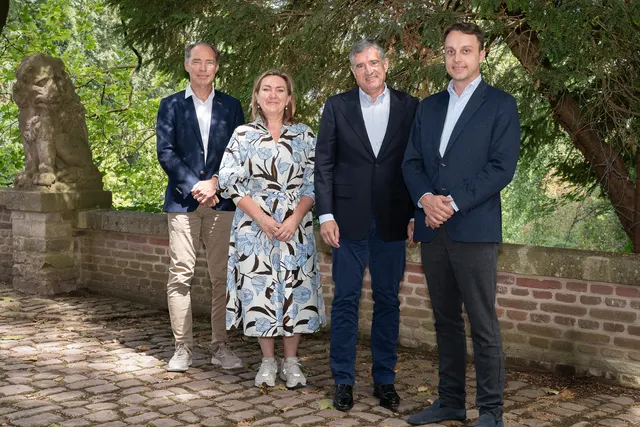
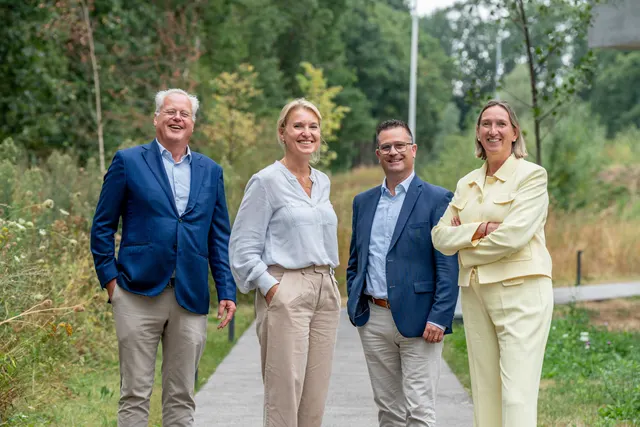
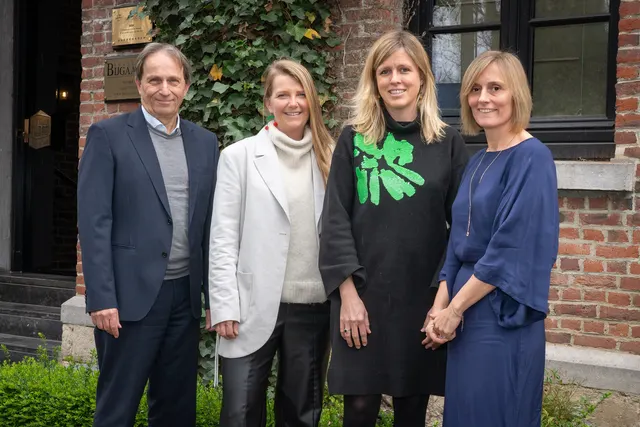
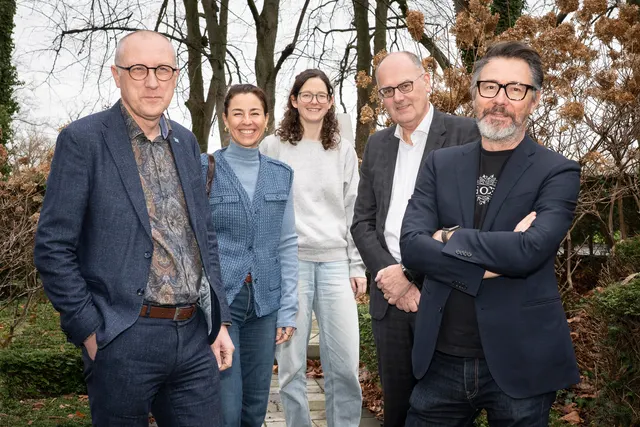
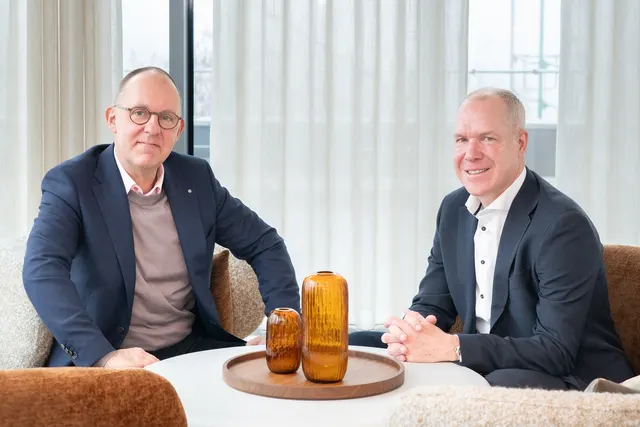
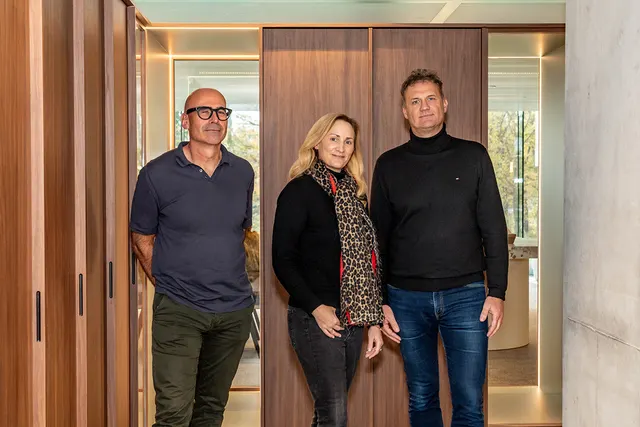
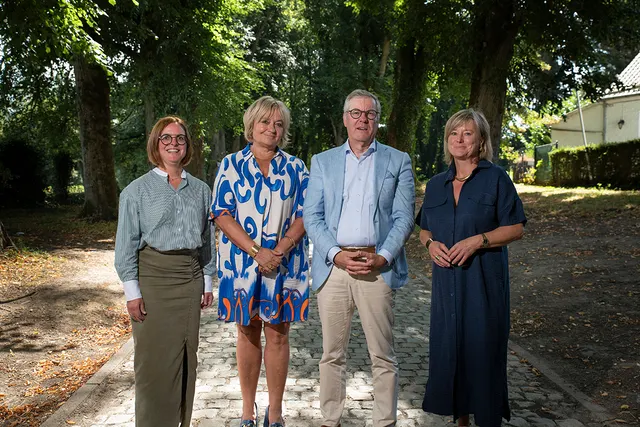
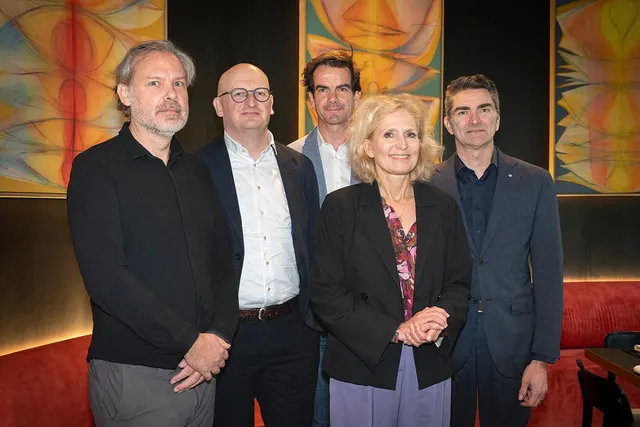
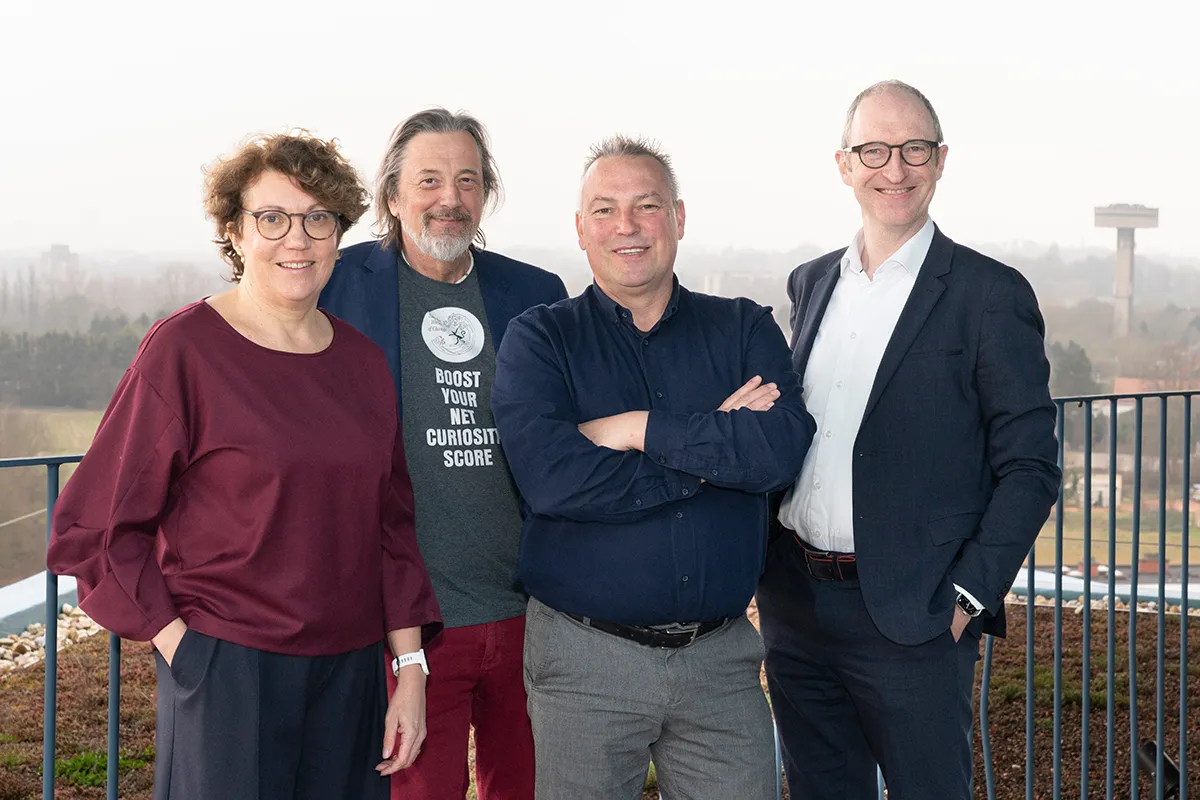
Europe’s industry is going through a difficult period. Competition from low-wage countries and China, a tariff war with the US and rising costs at a time when innovation is essential… The challenges are multi-layered and complex. What does the future hold for our industry? We brought a panel of futurists and tech experts together to hear their analysis and insights: Carine Lucas (Agoria), futurist Rik Vera, Bert Van Thilborgh (Futureproved) and Joachim De Vos (Living Tomorrow and UGent).
Manufacturing is struggling. A number of large companies have run into difficulties, with the impact also being felt by the SMEs that supply them. Is there light at the end of the tunnel? “The statistics show the biggest job losses in 12 years. For the first time, we are also seeing a slight fall in employment in the ICT sector, whereas it continued to grow during previous crises. This is a significant warning sign,” says Carine Lucas, digital expert at Agoria.
From overregulation to enabling policy
She notes that politicians have become aware of the urgency. “The Draghi report, Trump’s new term in office and the disappearance of companies such as Van Hool and Audi Vorst have made industry a prominent theme in all the country’s coalition agreements. But now the priority is to take concrete action quickly on labour costs, energy costs and complex regulations. Europe is setting the tone with the Omnibus package, but policy needs to focus more on enabling than regulating.”
Like many business owners, author, keynote speaker and futurist Rik Vera is frustrated by the overregulation that has taken hold in Europe: “The EU has a habit of coming up with rules for problems that don’t yet exist. I often visit China and, paradoxically, its business policy is more enabling. They let innovation and chaos emerge first, then regulate. Here, we intervene before that creative chaos has even had a chance to break out. Yet that is exactly what you need to innovate.”
Joachim De Vos of Living Tomorrow, also a keynote speaker and author, sees light at the end of the tunnel. “Thanks to the policies Donald Trump and Elon Musk are pursuing in the US, people in Europe are finally realising that change is necessary. Companies that have failed to innovate enough are being ruthlessly forced out. Unnecessary jobs are being cut. I expect a turnaround from 2026-’27. Look at what is happening in the defence industry. Since the end of the Cold War, we have scaled it back, but now we realise that we need to invest heavily in it again. That is necessary for our security, but the defence industry is also the source of so many technologies we use in everyday life, such as the internet and GPS. For me, this is the greatest opportunity Europe has ever had to reclaim its place alongside the US, China, Russia and Saudi Arabia.”
Taking the long view
Companies that respond to needs in the right way and know how to integrate technology can certainly succeed, adds Bert Van Thilborgh of Futureproved Trendwatchers: “I see some great examples in the projects we support. Take Movu Robotics from Lokeren, which has taken off and grown from 20 to 400 employees in just a few years. It proves that you need to embrace technology rather than freeze up for fear of its potential drawbacks. You can think what you like about Elon Musk, but he has managed to turn some wild ideas into reality. That is the problem in Europe: we don’t dare to commit fully to technology, or we put the brakes on projects of this kind of moonshot ambition.”
Rik Vera agrees. “This is an era of enormous change and enormous opportunity. I urge companies to explore technology proactively and learn through trial and error. I hear so many reasons not to do it: we don’t have enough expertise in-house, it’s not mature enough, there’s no business case yet… But people need to realise that the balance between making a profit and making a loss can shift very quickly. The right strategic choices can suddenly win you the market.”
At the same time, the futurist hopes that governments and businesses alike will take a much longer-term view. “We need a vision that looks ahead to 2030, 2050 and even 2070. Not long ago, I was in Saudi Arabia. The state-owned company Aramco has stated its ambition to become independent of oil by 2035. At the same time, the regime is working on a vision of where it wants to be in 2050. You can see how much drive that creates. We lack that kind of drive in Europe. Too many policymakers and companies have no real idea where they are going.”
The possibilities are endless
Technological change is advancing at an exponentially faster pace than before. Carine Lucas of Agoria also sees many opportunities: “There has never been so much technology available at such a low cost. We are seeing a real peak in opportunities for research and innovation. Things that once required a PhD are now within reach. We need to translate this into opportunities for the SME sector. We are trying to show SMEs that creative solutions can now be found for 99% of their problems. We are also seeing revolutionary developments in science, for example in the time it takes to develop new medicines. The most recent Nobel Prize in Chemistry went to three Google DeepMind researchers who cracked a code relating to protein structures in our bodies.”
As a techno-optimist, Joachim De Vos sees the key challenge here too: turning innovative research into successful products, services, processes or new business models. “We are good at coming up with new ideas, but not at bringing them to market. Too much emphasis is placed on measuring innovation success by how much IP you manage to register. That’s wrong: it’s about translating that intellectual property into business. Look at Philips. It is a company packed with IP that laid the foundations for AI, and yet it has not been innovative enough. It is still mostly about invention. We need to make much better use of our brains and dare to take more risks,” he says. “Here’s one example: we keep seeing accidents at level crossings. Yet an inexpensive smart camera costing around ten euros, installed on every train and at every level crossing, could easily prevent such incidents. Why are we so averse to doing that?”
“We don’t experiment enough,” says Rik Vera. “Sometimes companies are even tired of innovation. That is the real danger. It can make your mind stagnate and cost you the curiosity that, in my view, is essential to long-term success. Let’s automate all the boring tasks with AI and spend the time we free up on creative and innovative thinking!”
Education and technology
Education has a crucial role to play in this. But it needs to be restructured. “We have known for years that standards are falling. But our education system remains stuck in structures and methods from the past. To encourage spontaneity and help young people think creatively and innovatively, we need to give them more freedom, outside the traditional timetable,” says Bert Van Thilborgh. “The solution lies in shortening courses, making them more practical, fully integrating technology and involving businesses in education much more than we do today.”
“Technology is certainly part of the solution, including for further training later in people’s careers,” adds Carine Lucas. “Our country has one of the worst scores in Europe for lifelong learning. We can improve that score with tailored digital learning formats. Or consider the ambition to achieve an employment rate of 80 per cent. We can make work more sustainable with cobots that make physical labour less demanding, or use AI to make administrative jobs less stressful. In my view, the biggest challenge in making all this happen is greater collaboration between the sciences and the humanities: reconciling technology with the human and creative sides of life. There is still plenty of work to be done in that area.”
Question about this story? Ask your question
Keep following this
Get an email when a new story is published. No account needed.
- ThemeBusiness growth and entrepreneurship in Flanders
- SubjectRoundtable