Three Belgian Americans on the Donald Trump–Kamala Harris battle
Text Björn CrulImage Björn Crul, Björn Soenens
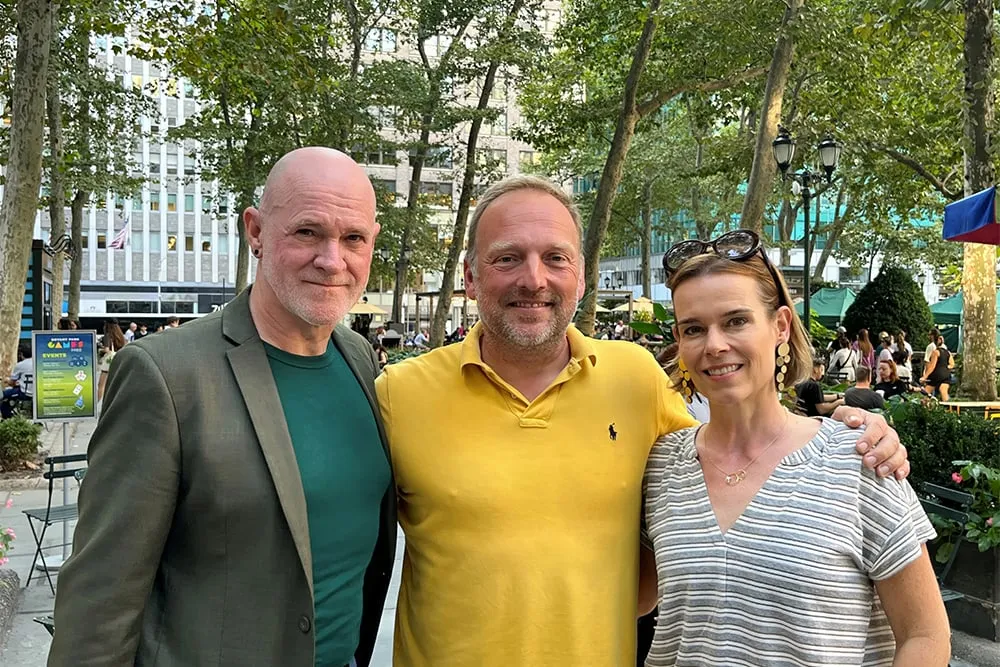
On 5 November, Americans will choose a successor to President Joe Biden. It will be either Democrat Kamala Harris or Republican Donald Trump. Another close election is in store, and the ‘winner takes it all’ electoral system could swing the odds right up to the last moment. How are Americans experiencing this election battle? And can the new president reunite a deeply divided country like the United States? We travelled to New York to talk to three Belgian Americans: VRT correspondent Björn Soenens, tour guide and entrepreneur Patrick van Rosendaal, and communications expert Marianne Amssoms.
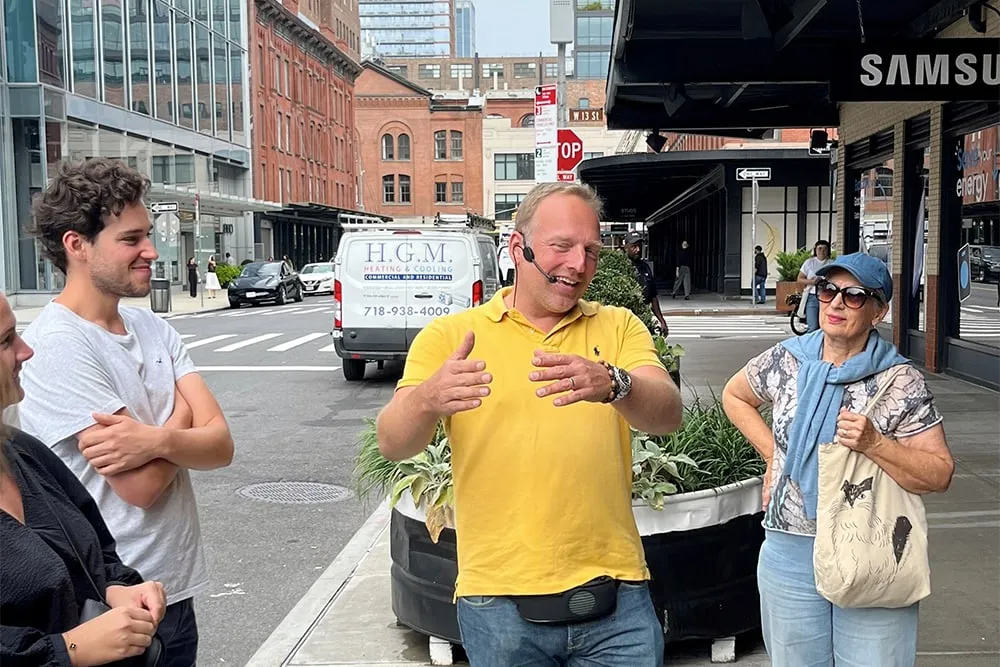
Patrick van Rosendaal has lived in New York for 17 years and now holds dual Belgian and American citizenship. As a tour guide, he built up BENY, a small business that creates bespoke tours and incentives for individuals and companies. “Love brought me to New York back then. After a career in finance and diamonds, I was also determined to reinvent myself. In the end, I became a tour guide, a job I enjoy enormously. I love this city, and almost every day I get the chance to share that love with Belgians who come here on holiday or for an inspirational trip.”
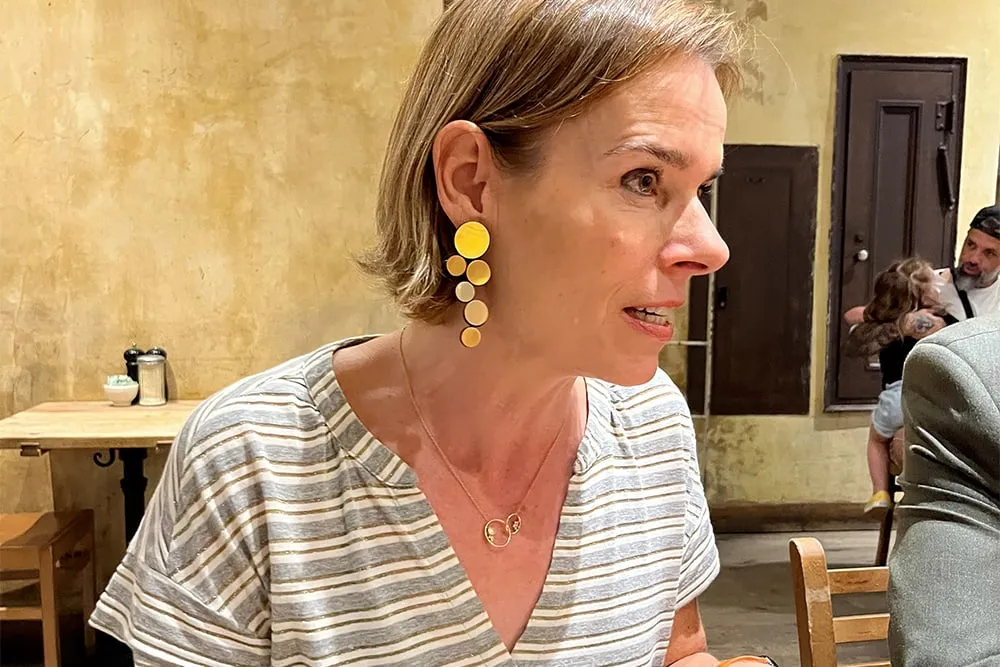
Marianne Amssoms and her family moved to the US for her role as head of AB InBev’s Global Communications department. She has now lived there for 15 years, and in 2018 set up her own consultancy in New York, advising business leaders on reputation and communications. “And yet I feel more Belgian than American,” she admits. “Although Belgium no longer feels entirely like home when I go back there, either. It feels as if I belong everywhere and nowhere. Although I could have, I never applied for American citizenship. Living abroad has made me realise just how proud I am to be Belgian. I know Belgians like to complain and moan, but all things considered, it is still a country where life is good and which has a good reputation abroad.”
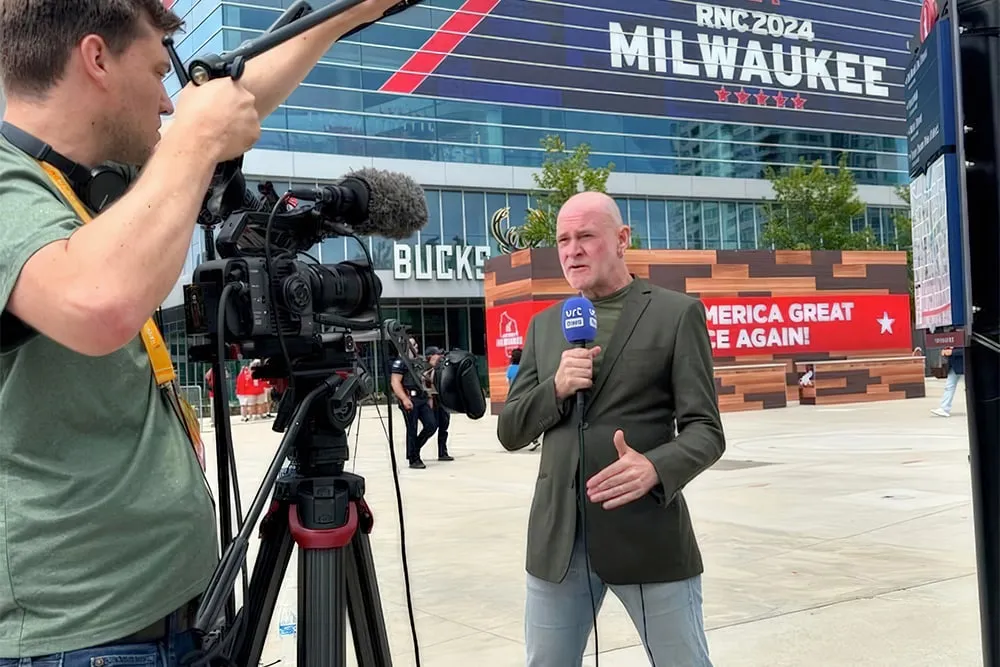
Björn Soenens has lived in New York since early 2017, with a home in Brooklyn. It is his base as a correspondent for VRT’s news service. He will remain there until February ’25, when he will return at his own request. “I relate to Marianne’s feelings. I think we have become Belgian New Yorkers, because there is no such thing as ‘the American’. There is a world of difference between people who feel at home here and those who live in rural areas of the Midwest, for example. I’ve travelled to many places on assignments where industry has collapsed and the area has fallen into decline. Rural America is disappearing bit by bit: young people move to cities in the hope of finding a better future. As a result, the social fabric of those villages and small towns continues to erode.” Soenens describes this at length in his latest book, ‘De Laatste Walvis, het ongezouten verhaal van Amerika’.
A country of extremes
The United States is, and remains, a country of extremes, that much is clear. “What appeals to me about New York is how much of a melting pot it is, with people arriving from all over and making the city their own. The positivity, energy and ‘can-do’ attitude appeal to me,” says Marianne. “But I can’t see myself growing old here. My children grew up here and have chosen to pursue higher education in Europe. It costs a fortune here, while many European universities offer higher-quality courses.”
Rents in major American cities are also exorbitantly high. In New York, a small studio can easily cost €3,000 to €4,000 a month. “Shared housing is the norm here, even for people in their fifties,” says Patrick. “Healthcare can also be very expensive here. But I can testify from personal experience that the quality is very high too. My little boy Matteo had serious problems at birth, and I count myself lucky that he was able to have surgery with a specialist who had developed a treatment for his specific condition. You find far less of that kind of hyperspecialisation in Belgium. The scale of 8.5 million inhabitants in an area almost 4 times the size of Antwerp or nearly 5 times that of Brussels also has its advantages.”
Björn Soenens puts this into perspective: “There is great optimism about the potential of technological and scientific progress. But if you look at average scores and indicators for the US, it can seem like an almost underdeveloped country, with a lower life expectancy than the EU, a widening gap between rich and poor, an average of 100,000 drug deaths a year and a rather poor standard of education. That also explains the tornado of ignorance and the anger many people feel towards the political class in power. They no longer understand the world or globalisation. They oppose migration, even though migrants do the jobs that white Americans have long since stopped wanting to do. And I have to admit that, after 8 years in the US, I sadly see little improvement. More and more Americans are resigned to their fate.”
Elections are a hot topic
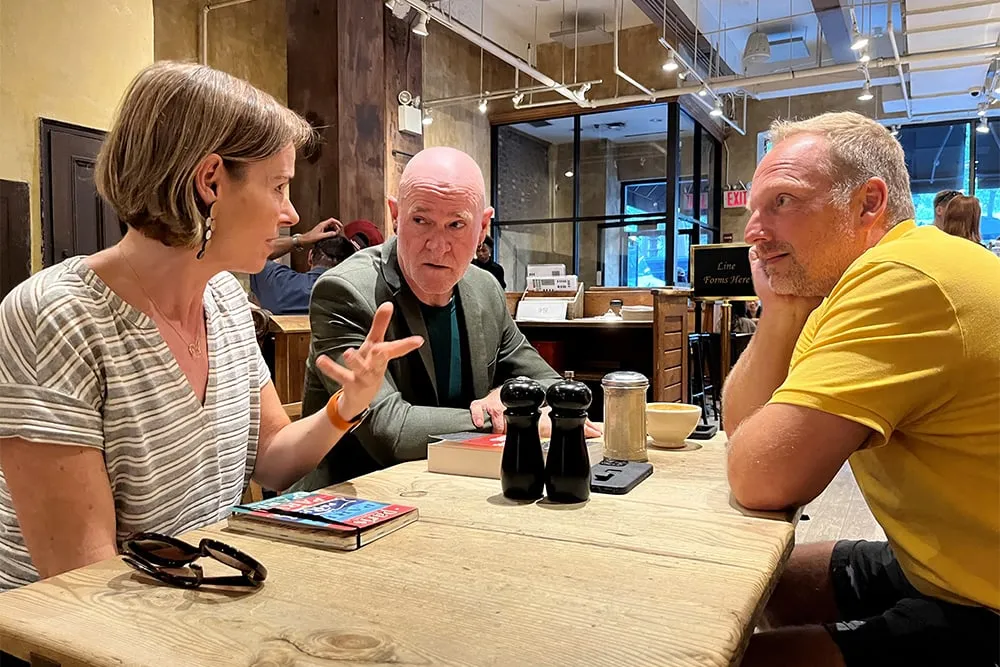
These issues could play a major role in the coming election, in a country where voting is not compulsory. “It’s a big topic in my neighbourhood,” says Patrick, who lives in Long Island City (Queens). “People discuss the presidential debates at the school gates. The doorman at our apartment block also often talks to me about them. And you can’t open your social media without it being overflowing with posts about the election.”
Marianne sees two different trends: “Friends and colleagues do talk a lot about the election. We are constantly bombarded with adverts in the media, because there are virtually no limits on them here. But they are not about the issues: they focus more on how bad the opponent is than on how good the candidate is. On the other hand, I’ve noticed that companies are much more cautious and wary of polarisation. I also fear that many European and Belgian companies operating here underestimate the chance of Donald Trump winning again, and are therefore not preparing enough for it.”
Björn Soenens has spoken to many Americans about the election and has noticed that they are mainly preoccupied with their own struggle to get by. “Many Americans have 2 or even 3 jobs and distrust politics. If they vote at all. The election is more or less ‘frozen’: you are either for Trump or against him, there is no middle ground. The great tragedy is that mainstream media are mistrusted and fact-checking barely matters. People believe what they want to believe, and social media algorithms reinforce the average American’s unshakeable convictions. There are a lot of problems, the government is failing to respond adequately to them, and so people are angry. In my view, that is the basis for Donald Trump’s re-election: even though the government is making substantial efforts, voters don’t see them, or Trump tells them they aren’t real. They believe him blindly.”
Trump or Harris?
Many Belgians do not understand how Donald Trump remains immensely popular despite lawsuits and scandals. But our panel believes there is a very real chance that he will become the next president. “I see a big difference from eight years ago, when Trump first ran for office,” says Patrick van Rosendaal. “His election merchandise and souvenirs are selling very well now, and I see lots of people wearing them openly too. Back then, people thought he had no chance. Now many more Americans consider it a realistic possibility.”
“Polls also give a distorted picture,” adds Marianne Amssoms. “Some people feel reluctant to admit in surveys that they intend to vote for Trump. You have to take that effect into account. And once again, it will be undecided voters who decide the outcome. Kamala Harris will have a chance in the swing states only if she manages to mobilise large numbers of people who would not otherwise vote.”
“Harris deserves credit for reigniting the Democratic Party in such a short time. There is hope again, and she represents the future. But she will need to make her policies more concrete,” says Björn Soenens, who notes that another factor is working in Trump’s favour. “Trump supporters are not a majority, they are estimated to make up around 30% of the population. But the rest of the Republican Party likes his agenda: slimming down the state, having it impose as few rules as possible and levy as little tax as possible. So they are very attracted to the policies Trump stands for. They choose what suits them: good for taxes, low regulation. As long as he does what works for them, they turn a blind eye.”
That raises the question: how will people react to the result? Can incidents like the storming of the Capitol in 2021 be avoided if Trump loses?
Marianne: “So far, he has refused to promise that he will accept the election result. Rather, he says he will if the election is (in his view) conducted fairly. The risk of unrest seems real. Security services are already preparing to protect the Capitol, but isolated incidents are to be expected in this scenario.
Björn Soenens: “I remember what Harvard professor Daniel Ziblatt told me in an interview. ‘There won’t be a civil war, because people are afraid of losing their Wi-Fi. They want to hold on to what they have. Trump will never concede defeat. So it will be turbulent and unsettled if he loses. If something happens, it will probably be better prepared for than in 2021. This will be a turning point for democracy, whatever happens.’”
A positive outlook for the future
Despite all that, the three Belgian Americans remain optimistic about the future. “The world is very focused on divisions and what is going wrong. But fundamentally, I remain optimistic: there is more that unites Americans than divides them,” says Marianne. “So I remain bullish on America. It offers plenty of opportunities. Just look at the many Belgian entrepreneurs who set up here and succeed.”
That is precisely why Björn thinks it is a shame that Biden is being so harshly criticised at home as an old man. “He hoped to take the wind out of the demagogues’ sails with good policies. He is undoubtedly the biggest reformer in fifty years, with an infrastructure plan, a climate plan, an industrial investment plan … European economists such as Geert Noels even look at it with healthy envy. It has brought a lot of factories back and created jobs. The European Union stood by and watched. It is a quiet revolution that too little is being said about in America, unfortunately.”
Patrick agrees: “The crisis is being felt around the world, but when you look at America, things are going pretty well. Unemployment has fallen from 15% during the Covid crisis to just over 4% today, which is unprecedented. That is why I remain optimistic. And in any case, New York is one of the most magical cities in the world for me. Whether Harris or Trump wins next, I will remain a proud American.”
Question about this story? Ask your question
Keep following this
Get an email when a new story is published. No account needed.
- SubjectRoundtable