Roundtable: Construction sector expects two challenging years
Text Björn CrulImage Dieter Meyns
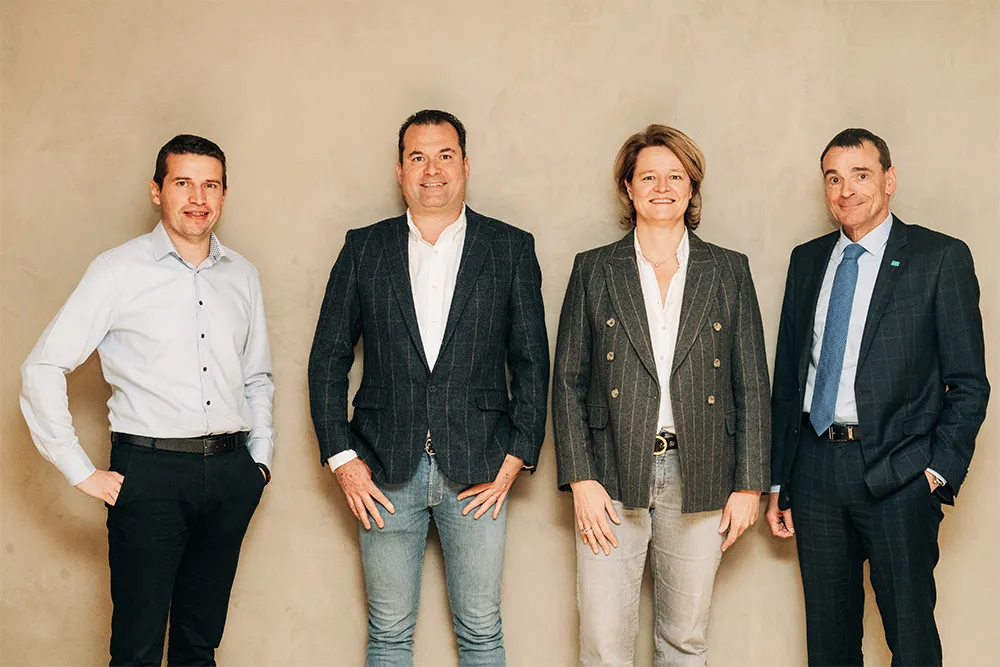
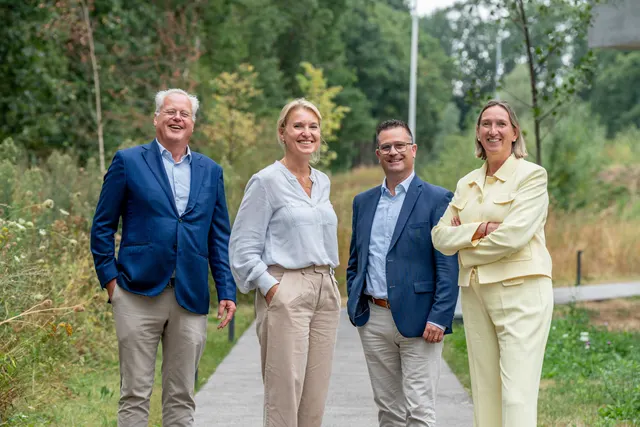
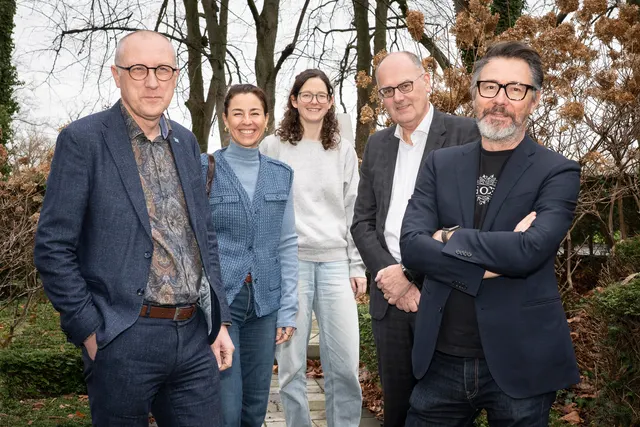
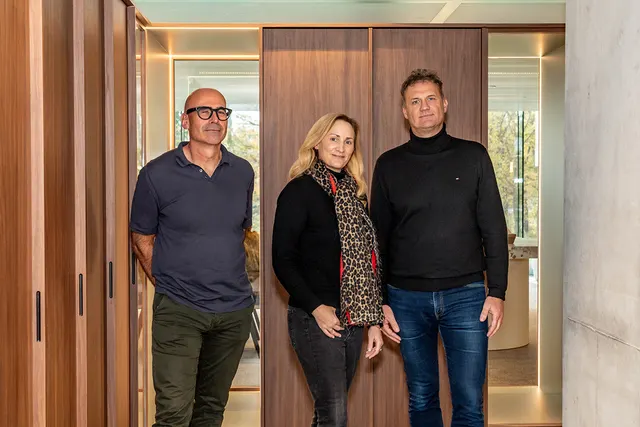
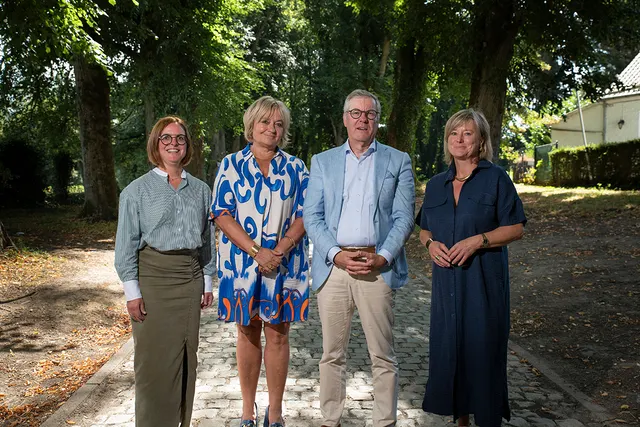
The construction sector is one of the most important sectors in our country and also an indicator of how our economy is doing. In that respect, 2023 was a remarkable year: more than 2,000 construction companies went bankrupt, the highest figure in 10 years. A combination of inflation and rising interest rates was felt most keenly in the residential segment. The big question, then, is whether 2024 will bring an improvement. We brought four construction entrepreneurs together to discuss the challenges and opportunities facing the sector: Kristof Defruyt (Vandenbussche Bouw), Jeroen Beeuwsaert (Beeuwsaert Construct), Kathleen Verhelst (Groep Verhelst / Verhelst Bouwmaterialen & Logistics) and Christophe Maes (Messiaen and incoming chair of Embuild).
The latest business confidence survey by sector federation Embuild paints a gloomy picture for the construction sector: no fewer than 6 in 10 construction and installation companies are seeing a decline in enquiries from prospective customers. Contractors in housebuilding and renovation in particular expect 2024 to be a worse year than 2023. “We too are seeing residential projects, particularly apartment construction, grind to a halt,” says Kristof Defruyt, CEO of Vandenbussche Bouw in Aalter. “Fortunately, we can make up for this with more public-sector projects for schools and municipal authorities. Even so, I expect our turnover to fall by 5% this year. There is no sign of interest rates coming down, and many property developers have put projects on hold.”
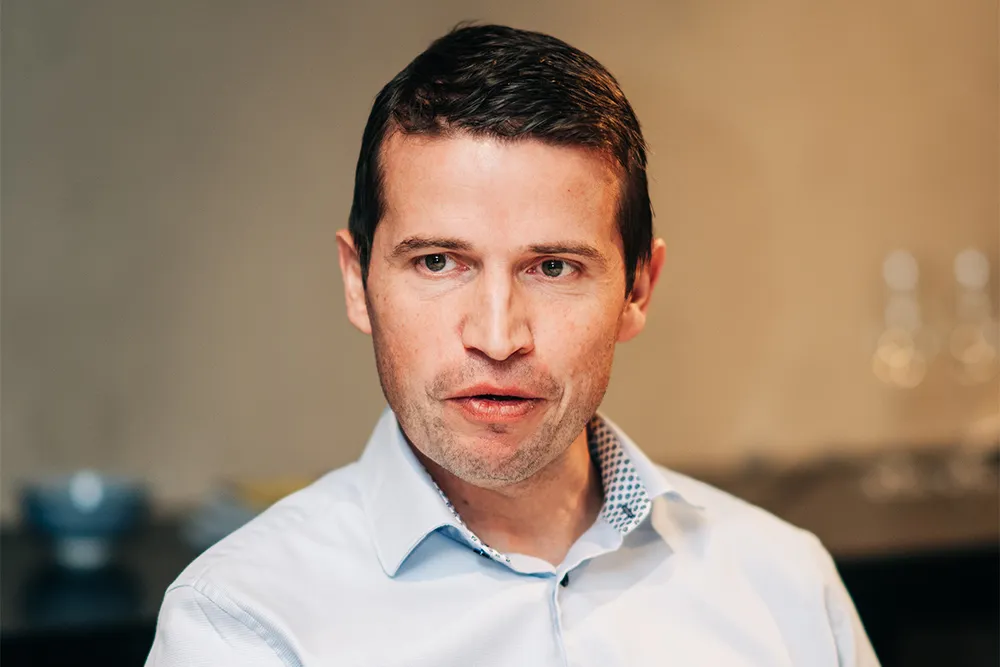
Beeuwsaert Construct, which specialises in industrial construction and warehouse construction, is seeing a clear shift in its business. Director Jeroen Beeuwsaert says: “Industrial construction is the branch of the construction sector least affected. Our turnover has tripled over the past 10 years. We used to generate 35% of our turnover from projects for the agricultural industry. That share has fallen to 20% as we have taken on more industrial projects. But livestock building has ground to a complete halt because of the nitrogen issue. Although a decree has now been adopted, farmers remain deeply uncertain, and we fear this segment will not recover. So we are focusing on logistics, SME warehouses, offices and retail. Although competition and price pressure have increased, we still expect modest further growth. We simply need to step up a gear.”
Beware of a self-fulfilling prophecy
Christophe Maes is part of the fifth generation of the East Flanders contracting family Maes. As well as investing in Algemene Bouw Maes NV and property company Alides, he now runs an SME construction firm specialising in renovation and refurbishment. In March, he will become national chair of Embuild. “We are seeing a construction sector moving at two speeds. The residential segment has slowed sharply. Rising costs and interest rates have made a house virtually unaffordable for first-time buyers. Project sales have taken a serious hit. But I have the impression that the worst is over and that households realise the days of low interest rates are gone for good. On the other hand, order books remain reasonably full at family businesses operating in the industrial and office markets.”
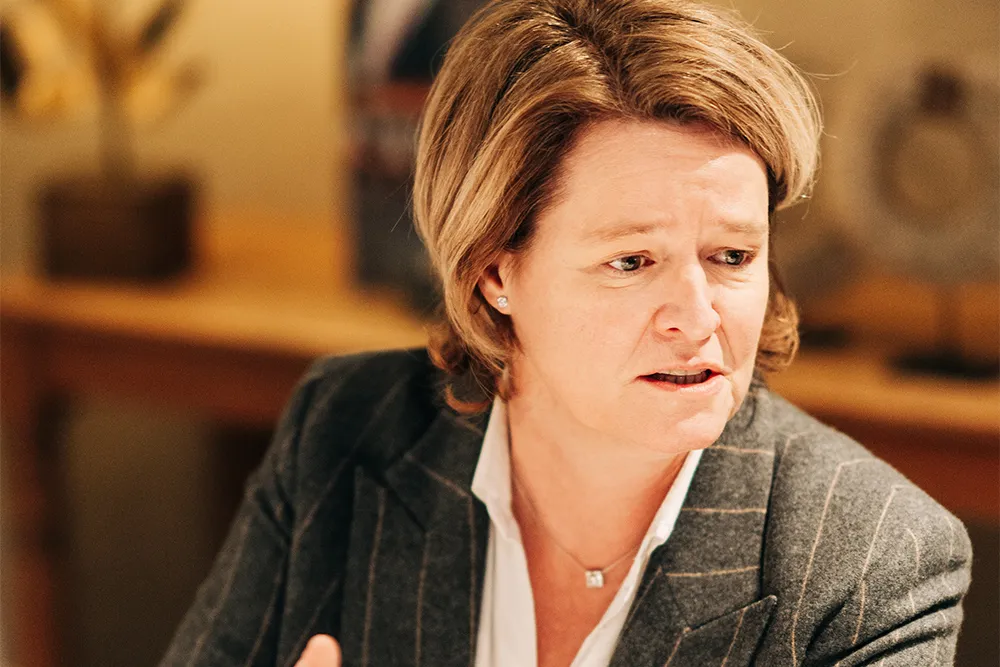
Kathleen Verhelst, managing director of Groep Verhelst, which supplies building materials as well as, among other things, precast concrete, flooring and even acoustic solutions, has also noticed this two-speed dynamic: “Some customers are not worried and are carrying on as usual. Others are clearly less able to plan ahead than they used to be. I am mainly concerned about a self-fulfilling prophecy: we need to focus on the positive so that investment in construction continues. The situation seems stable enough to me: building material prices are not about to fall, our supply chain is back on track, and we know the property sector has sufficient stock. Hesitation and uncertainty are good for no one.”
Sustainability is the key word
“We need to get back to being realistic,” Kristof Defruyt agrees. “Consumers and businesses are still feeling a degree of uncertainty. Banks also play a major role here, even though they could be helping to stimulate the economy. Personally, I expect 2025 to be challenging too. From experience, we know that public works tend to slow down in the first year after elections. We will have to bridge that gap.”
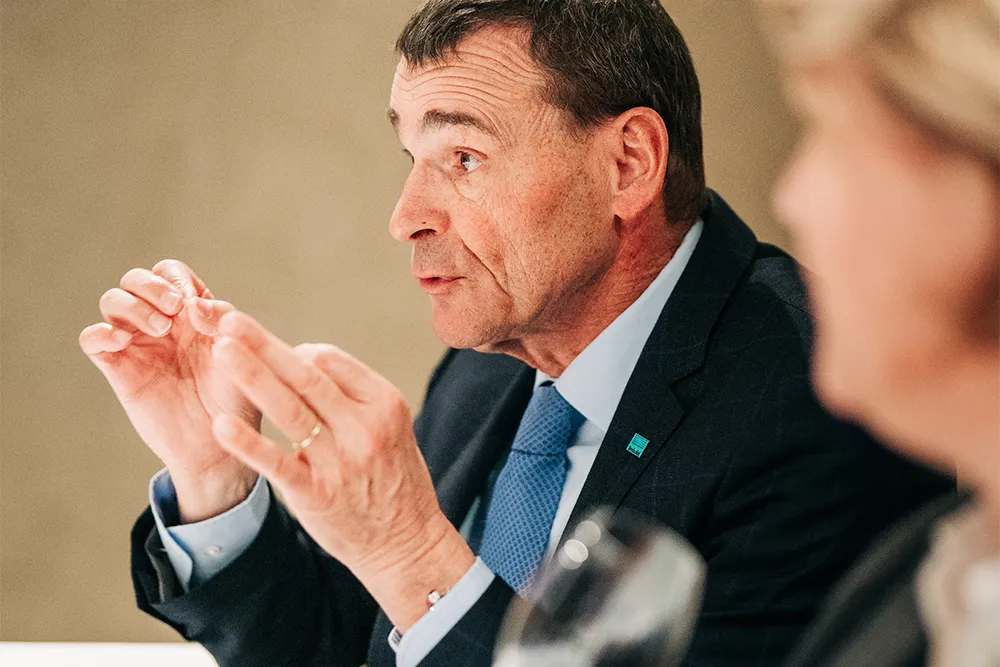
Christophe Maes agrees: “2024 and 2025 will remain challenging; we have to get through those years. But construction also has a bright future ahead. The European climate ambitions, with 2030 and 2050 as target dates, will require massive investment in our built assets. As a sector, we are the ideal partner for achieving sustainability targets. This will give us a boost. New technologies and materials can also deliver significant efficiency gains. I am very optimistic about that.”
Sustainability will be the key word in the years ahead. Jeroen Beeuwsaert is already seeing this in his industrial projects. “European regulations already require larger companies to report on their ESG (environmental, social and governance) efforts. We are seeing those companies prepare for sustainability reports now. Retail parks, for example, are paying more attention to energy efficiency and renewable energy generation. And major industrial park developers increasingly ask us to include a sustainability report with our quotations, and to use materials such as timber and green façade cladding, for instance. We are focusing on solutions that meet these requirements.”
For Groep Verhelst, this means its range is also evolving rapidly. “Many contractors still think very traditionally, but we are seeing, for example, the growing popularity of timber-frame construction. We are also getting more questions about the sustainability of certain products in our range. So we need to stay alert and see which suppliers have the best new solutions to meet expectations. We continuously monitor the market so we can advise construction professionals as a neutral partner.”
Staff shortages are holding back growth
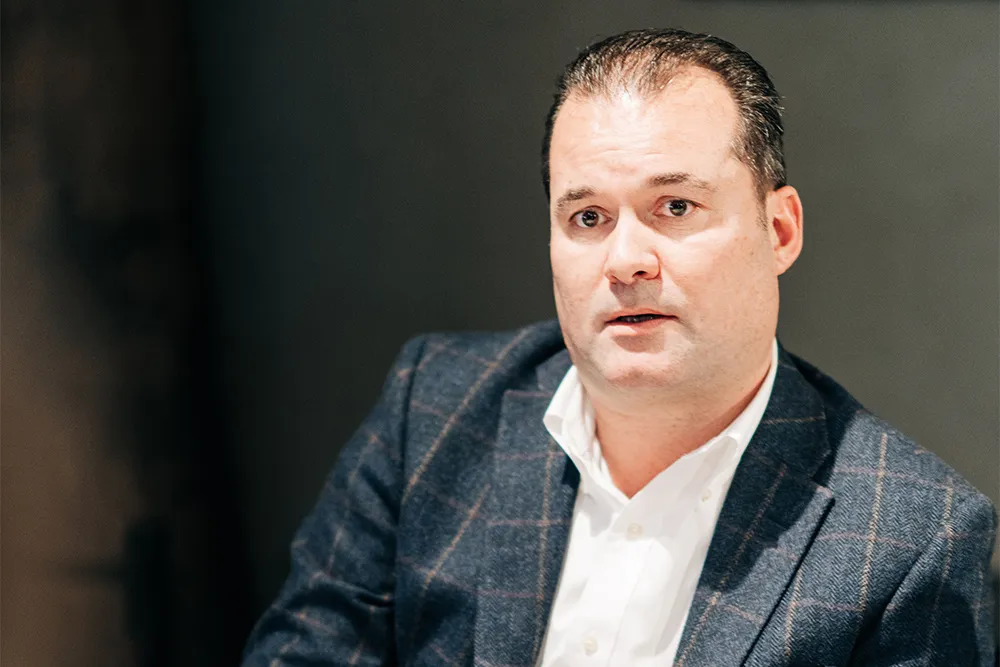
Another challenge is the tight labour market. “I know I’m stating the obvious, but finding workers for our sector is a nightmare. The pool we recruit from is too small because there are too few pupils in vocational education,” says Jeroen Beeuwsaert. “Everyone wants the best for their children, but that means fewer and fewer skilled tradespeople are graduating. Yet our sector pays well, and self-employed tradespeople have plenty of work and earn a good living. This will continue to be a challenge in the years ahead.”
The shortage of talent is forcing construction companies to consider alternatives. “Finding the right people is actually the biggest constraint on our growth,” says Kristof Defruyt of Vandenbussche Bouw. “To address the shortage of construction workers and further improve our quality, we are investing in automation and modular construction. Prefabrication, already commonplace in industrial construction, will spread to other segments. We are experimenting with an in-house factory that produces modular timber structures, which are then assembled on site. This has great potential, but architects will also need to be willing to adapt.”
It is not just construction workers who are hard to find; competition for engineers is also intense. Christophe Maes says: “Digitalisation is advancing rapidly in our sector. IT and technology are therefore becoming increasingly important: drones, 3D visualisation, BIM designs … This requires new expertise in our companies. You will already often see project managers and site managers with tablets on site. And as projects become more complex and require more technical systems, the need for engineers is growing. The professional association of engineering consultancies tells me they can no longer find the engineers they need, precisely because demand is so high.”
However, increased digitalisation also has a downside. The risk of cybercrime is growing too. Groep Verhelst experienced this first-hand in autumn 2023. “We were hit by a hack in October, and a ransom was demanded. It brings your business to a standstill in an instant. Fortunately, our team was able to respond quickly, working with the police’s cyber experts. The incident happened on Wednesday, and by Sunday evening we had restored the systems used for trading at our branches. The following Monday, our branches were able to reopen,” says Kathleen Verhelst. “Because we did not pay the hackers, we lost a huge amount of data and plans. This is the worst thing that can happen to your business. Our security has since been raised to the highest level, but that has slowed down some processes. I can only urge fellow business owners to give this serious thought, because sooner or later it will happen to everyone.”
Question about this story? Ask your question
Companies in this story

Keep following this
Get an email when a new story is published. No account needed.
- SubjectRoundtable
- CompanyVandenbussche NV
- CompanyBeeuwsaert Construct