“Despite everything, China remains an interesting place to do business”
Text Björn CrulImage Boris Vermeersch
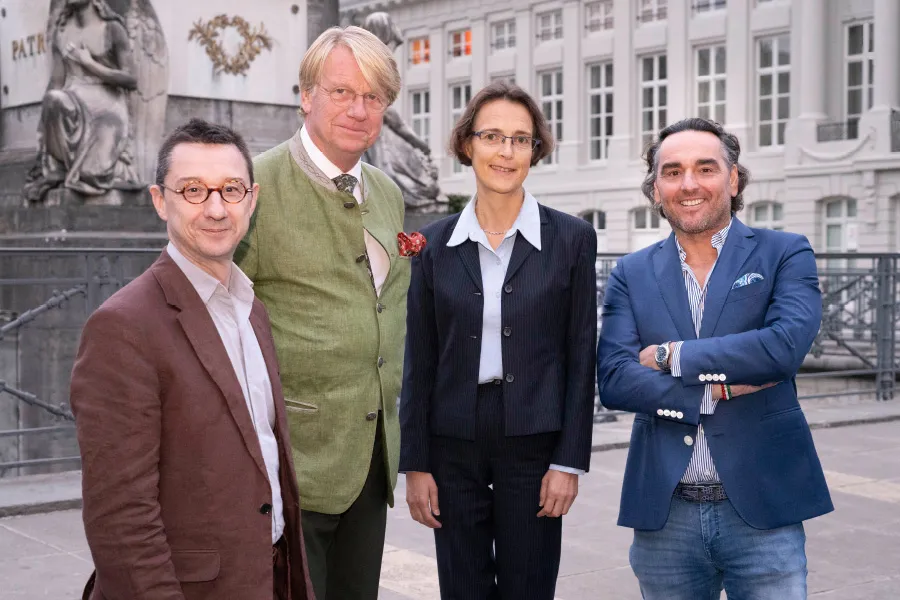
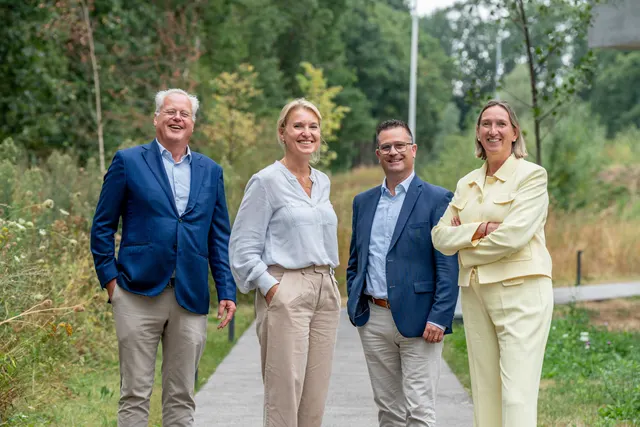
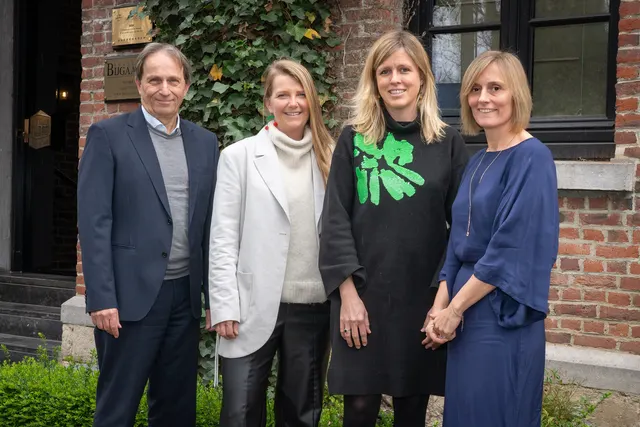
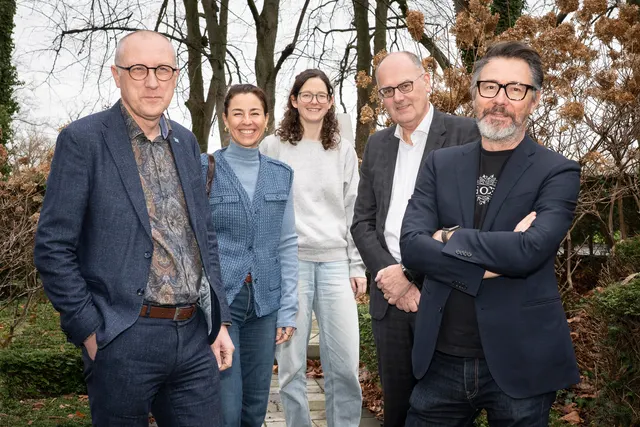
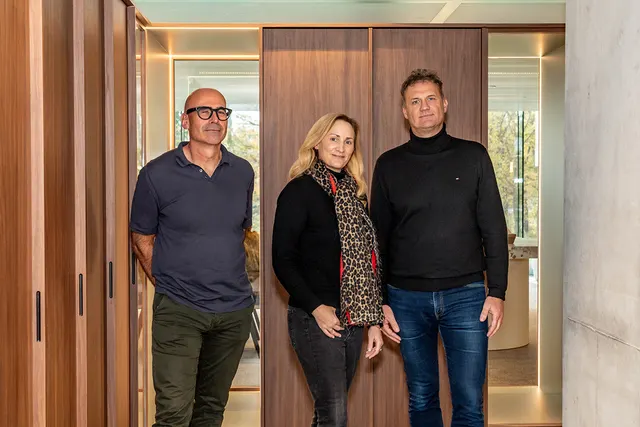
Four China experts around the table
Flanders is a small, open economy that depends on exports. In most cases, that means neighbouring countries and the EU. But since the 1990s, many companies have also ventured into doing business with and in China. Lately, the Chinese model seems to have lost some of its shine: growth is slowing, multinationals are moving to other Asian countries and geopolitical tensions are putting relations under pressure. Is China still an interesting trading partner? We asked four experienced experts: author and trend watcher Pascal Coppens, entrepreneurs Philippe D’heygere and Nico Vanherle, and Eva Verstraelen, Flanders’ economic representative in Guangzhou.
The Chinese economy is faltering. The growth forecast for this year is around 5%, well below the rates we had grown used to in the previous decade. As with the global economy, the Covid-19 pandemic has played a part. The latest wave hit China hardest, prompting the regime in Beijing to impose a strict zero-Covid policy.
Nico Vanherle, who has been producing heat pumps there through his company M1glio since 2012, has experienced this first-hand: “We were closed for a total of 8 to 9 months during the Covid period. There was no government support to help us deal with the consequences. In the end, the local government did help us, which enabled us to survive. Our business plan is now two years behind schedule. Fortunately, we are now seeing a catch-up, and thanks to major projects for Bank of China and Beijing Airport, we are back on track.”
The impact of geopolitics
Eva Verstraelen, who has been based in Guangzhou with Flanders Investment & Trade since May 2020, is seeing the effects of the economic slowdown: “Domestic consumption is sluggish. As a result, Chinese buyers have become more selective. They think much more carefully about which European products to include in their portfolios and are less inclined to take risks. So it has become harder for those looking to export to China. We are also seeing Chinese companies that were ready to invest in Europe before Covid postponing their decisions because of the economic and geopolitical situation. The Chinese government would currently prefer them to invest in the local economy.”
Belgian companies have also changed the way they view China, says author and keynote speaker Pascal Coppens. “Before the pandemic, many companies looked to China for inspiration. They wanted to know what was happening there in terms of digitalisation and innovation, and what the trends were in that fast-growing market. Today, they ask me much more about the macroeconomic situation and the impact of geopolitical conflicts. Perceptions have clearly changed. It is as if people think: as long as things are getting worse in China, we have less to worry about. I think that is a bad thing. China remains a dominant economic force worldwide, not only in Asia, but also in Africa and Europe.”

A strong long-term vision
Times have changed. In the early 1990s, Philippe D’heygere went to China with his then company Stow to manufacture industrial pallet racking. “We were one of the first Belgian companies to take the plunge and set up a factory there. In those days, we were welcomed with open arms everywhere. We experienced a boom in business as the country opened up economically to the outside world. But the Chinese have since taken matters into their own hands. Yes, they copied a lot of things, but don’t underestimate their brainpower and capacity for innovation. At least 600,000 new engineers graduate there every year!”
China’s strong economic development is, of course, partly down to the guiding role played by the government, which it continues to perform today. Philippe says: “They are very good at developing a long-term vision and then putting it into action. Look at how they have expanded public transport to link the interior with the coastal regions. Or how they build a completely new city in two years. Their logistics system is also geared entirely towards doorstep delivery in the heart of the city. We could learn from that.”
“That’s right,” adds Eva Verstraelen, who is briefly in Belgium to meet all her FIT colleagues from around the world. “I’m struck by how old-fashioned public transport in Belgium seems and how unsafe you feel in central Brussels in the evening. It’s completely different in China. Going back to the supermarket to do the shopping or paying with cash also feels strange. In Guangzhou, I do all of that using apps on my phone.”

Tackling all the problems at once
China has become a world power thanks to its strong economic and demographic development. But the trees do not grow to the sky. Alongside Covid-19, there was also a property crisis that shook the economic model to its foundations. Pascal Coppens says: “We have to acknowledge that China also faces a host of structural problems: the country is weighed down by debt linked to the property sector, it needs to catch up on the environment and climate, its population is shrinking and ageing, and domestic consumption is too low.”
“I have seen that the Beijing regime has sought to use the past three years to tackle many of those problems at once. Look at the tighter regulations for property developers, the debt limits or the sustainability ambitions that are now being put into practice. Perhaps that was a very smart move. The country was cut off from the outside world for a long time, so it could intervene without too many onlookers. Time will tell,” says Pascal. “Some people even think the economic slowdown was deliberate and planned.”
Chinese growth four times higher than Belgium’s
“Those astronomical growth rates were never sustainable either. Before Covid, things were simply moving too fast and the economy should really have slowed down earlier,” Nico adds. “It has happened now, due to a combination of factors. But let’s not forget that growth this year is still estimated at 5%, almost 4 times higher than the forecast growth in Belgian GDP in 2023. So saying things are going badly is also a matter of perspective.”
Even so, there are signs pointing to risks in the current approach. “I see a number of factors that could be dangerous,” says Philippe. “First, labour costs in China have not been low for a long time. That is why a number of multinationals are moving production to countries such as Vietnam or Thailand. The second factor is the trade war with the Americans. The policy launched under Trump and continued by Biden has led American companies to invest much more at home again, rather than in China. The Americans are afraid of China’s technological lead. In my view, quite rightly.”

A laboratory
So what does all this mean for Belgian companies? Eva Verstraelen says: “There are still plenty of opportunities. We must not be naïve, but China is a huge market that is enthusiastic about European products. They remain a kind of quality label, especially for food and drink, but in other sectors too. Those who find their niche and the right partners can do good business in China. But we must not turn a blind eye to the risks.”
“Entrepreneurs who make the local culture their own can thrive there,” says Nico Vanherle, drawing on his experience. “The government has a big say, but you can also turn that to your advantage. If you want to invest, the regional government and the banks will sit down with you to shape your business plan. They even compete to bring your project there. That can be a real opportunity.”
For Pascal Coppens, there is really no other choice: “An innovative company that wants to operate internationally has to go to China. The country has an incredible wealth of talent, and its entire population is more at home with new technologies than anyone else. It is a laboratory we do not have in Europe. And if you are an SME and go where others have yet to venture, you can get the most out of it. That is where the future lies for me.”
Question about this story? Ask your question
Keep following this
Get an email when a new story is published. No account needed.
- SubjectRoundtable