Environment, energy & waste management
Remediating contaminated sites with Hexagon’s expertise and support
Text Niels De BoysereImage Hexagon
Although soil contamination and remediation remain a challenging subject for many landowners, Hexagon knows the field inside out. The property developer, which specialises in sustainable commercial property, has all the expertise needed to support landowners and even take the entire burden off their hands. “It’s a major advantage that appeals to many potential sellers,” says director Jelle Vandendriessche.
Soil contamination refers to pollution of the solid soil and groundwater caused by human activity. According to figures from 2022, there are an estimated 85,000 sites at risk in the Flemish Region. “Any landowner can be affected by contamination,” explains Jelle Vandendriessche. “Contamination usually comes to light during a periodic inspection by OVAM, but it may also pre-date the start of the owner’s activities.”
There are therefore two types of contamination: contamination caused by the owner’s own activities and historical contamination. Remediation may be required in either case. “Historical contamination is generally already recorded in the database of the Public Waste Agency of Flanders (OVAM). If the contamination is not known to OVAM and you can prove as the owner that you did not cause it, you are exempt from remediation under the innocent-owner principle. If the contamination poses a risk to human health, OVAM will remediate the land on its own initiative. If your activities did cause the contamination, OVAM applies the ‘polluter pays’ principle.”
Remediation starts with a soil investigation
How exactly does remediation work? Jelle Vandendriessche explains: “The first step is an exploratory soil investigation (OBO). The soil expert examines the site’s history and all known activities, then takes soil samples from locations where machinery, storage tanks and other equipment were present. If the OBO finds no contamination, the land can be sold.”
If the soil expert does find contamination, OVAM will require a detailed soil investigation (BBO). “This report maps the contamination in greater detail. The third step is a soil remediation project (BSP), which OVAM must approve before work begins. Only once it has been approved can the remediation work start. Successful remediation is followed by a final declaration, marking the end of the remediation process.”
Strict rules for soil excavation and transport
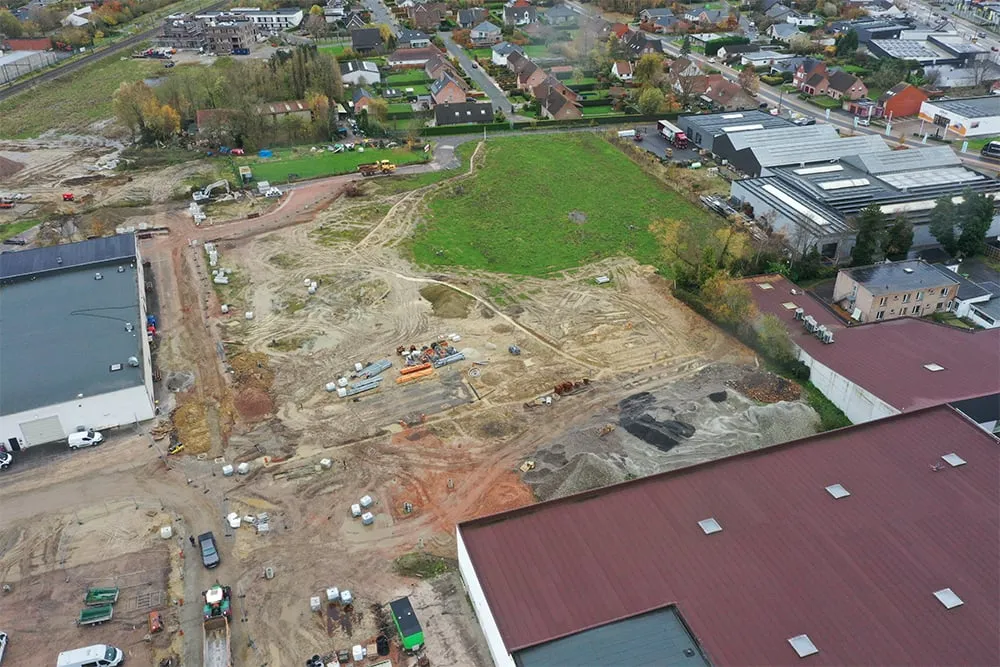
If a new owner encounters contaminated soil during excavation work, it must also be removed from the site. “Not all contaminated soil is subject to a remediation obligation. This is why residual or historical contamination remains on some sites,” explains Jelle Vandendriessche. “The rules governing the movement of soil then apply. These regulations set out how excavated contaminated soil must be handled, both at the excavation site and during transport, right through to its final destination. Certain conditions must be met at every stage so that the origin of the excavated soil can always be traced.”
Contaminated sites cannot simply be sold. “The land can only be sold once the owner has successfully completed the remediation themselves, or if the buyer is willing to assume the remediation obligation. The new owner must provide financial security to OVAM in the form of a guarantee, to ensure that the remediation will actually be carried out. This transfers all soil-related risks to the new owner, relieving sellers of contaminated land of a burden they are keen to shed.”
Approach and costs
Hexagon has considerable expertise in this area. “Our experts can assess contamination and estimate the costs, after which the new development plan is tailored to the remediation approach. We not only know the legislation inside out, we also calculate the impact of contamination on the future soil movements arising from construction work. This allows us to work cost-
effectively.”
The cost of remediation depends on how the land is redeveloped. “There is no one-size-fits-all answer. We always need to assess how deep and how extensive the contamination is. Some redevelopment projects also have a long history behind them. Costs can rise very quickly when groundwater is contaminated in deeper soil layers. That is the case, for example, with our Bazuin project in Roeselare, where remediation costs amount to 1.5 million euros,” concludes Jelle Vandendriessche.
A business enquiry for Hexagon Vastgoedontwikkeling? Get in touch
Companies in this story

Keep following this
Get an email when a new story is published. No account needed.
- SubjectEnvironment, energy & waste management
- CompanyHexagon Vastgoedontwikkeling