Hyundai Kona Electric 65 kWh: outgrown the city
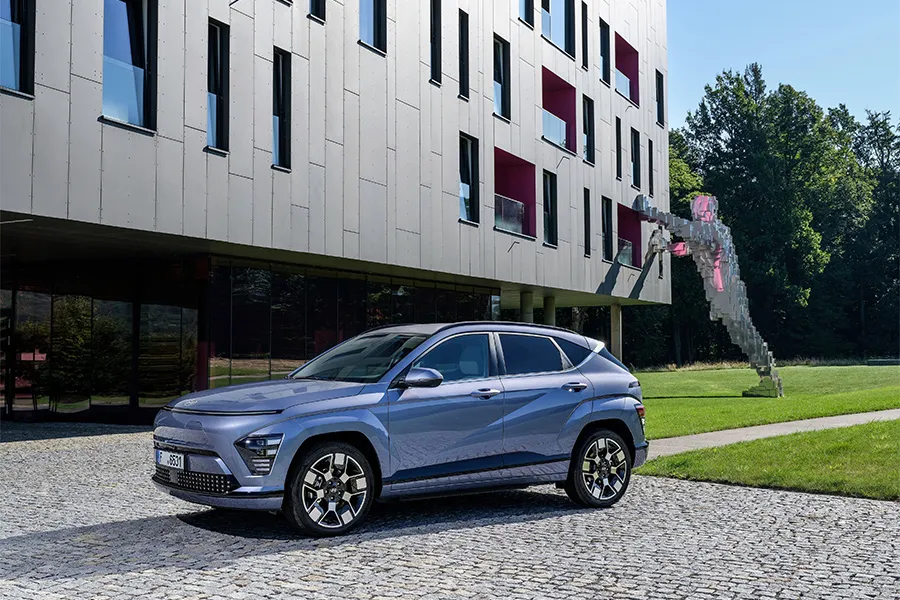
The first-generation electric Kona was Hyundai’s ticket into the fleets of many companies. This second generation has grown considerably, both literally and figuratively, and has outgrown the city crossover segment. Our editor took it for a test drive and came back impressed.
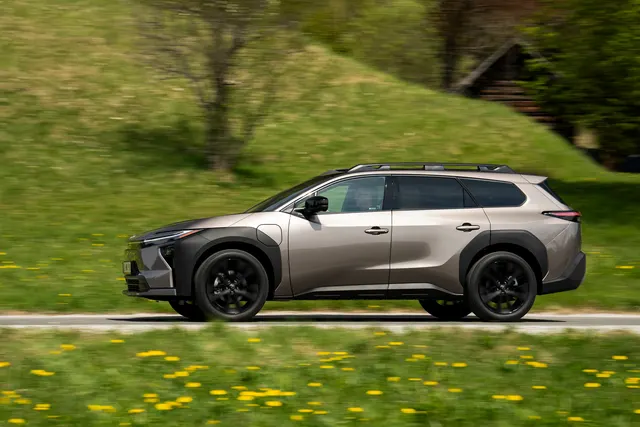
Put the old and new Hyundai Kona side by side and it is immediately clear that the newcomer has grown significantly. By around 15 centimetres, to be precise. 6 centimetres of that has been added between the axles, which is good news for rear legroom. Aside from its sleek nose and full-width LED strip, the Kona II looks a little like a compact, sleeker Tucson. In profile, you might mistake it for the Cupra Formentor, particularly at the rear.
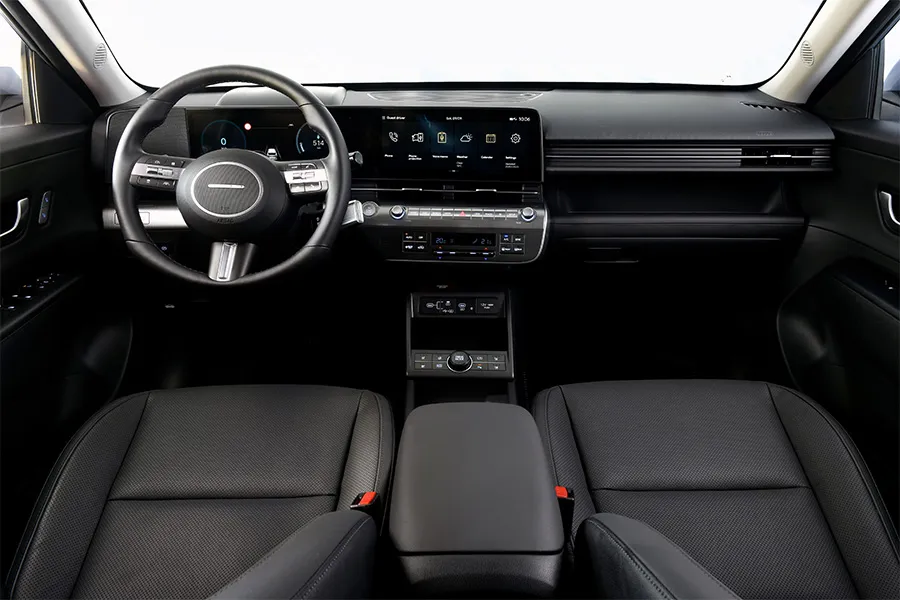
Open the driver’s door and you immediately sense that investment has gone into perceived quality. The door closes with a reassuring thud, and you are surrounded by attractive materials and top-class digital features. You soon get comfortable in the cockpit, although it has to be said that the steering wheel offers only limited reach adjustment. Another notable point: you still need a cable for Apple CarPlay and Android Auto. But that just about covers all the drawbacks.
Comfort with a capital C
Where previously you selected D, N, R or P using a row of buttons on the centre console, you now have to use a lever on the steering column. This frees up space for a storage compartment between the front seats. We select D and set off. First impression: the Kona feels heavier than its predecessor, despite gaining just 40 kilos. It also feels significantly more planted on the road, thanks to the greater distance between its wheels, both lengthways and across the width.
The impression of relative heaviness is reinforced by the reduced motor torque. While power has risen from 150 to 160 kW, Hyundai decided to cut torque from 375 to 255 Nm. The result is a more composed and comfortable ride. Unlike before, the front wheels are rarely overwhelmed under acceleration. The suspension is also surprisingly forgiving over bumps in the road. Even when the road is peppered with potholes and bumps, Ardennes-style, the Kona remains unruffled.
The cost
After a fairly sporty two-hour drive on mostly winding roads in the Moravian hills, our trip computer showed an average of 15.4 kWh/100. Intelligent regenerative braking, including the option of one-pedal driving, and mild temperatures will certainly have helped achieve this result. Divide the battery capacity of 65.4 kWh by this consumption figure and you get a theoretical range of 425 kilometres. That is not so far off the quoted 454 kilometres for the version with 19-inch wheels, like our test car. Choose 17-inch wheels and the WLTP figure rises to no less than 514 kilometres: a record in this segment.
The considerably upgraded Hyundai Kona Electric comes at a steep price, but one that is in keeping with its technology and equipment. You will need to be prepared to pay at least 48.499 euros for the version with the larger battery. That is exactly 5000 euros more than the variant with a 48 kWh battery, which has around 150 kilometres less range (377 kilometres according to the WLTP).
Technical specifications
Powertrain electric motor, front-wheel drive
Power 160 kW
Battery capacity 65 kWh (net)
Range 514 km (WLTP)
DC fast charging 102 kW
AC charging 11 kW (three-phase)
Starting price € 48.499 incl. VAT
Question about this story? Ask your question
Keep following this
Get an email when a new story is published. No account needed.
- SubjectMobility