Decarbonising heavy transport is a slow process
Text Björn CrulImage Denecker, Scania
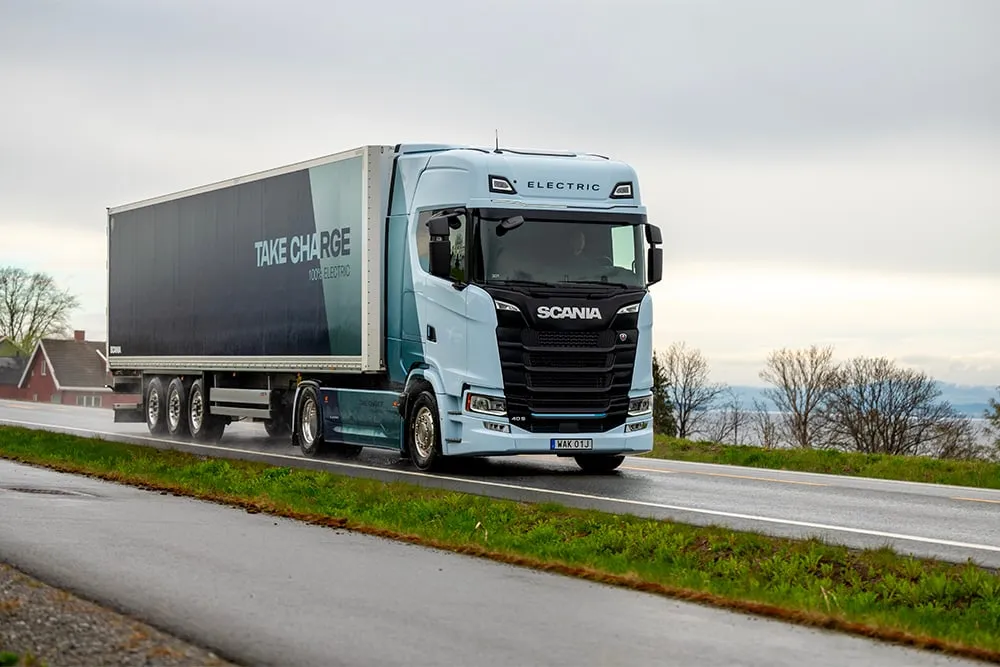
In the first six months of this year, the number of trucks in the European Union rose by 3 per cent. And although sales of electric trucks are increasing, their market share remains small. The number of new diesel trucks is still rising. Among vans, the number of newly registered electric vehicles is actually falling. Decarbonising transport and logistics is therefore a long haul. Manufacturers and transport operators hope the new European Commission will pay more attention to alternative fuels such as HVO and Bio-LNG.
Figures from ACEA, the European manufacturers’ association, speak for themselves: in the first half of 2024, registrations of electric trucks rose sharply, up by fully half on the year before. Germany is leading the charge, with a 113% increase. This means that more than half of Europe’s electric trucks are now on German roads.
A marginal phenomenon
Even so, electric freight transport remains a marginal phenomenon for now. Electric vehicles currently account for just under 2% of the market. More than 95% of Europe’s trucks run on diesel, up 2.6% compared with the first half of 2023. The remaining 2.4% market share goes to other powertrains, mainly LNG trucks.
Decarbonising road freight is therefore a slow process. ACEA even recorded a fall in new electric van registrations (- 3.7%), despite a 15% increase in van registrations overall. Hybrid vans did gain ground (+ 8.3%). But diesel remains the preferred choice for vans too, with a market share of almost 85%.
Technology neutrality
One of the challenges is that much freight is transported over long distances, where charging can be an obstacle. Truck manufacturers are therefore continuing to invest in every possible powertrain. Hans Binnendijk of Scania Benelux: “We look at the mix of energy carriers available today, and at what is affordable. We develop our technologies on that basis. For long-distance transport, we continue to invest in diesel, which can in time run on renewable fuels such as biodiesel and HVO without any problems. We also have a range of methane engines that can run on both fossil LNG and Bio-LNG. And, ultimately, we also see a future for electric long-distance transport.”
During the previous term, the European Commission firmly committed to phasing out combustion engines, effectively seeing a future only for electric vehicles, both cars and trucks. For her new term, Commission President Ursula Von der Leyen has indicated that she now wants to develop a technology-neutral approach that also gives synthetic fuels a role. This should offer transport operators and truck manufacturers a clearer outlook.
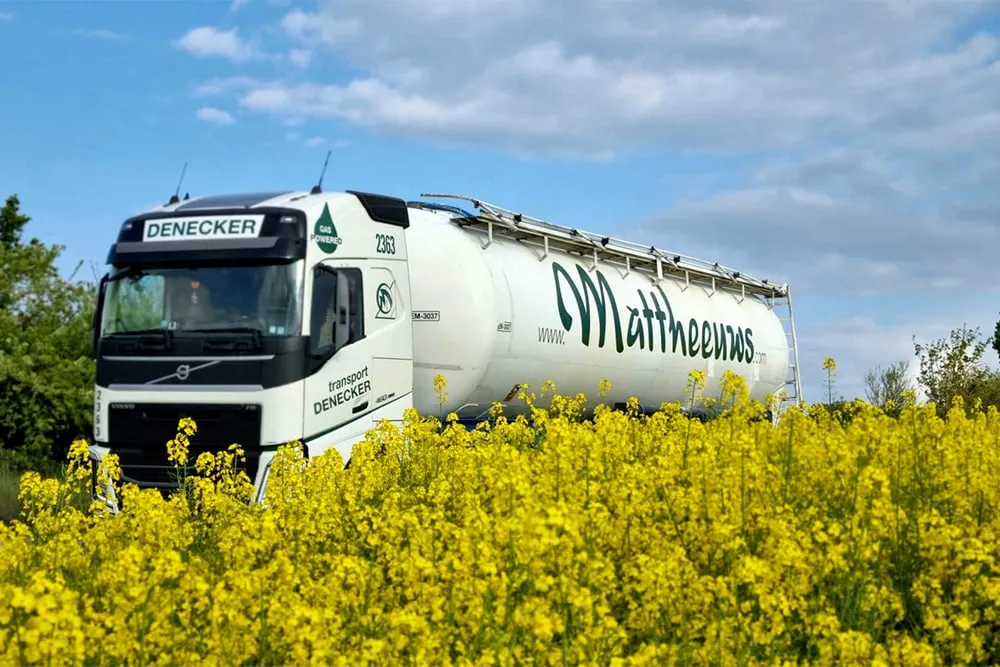
The transport company Denecker, based in Veurne, is one of the operators that took steps years ago to reduce its environmental footprint. When LNG was introduced for freight transport in Belgium, Denecker invested in its own filling stations. LNG produces less CO2 than diesel. The company also believes in Bio-LNG and other technologies to make its transport more sustainable. Managing director Mathieu Vander Paelt: “I expect policymakers at regional, federal and European level to make a clear choice to embrace all alternative fuels, not just battery technology. With existing vehicles, we can switch the molecule to Bio-LNG or HVO for diesel very quickly. That means we can continue to decarbonise from tomorrow.”
Flanders aims to accelerate electrification
The Flemish government is investing €3 million to accelerate the roll-out of charging infrastructure for heavy road transport. The funding will go to 19 projects submitted by transport companies and charging infrastructure operators. The call covered both public charging infrastructure along motorways and semi-public infrastructure at companies, linked to local energy generation, storage and load balancing.
Most of the projects submitted involve investment in charging systems, but there were also projects for software support. This is essential for vehicle management and for planning and carrying out charging sessions. The Flemish government expects it will need to continue providing support to encourage the success of electric freight transport.
By the end of 2025, Flanders is expected to have more than 10,000 charging equivalents for heavy freight transport. This will also help the government meet the requirements of the European directive, which calls for sufficient charging infrastructure along the trans-European road network.
Question about this story? Ask your question
Keep following this
Get an email when a new story is published. No account needed.
- ThemeTransforming business mobility
- SubjectMobility