Industrial construction in Flanders: seeking a new image and more land

In densely built-up Flanders, it is becoming increasingly difficult for industrial construction to secure space. Yet building new industrial infrastructure is crucial to our prosperity. Contrary to popular belief, new industrial construction is not necessarily harmful to climate goals. “We still associate industrial construction mainly with polluting factories with smokestacks, but in reality these are now rare.”
It goes without saying that having enough industrial construction is essential for economic growth. After all, companies need their own space to develop their products or services. Despite this clear importance, industrial construction in Flanders is currently facing an unfavourable climate. “We actually have a twofold problem here,” says Niko Demeester, director-general of the Confederation of Construction. “On the one hand, there is a severe shortage of usable land; on the other, the number of permits being issued is in free fall.”
The figures do indeed bear this out. Although around 2,500 hectares of land are theoretically still available for industrial construction, this is largely a figure on paper. In practice, much of this land is unusable because of its high purchase price, poor accessibility or proximity to residents, making neighbourhood opposition almost inevitable. In addition, the number of permits granted has been falling year on year. “Combined with the clear demand for new industrial construction, this means the market is now under considerable strain,” Demeester explains.
Renovating existing space
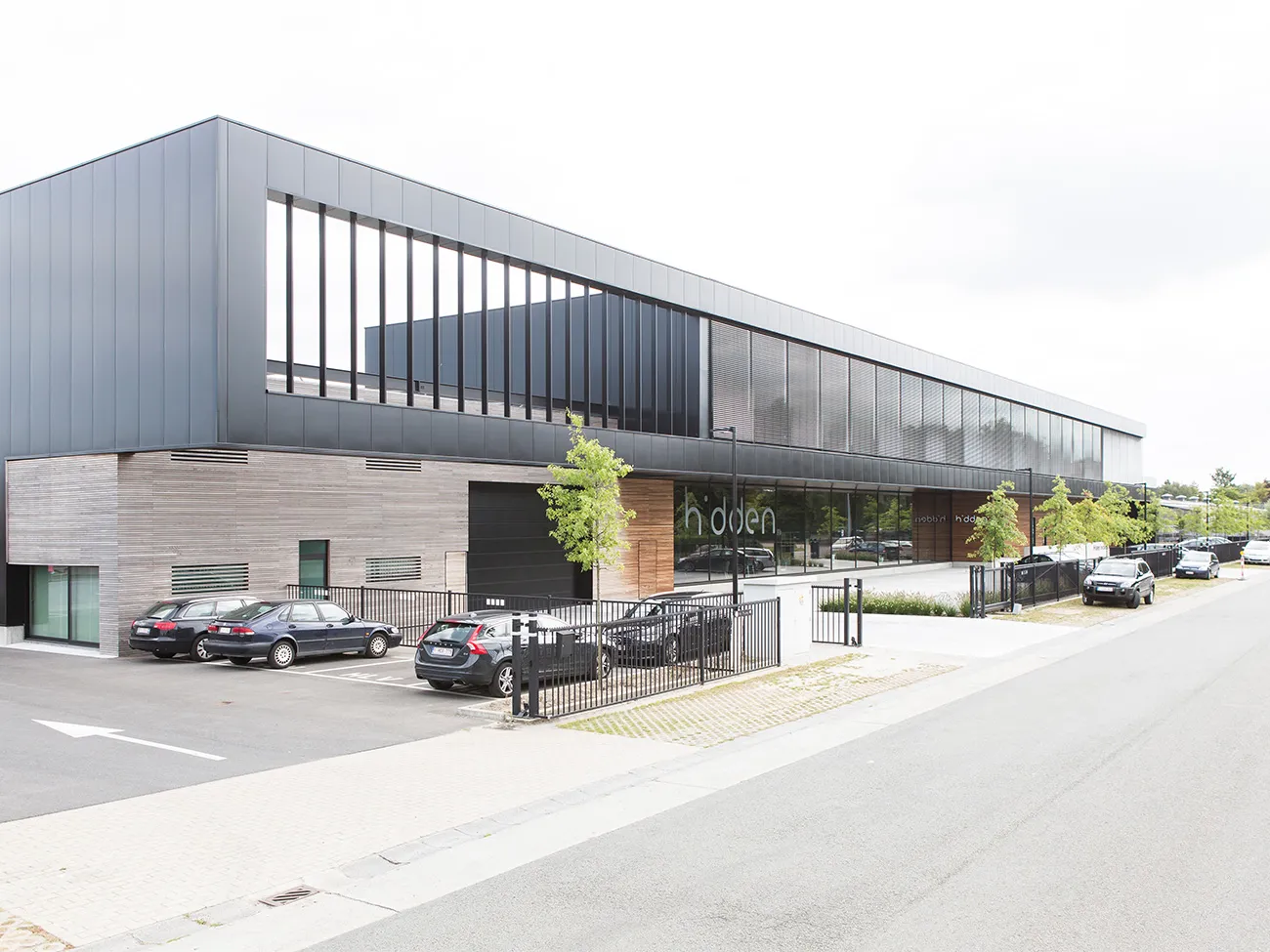
This does not, of course, mean that nothing has changed in industrial construction in Flanders in recent years. Many industrial buildings have been renovated, for example. In practical terms, this means they have been made greener in response to increasingly stringent sustainability standards. Bouwunie has seen this too. “Regulations have certainly pushed clients to build more sustainably. In recent years, many buildings with much better insulation have been completed,” says Jean-Pierre Waeytens, managing director of Bouwunie. “Rainwater regulations have also had a clear impact, as industrial buildings often have very large roof areas.”
As sustainability initiatives can have a positive effect on a company’s image, this is an attractive option for many clients. “Visible features such as solar panels, permeable parking areas or electric vehicle charging points are very popular,” Waeytens explains. However, it is important to put this shift towards greener construction in context. “Sustainable industrial construction differs from residential construction. Some standards, such as mandatory energy requirements, are often less stringent for industrial buildings. That makes sense. For example, there is no need to insulate a space used solely for storage unnecessarily,” Demeester explains.
The same nuance applies to the use of modern and smart technologies in industrial construction. “Most production halls are fairly standard. You will only find automation or so-called Building Information Systems (BIM) here if they clearly add value to the end product,” says Demeester. The logic is simple: entrepreneurs always seek to invest their available budgets in the final product, while the buildings themselves are often just an enclosure.
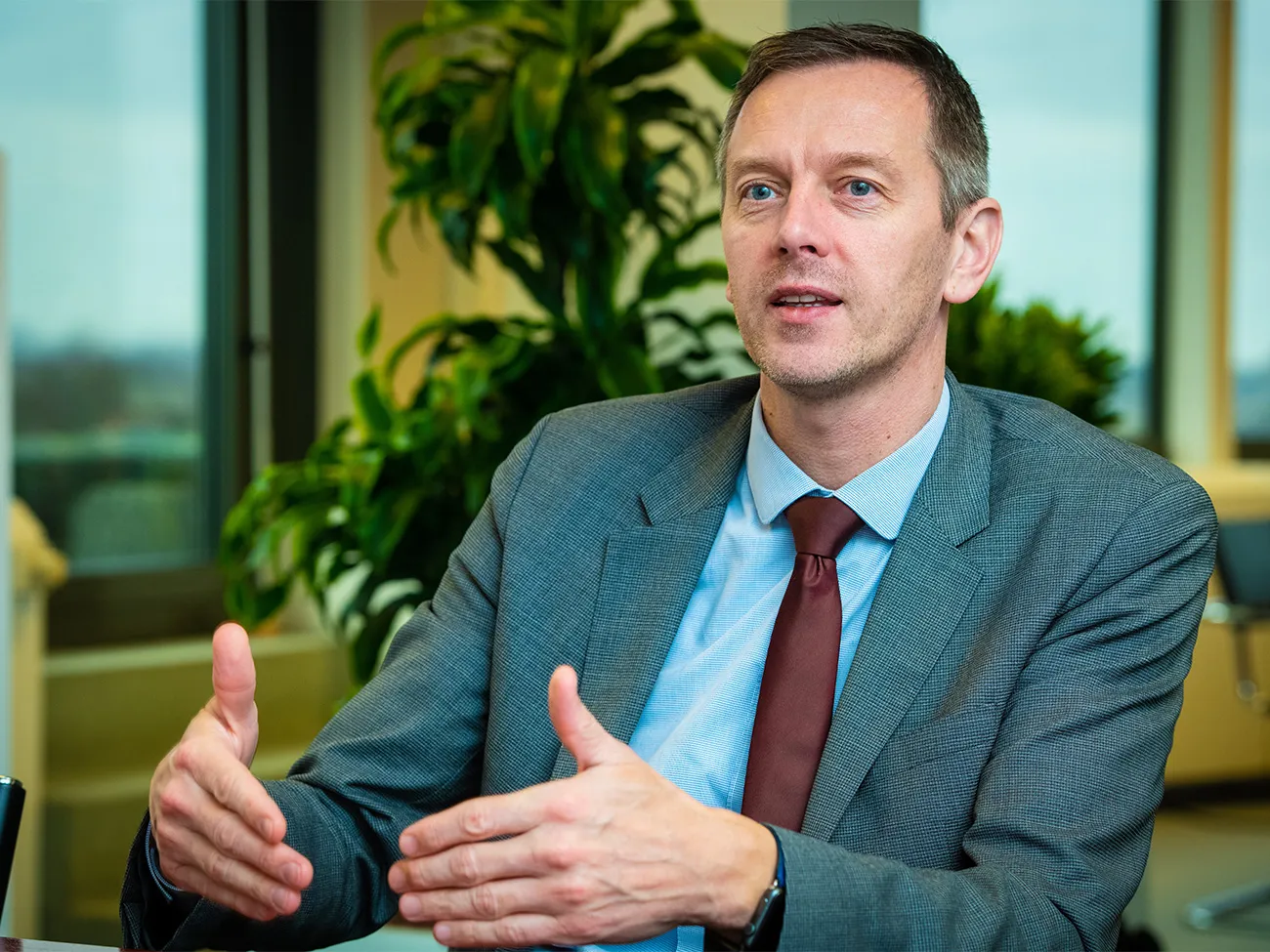
Image problem
In other words, industrial construction in Flanders is becoming more sustainable, and in a meaningful way. It is also often far less complex than other infrastructure projects. At first glance, this seems hard to reconcile with the sharp decline in the number of permits. According to Niko Demeester, this downturn is mainly due to the poor image industrial construction has today. “We still associate industrial construction mainly with polluting factories with smokestacks, but in reality these are now rare. Industry is also getting cleaner. That is why we would do better to talk about ‘economic activity construction’ rather than industrial construction. It immediately gives the sector a much more positive connotation.”
If this shift in mindset takes hold and industrial construction is no longer automatically seen as harmful, it will hopefully lead to a swift increase in the number of permits granted. This is necessary, because renovating existing industrial buildings alone cannot meet current demand. “Not every existing site can simply be transformed into something completely different,” Demeester says.
Redevelopment
This new image could also influence how we think about industrial construction in spatial planning terms. By making smart use of existing mechanisms, further gains can be made here too. The compensation principle, whereby green space lost to the construction of new industrial complexes is replaced by new green space elsewhere, has considerable potential and should therefore be used much more actively. This means no green space is lost. In most cases, there is actually a net increase in green space.
This more flexible approach to the space available would immediately open up a wide range of new economic opportunities. “Today, we talk a lot about so-called redevelopment projects, in which old industrial sites are converted into trendy, sustainable homes. But why should the reverse, converting an outdated residential neighbourhood in a poor location into a site for new industry, not be an option? This could ease the pressure on industrial construction in Flanders without necessarily undermining sustainability goals,” Demeester concludes.
Question about this story? Ask your question
Keep following this
Get an email when a new story is published. No account needed.
- ThemeBuilding and using business premises
- SubjectIndustry