




More and more companies are seeking talent in Portugal, Moldova and Romania
Text Björn CrulImage Greet Demonie, Let’s Work
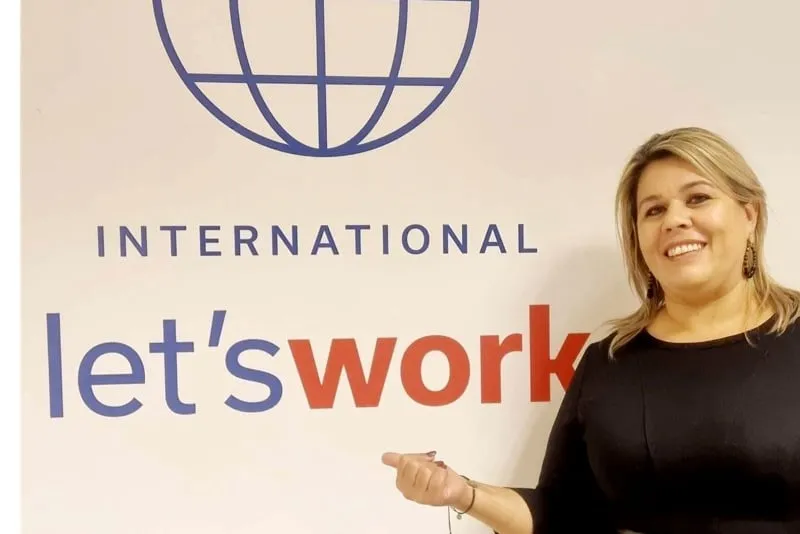
Despite the tougher economic climate, labour shortages remain acute. Shortages are so severe in many occupations that are difficult to fill that companies are recruiting abroad. Southern and Eastern Europe appear to offer promising pools of talent. “You can find motivated people there, both highly educated and with few formal qualifications, who are themselves looking for a better life,” say Adriana Vainer, division manager at Let’s Work International, and HR expert Greet Demonie.
Where can we still find people to fill our vacancies? It is a question that many SMEs in East and West Flanders are wrestling with. Part of the solution lies abroad. Greet Demonie: “Foreign workers are already well established in the construction sector. You traditionally find many Poles and Romanians there, attracted by the high wages offered by Belgian contractors. Most seasonal workers now also come from abroad to work for agricultural and horticultural businesses, which need unskilled labour.”
The list of occupations that are difficult to fill in the regular labour market continues to grow. Adriana Vainer has been recruiting talent from abroad for Let’s Work International for 14 years: “We used to target technical profiles, such as welders. Clients are still demanding, but they are more open-minded and the focus of the search has shifted considerably. Today, employers are mainly looking for people who want to work, are willing to learn the language and are committed to staying for the longer term. They then receive training in the company to acquire the skills needed for a specific role.”
Engineers and IT professionals wanted
Adriana notes that demand for engineers has risen sharply in recent years, undoubtedly as a result of the digital transformation of the manufacturing industry and the need to innovate. “That is why we have set up a dedicated division to focus specifically on this. We mainly recruit in Portugal, but also in Romania and Moldova. They offer good training programmes, so the standard of engineers is high. Belgium also offers an attractive working environment with interesting challenges for people with these profiles.”
With demand for IT professionals so high, Flemish companies have no choice but to look abroad to fill their vacancies. “Not enough graduates are entering the labour market. To be able to move quickly, I have noticed that some SMEs looking for IT professionals are choosing to recruit experienced talent from abroad who are willing to work from home. They can be brought on relatively easily to work remotely on specific projects,” says Greet Demonie. “And if they are a good fit for the company, they can get started and complete onboarding very quickly.”

One of her clients is a fast-growing IT company that has decided to recruit in Portugal. “IT training programmes there are well established and the mindset is right. At the first stage, we are hiring people who want to work from home, but the clear intention is to set up a Portuguese hub in the near future, from which the company can further develop its activities in the region. This offers Portuguese IT professionals promising career prospects.”
Recruiting outside Europe remains difficult
Let’s Work International also ventured into South America and tried recruiting in Brazil, among other countries. “But that remains a difficult process,” says Adriana Vainer. “Outside Europe, there is more paperwork involved in obtaining all the necessary permits. Applying for a work and residence permit can easily take a few months. Employers, however, want new recruits to be able to start work quickly. That is why we now limit our search to the European Union.”
In any case, recruiting candidates from abroad still requires a tailored approach, Greet Demonie knows: “Companies still need to put forward an attractive remuneration package. We take into account the employment status, tax regime, the fringe benefits the new employee expects, and so on. Candidates usually need support in completing all the administrative formalities. In many cases, the company also helps them look for accommodation.”
Finally, the success of a hire depends on how well the new employee is integrated into the workplace. “It is not only management and HR that need to be open to working with a colleague who speaks another language, their co-workers do too, and that is sometimes where the problem lies. Colleagues need to be willing to speak English, for example, not least to ensure safety in a production environment. Involvement and having a say are therefore crucial to helping newcomers settle in and feel comfortable at work,” conclude Greet Demonie and Adriana Vainer.
Question about this story? Ask your question
Keep following this
Get an email when a new story is published. No account needed.
- ThemeAttracting and retaining people
- SubjectHR, finance & IT







