




“The more diverse the team, the more solutions it will find, and the better they will be”
Text Christina Van GeelImage Lies Willaert
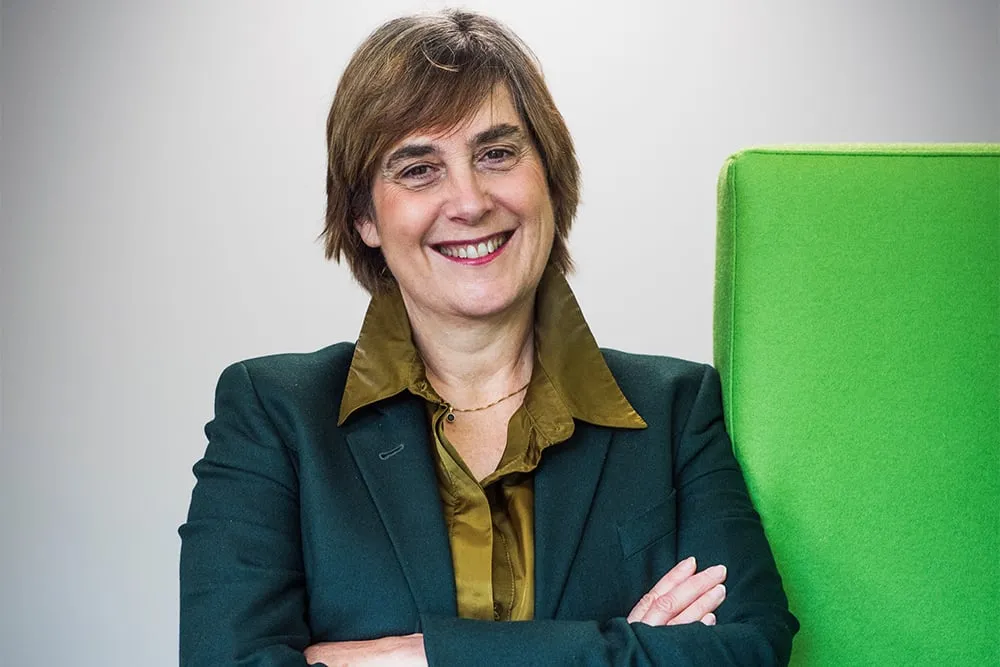
Françoise Chombar takes stock
As a girl, Françoise Chombar loved building little walls. Later, as CEO of chipmaker Melexis, she became a figurehead for Belgium’s tech sector. Since 2021, she has moved into a more strategic role as Chair of the Board of Directors. She enjoys devoting the time this frees up to social causes. For instance, she chairs the STEM Platform. Françoise is a woman with a vision and a mission who places great value on the concept of yin and yang, on balance, in other words. We take stock with her.
What memories do you have of your childhood?
Françoise Chombar: Recently, I came across some old black-and-white photos of me standing in the yard with a little wheelbarrow full of sand. There’s another one of me sitting on a mini-tractor. I loved working with my hands and, for example, building little walls. I’ve also always been very curious. I wanted to know how things worked. And when something broke, I wanted to fix it. I probably inherited that interest from my father, who was a technical draughtsman at a brickworks.
And yet I went on to study languages. At school I studied Latin and Greek, which my parents thought was a suitable choice. I didn’t mind: I was good at it and enjoyed it. My French and English teachers also encouraged my aptitude for languages. But at the same time, I remained a hands-on person. I wanted to make things, fix them and make them better.
“Whatever you do in and with your life, try to be the best,” my parents always said. “Make the most of your talents.” That stayed with me and became a way of approaching life. Your parents often have more influence than you might think at first.
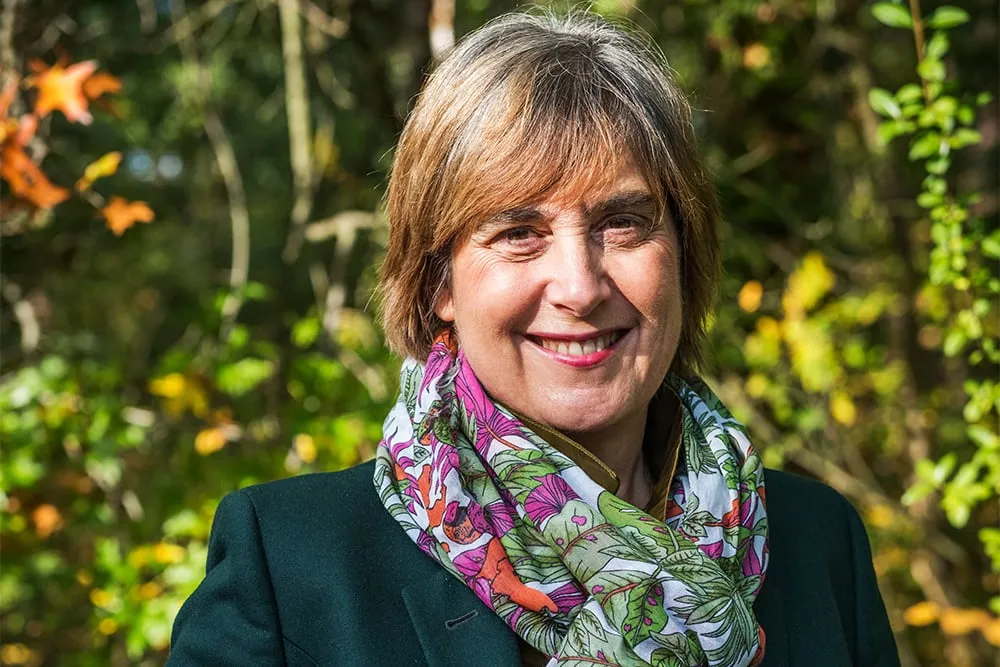
Your mother was a role model. What did you learn from her?
Françoise Chombar: My mother went to school until she was 18. She worked in an office for textile machinery dealers, where she kept everything running.
I was fascinated by how she juggled all those responsibilities: bookkeeping, preparing quotes, following up on deliveries … She was a free-spirited, intelligent woman who set the bar incredibly high for herself and her children. Demanding in a positive way: she knew what she and we were capable of.
At an earlier job, my mother was dismissed because she was getting married. That was still allowed back then. And it really wasn’t all that long ago: we’re talking about 1960. That’s alarmingly recent. I was so indignant when she told me! I’ve taught our children this: whatever you do, stay in control of your life. It’s good and necessary to form close bonds, but make sure you can stand on your own two feet. You can only be strong for others if you’re strong yourself.
How important is ‘balance’ in your life?
Françoise Chombar: I place great value on the concept of yin and yang: white with a little black in it, and black with a little white. The two parts balance each other and drive each other forward. Yin and yang also imply evolution and movement, and diversity. The two parts are interdependent, reliant on each other. Just as we humans rely on one another.
It’s a framework you can apply to almost every aspect of life and business. Different perspectives lead to more and better ideas, to progress and innovation. That brings us to gender balance, one of my hobby horses. It’s also an important economic driver. Gender balance, for example, broadens your market. The fact is that women still make most purchasing decisions. That’s an argument entrepreneurs are receptive to: if your target audience is reflected in a diverse team, you gain market share. It’s as simple as that.
Diversity is also a prerequisite for innovation. The more experiences and viewpoints you bring into an innovation process, the faster and more effectively innovation will deliver.
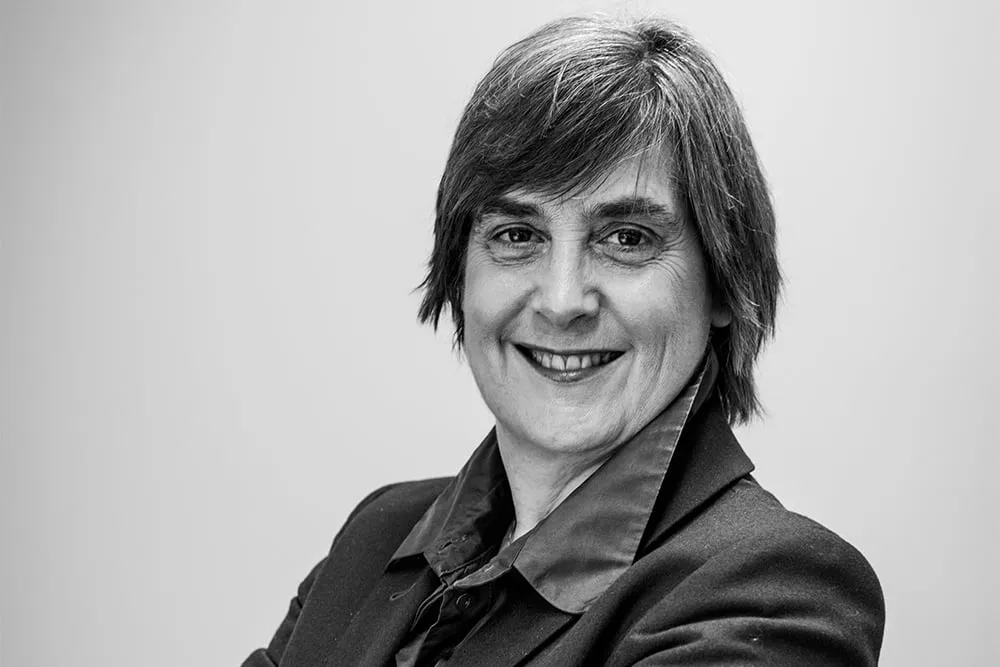
You’re also a committed ‘STEMinist’. What does that mean?
Françoise Chombar: It’s a combination of STEM, Science, Technology, Engineering and Mathematics, and feminist. Too few girls choose technology. That’s down to a wide range of factors: sociological, psychological, the media, family influences, you name it. But the sector suffers as a result. And it’s about more than gender. Religion, background, sexual orientation or neurodiversity: the more diverse the team working on solutions, the more solutions it will find, and the better they will work for as many people as possible. The technology sector undoubtedly still has plenty of room for improvement in this area. It’s a complex, long-term process. But if I can move one small stone in the river, then it’s worthwhile.
What are you proud of?
Françoise Chombar: My husband and I have both had, and still have, very busy professional lives. But we’re also a close-knit family. People outside the family sometimes criticise you for being away from home so often, especially as a young mother. When our eldest had a bit of a difficult time in nursery, the teachers looked to me. They assumed it must be because I worked so much. But our children themselves have never blamed us for it. We were there for them as parents.
Our passion for our work also taught them how important it is to use your talents for yourself and others. The fact that we, as parents, were engaged with the wider world and that our professional lives weren’t always easy also helped them understand that life isn’t black and white, but full of nuance. They’re now confident, happy people in their thirties, deeply committed to themselves and others.
Is there anything you regret?
Françoise Chombar: I regret only one thing: not being there when my mum died. I didn’t know it was going to happen. She died alone, and I’m very sorry about that. Apart from that, I have no fundamental regrets. I have sometimes regretted things I’ve said or done, things that make you think: “I shouldn’t have done that” or “I should have done that better”. But you learn from them, and work out how to do things differently and better next time.
I do take a moment to reflect on it. Sometimes I can feel very low. But at some point, you have to turn the page. That’s a form of compassion: giving yourself and others the chance to make mistakes. A company like Melexis depends on innovation. If you don’t allow people to make mistakes, you won’t get anywhere. The same goes for life. Life is all about striving to move forward, doing better tomorrow than today, constantly innovating. And of course, you sometimes make ‘mistakes’ along the way.
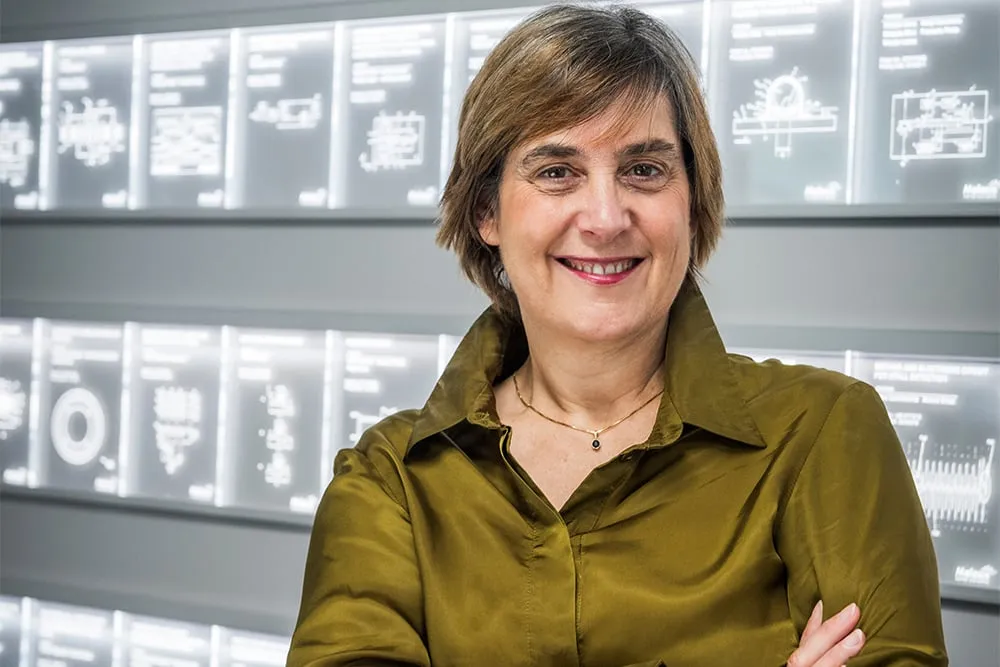
Are you good at being happy?
Françoise Chombar: Oh yes, I can be truly happy. About the smallest things. A walk in a beautiful wood. Spending time with the children and grandchildren. Seemingly very ordinary things. I’m also incredibly grateful that we have it so good in Flanders. I’m grateful that we’re allowed to speak our minds without being arrested or worse.
I call myself a progress optimist. If you look at the objective figures, the world is steadily getting better. We sometimes experience setbacks, but overall life is improving for more and more people. Progress is not absolute, of course. We have it in our own hands, and we’re responsible for it. Caroline Pauwels, former rector of the VUB, called this possibilism. As a person, as an individual, you can contribute far more than you think! Possibilism is based on the idea that greater nuance and more collaboration can lead to a better life for more people.
What does the world need, in your view?
Françoise Chombar: If you want to move forward, you have to steer clear of polarisation. You should be able to express your opinion, hold your own views and put forward possible solutions. But you have to do that with others, together. It’s not about reaching consensus, but about reaching consent. Consensus is about ‘standing up for your own ideas and persuading others of them’; consent is about ‘listening to others and finding what’s best for the group’.
“There are no solutions, there are only trade-offs,” says economist Thomas Sowell. There are no solutions, only compromises. Life is about weighing things up. The solution we’ve developed together may not be perfect, but in the circumstances it’s the best solution for the different parties.
How do you put that into practice?
Françoise Chombar: By building something with a team and bringing people along with a shared vision. I enjoy bringing together the right people so they can work together towards the best possible outcome for as many people as possible. I think I’m good at it, too. Connecting dots and connecting people. Encouraging people to bring out the best in themselves: that’s my thing.
I’m incredibly happy about all the opportunities that came my way and that I was able to seize. Success is getting what you want, and happiness is wanting what you get. That’s my motto in life. As a possibilist, I strive for success and progress. But at the same time, I’m very grateful for what I’ve been given. That’s yin and yang again. It’s really deep within me, you know. (laughs)
Question about this story? Ask your question
Keep following this
Get an email when a new story is published. No account needed.
- SubjectGeneral







