




Resilience will be a decisive factor for Europe’s construction sector as it approaches 2026
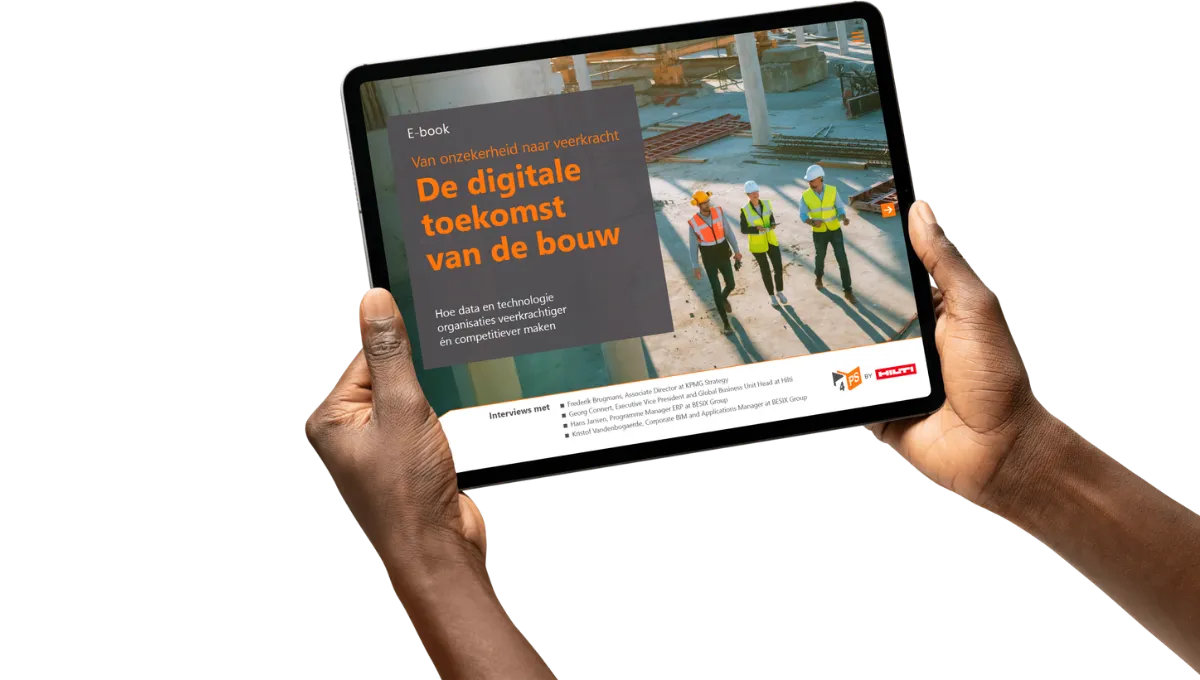
Economic uncertainty is forcing construction companies to make structural choices about data, technology and collaboration.
Ghent, 16 March 2026: Europe’s construction sector is under mounting pressure from economic uncertainty, labour shortages and changing regulations. Companies that continue to operate according to traditional models risk falling structurally behind. Recent research among European experts shows that resilience is becoming a structural success factor for the sector. The findings have been compiled in 4PS’s e-book From uncertainty to resilience: The digital future of construction .
Uncertainty strikes at the heart of the sector
Recent years have shown that uncertainty in construction is no longer a temporary disruption, but a structural reality. Fluctuating material and energy prices, supply chain disruptions and a growing shortage of skilled workers are making long-term planning increasingly difficult. At the same time, societal challenges remain significant: housing construction, renovation and decarbonisation require scale and predictability, while margins are under pressure.
Resilience: from defensive measure to strategy
Construction companies that invest in resilience are better able to absorb shocks and seize opportunities. It is no longer merely a defensive measure. This calls for different choices than in the past. It is not just cost control, but above all data-driven decision-making, integrated processes and supply chain collaboration that determine who gets ahead. Georg Connert, Executive VP and Global Business Unit Head at Hilti, says: “Resilience is a competitive advantage, precisely because construction is inherently volatile and characterised by long project cycles and uncertainty.”
The labour market as a structural breaking point
One of the sector’s biggest risks remains the shortage of personnel. Millions of additional skilled workers will be needed in Europe by 2030, while a large proportion of the current workforce is leaving the sector as it ages. Without productivity gains and different ways of working, construction and infrastructure projects risk grinding to a halt.
Frederik Brugmans, Associate Director at KPMG Strategy, believes this is forcing companies to reposition themselves: “Main contractors were traditionally organised. Now they are moving towards industrialised construction and more integrated supply chain collaboration to manage risks more effectively.”
Digitalisation is available, but not yet being harnessed
Although digital technology, AI and integrated ERP systems are widely available, only a limited number of construction companies use them systematically. This gap is widening differences in agility and resilience across the sector. According to 4PS, companies investing in data, process integration and transparency today are building a structural advantage, especially in uncertain times.
A turning point as 2026 approaches
A turning point is emerging for the construction sector as 2026 approaches. Research among European experts points to two possible futures: sticking with business as usual, with increasing vulnerability as a result, or opting for structural change. In the latter scenario, resilience becomes a competitive advantage rather than a last resort. The analysis has been compiled in the e-book From uncertainty to resilience: The digital future of construction.
Question about this story? Ask your question
Keep following this
Get an email when a new story is published. No account needed.
- SubjectGeneral







