




Reshoring: a story of sustainability, anchoring and added value
Text Bavo BoutsenImage Aqualex, Corbeo, Luk Collet
Flemish entrepreneurs share their success in bringing activities back from abroad
Anchoring and bringing back industrial activity is essential to strengthening Europe’s strategic autonomy. In today’s geopolitical landscape, with climate targets on the horizon, reshoring is one of the key trends of the moment. Yet the number of Flemish companies actually taking the step remains limited for now. However, entrepreneurs who have successfully completed this journey are highly enthusiastic.
Geopolitics and tariff wars dominate the headlines. We are moving from a highly open, globalised economy towards a more protectionist approach. In Europe in particular, the pursuit of strategic autonomy is high on the agenda. This means paying greater attention to our own defence capabilities while reducing dependence on distant foreign actors. Europe therefore needs to produce more within its own region and, wherever possible, bring industrial activity back or reshore it.
Creating added value
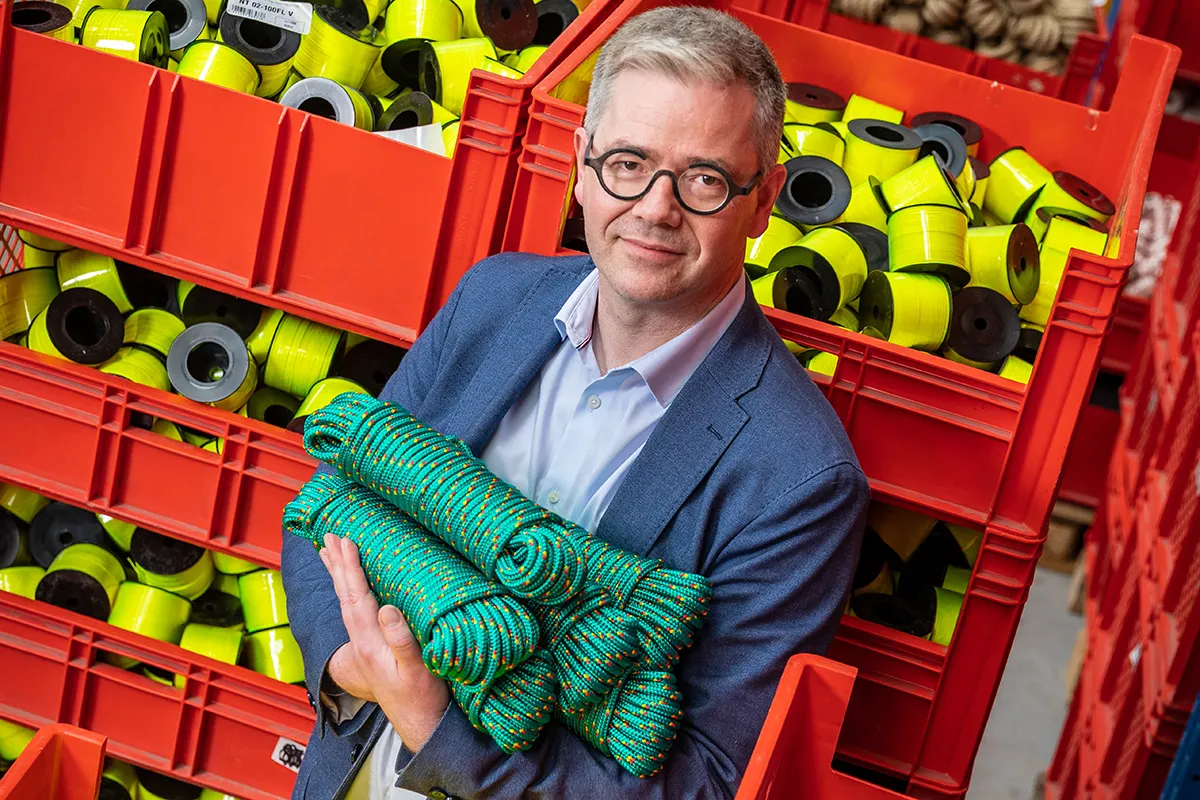
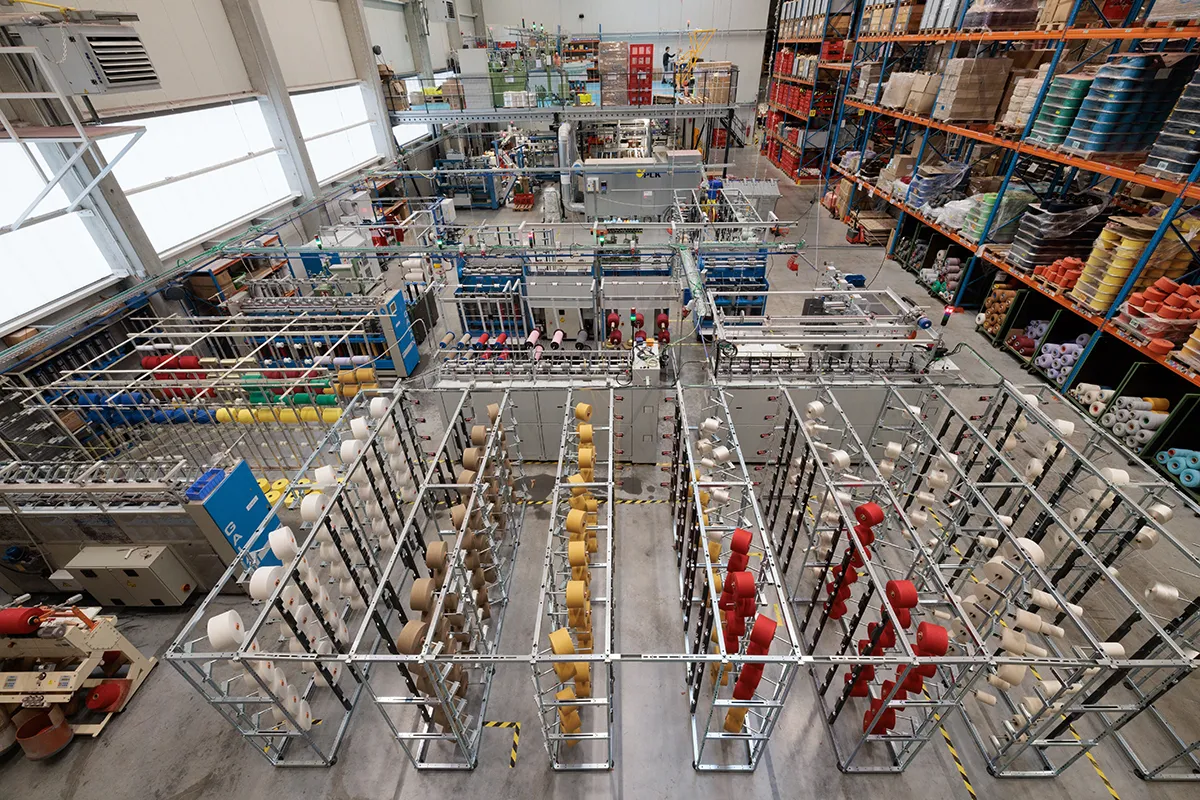
One company that has already taken this step is Corbeo, a producer of rope and cord for retail and industrial applications based in Zele. “My wife and I took over the company in 2015. From the outset, our ambition was to bring as much production as possible back and create more added value here,” says CEO Wilfried Baeten. “The basic raw material for the traditional lashing ropes familiar from the scouts is generally sourced in Brazil and shipped to China. Once processed, the product is sent to Europe. We wanted to bring production as close to us as possible.”
It worked: today, Corbeo produces, repackages or processes just over half of its products itself. “The added value we create as a result has tripled since we took over. That is also why we set up our own rope-making workshop. This is obviously a very complex undertaking, but our goal remains to move towards 100 per cent in-house production.”
Custom work
Bringing industrial activity back depends, of course, on finding the right people. This is often where the difficulty lies. Labour shortages are an obstacle. That is why companies often look to advanced automation or work with sheltered workshops. “We are seeing a growing number of projects in which companies set up partnerships with sheltered workshops,” says Francis Devisch, director of Groep Maatwerk, the umbrella organisation for sheltered workshops.
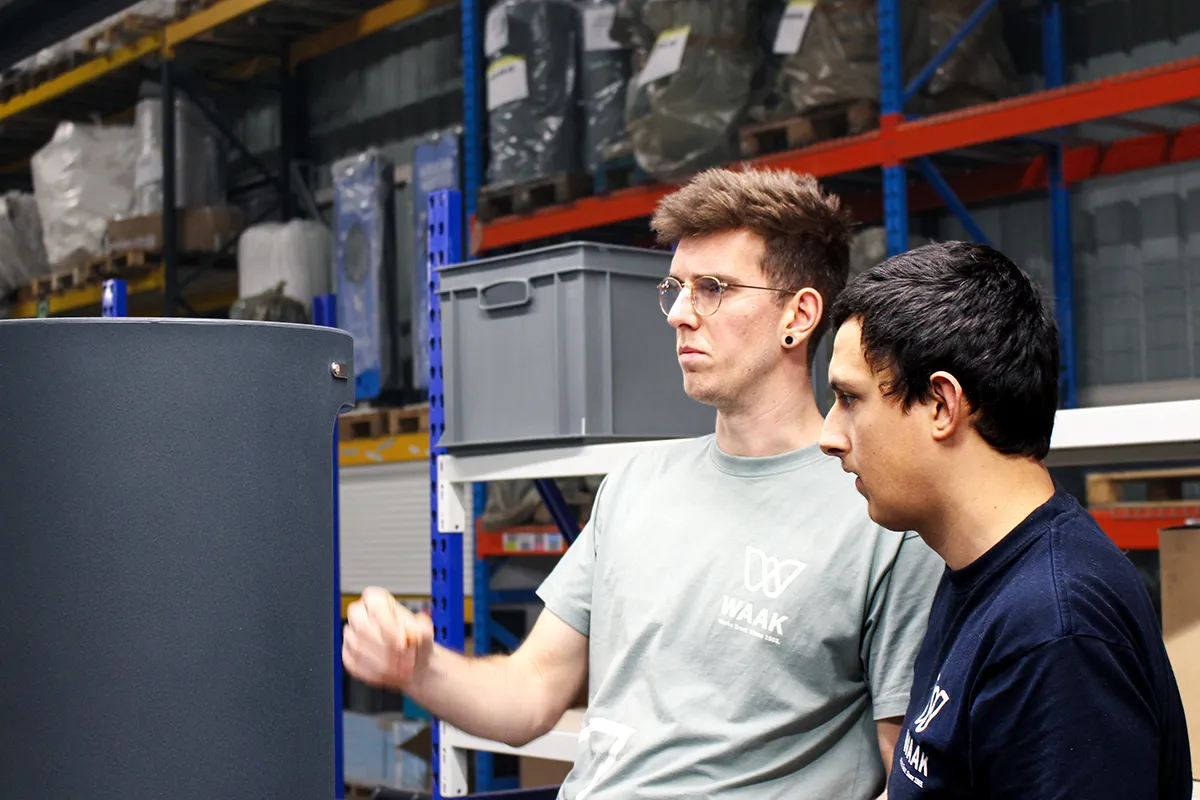
A good example is the partnership between Aqualex and sheltered workshop Waak. The West Flanders-based producer of mains-water coolers is using this collaboration to manufacture its new Circulo water column. “The product is made from recycled materials. To go a step further, we looked for ways to make it in-house as well. That led us almost automatically to Waak,” says CEO Alexander Vanlerberghe, who was able to bring in suitable staff quickly. Employees from the sheltered workshop now work alongside Aqualex staff on the production floor. “This also gives us greater control over the quality of our products, which is a priority for us.”
“Although such partnerships are becoming more common, there has not yet been a major breakthrough,” Francis Devisch adds. “It is also striking that not every company is keen to publicise them.” Wilfried Baeten believes this reluctance is misplaced: “These are precisely the success stories that should persuade others to take the plunge. In reality, it is mainly a question of companies making a mental shift.”
(Don’t fall into) the reporting trap
Regulation is another important factor in this story. “It often has a noble objective, but today it is missing the mark somewhat,” says Baeten. “Under the European Carbon Border Adjustment Mechanism (CBAM), which is intended to levy a charge at the border on the CO2 emissions generated in the production of certain goods outside the EU when they are imported, we would, for example, have to pay CO2 compensation from 2027. That is because we use imported galvanised steel. But this reporting does not take into account the fact that, according to our life-cycle analysis, we have reduced our production’s total CO2 emissions by as much as a factor of eight by producing in-house.”
To address situations like this, the European Commission recently proposed the Omnibus package, which includes exempting SMEs from ESG reporting requirements in order to reduce administrative burdens. Wilfried Baeten considers this a step in the right direction.
“Especially because intensive reporting requirements raise the bar for companies looking to reshore. They fuel the perception that this will inevitably lead to a more expensive end product, which is not true. In fact, rising wage and production costs in the Far East are making the move increasingly attractive financially. We need to tell that story much more often, because in the end, the price at the till is what matters most to consumers. In any case, we need to be able to offer a product that is price-competitive,” he concludes.
Question about this story? Ask your question
Keep following this
Get an email when a new story is published. No account needed.
- SubjectGeneral







