




“Our ambition is to keep growing internationally”
Text Björn CrulImage Tom Leentjes
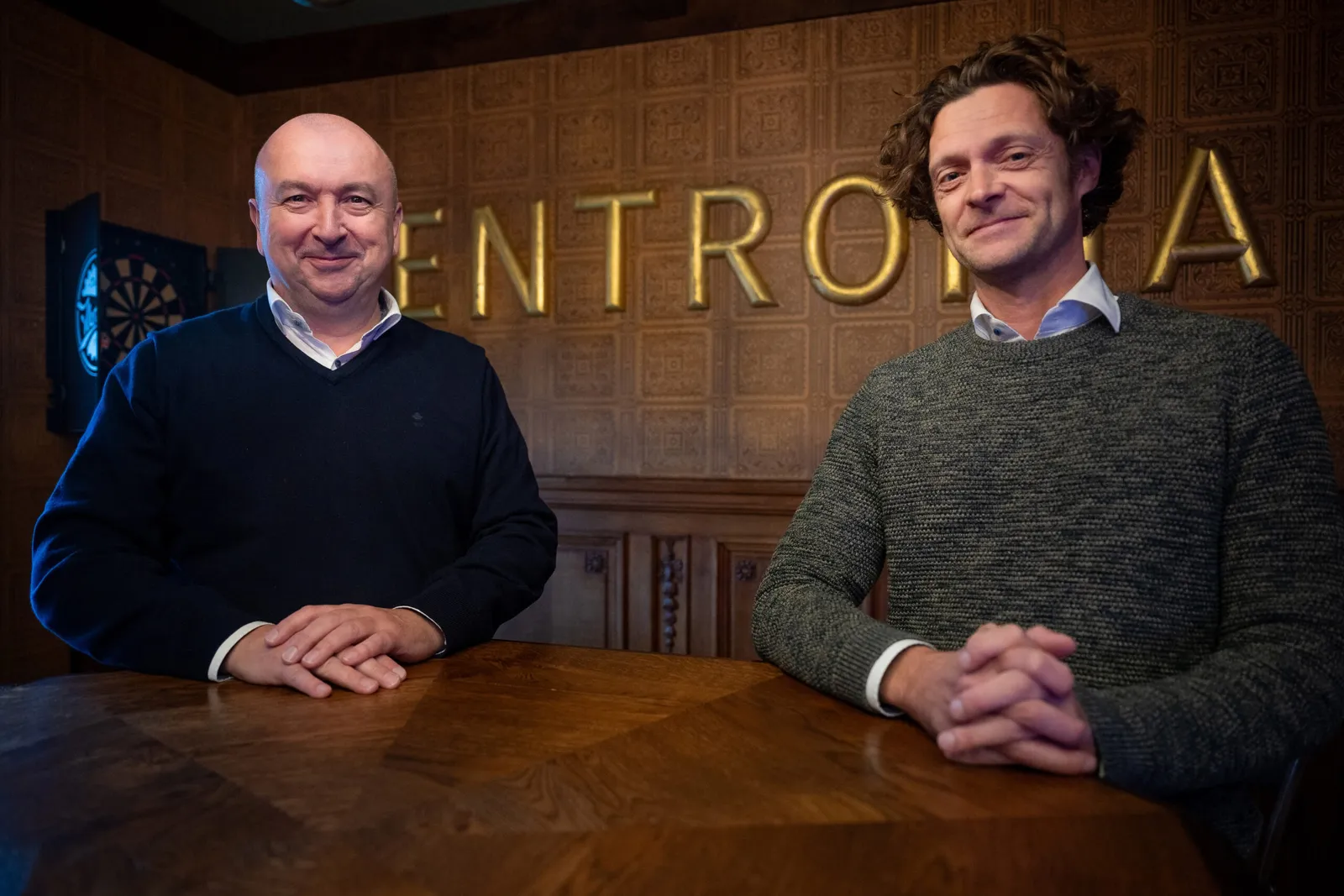
Conquering the world from Flanders is not something every company can do. Even technology companies have to fight to carve out a place for themselves in foreign markets. Entropia, based in Oostkamp and specialising in mission-critical communications systems and services, and Sensolus, based in Ghent and enabling companies to monitor their machinery, vehicles and assets via an IoT platform, prove that it can be done. The companies’ leaders, Philip Vercruysse and Kristoff Van Rattinghe, talk about the steady growth of a Belgian multinational and their ambitious growth plans.
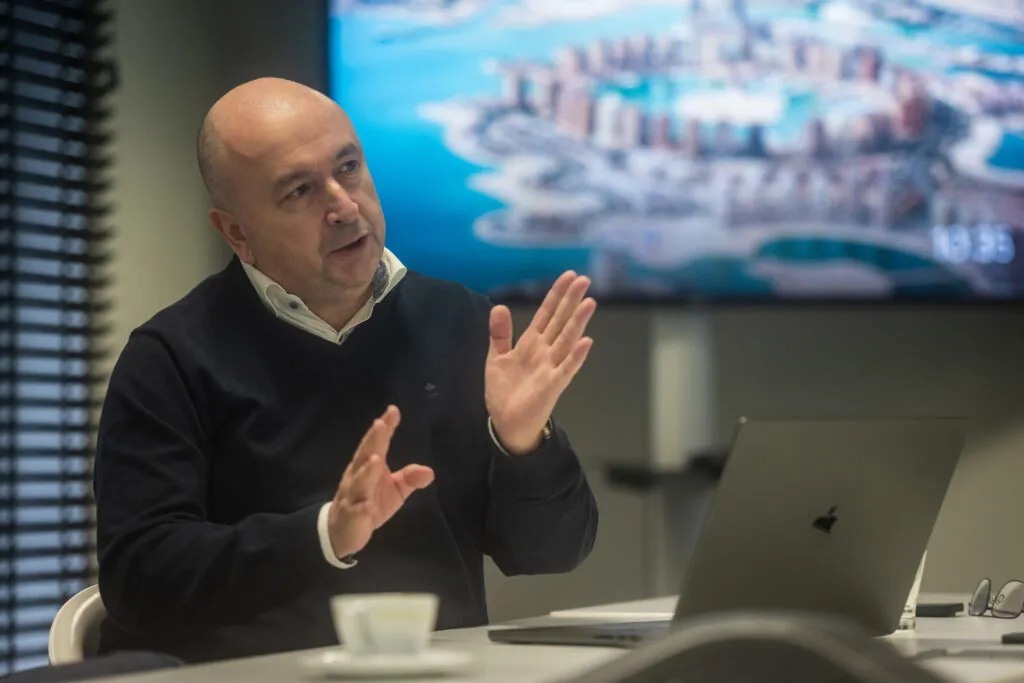
You both started a company from scratch. What was the original idea, and where are you today?
Philip Vercruysse: I started more than 35 years ago with a shop in the Bruges region, selling communications equipment to radio amateurs and small businesses. Before long, however, I was receiving requests from professionals looking for specific wireless communications solutions, including the police, maritime services, coastguard, water and energy companies, and so on. This led to some great projects, and I realised there was also a need for a reliable network for mission-critical communications, independent of conventional mobile networks. That is how the first Entropia network, using microwave links, was established in West Flanders. At our customers’ prompting, we gradually expanded it from 2000 onwards to provide full coverage across Flanders and Brussels. Later, we added a network in the Netherlands, Great Britain and offshore in the North Sea. We continue to refine our technology and offer very high availability. Today, as an SME, we generate revenue of €10 million and employ 35 people.
Kristoff Van Rattinghe: At Sensolus, 11 years ago, we started from the idea that the Internet of Things offered a very simple solution for digitising all kinds of things. This meant we could offer a wide range of possibilities to non-technical users too, without requiring major investment in hardware. Our first projects focused on informal care and keeping track of a loved one remotely. Over time, we moved into industrial asset management, in other words the remote monitoring of valuable equipment. Our customers are typically large companies such as Airbus, DHL and Volvo. In 2016, we began operating in neighbouring countries France, Germany and Great Britain. We also supply Spain and Italy through partners. Sensolus now has 55 employees, and our revenue is set to reach €10 million in 2025.
Philip, Entropia has operations in Belgium, the Netherlands and now Great Britain too. How far do your international ambitions extend?
Philip Vercruysse: We want to keep growing step by step, as we always have. We receive enquiries from many countries, but the nature of our services, guaranteeing mission-critical communications that work at all times, means we have to focus. We have just completed a nationwide switch upgrade across our network, so we are ready for simultaneous hybrid technologies using TETRA and 5G. We have also developed the Combonet platform ourselves, enabling us to provide services such as 5G broadband communications, including in countries where we do not have our own masts. We already operate this way in Great Britain, and our colleagues in the Netherlands want to use the same approach to grow in Germany. We have also developed ComBus, our mission-critical control-room platform. It not only dispatches mission-critical voice and data, but also controls and operates telemetry. All of this runs on our own masts, infrastructure and cloud environment.
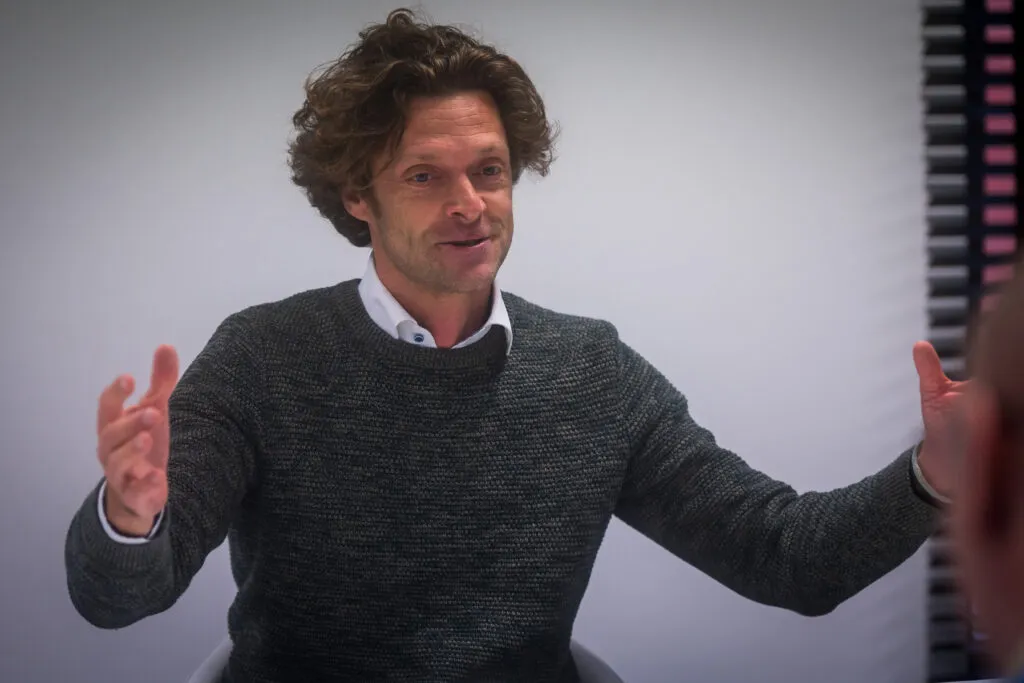
Kristoff, how is your expansion abroad going?
Kristoff Van Rattinghe: We use public networks to connect sensors to our SaaS platform. So we don’t need fixed infrastructure. That means we can scale quickly, from 5 to 10,000 sensors. 80% of our revenue now comes from abroad. But every new country brings a fresh challenge. However good your product is, it takes time to get to know the local business culture and customs. That is why we deliberately work with local teams to establish us in each market. After expanding into neighbouring countries, we took the next step in 2022 and entered the US. It is, of course, a large, lucrative market with plenty of opportunities, but you can also burn through a lot of money quickly. In effect, it is 50 separate countries, with each state having its own character. We are steadily finding ways to grow, with a local duo: a Belgian expat and an American with extensive experience in the tech sector. After two years, we have a much better idea of what works and what doesn’t. It has been an extremely exciting experience, both for the company and for me personally.
This summer, Entropia raised €60 million from a Dutch investor. What does this capital injection mean for further expansion?
Philip Vercruysse: We have found a strategic partner who is committed to working with us for the long term. Due to accounting and tax differences between Belgium and the Netherlands, the paperwork is currently being finalised. The plan is to put our existing financial structure in order and then invest heavily and grow. We are improving our existing network by making greater use of dual microwave links, which will also increase redundancy and enable us to continue guaranteeing a service level of at least 99.5% uptime. We will also supply customers with end-user equipment, so they no longer have to worry about it themselves. And I certainly see opportunities to further develop our mission-critical ComBus cloud software. We have plenty of plans.
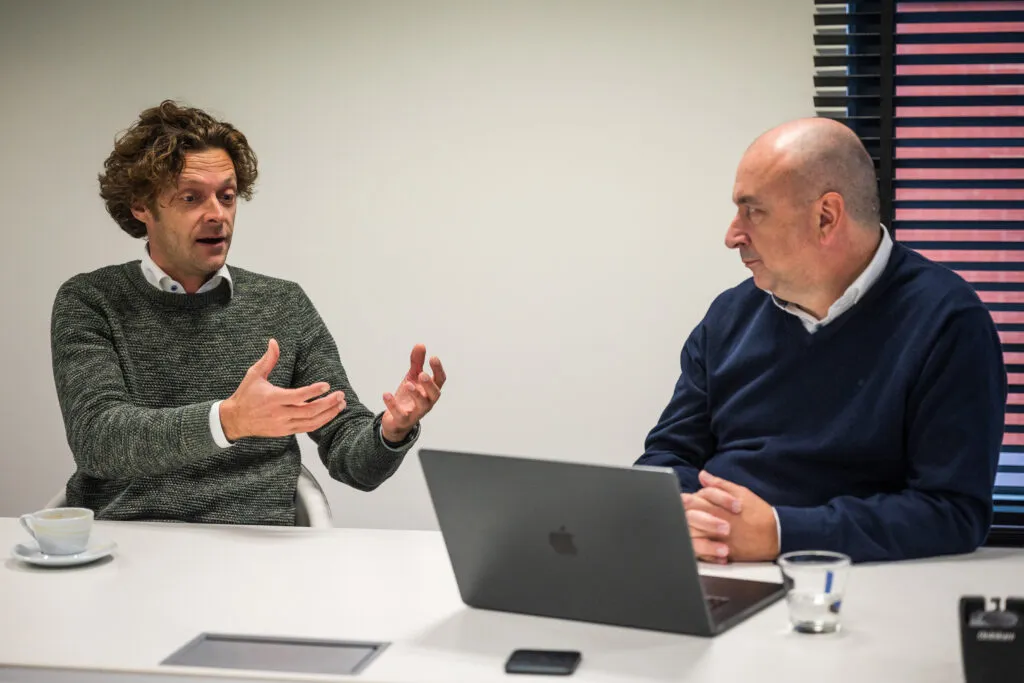
Kristoff, Sensolus’s last major funding round was in 2020, when you raised €3.5 million. Are you, as a scale-up, still looking for further funding?
Kristoff Van Rattinghe: As a growth company, you are always thinking about funding. We need sufficient resources to deliver on our strategy. Four years ago, a German industrial investment fund came on board specifically to help us internationalise. Since then, we have secured additional funding through bank financing and our existing shareholders. We are not ruling out new rounds, but raising money must not become an end in itself. We see considerable growth potential and are ambitious, but at the moment we have no specific need for additional funding.
Is building an internationally focused company from Belgium an advantage or a disadvantage?
Kristoff Van Rattinghe: That’s a difficult question. When I’m walking around in America, I can see how many opportunities its start-up culture offers: funding is available, you can move quickly, and everyone gets plenty of chances under the principle of ‘failing forward’. On the other hand, we would never have got to where we are today if we hadn’t grown cautiously in the early stages. What does stand out to me is Belgium’s image abroad: we have well-trained engineers, strong language skills and a reputation as quiet, hard workers. Those qualities give us a mark of quality overseas.
Philip Vercruysse: Doing business in Belgium is a challenge. The rules of the game for entrepreneurs often change here, but that makes you stronger too. I find that the spirit in the Netherlands is more straightforward, whereas innovation requires you to be able to think in a suitably chaotic way. I think Belgians have more of that in their DNA. Sometimes the Dutch also look down on the Belgians, until you achieve something impressive that they admire. Where you do business probably makes little difference, as long as you do it with passion and alongside your employees.
Finally, what are you most focused on as CEOs today?
Kristoff Van Rattinghe: I now spend more time leading strategic projects. As our team has grown to 55 employees, I have less need to deal with day-to-day operational matters. But my first priority remains staying close to our people and ensuring good internal communication, including with our employees abroad. It is the team that has to carry out and deliver our plan. I also get involved in specific challenges such as new partnerships, winning a major new customer or building brand awareness in the US. These things keep the job interesting and ensure that I continue to learn as an entrepreneur.
Philip Vercruysse: I can fully relate to that. Some time ago, we appointed a Dutch managing director, which has seen my role evolve more towards that of Chief Technology Officer. I remain fascinated by engineering and technology, and that passion is still stronger than my interest in “being CEO”. Now that we have secured growth funding, the sky is the limit in our niche market. We are already recruiting new people and looking at opportunities for a few acquisitions that could strengthen our group. I see 2025 as the most innovative year in Entropia’s history.
Question about this story? Ask your question
Keep following this
Get an email when a new story is published. No account needed.
- SubjectGeneral







