




Matthias Diependaele and Jo Brouns on the economy and policy in 2025
Text Bavo Boutsen en Björn CrulImage Boris Vermeersch
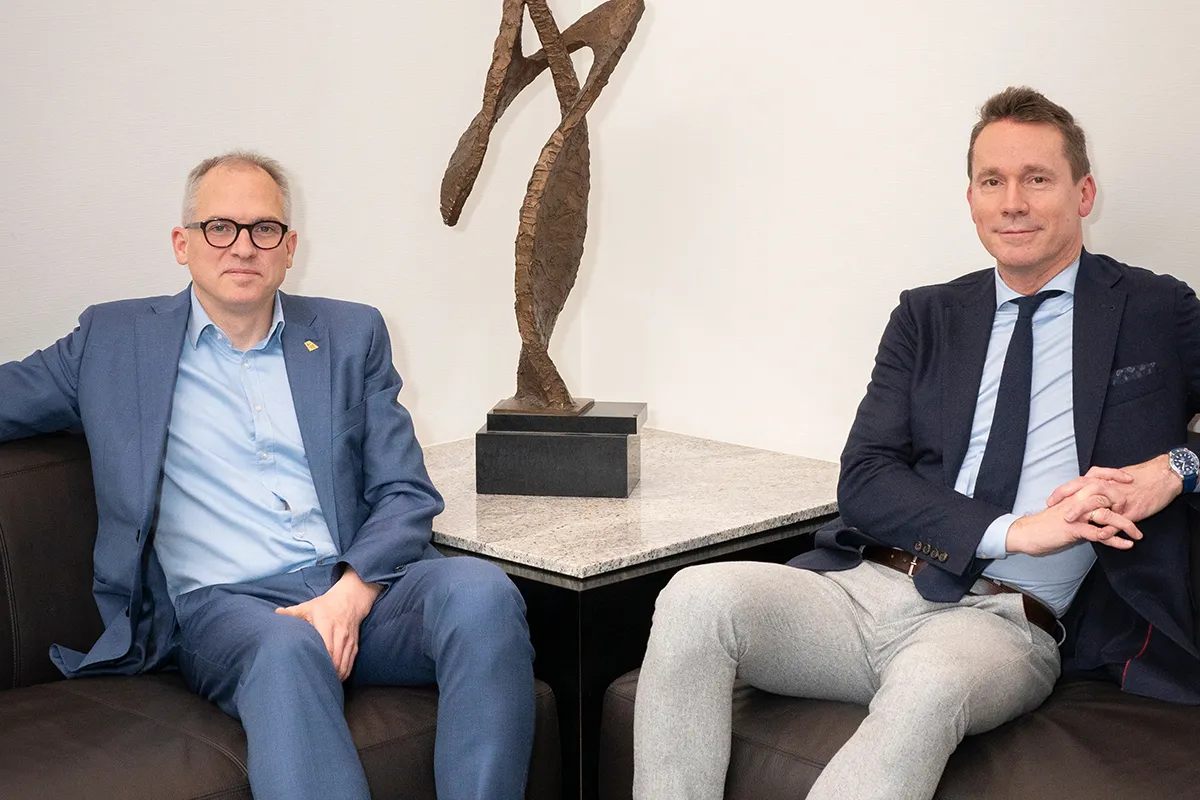
2025 looks set to be a difficult year for the economy. Many industries are under pressure and are looking to ‘politics’ to deliver more supportive policies. Flemish Minister-President Matthias Diependaele (N-VA), who is also responsible for the economy, innovation and industry, and Minister for the Environment and Agriculture Jo Brouns (CD&V) are well aware of the challenge. Buoyed by the new momentum in the young Flemish government, they intend to pursue a robust economic policy during this term of office, particularly on permits and legal certainty. “Fundamentally, we want to restore the balance between private and public interests”, they say.
The new year got off to a turbulent start economically. 2024 ended with a record 6,300 bankruptcies and significant job losses in Flanders. It is no coincidence that business confidence is also falling. As policymakers, how do you view the situation?
Matthias Diependaele: We saw this situation coming and tried to anticipate it as best we could in our coalition agreement. Our productivity growth has been slowing for years. Improving productivity and competitiveness is therefore crucial, as it is the only way to sustain our prosperity. We have agreed to work towards a predictable permitting policy that provides legal certainty, fewer unnecessary rules for businesses, administrative simplification and targeted investment in infrastructure. At the same time, we will make strategic choices in innovation policy to support investment in industry. Think of sectors such as agri-food, defence and aerospace, where we rank among the international leaders.
Jo Brouns: As Minister for Work in the previous Flemish government, I learnt that the persistently low number of people entering the labour market is a major challenge. Almost every business I spoke to first and foremost asked for more talent to be made available. We therefore need to do even more to reach the economically inactive population. The new policy framework of the federal government, particularly the time limit on unemployment benefits, could be a game changer. But it would be wrong to think that economically inactive people can immediately return to work. Reskilling and upskilling will be crucial. This government is also taking action on that front, as shown by the efforts we expect from VDAB.
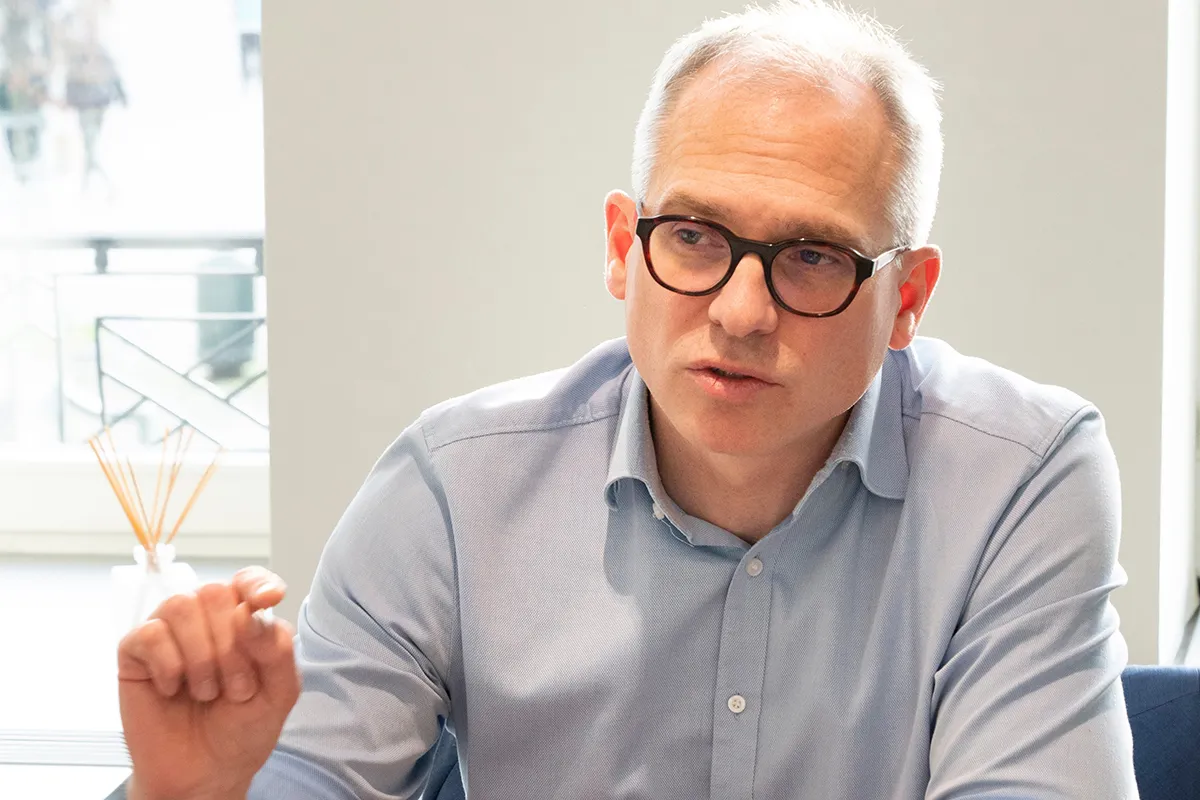
Meanwhile, Donald Trump began his second term with tough rhetoric towards Europe. What does this mean for the Flemish government’s policies?
Jo Brouns: We must make a clear choice in favour of a united Europe and strategic autonomy. The Commission von der Leyen’s competitiveness compass will set the direction, first and foremost because it must make room for more flexible targets. I am thinking, for example, of mandatory sustainability reporting (CSRD), which currently has a very rigid framework. We must have the courage to review it. In that sense, Trump’s return to the White House is above all a wake-up call for us. We must realise that we cannot afford to be complacent.
Matthias Diependaele: I’m tired of all the moaning and complaining about Donald Trump. The problems of excessive regulation and the imbalance between the economy and the environment … they have been around for a long time. By going too far with CSRD reporting, we have lost sight of its societal purpose, its rationale. That sets off a vicious spiral that undermines the economic model. Green hydrogen is one example. The aim is to impose an ideal straight away, rather than letting it develop step by step. The business case simply isn’t there yet. Europe should act more like a boxer in the ring, assertively, and less like a referee wagging a finger.
Jo Brouns: At its core, this is about choosing the right path towards a greener future. And that means you cannot build an ecological paradise on an economic graveyard. I would point to the debate around Ineos’ new ethane cracker at the port of Antwerp. The starting point in cases like this should be to give businesses the opportunity to take steps towards more sustainable production. The same applies to agriculture. If you want to build a new livestock shed, you must be able to demolish the old one.
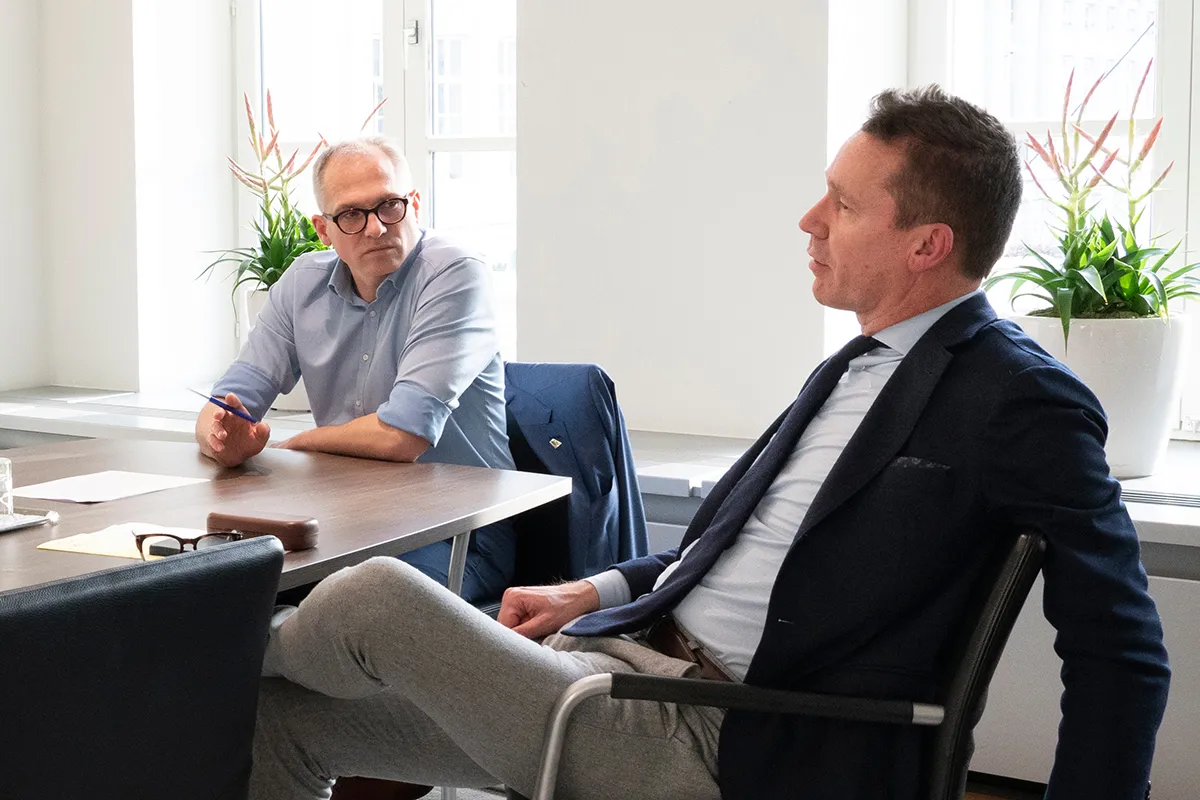
A Flemish Industry Forum took place in December, with the government holding talks with representatives of major industrial sectors. What lessons did you draw from it?
Matthias Diependaele: Compared with the previous summit in March 2024, we now have a new coalition agreement that will work to improve the business climate and make strategic choices. Our priority now is to develop solutions to support and anchor industry. Some of the work also falls to the EU. By allowing member states to provide massive amounts of state aid, the previous Commission seriously undermined the functioning of the single market. The balance, the level playing field within the Union, must be restored.
Jo Brouns: It is also important that there is a growing recognition that European unity does not mean one-size-fits-all. Every member state or region has its own distinct characteristics, and these must be taken into account when policy objectives are imposed. Take the Nature Restoration Law, for example, and its far-reaching implications for a densely populated region such as Flanders or the Netherlands. Its impact cannot be compared with that in, say, a rural region of Poland or a large country such as France.
Flanders’ extremely high population density and lack of space are probably the region’s biggest policy challenge. It is no coincidence that a growing number of businesses are starting new activities in northern France.
Matthias Diependaele: With one exception, these are always expansions. In practice, then, there is no decline in existing employment. Ultimately, of course, this issue is about space, and there is no way to create more of it in Flanders. The economy needs more space, but housing, agriculture and nature also require additional land. We cannot create extra square metres; it is a zero-sum game by definition.
Jo Brouns: One area we can work on is the granting of permits. We have set up a task force led by Mark Andries, Director-General of Vlaio, bringing together civil servants, academics, lawyers and judges to identify practical measures to speed up the permitting process, make environmental assessments more robust and organise public participation in major projects in a meaningful way. We want to see results within a year. We want clarity and predictability throughout the process, so that the permits we issue provide legal certainty.
Matthias Diependaele: Granting a permit should be a political decision. The legalisation of the permitting process has skewed the balance between private and public interests. That balance must be restored. More than ever, we need politicians with the backbone to make decisions in the public interest and the courage to explain them to the public.
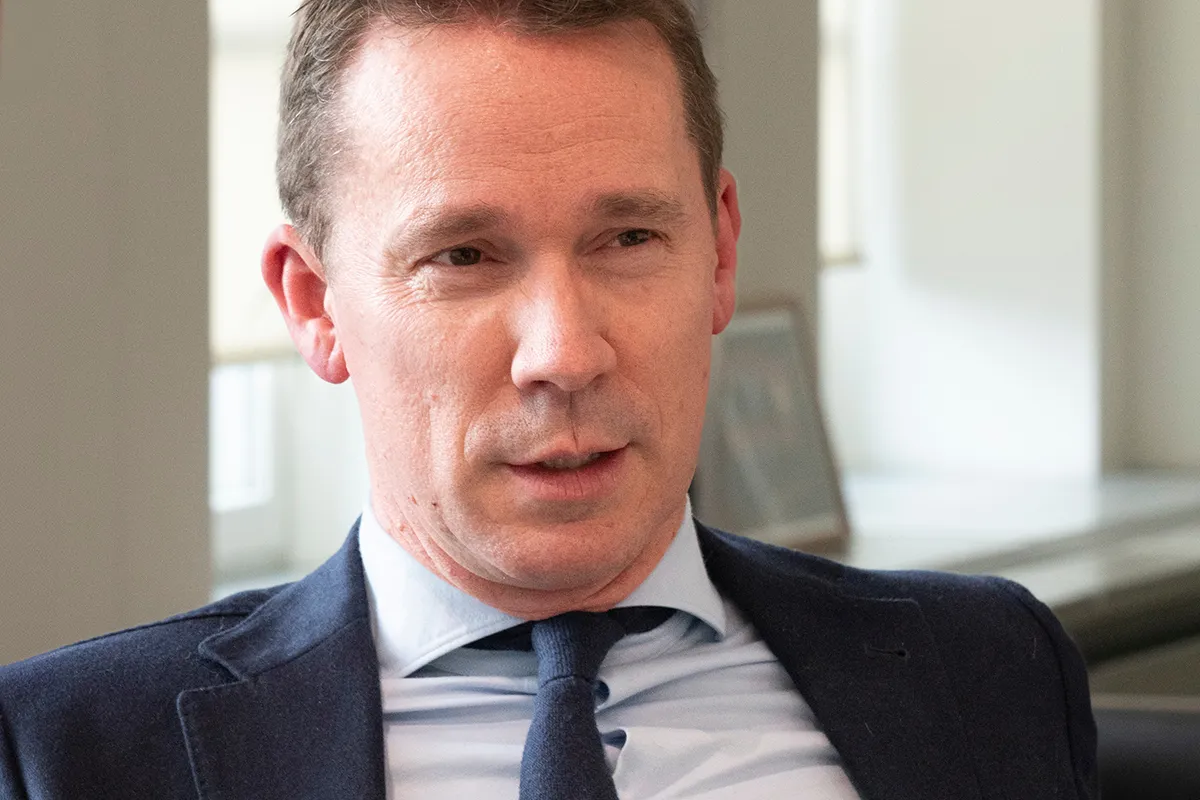
Either way, the need for housing, business premises, agriculture and nature is enormous. Can this still be reconciled with the reality of limited space?
Jo Brouns: Flanders is tiny, and all these functions are simply essential to our prosperity. That is why we must be creative and think outside the box. Think about building upwards or increasing density. The same goes for everything related to nature. We need to be willing to provide species with new habitats, rather than trying to bring them back to places with a different function, where restoration is no longer justified.
Matthias Diependaele: It is mainly about making smart use of space, and property developers hold a key to this. Redeveloping ageing areas offers opportunities to create a large number of high-quality homes in a limited space. I have therefore never understood why the previous federal government scrapped the 6% VAT rate for demolition and redevelopment. We will need all the sectors involved to meet this challenge, so bring them into the decision-making process.
Will the construction shift remain in place over the next 15 years?
Matthias Diependaele: I’m very glad that the term ‘concrete stop’ is no longer being used. In the coming years, we will need to put construction into overdrive to meet all our needs, for example in housing. And let’s not forget that the current sprawl of residential areas also means that housing in our country is very affordable. As many as 72% of Flemish people own their own home.
Jo Brouns: Ultimately, it is about finding smart ways to use space. We are now putting the Beleidsplan Ruimte Vlaanderen fully into practice, so that local and provincial authorities can base their policies on it. The Beleidsplan is the successor to the much-discussed Ruimtelijk Structuurplan Vlaanderen, which is almost 30 years old. It must translate our ambitious and strategic choices into concrete, legally binding measures, for example the decision not to develop certain residential expansion areas in order to preserve open space. And this is, of course, closely linked to local choices on climate adaptation and water management.
Question about this story? Ask your question
Keep following this
Get an email when a new story is published. No account needed.
- ThemeBusiness growth and entrepreneurship in Flanders
- SubjectGeneral







