




In conversation with Tomas Van Den Spiegel and Ann Wauters
“Elite sport is the perfect training ground for life”
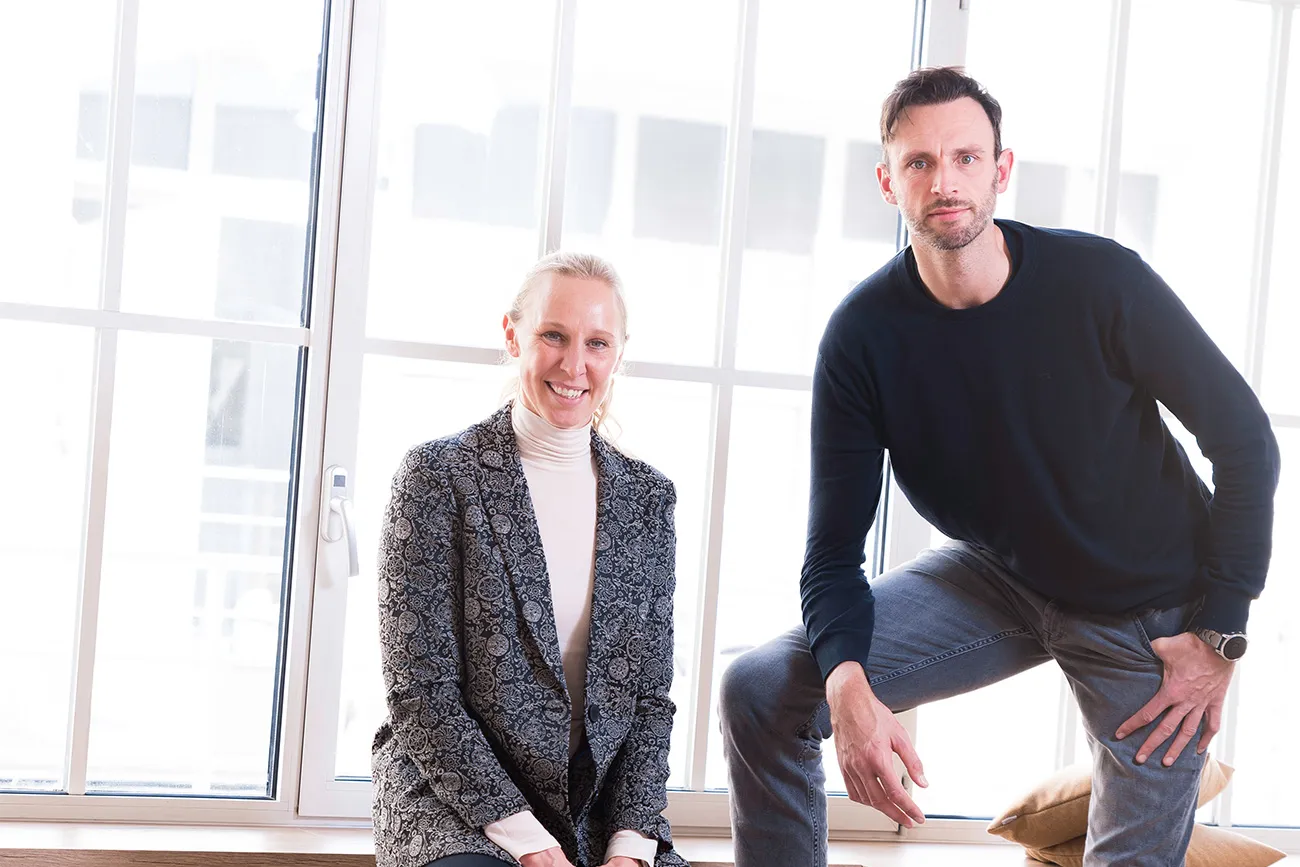
In Flanders, spring means cycling. Behind the success of six spring classics, culminating in the Tour of Flanders, is Flanders Classics, a young organisation headed by former professional basketball player Tomas Van Den Spiegel. Ann Wauters has also brought her basketball playing career to a close. She is now an assistant coach at Chicago Sky and a sought-after keynote speaker. We talk to these athletes about life after elite sport and their paths into business.
Tomas, Ann, you share a passion for basketball. Did you both love it from an early age?
Tomas: “I did. My whole family played basketball, so I grew up with it. I was lucky enough to make it my profession.”
Ann: “My experience was somewhat different. My parents are baby boomers. For them, my studies came first, while sport and free time were more of an afterthought. Basketball came into my life later. But I have to admit, it was love at first sight. I also had a natural aptitude for it, which gave me confidence. It was like a drug for me. I wanted to keep getting better results. That meant pushing myself hard, but I also enjoyed it.”
During your professional careers, did you already have an idea of what you would do after sport?
Tomas: “Not really. My focus was entirely on my professional career, and it needed to be if I was to keep performing at a high level. The main things I developed were perseverance and determination. They brought me to where I am today.”
Ann: “Towards the end of my career, I was focused on just one thing: my dream of competing at the Olympic Games. If that hadn’t been my goal, I would undoubtedly have mapped out a path sooner. Staying in the basketball world was by no means a foregone conclusion. But I couldn’t pass up the opportunity to become a coach.”
Tomas: “To be honest, I haven’t touched a basketball since my professional career ended. But sport still dominates my life, and now I want to make a difference in the sector.”
Did your basketball careers lay the foundations for entrepreneurship?
Tomas: “Basketball is the ultimate team sport. You give everything to help the team perform better each time. I think the bonds between players are much closer than, for example, in a football team. You also learn that training and preparation are crucial to achieving a good result, but that every game is different and a setback can be just around the corner. As an entrepreneur, too, you have to be prepared for anything and be adaptable when things don’t go your way.”
Ann: “Absolutely. Basketball is played in a very confined space, and working together can make all the difference. You also learn to cope with time pressure and are encouraged to look for creative solutions. These are all skills entrepreneurs need today.”
Sport shaped your lives. Is that still the case, Tomas? Do you lead by example with your employees?
Tomas: “Yes. I believe in the ‘lead by example’ principle and want to set a good example for my colleagues.”
Ann: “That’s where things go wrong in many companies. A CEO can have the best intentions in the world, but if they don’t lead by example, their initiatives are unlikely to get much support. That doesn’t mean you can’t or shouldn’t make mistakes, though. It’s important to recognise that asking for help and delegating tasks are perfectly acceptable, and can help you succeed.”
Tomas: “Letting go was something I really struggled with. At first, I was involved in everything. But sooner or later, that comes back to bite you. Letting go means some tasks take longer than planned, and I’ve had to learn to accept that too.”
Ann: “That doesn’t necessarily have to hold a company back. People simply approach things differently. Those differences can actually make your team stronger.”
Tomas, the average age in your team is around 30. Ann, you work with a lot of young players in Chicago. What are the challenges of working with such young teams?
Ann: “It’s always fun to work with young players and help them develop. They have a lot to learn, but they’re also extremely ambitious. Even so, I feel they’re much more demanding than, say, 20 years ago. They want to be athletes, but also earn good money and have lots of free time. That’s not realistic.”
Tomas: “Young people today have plenty of options. That makes things more difficult and gives many employers a headache, because they don’t know what to do to win the war for talent. Admittedly, it’s a constant challenge at Flanders Classics too. We try to strike a balance between creating a pleasant working environment and keeping the company profitable.”
Ann: “To find that sense of fulfilment at work, young people also need to learn how to cope with setbacks, and we need to help them become more resilient. Elite athletes know better than anyone what that takes, what it feels like to lose and to be alone.”
Tomas: “Personally, I still sometimes struggle to find the right balance. I set myself high standards and work extremely hard to put cycling in Flanders on the map. But when I manage to bring about positive change, it makes me intensely happy.”
One achievement was equalising prize money for women and men in the Flemish classics. Is that a major breakthrough?
Tomas: “If you want to future-proof cycling, you need to bring everyone on board. And to be clear, this is about more than prize money alone. The additional funding will improve sporting conditions, giving women more opportunities to excel in their sport. For me, this was a landmark issue, and we’re extremely proud to have made it happen. Women’s cycling has enormous potential.”
Ann: “I couldn’t agree more. The figures alone show that women’s cycling is experiencing tremendous growth. The coronavirus crisis gave cycling a boost, of course, but you also need someone to drive it forward. Flanders Classics is doing that brilliantly.”
Tomas: “Let’s not forget that we have a fantastic role model in Lotte Kopecky. Her success is hugely inspiring. But if we really want to build broad public support, sometimes we need to rethink everything and be prepared to educate our audience anew. That’s also why the women finish the Tour of Flanders later than the men.”
Are bringing about change and making an impact in sport the ambitions you share for the future?
Tomas: “Absolutely, but it won’t happen without a struggle. We still face a number of challenges. First, we need to ensure our races can continue. We also have to get the next generation interested in cycling. And to play a role on the global stage, we need to make even more of our strengths internationally.”
Ann: “For now, it’s unclear what the near future holds for me. I’m at the start of a new career, and I haven’t decided whether I want to continue coaching. In any case, I know how to motivate people, and I want to use my experience to help steer the sporting landscape in the right direction.”
Question about this story? Ask your question
Keep following this
Get an email when a new story is published. No account needed.
- SubjectGeneral







