




“Hopefully a new business park on the former Bekaert site by the end of 2024”
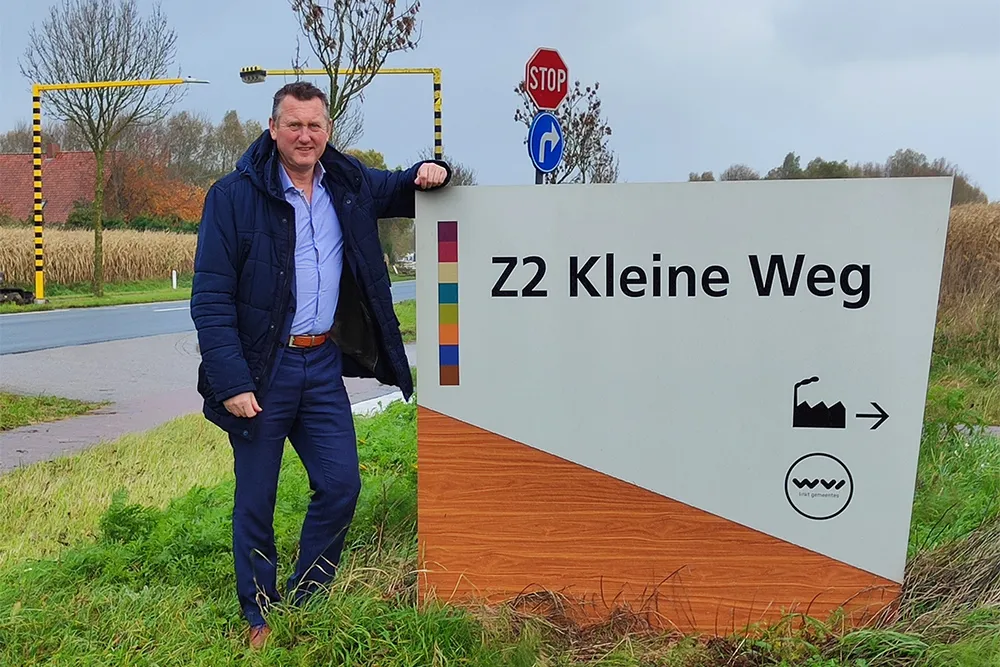
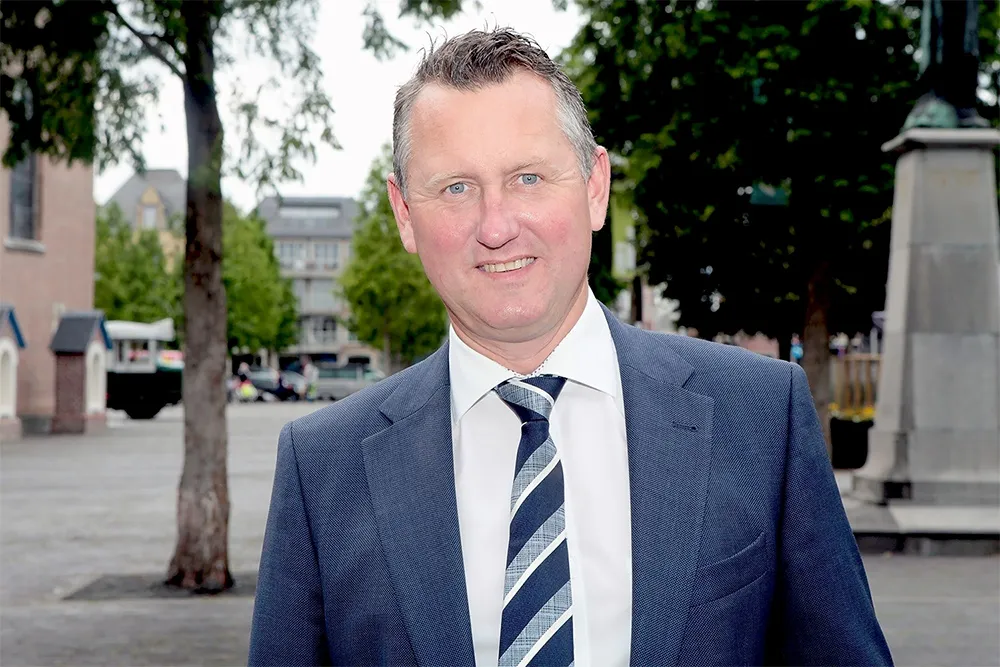
Ingelmunster Mayor Kurt Windels speaks
On the axis between Bruges and Kortrijk, the municipality of Ingelmunster already played an important role in the Middle Ages. Ingelmunster Castle, built on the site of a historic fortress dating from 1075, is a reminder of that period. Because the municipality did not merge with other municipalities in the major merger of 1977, it has a limited area today and a population of around 11,500. Kurt Windels (De Brug, N-VA, Open Vld) has been mayor since 2013: “A merger will eventually be unavoidable. But over the coming years, we still have plenty of plans to deliver in our own backyard.”
Mr Mayor, what kind of businesses are based in your municipality?
Kurt Windels: Ingelmunster has a limited area, just 16 square kilometres. That is much smaller than most of the surrounding municipalities. But we are centrally located in the region, close to Roeselare and Kortrijk, and have good transport links by rail and via the Roeselare-Leie Canal. We are typically a municipality of SMEs and self-employed people who have built up their businesses over the years. So you will find quite a few business centres here, with smaller units of around 100 to 150 m².
We no longer have any large-scale industry, since steel wire producer Bekaert decided to close its factory in 2020. The municipal administration and the residential care centre are the largest employers. Our diverse business community does, however, provide plenty of jobs. After all, 100 SMEs together add up to a lot of jobs.
How do you see the economy in your municipality developing?
Kurt Windels: We still have a strong farming community, which is naturally closely linked to the region’s vegetable sector and auction. The number of active farmers has fallen, but we are seeing land consolidation and farms scaling up. This is essential if farms are to remain profitable and comply with all the regulations. Another trend is the continued arrival of new tradespeople and shops. I am pleased to see that entrepreneurs are still discovering specific niches in which they can excel. One example is Sablé Breton Bakery, which specialises in handmade shortcrust pastry bases for tarts. It now employs around ten people and is expanding rapidly.
You mentioned the Roeselare-Leie Canal. Is it still economically important to Ingelmunster?
Kurt Windels: Industrial activity along the canal is concentrated mainly between Oostrozebeke and Wielsbeke, and between Izegem and Roeselare. There is hardly any industry linked to the canal here. However, we are working with De Vlaamse Waterweg on a plan to give tourism on and around the canal a new boost. We want to develop a “Park by the Water” stretching from the border with Izegem to Oostrozebeke. Taking the visitor experience to the next level with water-based activities and recreation alongside the canal will create new opportunities for hospitality and tourism. There is still room for growth in those areas. Ingelmunster, for example, has a good range of cafés, but we would like to see more places to eat, from a simple brasserie to a fine-dining restaurant.
Space for businesses is a problem in many municipalities. Is there still room for new businesses in yours?
Kurt Windels: We are familiar with the shortage of space, especially as a municipality with a limited area. That is why we are deliberately focusing on redeveloping vacant business premises, so that we do not have to use new open space or agricultural land. The site of the former Bekaert factory covers 8 hectares that we can designate as a business park. We are preparing the project now. The intermunicipal organisation WVI will manage it. Hopefully everything will be in place by the end of 2024. We will be able to offer space there to somewhat larger businesses, at an affordable price with the intermunicipal organisation acting as an intermediary.
In what ways can the municipality support businesses?
Kurt Windels: Our main task is to provide a supportive policy framework. As a local administration, we need to make sure people enjoy living here and feel at home. West Flanders’ ongoing challenge is the brain drain, with young people leaving and staying elsewhere after their studies. As a local authority, we want to encourage people to stay here or move here, and avoid becoming a dormitory town.
We want to offer an attractive range of amenities in various areas. For example, there was a problem with out-of-school childcare. As a municipality, we stepped in to fill the gap. People also need to enjoy themselves in our municipality. That is why we are investing in expanding the sports park and want to build a new cultural centre.
We also take pride in the services we offer businesses. We have a local economy officer who informs businesses and helps them find their way. We give start-ups a symbolic boost by paying the fee for their registration with the Crossroads Bank for Enterprises. We also have a well-organised permit application process. As a relatively small municipality, we have a highly skilled spatial planning department, with experts in environmental matters and urban planning. Businesses receive real guidance here to help them bring their applications to a successful conclusion, and this is appreciated. We are glad of that, by the way, because these matters are becoming increasingly complex.
Is a merger with other municipalities necessary to maintain the quality of public services?
Kurt Windels: That is on the horizon everywhere. But we have chosen not to do it in the short term. We want to keep going as a local administration for at least another six years. We have plenty of plans in the pipeline that we want to deliver. Whatever the future brings, we must never forget to provide enough contact and facilities close to home.
Of course, we realise that mergers are the way things are heading, and it would be foolish not to explore the possibilities together. We already have good relations with our neighbours. We are linked to Izegem through around 80 intermunicipal cooperation agreements. The only exception is the police district: we are not yet part of RIHO, but that will change in the short term.
So there is a strong connection between us. And it feels natural: many people from Izegem come to Ingelmunster to shop and for leisure activities. Our residents also regularly visit Izegem. A merger in that direction would create an area with 40,000 inhabitants, which seems like a good size to me.
Question about this story? Ask your question
Keep following this
Get an email when a new story is published. No account needed.
- ThemeBusiness transfers and acquisitions
- SubjectGeneral







