




Double interview: Inge Ampe (CKV Bank) and Leen Van den Neste (vdk bank)
Text Björn CrulImage Dieter Meyns
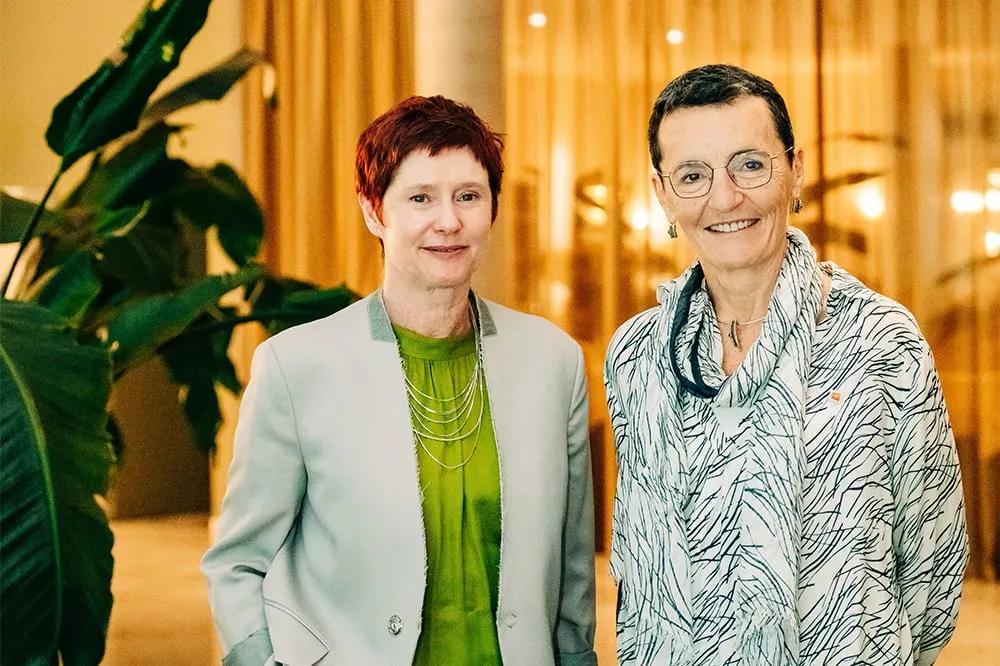
September was a turbulent month for the Belgian banking sector. The trigger was the €22 billion in savings released from the state bond launched a year earlier at the initiative of Minister Van Peteghem, with an attractive interest rate and low withholding tax. The battle for those savings led to a fierce competition between the major banks last month. The perfect opportunity for Business Vlaanderen to sit down with Inge Ampe (CKV Bank) and Leen Van den Neste (vdk bank), the only female CEOs in Belgian banking. We discuss the state of play and banking in volatile times, in a world full of suits.
Belgians can choose from a wide range of financial service providers, including local and international banks and pure-play online players. How do your institutions position themselves? What sets vdk and CKV Bank apart?
Leen Van den Neste: We are a mid-sized retail bank founded in 1926 by the Christian workers’ movement. To this day, social organisations remain our largest shareholders. They are not seeking the highest returns, but are primarily committed to social inclusion. That has been the guiding principle throughout our history. As a bank, we are also here for people with more modest means, or those who find digital banking difficult. The biggest change we have seen is our adoption of a strict code of ethics and our strong commitment to sustainability. We offer our customers returns for themselves, for their local area through local lending, and for the planet through sustainable investments. That is precisely why we were a good fit for the NewB cooperative, which forms the basis of our network in Wallonia.
Inge Ampe: CKV has been Belgium’s smallest bank for 60 years, and we are proud of that. Our business model is very straightforward: we take in savings and use them to fund mortgage lending. We focus on borrowers who fall through the cracks at the big banks and need a tailored solution. Think of a mortgage for someone aged 65 or over who wants to invest in a second home, a loan for an entrepreneur who has previously gone bankrupt, or customers looking to consolidate their debts. We have bank agents who market our deposits, and work with brokers on lending in Belgium and France.
The financial world is highly volatile, and interest rates have been challenging in recent years. How is profitability holding up?
Leen Van den Neste: We may not be big, but we punch above our weight. In recent years, vdk bank has managed to grow by 8 to 10% a year, both in customer numbers and assets under management. 2024 looks set to be one of our better years. We do, however, keep a close eye on profitability. That is precisely why we want regulators to pay more attention to the diversity and complexity of the sector. We have 300 employees and relatively simple products, yet we are subject to the same rules and levies as institutions many times our size and carrying far more risk. Fair policy should take banks’ individual characteristics and size into account.
Inge Ampe: We have grown substantially over the past 10 years, with our team expanding from 20 to 80 employees. We achieve a healthy return on equity of 10 to 15%. But our family shareholders, Dominiek De Clerck and Véronique Santens, focus above all on long-term results. I do see our costs rising, partly because of increasing European regulation, for example on ESG, and investment in IT. That means we have to ensure our income grows too. Because we are small and do not have our own branch network, we need to invest less in that area. But we are continuing to professionalise at pace.
vdk bank has expanded into Brussels and Wallonia through its acquisition of NewB and plans to open new branches. CKV works through a network of independent bank agents and brokers. How do you see these physical networks evolving?
Leen Van den Neste: We have around 65 branches and continue to invest in being close to our customers. Last year we opened in Hasselt and Brussels, and our first priority is to establish a presence in Wallonia’s provincial capitals too. Our branches are open, so you can drop in without an appointment with any questions. We know our customers value being able to speak to someone who knows them. Understanding and empathy are key, for example when there has been a death in the family. But they are just as important when you have clicked on a link in a phishing email and do not know what to do.
Inge Ampe: CKV is on the same wavelength. Just because almost everyone has a smartphone does not mean they all know how to bank digitally. Taking out a mortgage online or taking your first steps in investing can be a major hurdle for many people. That is why we have such faith in our broker network. Brokers are close to their customers, know them inside out and can give them the right advice. It is no surprise that brokers are becoming more important in our sector, while the major banks are steadily shrinking their branch networks.
There has been much debate over savings account rates in the past year, following the Van Peteghem state bond in 2023. Does last month’s scramble for the funds released from the bond not prove the government right? It did stimulate competition, with positive results for consumers, after all.
Leen Van den Neste: There is indeed more competition now than there was a year ago. Were we as a sector too slow to raise savings rates? I do not know. In the summer of 2023, we were emerging from a long period of negative interest rates, with 20-year loans on our books generating low interest income for the bank. It therefore takes time for an increase in the European Central Bank’s rates to feed through to savings products. We have to safeguard the bank’s stability and profitability for all our customers. Minister Van Peteghem challenged us, and vdk bank, like the other banks, rose to that challenge. We offered a fixed-term deposit and a green cash bond with an attractive return. However, we did not join the bidding war to launch products at high rates and therefore at a loss. That should really have been banned.
Inge Ampe: We watched with great interest, but raising funds for six months or 1 year is not our focus. We try to match the maturity of our lending and therefore tend to target fixed-term deposits of 3 years or more. As a challenger in the market, we consistently offer savers a return above the market rate. It fits our model, and we also see it as a form of marketing that raises our profile.
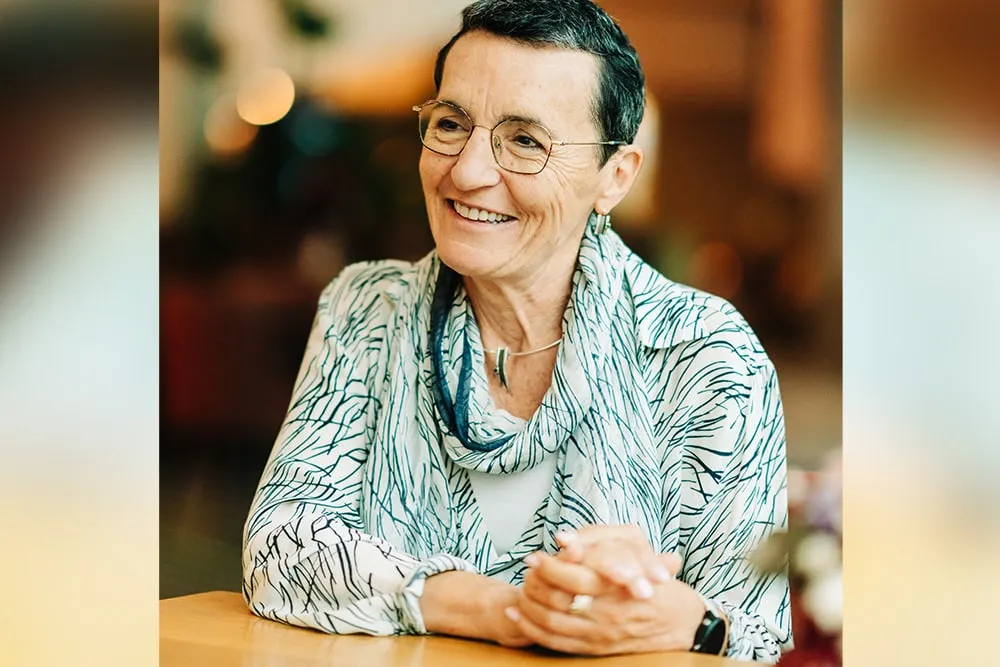
After years of ‘free money’, the yield curve rose, but inflation has since fallen and the European policy rate has been cut again. US rates are expected to follow this autumn. What does this mean for consumers in the medium term?
Leen Van den Neste: The interest rate environment remains challenging, but we are on the right track. The inverted yield curve, where short-term returns are higher than long-term ones, will give way to a normal yield curve. That is a much healthier environment for any banker. That is also why the loyalty bonus matters to us: it helps support the duration match on our balance sheet. I also hope our politicians will give some thought during the negotiations to people who were unable to invest in the state bond. What matters most to them is having more money left at the end of the month after tax.
Inge Ampe: Interest rates cut both ways. Just look at how the housing market contracted as rates rose … If mortgage rates fall, more people can afford to buy a home. But that also means savings account rates need to remain under control. Those with the means to seek returns can look at fixed-term investments and shares. Personally, I would like to see base rates and loyalty bonuses replaced by a single rate on deposits: the simpler, the better.
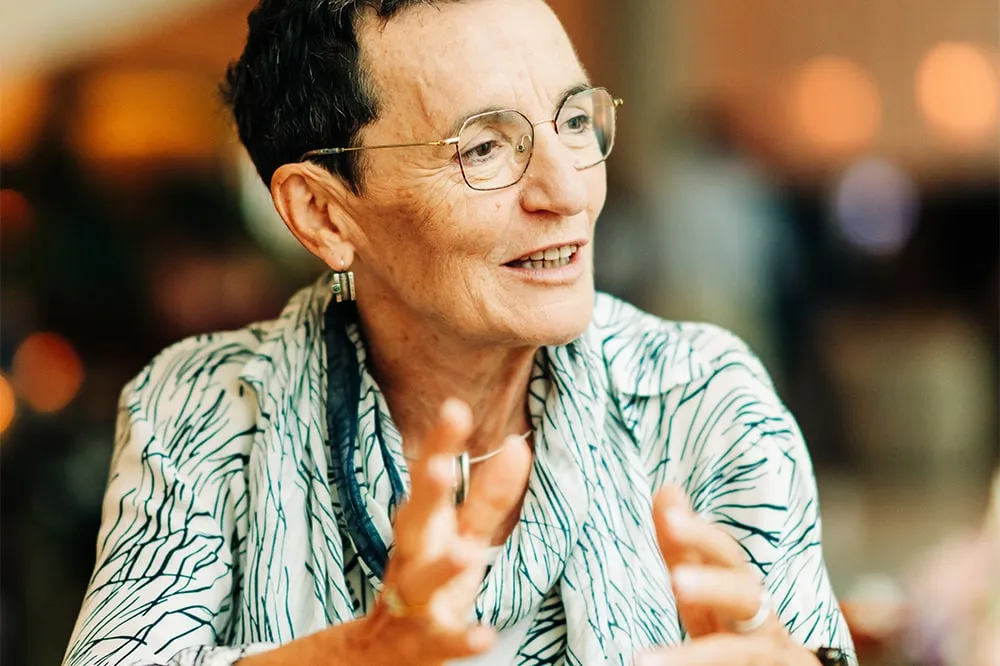
Finally, you have both held senior positions in banking for years. It remains a very male-dominated sector. Is there still a glass ceiling?
Inge Ampe: Yes, there is a glass ceiling. I am pleased with my own career, but I am more pessimistic than I was 10 years ago. When it comes to recruitment and succession, even highly intelligent people who select candidates on merit are biased. You have to proactively seek diversity in your executive team. That still does not happen often enough, as if people think that only “masculine” qualities make for good leaders in finance. Women are often seen as either too soft, too rock ’n’ roll or too much of a thorn in people’s side. The balance on CKV Bank’s executive team is good, though: we now have 2 men and 2 women, with 1 vacancy still open.
Leen: An active policy is indeed needed. Even job adverts tend to prioritise masculine qualities and give less prominence to women’s skills. I am also the only woman on vdk bank’s executive committee, alongside 4 men. We are carrying some historical baggage, but we certainly need to do more to find female talent in our institutions and encourage women to apply for leadership roles. Only with more female leadership can we challenge one another’s thinking and tap into new creativity.
Question about this story? Ask your question
Keep following this
Get an email when a new story is published. No account needed.
- SubjectGeneral







