




Deinze Mayor Jan Vermeulen speaks
Text Björn CrulImage Bram Mervillie, Stad Deinze, Steenoven, VIB
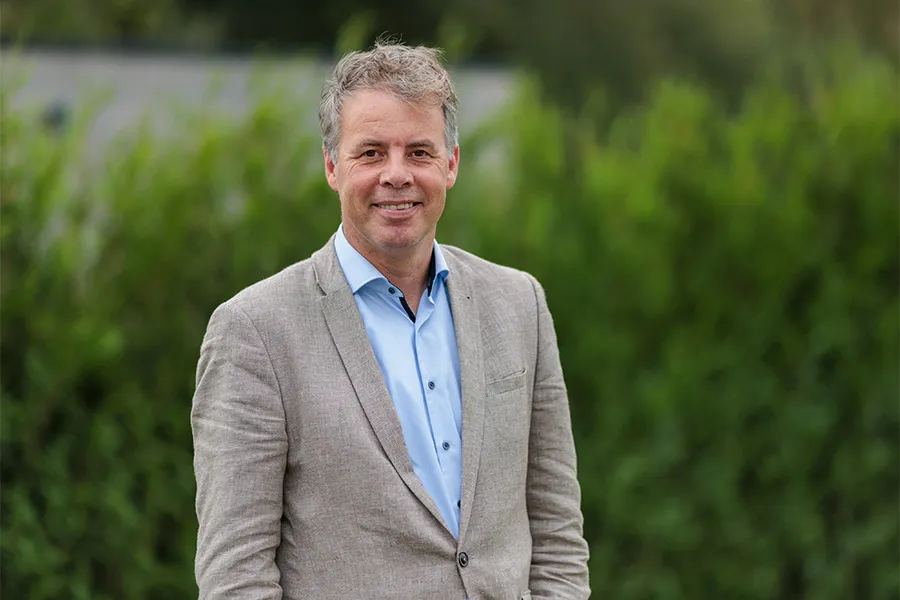
“Proud of our renewed, vibrant town centre”
Deinze, known to many for its location on the Leie, Ooidonk Castle or Stokerij Filliers, is the second-largest city in East Flanders by area. It owes this position to its merger with Nevele, which took effect on 1 January 2019. The city now has 17 sub-municipalities and 45,000 inhabitants. Jan Vermeulen (CD&V) has been mayor since 2012. The merger and town-centre renewal were key priorities for him: “The merger that created Deinze, the Land of Nevele, gives us a dynamism from which the younger generation in particular will reap the benefits.”
Mr Mayor, what are Deinze’s strengths?
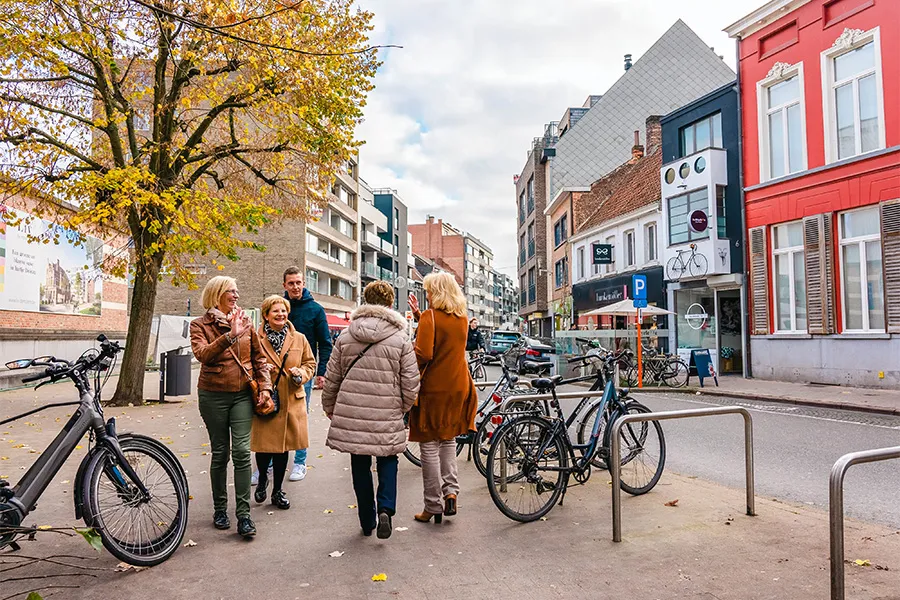
Jan Vermeulen: Our people are our greatest asset. I am also proud of how affordable the city is. We also benefit from our location on the Ghent-Bruges axis, alongside the E40, and close to the Kortrijk-Ghent axis and the E17. In addition to this motorway hub, we have three railway stations and, with our many attractive cycle routes, we can also count ourselves among the best cycling cities in the country. Thanks to all these factors, Deinze is attracting new residents in large numbers, which naturally supports our continued economic growth and prosperity.
What does the local economy look like?
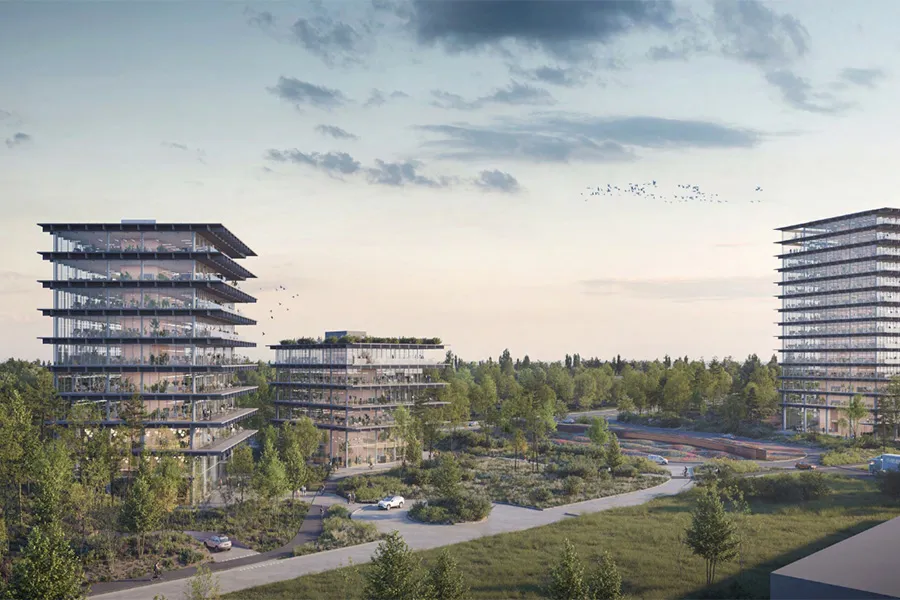
Jan Vermeulen: The agro-industry has traditionally been strong in Deinze. Examples include animal feed company Versele-Laga, bakery ingredients producer Dossche Mills, Oliefabriek Vandamme and Stokerij Filliers. These are well-known names and all fine businesses in our city. We also have several industrial estates, with De Prijkels alongside the E17 the jewel in the crown. The expansion of this business park is giving entrepreneurship a boost: in recent years, we have seen an increase in the number of SMEs and businesses operating in our area. The new Poort van De Prijkels complex, which includes towers with sustainable offices, will undoubtedly bring further dynamism.
Which sectors or activities do you see potential in for the future?
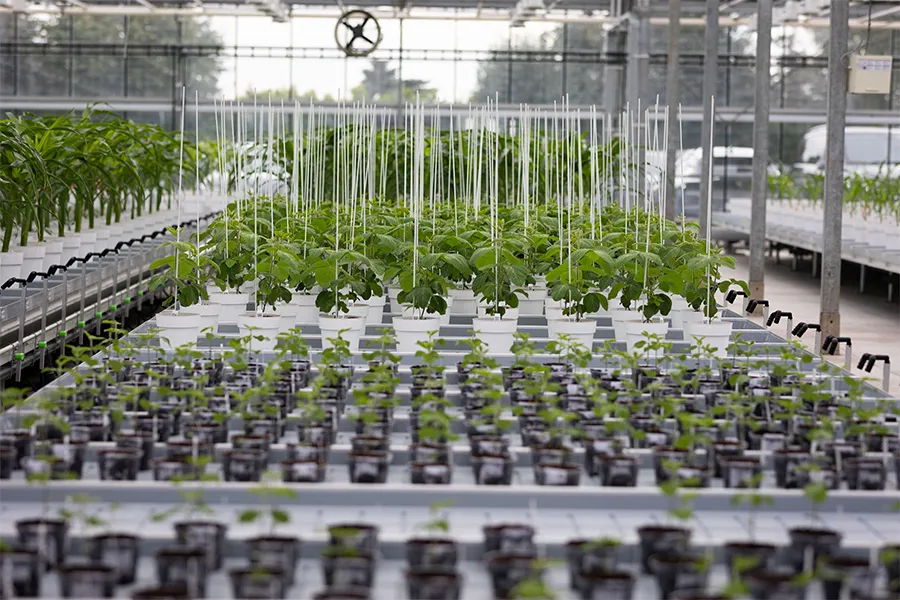
Jan Vermeulen: There is quite a lot of innovation in our area. The VIB Agro-Incubator, which we were able to open in Nevele, is world-class. It focuses on innovative research to accelerate the development of climate-resilient crops. Bayer also has a high-tech greenhouse complex in Deinze, as does Tomato Masters. There are plenty of other companies I could mention. Ekopak and Bosaq are new leading businesses that recently set up in Deinze and are innovating in water treatment and water management. MG Real Estate also has potential: it is conquering Europe from Nevele.
Looking to the future, I think we could work more closely with Ghent University. It still needs to discover Deinze as a growth hub. Knowledge and innovation are key to the economic future of our city. Because we are so close to the university and higher education institutions, we have the potential to attract even more knowledge-based companies to the city.
Is there still enough space available for new businesses?
Jan Vermeulen: That is often a problem, just as it is in other East Flemish cities and municipalities. Take Aluvision, for example, which builds modular systems for events and trade fairs. Its rapid growth left it short of space, and it eventually chose to open a new site at the Evolis business park in Kortrijk. We should have allowed more high-rise development when expanding De Prijkels. There is also still too much concrete. And a smart traffic circulation plan could have saved quite a bit of space. But it is always easy to talk about these things in hindsight, of course.
How do you keep up with what is happening among businesses in Deinze?
Jan Vermeulen: We keep our finger on the pulse of the business community through our Deinze Industrie platform, which brings together companies on the industrial estates. We provide financial support for this forum. It generally deals with smaller issues for which we seek solutions together. We also have our Economisch forum, an advisory council where business owners can voice their views on local policy measures such as multi-year plans, roadworks, tax and grant regulations, and so on. I also try to visit businesses regularly in my capacity as mayor.
What are the priorities in local economic policy?
Jan Vermeulen: A city needs to be dynamic and make sure businesses can obtain permits quickly. Lootens Line and Dematra, for example, once received their permits within a fortnight. That is not always possible, but it sent a powerful signal. In the meantime, those businesses have continued to grow strongly.
We are also working on town-centre renewal. The new Brielpoortbrug over the Leie links the Brielmeersen recreation area with the centre. The car park can now fulfil its role as a park-and-ride facility for the city. In the centre, we have a revamped pedestrianised shopping street. We invested in a playground to make the area more lively, and completely revitalised the shopping street. Everyone is benefiting from that.
Which economic project are you most proud of?
Jan Vermeulen: The purchase of the HUP/HUB building in Tolpoortstraat. The city itself bought a property that had been empty for no less than 7 years. It has since become a vibrant place in the heart of our shopping street. Start-ups can try their hand at entrepreneurship there and have the option of renting a pop-up shop for three months at a time. There is also a multi-purpose space that businesses and local traders’ organisations can use.
The construction of De Brielpoortbrug, together with the Leietop site and the redevelopment of the Molens van Deinze, has brought the centre of Deinze back to life. This is despite the fact that until 1 May 2019, 150 ten-tonne lorries drove through our town centre every day.
Which issues need to be resolved to boost entrepreneurship?
Jan Vermeulen: Mobility certainly remains a challenge. Cycling has already helped many people avoid traffic jams, but the urban boulevard really needs to be built now. We also need more train stops. We need to be able to get to Brussels and Lille faster by train, thanks to more frequent stops. I would also welcome a tram connection or a tram bus service to Ghent and Kortrijk. Car use has reached the limits of growth in urbanised Flanders. It is a shame that we continue to pay people in the form of company cars. We can do better.
Question about this story? Ask your question
Keep following this
Get an email when a new story is published. No account needed.
- ThemeBusiness transfers and acquisitions
- SubjectGeneral







