




De Prijkels expansion (Deinze-Kruisem-Nazareth) is sold out
Text Björn CrulImage Veneco, Steenoven
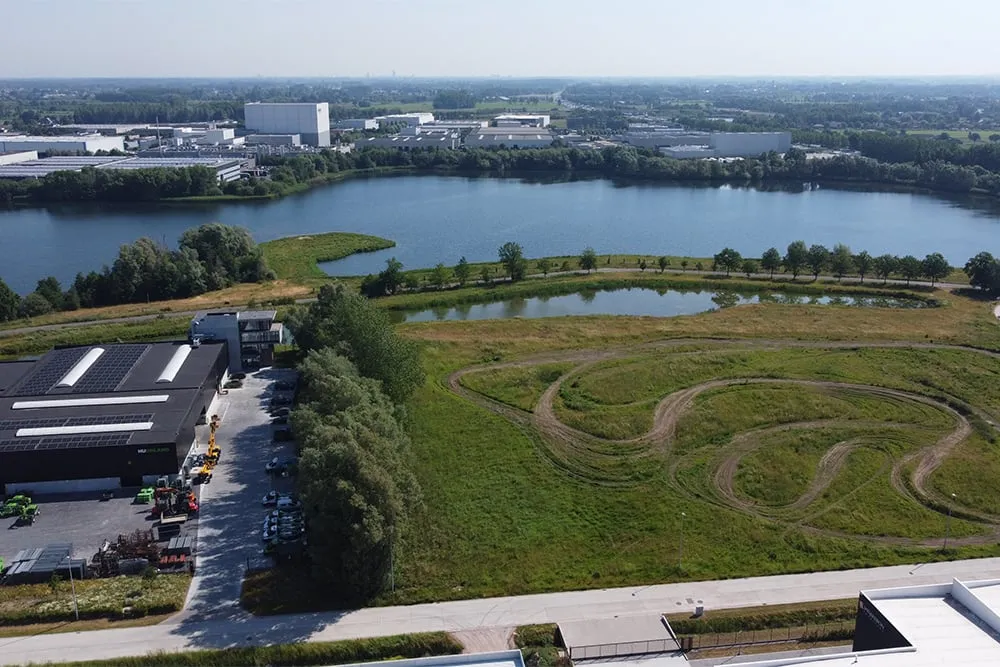
Over the past few decades, the E17 from Kortrijk via Ghent to Antwerp has developed into a major economic corridor. Numerous business parks have sprung up along the motorway. Excellent accessibility means demand continues to outstrip supply. The two most recent expansions, E17/4 in Lokeren and the third phase of De Prijkels in Deinze, Kruisem and Nazareth, have already sold out. We take stock with Sofie Vandelannoote, managing director of regional intermunicipal association Veneco.
De Prijkels is one of the successful economic developments along the E17. What is the history of this site?
Sofie Vandelannoote: De Prijkels is almost 30 years old. Development of the first phase began in 1996. At the time, a 39-hectare site was made available, where 36 companies could set up. It soon became clear that demand was even greater. Work therefore began in 2004 on a Provincial Spatial Implementation Plan. This made it possible to develop a business park serving a wider area. Development of a third and final expansion, known as ‘Groot Prijkels’, began in 2019.
How large is De Prijkels now? How many companies have found a home there?
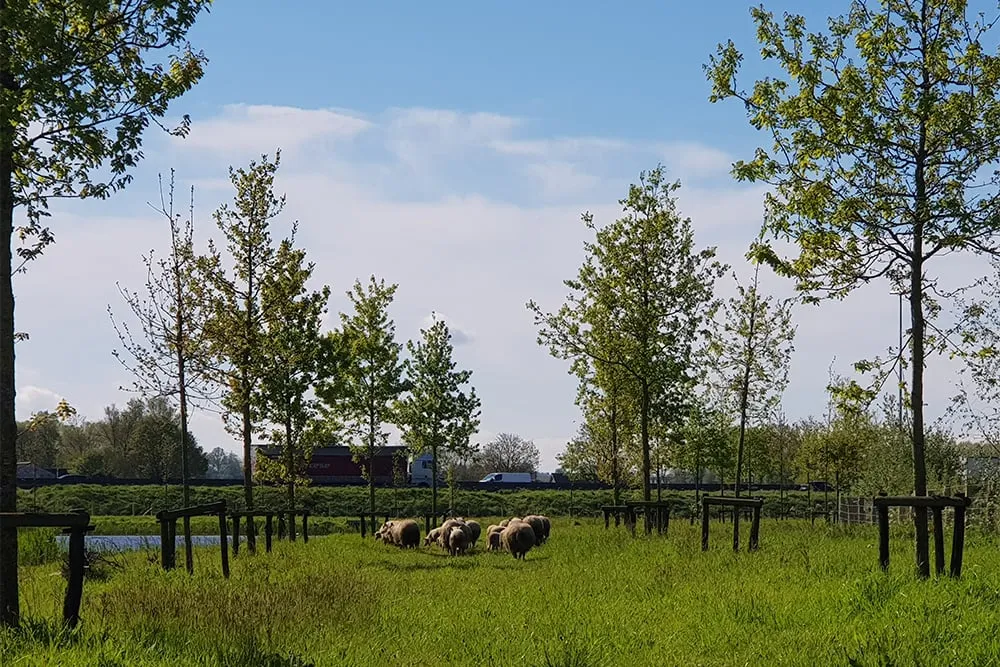
Sofie Vandelannoote: The business zone now covers a total of 149 hectares, and around 75 companies are expected to set up there. All plots in the third phase, covering 96 hectares, have been sold, although a number of companies have yet to start building. The usable area of the expansion is 55 hectares; the remainder is taken up by roads, shared rainwater infrastructure and green spaces. For example, a 5-hectare woodland has been planted as a buffer between the site and the surrounding areas.
Which well-known names can be found in this business zone?
Sofie Vandelannoote: Companies based here operate in a wide range of sectors. These include chip producer Agristo, finishing company Beddeleem, transport company Dematra, Drukkerij St.-Luc Labels & Packaging, water company Ekopak and textile exporter Mistral Home. One of the most recent companies to join us is the family-owned business Renson, which has built a new site along the E17 in Kruisem, also home to the NOA inspiration park.

A development featuring two multi-company buildings is also in the pipeline, under the name ‘Poort van de Prijkels’, in partnership with developer Steenoven. What exactly does the project involve?
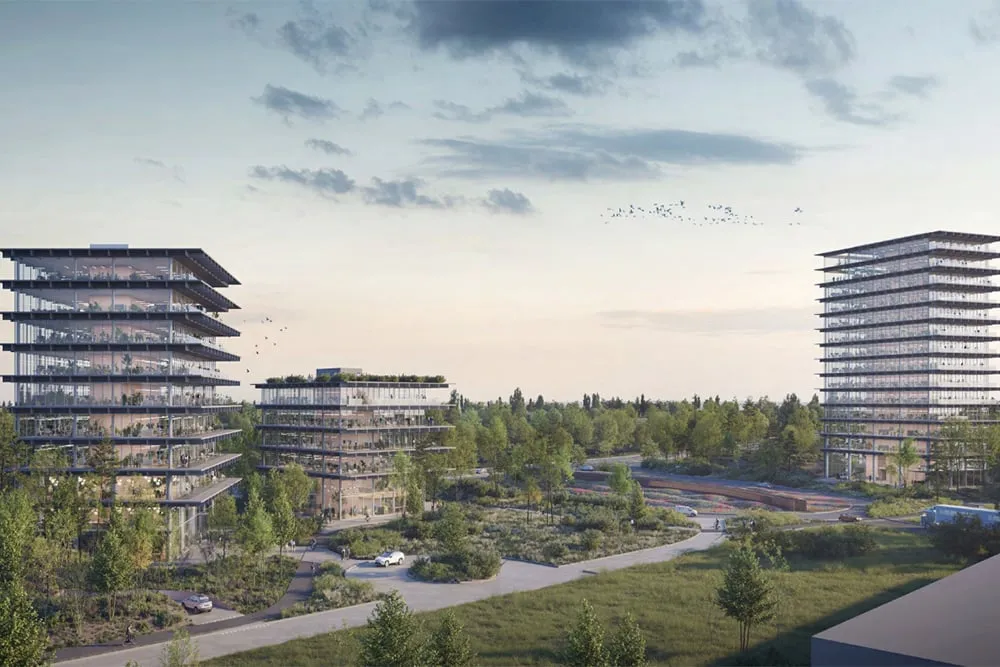
Sofie Vandelannoote: Poort van De Prijkels will be the new gateway to the business park on the border of Deinze and Nazareth. The project was awarded to developer Alheembouw-Steenoven through a competition, and the developer enlisted Kaan Architecten, landscape architects DELVA and DENC-studio. This will be a new landmark beside a turbo roundabout that references the ancient Roman road.
A 15-storey office building, a 60-metre tower, will rise in Nazareth. A little further on, in Deinze, there will be two buildings: a 40-metre tower with around ten storeys and a smaller, six-storey building alongside it. We are targeting office-related uses, such as business support functions, laboratories and service providers. Work is currently well under way on the application for an environmental permit. If the planning application proceeds smoothly, the first companies could move in during 2027.
As an intermunicipal association for spatial planning and economic development, Veneco provides services to 21 municipalities in the Ghent region. How do you support these municipalities in practice?
Sofie Vandelannoote: One of our aims is to support the local authorities concerned with their spatial development, with the goal of stimulating local employment. We are involved throughout the process: spatial planning and securing a spatial implementation plan, drawing up detailed plans for the site and applying for all the necessary permits. Once the permits are in place, we also help determine how the site will be developed.
Another key aim of our association is to prevent speculation on business parks and ensure that companies with strong local roots can find a place there. We want to avoid at all costs investors buying up land solely to sell it on later at a profit. The specific allocation is always carried out in collaboration with the municipalities concerned, based on criteria established in advance. At a later stage, we also help maintain the business park to keep it tidy and in good condition. We will continue to monitor the shared lorry park as well, to check that the system is working properly.
How does the allocation process work?
Sofie Vandelannoote: In the case of De Prijkels, we had both a local business zone and a zone for regional businesses. We issued a call for applications, inviting companies to apply for a plot. The selection criteria relate to location (is it a new site, is the company facing constraints on expansion, or is it located in a zone where such activity is not permitted?), economic impact (how many jobs will be created? Is there a link with other companies nearby?), mobility (how much traffic will the company generate?) and sustainability. On this basis, we draw up a proposed plot allocation and hold discussions with the local authorities concerned to reach a decision.
The final phase of De Prijkels placed particular emphasis on sustainability and green spaces. Is this the new standard?
Sofie Vandelannoote: De Prijkels is a highly successful business park, with a strong spatial design and visual quality. Great importance has been attached to managing mobility, with facilities such as a shared lorry park and segregated cycle paths, as well as to the landscape setting: efficient use of space, green areas, buffer and infiltration basins, and so on. We apply these principles elsewhere too, for example at De Campagne in Maldegem, where integrating the business park into its green surroundings is a priority. And at the new Balgerhoeke business park in Eeklo, which will be an energy hub close to the incinerator, renewable energy is even the basis for the entire site plan.
A business enquiry for Steenoven? Get in touch
Companies in this story
Keep following this
Get an email when a new story is published. No account needed.
- ThemeBuilding and using business premises
- SubjectGeneral
- CompanySteenoven







