




Arne Quinze: “Art should bring people together and start a dialogue”
Text Christina Van GeelImage Arne Quinze
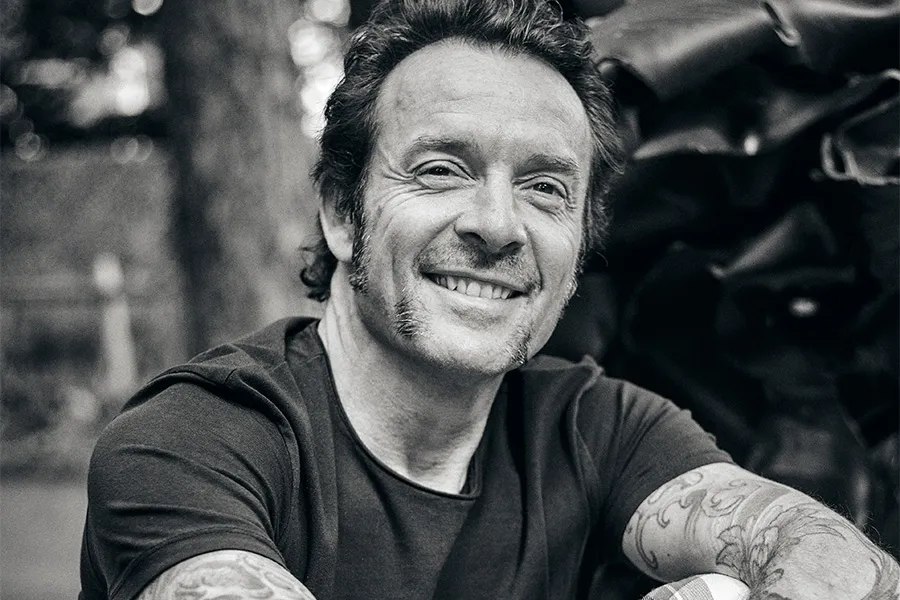
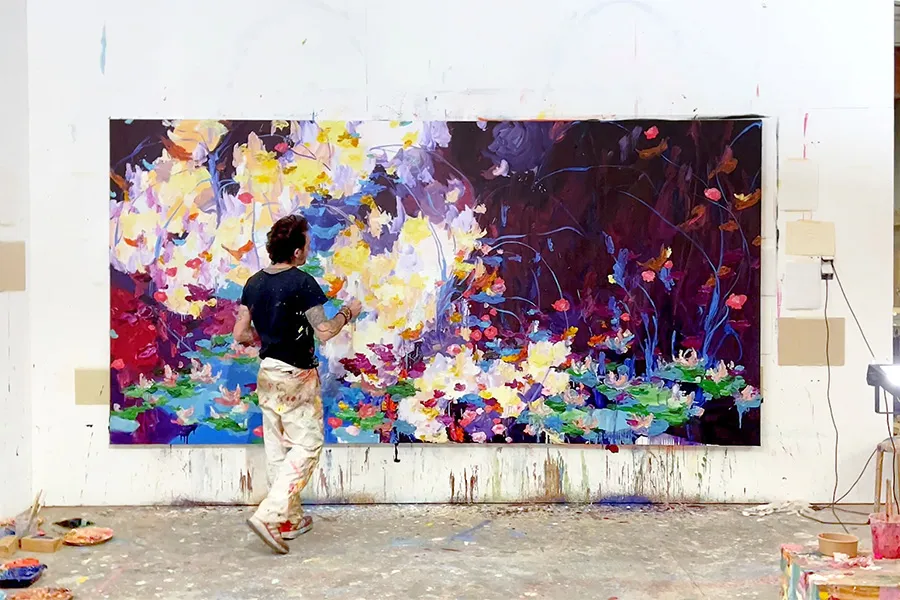
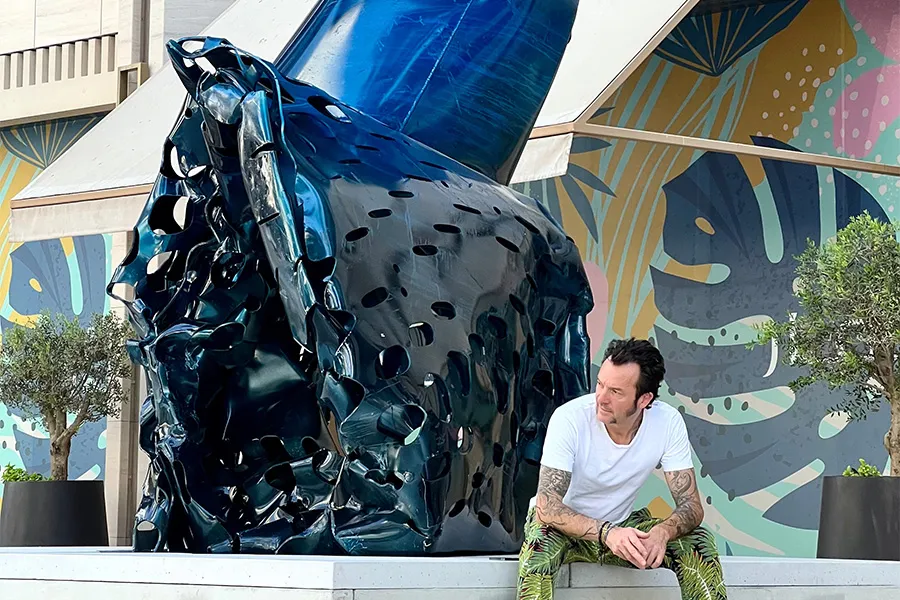
Arne Quinze is a painter, sculptor and artist. He began his career in the 1980s as a graffiti artist. His striking art installations now adorn public spaces around the world. Quinze is constantly amazed by the beauty of nature. Through his art, he wants to restore the lost harmony between people and nature. With striking colours and shapes, he challenges our grey, monotonous cities. We have become ‘aliens’, he says, destroying the planet with concrete and completely out of balance with the wonder of nature.
What amazes you?
Everything. Wonder begins with learning how to look. I get up and look around me, amazed, like a small child. The rain, the snow, the butterflies in my garden: there is always something to amaze and cheer me up. I always aim to inspire wonder with my installations, too. They are often large sculptures that people literally have to look up at. They make you see the world from below, from a frog’s-eye view, with a sense of wonder. And wonder opens up your mind and your world, making you curious. When you are amazed, you open yourself up, including to other people. It breaks down the walls around us and within us.
Where do you find inspiration?
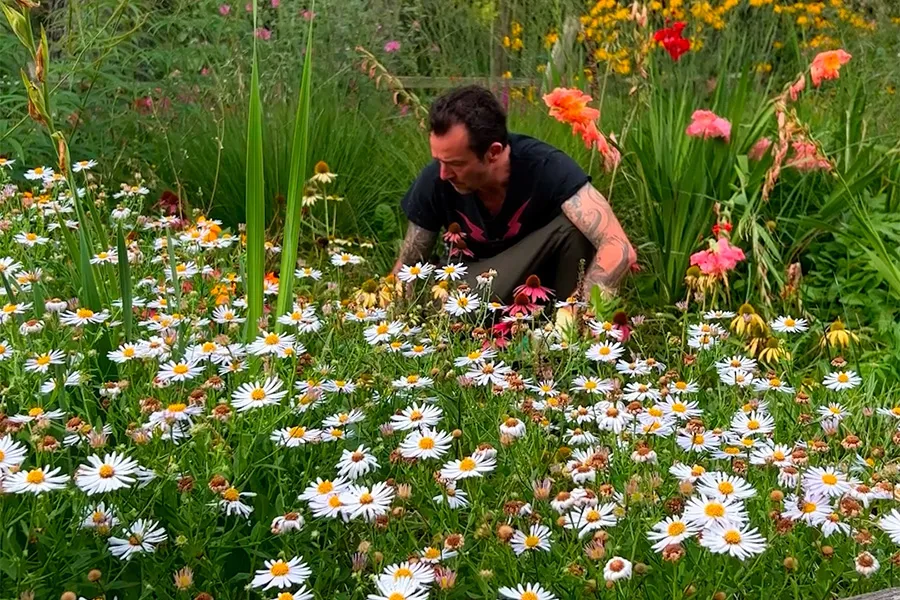
Everything I make today is rooted in the wondrous world I discovered as a child in my parents’ garden: the vast fields and ditches in the polders. I am still a gardener through and through. I often find myself on my knees in the garden. It gives you a very different view of the world. On your knees in the garden, you are right in the middle of wonder. Face to face with the diversity of life.
As people, we always look down from above. We want to control and dominate the things around us. We want to bend nature to our will. Because, in fact, we have forgotten how beautiful nature is and that we are part of it, too. We no longer see it.
I have seen many corners of the planet, and everywhere people behave in the same way. Forests are cut down, open spaces are controlled and replaced by walls. Apparently, we need these shapes around us to live and even to think. We constantly limit our ability to think. We want to think in boxes. The older I get, the more I notice it. We behave like aliens on our own planet. We are completely out of harmony with nature.
What does that do to you as a person and as an artist?
It upsets me that so few people want to make their surroundings more beautiful. Our streets have become mineral landscapes of concrete. Children grow up in cities and no longer know what wildflowers or insects are, or what the seasons are. Trees in cities are cut down because they are too expensive to maintain. Most cities have become ovens, which is really not a good idea in the midst of the climate crisis. We are constantly working against ourselves. I don’t understand it.
We also retreat behind those grey walls. Apparently, we find it very difficult to live together. We are afraid when we are not in control, and we fear those we do not know, or what we do not know. We are happy to watch a Star Wars film about strange worlds, but then, if we pass someone wearing a headscarf in the street, we point fingers and disapprove. If only we could learn something as human beings from the diversity of nature, life would be a lot more pleasant.
Ultimately, there is only one race in the world, and that is us: human beings. Tall, short, white or Black, with or without a penis, that is not what really matters. Look into each other’s eyes and realise that first and foremost, we are human beings. And we have only one planet that sustains us and that we must look after: our Earth. We must learn to live in harmony with ourselves, with one another and with our Earth. We are only at the beginning of a climate crisis that is difficult to comprehend. Mother Nature is forcing us to our knees. We will have to adapt, and we will need one another.
Can art bring people together?
Absolutely. But art and culture are often hidden behind walls, in museums, theatres and concert halls, too. Only one per cent of the population encounters art that way. Art in public spaces reaches all those other people. Often without them asking for it, and that can lead to heated discussions. When I put sculptures in public spaces, my first aim is to bring people together, and that can also lead to interesting confrontations. Not everyone has to like my sculptures. But controversy that starts a dialogue, gets things moving and brings about change, that matters. The alternative is a bland uniformity and stagnation.
About twenty years ago, I put a sculpture in central Brussels, on a vacant plot that we had completely cleared. The best compliment came from a woman who said: “Thank you, Arne. After years, I’m talking to my neighbours again.” Something was happening in the street that brought those people together, something they shared. The neighbourhood came to life. Crime disappeared. The cafés flourished. The village feeling returned to the heart of the big city. Of course, not everyone in the neighbourhood liked the installation, but the controversy had a positive outcome.
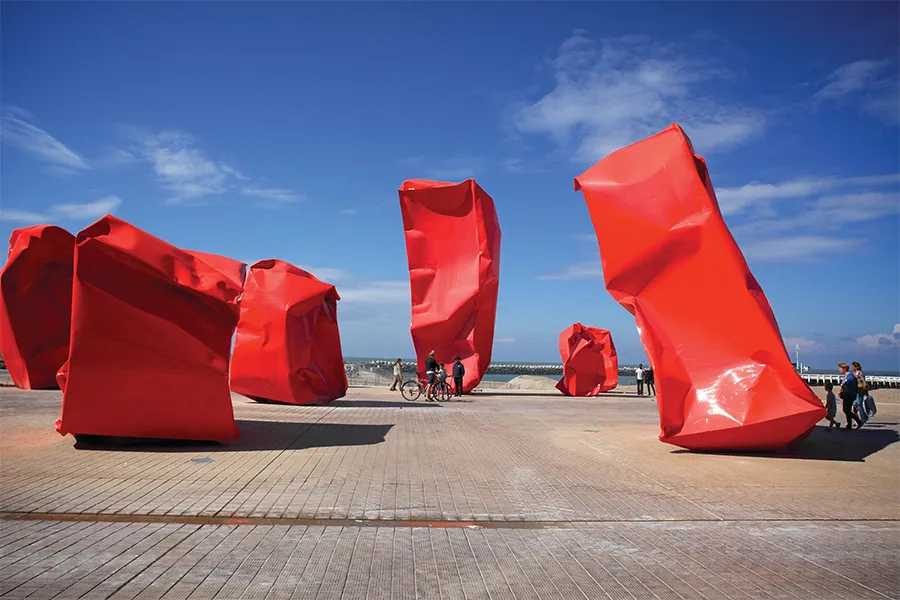
We need to learn to open ourselves up and be curious about what is strange and unfamiliar. Like my Rock Strangers, the large red sculptures on Zeeheldenplein in Ostend. People raise their blinds and see a strange object in their familiar surroundings. What do you do then: reject it or embrace it? That is the choice we have to make.
What is your greatest talent?
I am not afraid to go off the beaten track. I don’t look at the tree in the way, but at the path around it. And that has been essential to the journey I have taken. Never being afraid to fail gave me self-confidence and faith in my dreams, too. I have often fallen flat on my face along the way. It was often a real struggle. On Mondays, we often didn’t know whether there would be food on the table by the end of the week. Recently, I was sitting around the campfire with my children. “We sometimes miss those days a little,” they said. Everything we did to survive! We had nothing, but we went for it, we never gave up on our ideas and we kept building those sculptures with the very last of what we had. That is how our story gradually grew, as a family, too.
Sometimes I fasted for entire days so I could feed my children. But I did it with a smile. Once, I painted the kitchen with a jungle theme to distract from the fact that there was nothing on the plate. That is how my children remember those days. We also grew incredibly strong as a family because of it. We were, and still are, a close-knit and strong clan. They could put us in the jungle with nothing, and we would come out with everything.
What have you learned from those who came before you?
The most beautiful and precious gift I received was from my father. He gave me the chance and the space to grow, but also to stumble. He never judged me, despite all the mischief I got up to in my life. I owe the open mind I have today to him. He gave me an enormous amount of wise advice, simply by listening. His eternal patience and his ability to listen to others, his kindness, his strength and the security he provided made him a father in every sense of the word… What a wonderful man he was.
When he passed away, I felt as though the roof over my head had gone. It took me years to find that sense of security again. There were many tears and much sadness, but also joy. Gratitude for the father he was.
Finally, what does heaven mean to you?
Paradise is here and now. I am someone who lives in the moment. I enjoy the present. I have plans for the coming years, and I look forward to so much. I am a dreamer. I dream out loud, I fight for my dreams and I make them happen. But all the same, I enjoy life and live in the here and now.
Question about this story? Ask your question
Keep following this
Get an email when a new story is published. No account needed.
- SubjectGeneral







