Why business transfers rarely go wrong on paper, but often falter on a human level
Text Bavo BoutsenImage Family First
“When everything remains implicit, no one knows where they really stand”
The family business was doing well. The figures were healthy, the team stable, and succession seemed assured. The son had been working in the business for years, alongside his sister. Their parents saw them as the natural successors and assumed the future was on track. Until one day, their son left without saying much. At Family First, Kurt Vannieuwenhuysen hears stories like this all too often. To him, they above all demonstrate the importance of a carefully planned succession process.
There was no heated discussion or conflict. But the decision landed like a bombshell. What followed was a shockwave through both the business and the family. His departure meant not only the loss of a key role and established customer relationships, but also of trust. His sister, who was also active in the business, was left with doubts. Their parents could not understand what had gone wrong.
Why you must not leave it too late to start
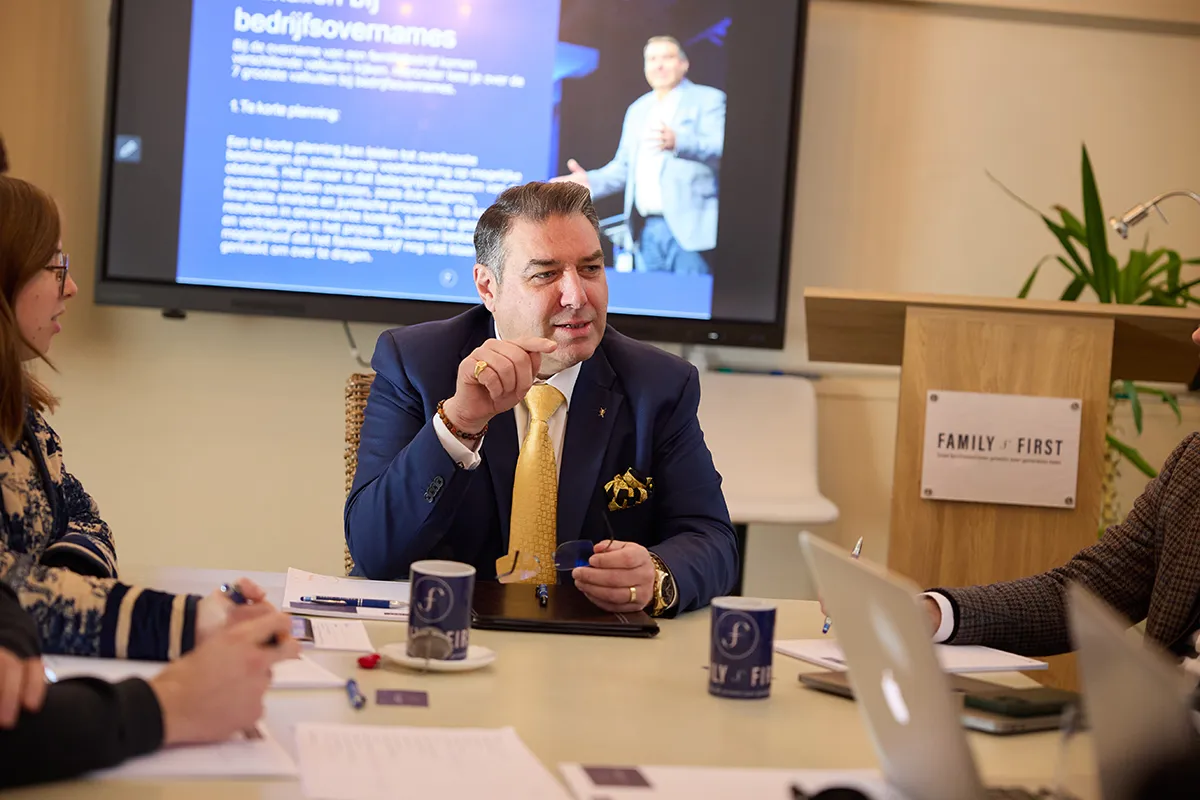
“We see this happening all too often. Parents work alongside their children for years without ever really talking about expectations, roles or ownership. Until things go wrong,” says Kurt Vannieuwenhuysen, founder of Family First, a specialist family business that helps family businesses with succession. “A succession rarely fails because there is no plan. It fails because people have never really talked.”
So succession does not start at the notary’s office. It begins much earlier, or at least it should. “This process needs to find answers to questions such as: who wants which role? What is going on beneath the surface? If these questions are not asked, frustration builds. Until someone turns away out of helplessness, not unwillingness,” he says.
Three systems, one process
A successful succession takes account of three interconnected systems: the individual, the business and the family. Each has its own pace and sensitivities. When these systems are not aligned, friction arises. “The son in this story never felt truly heard. And his sister, who stayed, began to have questions of her own. Because when everything remains implicit, no one knows where they really stand. There was no shared vision, no explicit conversation about ownership or the future. Everything was taken for granted, and ultimately that could no longer be sustained,” Vannieuwenhuysen continues.
In other words, succession takes time. Not to get the structures in order, but to bring people along. To share responsibility, let go and build trust. On average, the process takes seven to ten years. “Succession is not a sprint. It is a marathon,” he says. “And those who only set off when the finish line is in sight will inevitably run into themselves and others along the way.”
After their son left, the parents approached Family First. “Together, we set about drawing up a family charter. This is not a legal document, but a shared framework.” An invitation to have the conversation about expectations, ownership and roles. “For this family, it was the start of something new. What had been spoken aloud no longer had to stand in the way. Their daughter, too, was given a clear place in the story. Not as someone expected to fill a role, but as an active voice in the process. The parents discovered that succession is not a checklist. It is a process that needs everyone’s support. Not just on paper, but between people,” concludes Kurt Vannieuwenhuysen.
Een zakelijke vraag aan Family First? Get in touch
Companies in this story

Keep following this
Get an email when a new story is published. No account needed.
- SubjectServices
- CompanyFamily First