Squadron helps manufacturers take an end-to-end approach to digitalisation
Text Björn CrulPhoto Kurt
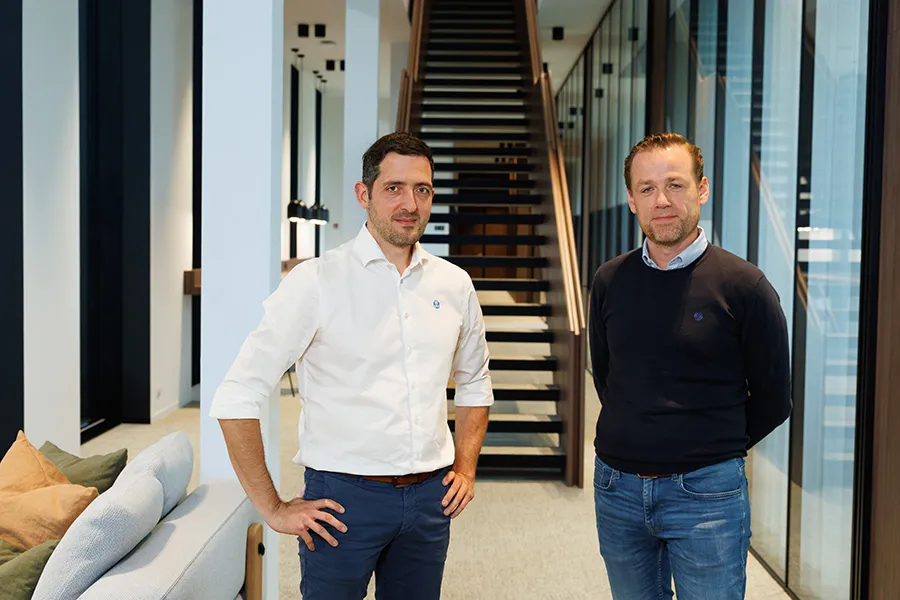
Manufacturers with a diverse product range often struggle to digitalise or automate their production. Such a project calls for a tailored approach and a clear roadmap for implementing new technology. Squadron, a spin-off of STAS in Waregem, combines the know-how gained from its own digitalisation journey with the expertise of engineers and software developers. It has offices in Waregem, Oostkamp and Macedonia.
STAS, a manufacturer of trailers, self-unloading trailers and tipper trailers, is at the forefront of the transition to Industry 4.0. The manufacturer has earned the Factory of the Future quality label for both its sites in Waregem and Tournai. Director Pieter-Jan De Man says: “Eight years ago, STAS chose to pursue end-to-end digitalisation. This enabled us to fully digitalise and extensively automate our processes. We started with our customers’ needs and, of course, wanted to further improve our efficiency and quality. But we also paid close attention to the human dimension, namely ensuring that our employees could fully benefit from digitalisation. That is precisely why we decided to develop as much as possible in-house.”
Digitalisation requires a diverse team
The digitalisation team succeeded in achieving its goal. STAS now operates a paperless factory, where operators use tablets to monitor their processes and manage all their administration. The entire dealer network has also been digitalised. “Our 44 dealers in 34 countries are connected to our databases in real time. When they configure a vehicle, they always have the latest information and prices. At a time of significant price fluctuations, this helps us protect our margins,” says Pieter-Jan De Man.
STAS decided to make its digitalisation and automation experience available to third parties. It set up the spin-off Squadron to support other manufacturers. Business unit manager Dries Dewulf says: “You need a very diverse team to bring a digitalisation project to completion: people with knowledge of sales, product development and production, as well as business analysts, engineers and software developers. Moreover, for a manufacturer with a broad product range and low volumes, digitalising processes is usually a challenging exercise. This is where we bring our experience to bear, acting as a strategic sounding board, adviser and implementation partner.”
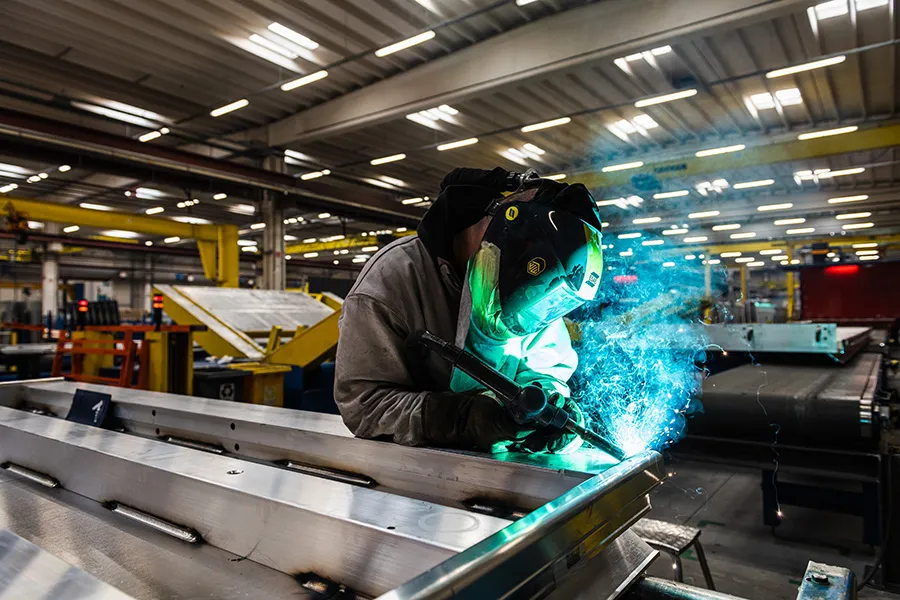
Involving all stakeholders
Squadron starts every project with a workshop at its office in Waregem. “Together with the key users, we map out the entire process: how does contact with the end customer work? How is an order taken? At what stage do engineers and the purchasing department get involved? What challenges are there on the production floor?” explains Dries. “That way, we identify where digitalisation and automation can have the greatest impact.”
This exercise is a crucial first step. “The ultimate goal is to create more added value. If you move too quickly, you risk digitalising a poor process. The result will inevitably be a poorly digitalised process,” adds Pieter-Jan. “By involving all stakeholders, we can determine what is relevant to the different departments and where the process needs to be adjusted as part of our end-to-end digitalisation. After all, some issues cannot be solved with software.”
An action plan is then drawn up and decisions need to be made. Dries says: “We work within the Microsoft ecosystem, including Business Central, Power Platform & Power BI, and we also integrate CPQ solutions such as Trimit and Elfsquad. We look at how to digitalise things step by step and where the quick wins lie: in the sales process, price configuration, order flow, planning and control of production lines. There is still a lot of administration throughout this process in manufacturing companies. If we can incorporate it into digital processes, we can achieve genuine end-to-end efficiency gains, to the benefit of both customers and employees.”
Data is the new gold
Once that step has been taken, new opportunities open up. “Digitalisation is a continuous process in which you keep looking for improvements and greater efficiency. The benefit is that you can use data from your digitalised systems to explore further optimisation, or to prevent downtime and bottlenecks. It can even help inform future investment decisions,” says Pieter-Jan De Man. “With our experience in manufacturing processes and digitalisation projects, we are ideally placed to support our customers in this.”
Question about this story? Ask your question
Keep following this
Get an email when a new story is published. No account needed.
- ThemeDigital business and automation
- SubjectServices