Group insurance can make all the difference in the war for talent

Alternative employee benefits are more popular than ever
Almost every business is now facing the war for talent. But a good HR policy is not just about attracting new talent, it is also about retaining experienced employees. More and more businesses are realising this and are keen to invest in retaining their people. In a world of competitive salary packages, a supplementary pension plan with additional risk cover can be an attractive solution.
Group insurance, a form of supplementary pension, is still one of the most effective ways of offering alternative remuneration. Payroll costs fall by 12.6% and the premiums paid are tax-deductible. Experience shows that employees greatly value group insurance as part of their remuneration. Offering group insurance shows that you are a “caring employer”.
The employee receives a valuable benefit. Group insurance not only helps maintain their standard of living in retirement, it is also not taxed as a benefit in kind. What is more, the net benefit includes a minimum interest rate of 1.75%.
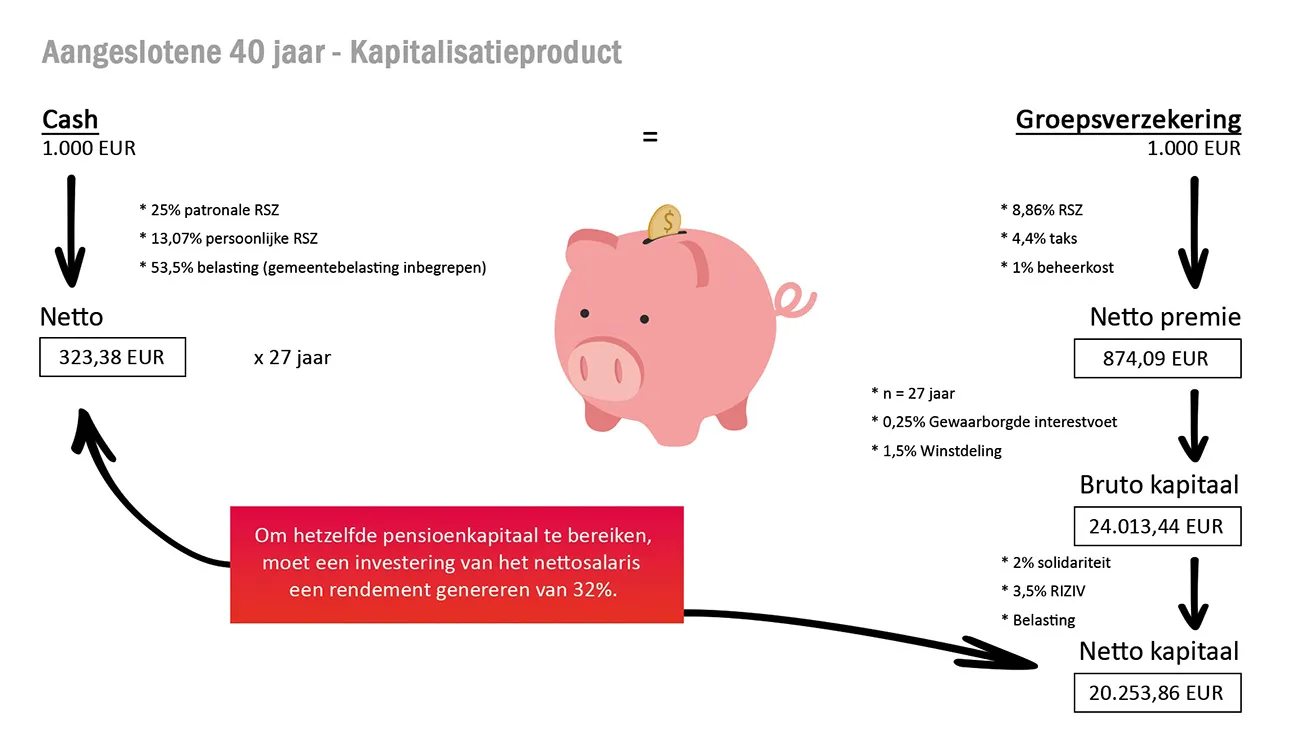
The simulation below illustrates this:
A 40-year-old employee receives a gross premium of 1,000 euros paid into a group insurance policy every year for 27 years. With a minimum return of 0.25% and a profit share of 1.50%, the employee receives net capital of 20,253.86 euros at the age of 67. If they had received the same amount as cash remuneration, they would have needed a return of 32% to achieve the same net capital. Even though group insurance has delivered low returns for many years, it remains difficult for employees to make up the difference through the returns on private investments or, for example, property investments.
Employers are required to guarantee a minimum return of 1.75%. In current market conditions, this is a “sword of Damocles”. Returns on Branch 21 policies, which account for 82% of the market, are extremely low. In a supplementary pension plan for employees, whether based on defined contributions or a cash balance, the employer therefore risks having to make up the difference to achieve a return of 1.75%. However, even with low returns, group insurance remains a worthwhile investment, even if it is underfunded. The net benefit makes it worthwhile.
Branch 21 vs. Branch 23
At Callant, we are seeing more and more employers seek to address not only the issue of underfunding, but also the impact of very high inflation. They are moving away from the low fixed return of a Branch 21 investment and investing in a Branch 23 policy, which offers no guarantee of returns or capital. The aim is to reduce the employer’s potential risk of underfunding while achieving an attractive return for the employee.
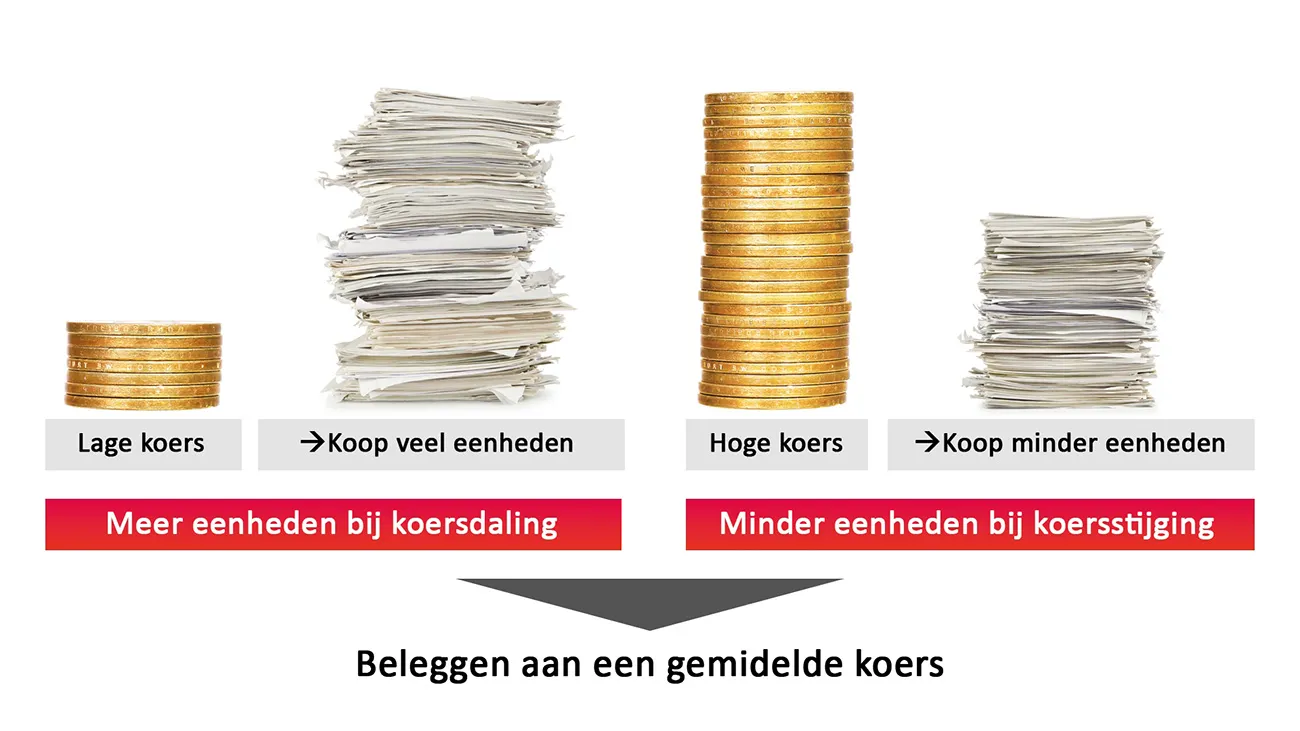
Group insurance is ideally suited to a Branch 23 policy. Investing through regular contributions means buying at the average market price over the long term, up to retirement age. This gives time for less favourable market conditions to even out over the longer term.
The main advantages of a Branch 23 policy are clear. Potential returns are higher than with Branch 21, thanks to a diversified & dynamic allocation of assets. There is greater flexibility through active, dynamic management of the financial assets, regular rebalancing and the opportunity to take advantage of market opportunities. Risk management is also crucial. It is best to choose a solution suited to your risk appetite.
The guaranteed return is a hurdle, but Branch 23 policies can often deliver attractive, high returns that automatically meet the statutory requirement.
By offering group insurance, you protect your employees’ purchasing power in retirement. The expectation is that the state pension will not rise significantly. In today’s war for talent, retention and the principle of being a ‘caring employer’ are top of the HR agenda.
A pension plan is essential! Add life insurance, income protection and medical expenses cover to protect your employee and their family: be a caring employer! Request a meeting via www.callant.be or [email protected].
Question about this story? Ask your question
Keep following this
Get an email when a new story is published. No account needed.
- SubjectServices