Family First on family succession: how to prepare for a successful generational handover in a family business
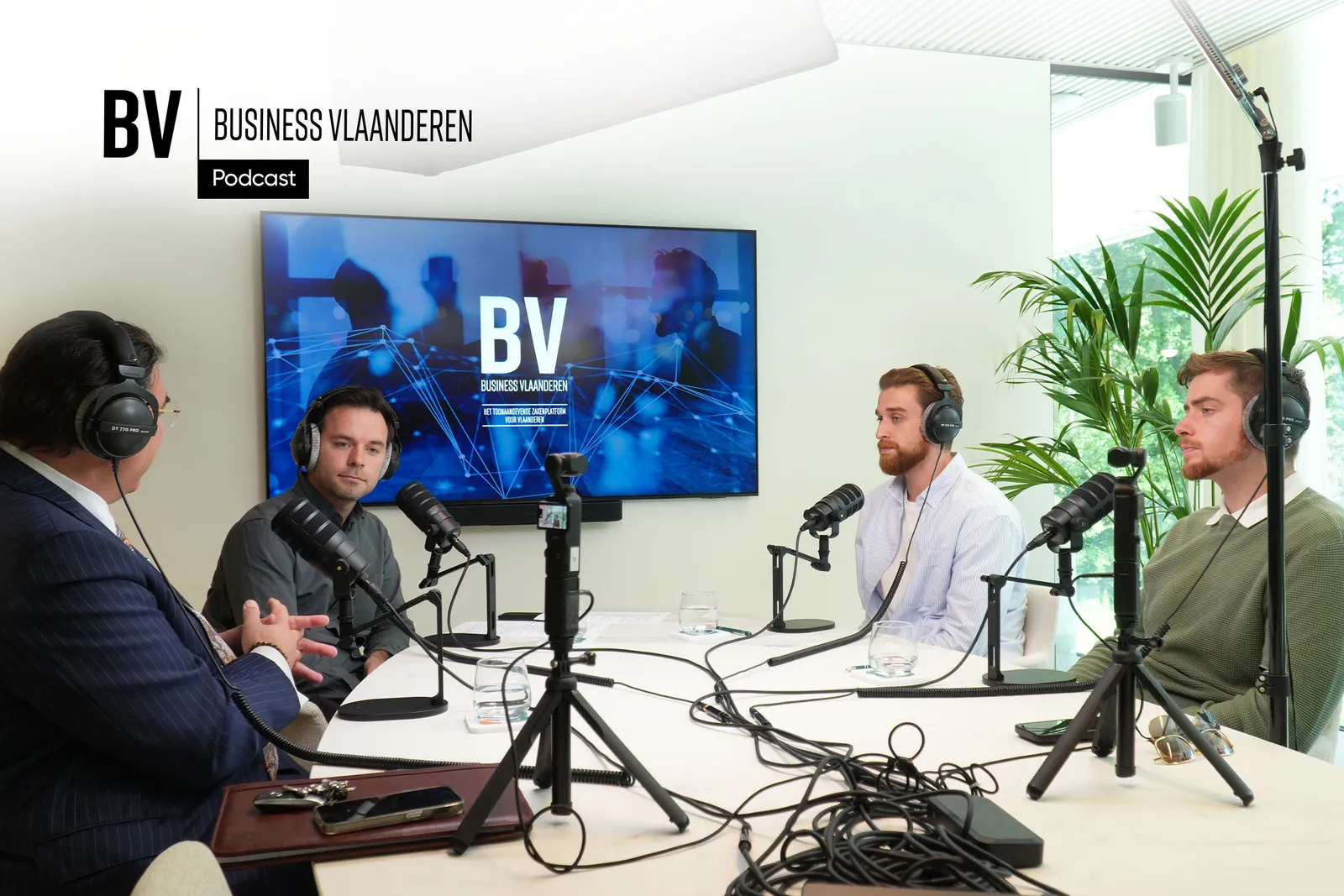
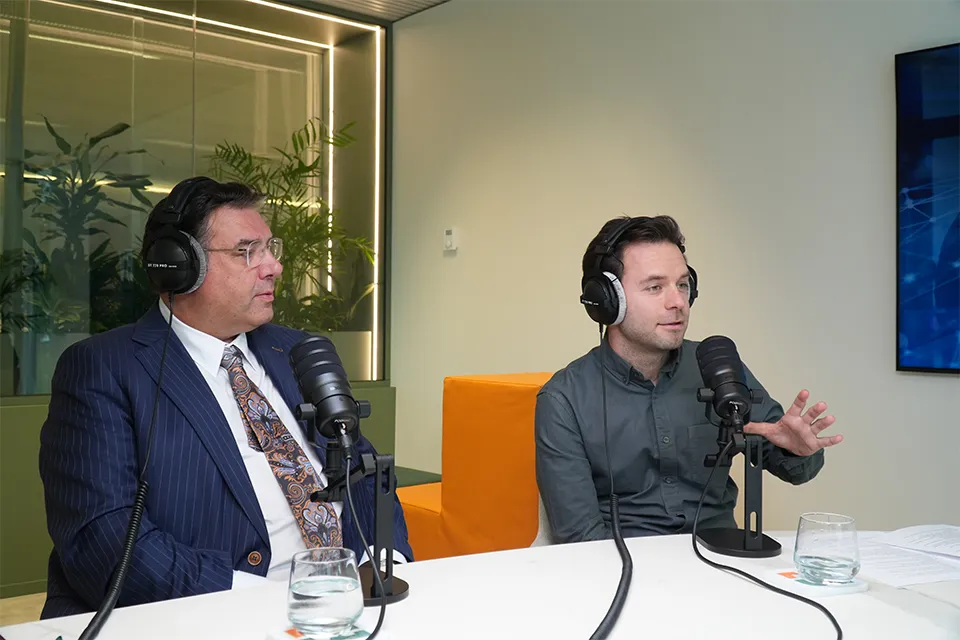
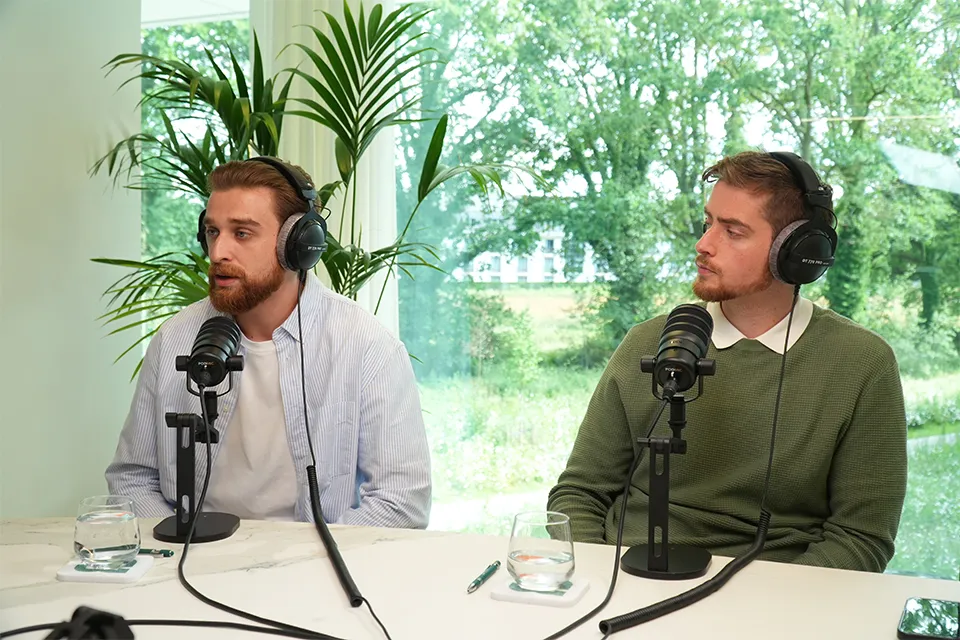
How can you ensure a family business is successfully passed on to the next generation? In this first episode of the Family First podcast, host Bavo Boutsen talks to founder Kurt Vannieuwenhuysen and his sons Niels and Matthijs Vannieuwenhuysen. They discuss why family succession is often complex, how a family charter can prevent conflict, and why emotions, as well as figures, play a crucial role in a generational handover. They also explain Family First’s unique approach and share their vision for the future of Flemish family businesses.
Speakers:
- Kurt Vannieuwenhuysen , CEO of Family First bv
- Niels Vannieuwenhuysen , Event & Project Manager at Family First bv
- Matthijs Vannieuwenhuysen , Finance and Administration Assistant at Family First bv
Host: Bavo Boutsen
Een zakelijke vraag aan Family First? Get in touch
Full transcript
All chapters (26)
- Introducing Family First and the podcast’s mission
- Family First elevator pitch
- Family First’s mission
- The origins of Family First
- What sets Family First apart
- The 3B technique
- How the 3B technique works in practice
- The influence of those around them
- Figures and emotions
- The first steps in a support programme
- From diagnosis to family charter
- What is a family charter?
- Why do so few SMEs have a family charter?
- The added value of an independent external partner
- Different expectations between generations
- Working with entrepreneurs’ life’s work
- The team behind Family First
- When family succession is not possible
- The sons join Family First
- A different route into the family business
- Roles within the family business
- Vision for the future and an ecosystem for family businesses
- Towards a one-stop shop for family-owned SMEs
- Attracting new clients
- Communication within the family business
- Closing remarks
Introducing Family First and the podcast’s mission
Bavo Boutsen Welcome to the Family First podcast. In this series, produced in partnership with Business Vlaanderen, we take a closer look at the company of the same name and explain how and where it makes a difference for its clients. In the first episode, I’m joined by founder Kurt Vannieuwenhuysen and his two sons, Niels and Matthijs. All three work at the company, so they know better than anyone what it stands for. Let’s put that to the test. Hello, Matthijs.
Family First elevator pitch
Matthijs Vannieuwenhuysen Hello, Bavo. Family First supports family business transfers and generational handovers in various ways. On the one hand, we offer a charter, preceded by an analysis and diagnosis. On the other, we have a number of programmes in which we support clients through a generational handover, because we find that many family-owned SMEs are not ready for a transfer. Finally, we also do some M&A work. In those cases, we aim to preserve the family values while finding an external solution. That’s essentially how we do it.
Family First’s mission
Bavo Boutsen All right, we’ll look at each of those in more detail shortly. But I’ve already mentioned that your brother is here too. We’ve explained what you do, but perhaps we should also talk about why you do it. What is Family First’s mission?
Niels Vannieuwenhuysen Good afternoon, Bavo. Family First’s mission is to help family businesses in Flanders grow across generations and keep the business in family hands. We increasingly saw Flemish family businesses being bought by external parties, from outside Belgium or with a different character. We want to counter that trend.
Bavo Boutsen So you recognised that, despite having many family businesses, we unfortunately still lose a lot of them in practice. And you want to help counter that.
Read the full transcriptCollapse transcript23 more chapters
The origins of Family First
Bavo Boutsen Let’s look at the company’s story, starting at the beginning. Kurt, you founded the company three years ago. Let’s go back to that moment. What was your idea? Why did you take that step?
Kurt Vannieuwenhuysen The idea actually came to me much earlier, Bavo. I worked as an accountant and tax adviser for 25 years, and had many family businesses among my clients. I noticed that things often went wrong. We might come back to that shortly. I wanted to do more and more to address those issues. At a certain point, I thought: I want to leave accountancy behind. I want to be more of a helping hand to family businesses. So I decided to specialise in that field. I took courses and looked at how large corporate companies approach family succession. During the pandemic, when everything shut down just as I was about to start in 2020, I used the extra time to read more and do further research. I adapted the systems used by large companies for SMEs. When doors reopened, in both the literal and figurative sense, I got started. I didn’t want to hold kick-off meetings on screen. In an initial meeting with a family business, you need to be able to read non-verbal communication well. So I postponed the launch until September 2023, when I started Family First.
What sets Family First apart
Bavo Boutsen What was that preparation period like? You’re not the only ones offering support. How did you develop a distinctive identity for Family First?
Kurt Vannieuwenhuysen What mattered to me was making this our core business. I find that many other providers offer it as one part of a broader range of services. I wanted it to be our sole core activity. Our independence is also very important. We are not tied to an accountancy firm, a legal practice or a bank. That allows us to work in complete independence. We are also willing to ask the difficult questions. For our market research, I looked around the world for others doing this independently. Our system is based on one company in Australia and another in Northern Canada. We had to look a long way to fine-tune our approach to what it is at Family First today.
Kurt Vannieuwenhuysen Our focus on SMEs also stems from my background in accountancy. I mainly worked with SMEs. Flanders has a strong SME base. Decision-making lines are short, and I like that dynamism. We are an SME ourselves, too.
The 3B technique
Bavo Boutsen So you’ve developed a very specific method based on reading and international examples. What exactly does it involve?
Kurt Vannieuwenhuysen There are various methods, but Family First’s flagship is the 3B technique I developed. I also wrote my first book about it. The three Bs stand for whether successors are willing, involved and capable. We assess this in a very specific way. We make a diagnosis and then carry out an analysis for the pater and mater familias to assess how we view the succession.
How the 3B technique works in practice
Bavo Boutsen That’s the theory. But how do you test those three Bs in practice?
Niels Vannieuwenhuysen My father noticed that potential competitors usually hold group discussions about family business transfers. We do things differently. Often, only the kick-off meeting takes place with everyone together, for example, with the father and mother. After that, each person gets around an hour and a half to tell their story freely, one to one. That puts everyone at ease and lets them be themselves. Our team members are trained to ask around twenty questions about willingness, involvement and capability. They ask those questions in different ways.
Bavo Boutsen So you’re essentially asking the same questions in different ways.
Niels Vannieuwenhuysen Exactly. This allows our experts to quickly sense when someone is giving an honest answer. That helps us produce an analysis that reflects reality as accurately as possible. By asking about the same thing in different ways, you eventually get to the heart of the matter.
The influence of those around them
Bavo Boutsen So it’s really about the people behind the business. Do you also involve the people around them?
Niels Vannieuwenhuysen Absolutely. We always mention this in our keynote talks and at our events. Who needs to be around the table? That’s a very important part of the process. Sometimes that even includes the parents of an in-law, because they can have a lot of influence on that in-law, who in turn influences your son or daughter. So it can reach quite far. That’s another thing that sets us apart. When necessary, we make the effort to sit down with those people, even if that wasn’t agreed in advance.
Figures and emotions
Bavo Boutsen So there’s a psychological aspect, but the figures are obviously still important.
Matthijs Vannieuwenhuysen Absolutely. Like a lawyer or an accountant, we pay close attention to the figures. The difference is that we also pay attention to emotions. Accountants and lawyers generally don’t do that when a business is transferred.
Bavo Boutsen So you combine the two.
Matthijs Vannieuwenhuysen Exactly. My father has 25 years’ experience as an accountant, so we have plenty of expertise in that area. We do the financial work an accountant or lawyer would do, while also paying close attention to the family aspect and emotions, which we believe are what make a family business distinctive.
The first steps in a support programme
Bavo Boutsen What does a programme like that involve in practice when a client comes to you?
Matthijs Vannieuwenhuysen First, we look at the family and the business, because the two are often closely linked. We talk to all the parties involved: the pater and mater familias, potential successors and any other closely involved family members. We look at the figures later. They take second place to the relationships between the people involved.
Matthijs Vannieuwenhuysen Together, that forms the diagnosis I mentioned earlier. We map out the family dynamics and the financial situation. Based on that, we draw up an action plan to ensure the transfer is sustainable and successful.
From diagnosis to family charter
Bavo Boutsen Let’s look more closely at that action plan. What are the next steps?
Kurt Vannieuwenhuysen Perhaps I should clarify something, Bavo. When we work towards a charter, we’re not really selling a charter. We’re selling succession support. Why do I want to emphasise that? We find that a charter is often the outcome of our diagnosis and analyses. It’s during those programmes, through the questions we ask and the one-to-one conversations, that we assess whether the children are willing. If you simply ask whether they’re willing, you’ll often get a clear yes or no. But if you ask whether they’re willing to put their house up as collateral for a loan to buy the shares, you usually get a much more nuanced answer. Ask the same question of your children’s partners and you’ll often get another nuanced answer. Those questions lead us to an analysis. Only then might we work towards a charter, if there’s consensus. If the conversations show that a charter is important, it becomes the outcome. We then often provide further support through business mentoring or a co-CEO arrangement to prepare the next generation.
What is a family charter?
Bavo Boutsen We may not have fully explained the family charter yet. Is it a kind of constitution for the business?
Kurt Vannieuwenhuysen Yes, it’s the business’s constitution. It goes far beyond a shareholders’ agreement. You can already regulate many things in the articles of association, but these are governed by law, so you don’t have complete freedom. A shareholders’ agreement is usually drawn up between non-family shareholders, for example, friends or acquaintances who start a business together. It sets out arrangements for leaving in the event of a conflict or by mutual agreement, such as good leaver and bad leaver provisions.
A family charter goes much further. It is the constitution for both the business and the family. A family business often comprises more than one company. A shareholders’ agreement usually relates to one specific company. A charter can cover the entire group.
For example, we set out how the handover should take place, whether payment is required, how jobs in the family business are handled, who gets priority for certain roles and how family members are assessed. Financial arrangements are also covered. How are we going to grow? Organically or through acquisitions? All these matters are included in the charter. Our charters go into considerable detail. We cover around twenty-five chapters, so it is a comprehensive document for the years ahead.
Why do so few SMEs have a family charter?
Bavo Boutsen We said that you follow a process that ultimately leads to a charter. Why do most SMEs still not have a family charter?
Kurt Vannieuwenhuysen Most do not have one yet because people think a charter is only for large family businesses.
Bavo Boutsen But you do not think that is the case?
Kurt Vannieuwenhuysen No. We have to do a lot to raise awareness and show people that solutions are available for small SMEs too. A charter is particularly valuable even for a small SME. I like to compare it with succession planning. Many people think succession planning is only for the wealthy and that you only start thinking about it when you are sixty. That is not true. It is best to start much earlier, to protect both your family and your employees. A family charter is no different. Any SME looking to pass the business on to the next generation, or where a husband and wife or a newly blended family are working together, should have a charter or at least undergo a diagnostic assessment.
The added value of an independent external partner
Bavo Boutsen The whole process is very personal. You are an external partner. What is the added value of that? Many people might think that conversations like these should take place without outsiders.
Kurt Vannieuwenhuysen In a way, you are right. We find that there is often a barrier, or even a sense of shame, around discussing these things. Having an independent party ask the questions and get involved takes the emotion out of the conversation. Everything in a family business is emotionally charged. By neutralising those emotions as an external party, we make it possible to approach everything much more rationally. That makes it easier to talk about and helps you find solutions rather than end up in conflict.
Different expectations between generations
Bavo Boutsen So there are plenty of cases where things go wrong?
Kurt Vannieuwenhuysen They are all too common.
Bavo Boutsen Feel free to give an example, without naming names.
Kurt Vannieuwenhuysen Things often go wrong because expectations are left unspoken. The generation handing over has certain expectations, while the generation taking over has different ones.
I once had a client with a construction company. The father was very clear: “If you do not work fifty hours a week, you cannot run this business.” His son saw things differently. He said: “I am not going to work as hard as my father. I am going to do it in forty hours a week.” Those are different expectations. I am not saying who is right. Time will tell. But those expectations do need to be discussed. The father also has to give his son the chance to try doing things his way. If he does not, frustration and conflict will follow. A few months later, you hear comments like: “He is not working again. He has booked another long weekend.” Those are exactly the situations you want to avoid.
Working with entrepreneurs’ life’s work
Bavo Boutsen You work with people’s life’s work. That comes with great responsibility. How do you handle that?
Niels Vannieuwenhuysen You are indeed working with someone’s baby, their child, really. That is why your team needs experience and people who know how to listen. As I said earlier, we ask around twenty questions. But just as important is the silence you leave, so people have room to speak. You have to earn the client’s trust from the very first contact. That is also why we organise our evening events, so people can get to know us. People are only willing to share their story once they feel they can trust us.
You see it at networking events too. People often start quietly telling us that they are having problems with their son or daughter in the business. That is when the conversation really begins. From that point on, a connection and trust develop. That is what we build on. Ultimately, that is why we do it.
The team behind Family First
Bavo Boutsen Who does all of this in your team?
Niels Vannieuwenhuysen My colleague Daniel Helmut Dittrich, for example. He is sales manager at Family First and a keen networker. Some might call him a smooth operator, but that is not the case.
Bavo Boutsen That is something people sometimes say about sales managers.
Niels Vannieuwenhuysen Yes, indeed. He knows how to put people at ease. I always put it this way: we do not sell a product. We sell trust. When clients start working with us, the process usually lasts several years. They become almost like acquaintances. The connection runs deep. Daniel, my colleague Matthijs and the rest of the team know how important it is to listen and ask the right questions at the right time.
When family succession is not possible
Bavo Boutsen Your whole process is about succession, but of course it does not always work out. So there are also cases where the conclusion is that the business cannot stay in the family. Is that the end of your involvement?
Matthijs Vannieuwenhuysen No. That is why we also have an M&A offering. We then look for a suitable external partner. A simple example is when there are no children who can take over the family business. That does not mean the business has to lose its values. The pater and mater familias have built something around certain values. Other parties often look only at the figures, such as EBITDA. That is obviously important, but we try to find a buyer who also wants to carry those values forward.
Bavo Boutsen It might seem a shame if that is the conclusion, but that does not mean it has to be a failure.
Matthijs Vannieuwenhuysen Absolutely not. Some children simply do not want to take over the business because they want to go in a completely different direction. If someone wants to become a doctor while their parents own a food business, that is where the story ends. Their son or daughter should not have to give up their dream. It might be a shame, but that is life.
The sons join Family First
Bavo Boutsen Another point we should certainly mention, which I touched on in the introduction, is that you have also become a family business now that your sons have joined. Perhaps we should explore that a little further. How did it happen, and what was the main reason?
Matthijs Vannieuwenhuysen I took that step about two years ago.
Bavo Boutsen So quite early, given that the company has only been around for about three years.
Matthijs Vannieuwenhuysen Yes, I actually took that step just after my studies. Why? That is a good question. On the one hand, you always feel a little pressure.
Bavo Boutsen In your case, it is particularly relevant, because the service you offer is all about relationships between generations.
Matthijs Vannieuwenhuysen Absolutely. But I was also attracted by the idea of building something worthwhile within the family business. You work with your family towards something bigger. You try to build it up and grow it. That is enjoyable. You could compare it to a board game or a team sport where you have to work together to create something good in the end. I started two years ago. As you said earlier, Bavo, Kurt had only started three years before that. The company was still in its infancy.
Bavo Boutsen So it was also a good time to join.
Matthijs Vannieuwenhuysen Definitely. That appealed to me. I also trained as an accountant, and my father worked in accountancy for 25 years. Being able to draw on my father’s experience was another important reason for joining the business. That is how I ended up here, really.
A different route into the family business
Bavo Boutsen Was it the same for Niels? Did you feel any pressure?
Niels Vannieuwenhuysen I do not think that pressure has to be a bad thing, and many children are in the same boat. There is always a certain amount of pressure. I have been at Family First for about a year and a half now, and I never really felt that pressure because I trained as a car mechanic. At the time, I did not really understand the service industry, so I did not feel the pressure.
Things happened differently for me. The atmosphere at my previous job was not good. I then volunteered at a business seminar. It was three intensive days spent organising a large networking event for entrepreneurs. That is where I discovered my love of events, networking and entrepreneurs. My previous job was not working out, and my father was looking for someone to organise events and attract clients. I wrote down five reasons why I should not do it and five reasons why I should. In the end, the reasons for doing it carried much more weight.
Roles within the family business
Bavo Boutsen Was it immediately clear to both of you what roles you would take on in the business?
Matthijs Vannieuwenhuysen It was for me. Given my background, it was a logical step. That is still what I do today, and I really enjoy it. There was little uncertainty for me.
Bavo Boutsen And was your future in the business clear from the outset too?
Kurt Vannieuwenhuysen No, definitely not. I would like to take this opportunity to thank them both for taking that step. There was never any pressure, but as a father, you naturally hope your children will become entrepreneurs too. I gave them both an exercise: list three reasons why you would do it and three reasons why you would not. They both did it.
I did have one condition. If you join the family business, you have to work harder than before and for less money. They both took a cut in pay and free time. That was an important requirement for me.
Bavo Boutsen And yet they both did it.
Kurt Vannieuwenhuysen Indeed.
Vision for the future and an ecosystem for family businesses
Kurt Vannieuwenhuysen As for the future, when you start a new business, you have a particular idea in mind. Originally, we wanted to focus solely on supporting generational handovers. But I realised that family businesses had many other things going on. They had many more needs. As an entrepreneur, you try to help people as much as possible. We are here to help family businesses. We want to make things as easy for them as we can.
For the past few months, I have been thinking about building an ecosystem around our current offering. An ecosystem that does even more to make life easier for family businesses, including in areas such as succession planning, wealth planning and M&A. People who sell their business to their children and receive a certain sum of money for it may want to invest in startups. We want to help make that connection.
I think it’s important to make the right connections. We want to help Flemish businesses grow and make the most of the knowledge and expertise available here.
Bavo Boutsen Again, is that because you believe there isn’t enough support available for this today?
Kurt Vannieuwenhuysen Or because that support is being handled in the wrong way. I’m certainly not pointing the finger at competitors. We actually have very few competitors because we work completely independently, and this is our core business.
I also think it matters that we are a family business ourselves. I’m an entrepreneur. I built the business from scratch. I’ve experienced highs and lows. I’m a first-generation entrepreneur. You don’t learn that from textbooks. You learn it by getting your hands dirty. That’s exactly why we feel a connection with family businesses.
Towards a one-stop shop for family-owned SMEs
Bavo Boutsen So you want to evolve into a one-stop shop for SMEs.
Kurt Vannieuwenhuysen You could put it that way.
Bavo Boutsen Which services do you already offer as part of that?
Matthijs Vannieuwenhuysen First, we offer our diagnostic service. We also have the Family First Class, a training programme in which Kurt guides families over three days through all aspects of family businesses, drawing on everything he has learnt during his training.
We also have the family charter, which follows on from the diagnostics or training. This sets out the family business’s constitution.
We also offer business mentoring or a co-CEO programme to ensure a smooth generational handover. Finally, we have our M&A offering for cases where an external acquisition is the best solution.
Attracting new clients
Bavo Boutsen So you mainly want to broaden your offering. Does that affect your target audience?
Matthijs Vannieuwenhuysen No, I think it will stay the same.
Bavo Boutsen How do clients find you today?
Niels Vannieuwenhuysen Our sales colleagues attend a lot of networking events. We also have a marketing machine that runs day and night, trying to generate as many leads as possible.
But ultimately, we win clients by building trust. It’s not just about the product. Every case is tailored to the client. That’s why we set aside an hour and a half for an initial meeting. If it ends up lasting three and a half hours, so be it. The first issues often come to light during that initial meeting. Based on those, we look at how we can help the family business owner through our offering.
That’s why we also want to make our offering as broad as possible. As you said earlier, we want to become the one-stop shop for family-owned SMEs.
We strongly believe in personal contact. Despite the rise of AI, we prefer to meet people face to face. In our line of work, face-to-face contact is particularly important.
Communication within the family business
Bavo Boutsen How do you plan to maintain a balance within the family as you continue to grow?
Matthijs Vannieuwenhuysen Communication is particularly important. Everything must be open for discussion. It needs to be discussed regularly. That has to be scheduled deliberately, and everyone involved must be heard. Everyone must also be appreciated. That’s how you achieve a workable relationship. We certainly manage that. Communication is one of the most important elements.
Kurt Vannieuwenhuysen When communication is difficult or doesn’t get going naturally, we are precisely the independent party that can get it started again and guide it.
Bavo Boutsen And do you manage to continue seeing each other as family, as well as colleagues?
Matthijs Vannieuwenhuysen Of course. As an entrepreneur, you spend a lot of time on the business, but at home we’re simply family.
Closing remarks
Bavo Boutsen I hear a lot of ambition for Family First’s future. I’d like to thank all three of you very much for this conversation. If you’ve been intrigued by the story, I recommend keeping an eye on Business Vlaanderen’s channels, as more podcast episodes featuring Family First are on the way. We’ll also hear from some of their clients. Hopefully see you then, and thanks for listening.
Companies in this story
Keep following this
Get an email when a new story is published. No account needed.
- ThemeBusiness transfers and acquisitions
- SubjectServices
- CompanyFamily First