Why Flanders’ logistics spearhead cluster is going all in on cargo bikes
Text Bavo BoutsenImage Uze, De Wassende Maan
“We want to demystify cycle logistics for businesses”
The city of the future will have more bicycle couriers and electric cargo bikes. They can help make logistics chains more sustainable and form part of the solution to existing urban mobility problems. To further support the growth of cycle logistics, VIL, the Flemish logistics spearhead cluster, is launching a large-scale project. “The sector is gradually moving beyond its infancy.”
Bicycle couriers weaving their way through the city on cargo bikes are an increasingly common sight. “Yet we believe the potential of this innovative transport method remains largely untapped,” says Stefan Bottu, project manager of VIL’s Fietslogistiek XXL project. VIL is the spearhead cluster that promotes innovation in logistics on behalf of the Flemish Government. “Studies suggest that up to 25% of logistics flows could theoretically be handled by cargo bike.”
A ready-to-use starter’s guide
According to Bottu, the rise of this form of logistics is driven by the trend towards greener cities, as well as the many new cargo bike models that have come onto the market in recent years. “The sector is gradually moving beyond its infancy. That is precisely why we believe this is the right time to give the trend some extra impetus.”
“The aim is to demystify cycle logistics for businesses at large. For the vast majority, it is still uncharted territory,” Stefan Bottu continues. “That is why, together with UAntwerpen and AP Hogeschool, we will develop a cost model based on an in-depth study of successful examples from abroad. It will map the exact cost of a bicycle courier trip and what that means for a business.” The findings from this cost model will then be turned into a practical guide for businesses. “It will be a ready-to-use starter’s guide to making deliveries by cargo bike,” says Bottu. “We want to give businesses insight into the costs involved in making this choice. Fietslogistiek XXL, funded by VLAIO, is primarily aimed at logistics and distribution companies, but also at shippers, bicycle manufacturers, cities, service companies, webshops and retailers.”
Over the next two years, a number of pilot projects will be rolled out with 20 project partners. “We have deliberately brought together a very diverse group, ranging from major logistics players such as DHL and PostNL to a pizza chain and a fishmonger looking to explore their delivery options. This allows us to take account of the different needs and requirements.”
Plenty of enthusiasm
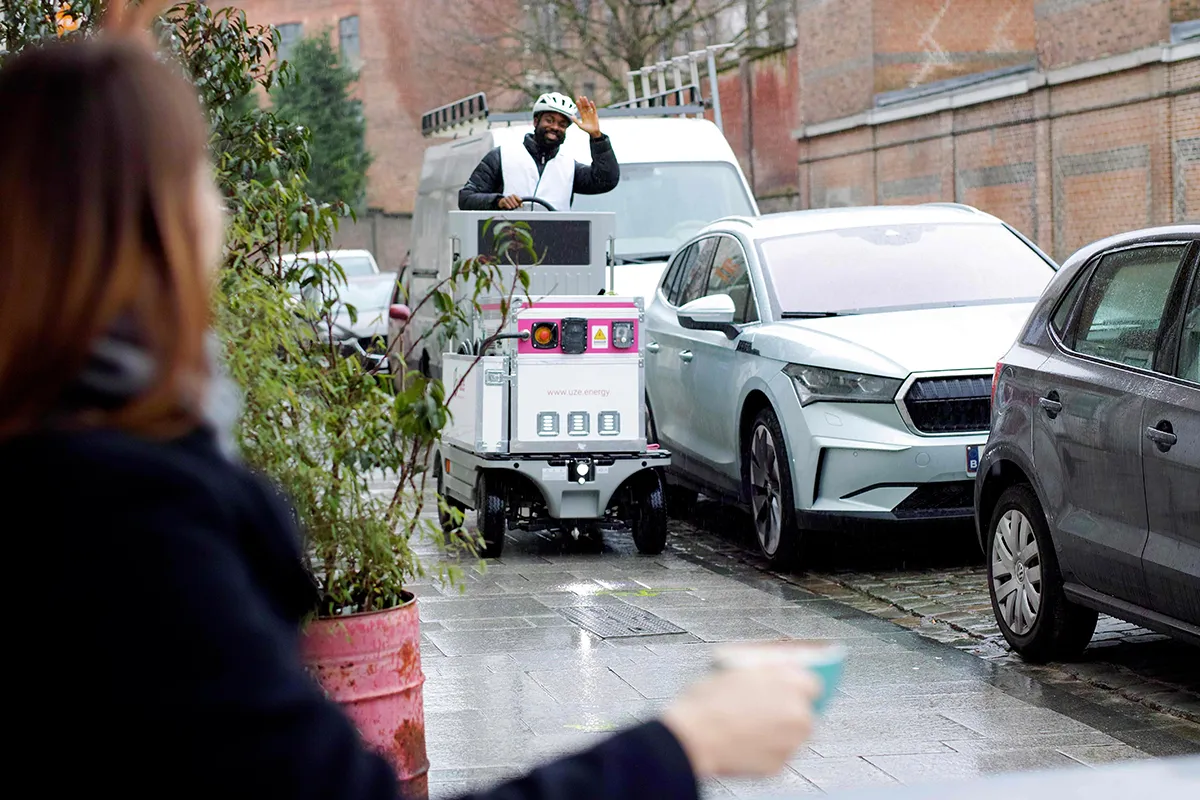
One of the participating partners is Uze, a young company offering mobile fast chargers. “Our fast chargers for electric cars are mounted on a cargo bike. This makes them highly manoeuvrable, allowing us to offer drivers the option of charging their car wherever it is parked,” explains co-founder Dieter Schotte. “This enables us to provide charging solutions with little impact on public space in the city.”
The project is of great interest to Uze. “We have considered and tested various bicycle and LEV (light electric vehicle) solutions, but we continue to analyse all the options in depth. We firmly believe in the potential of bicycle trailers and want to learn from the experience of other project partners who are already using them,” says Schotte.
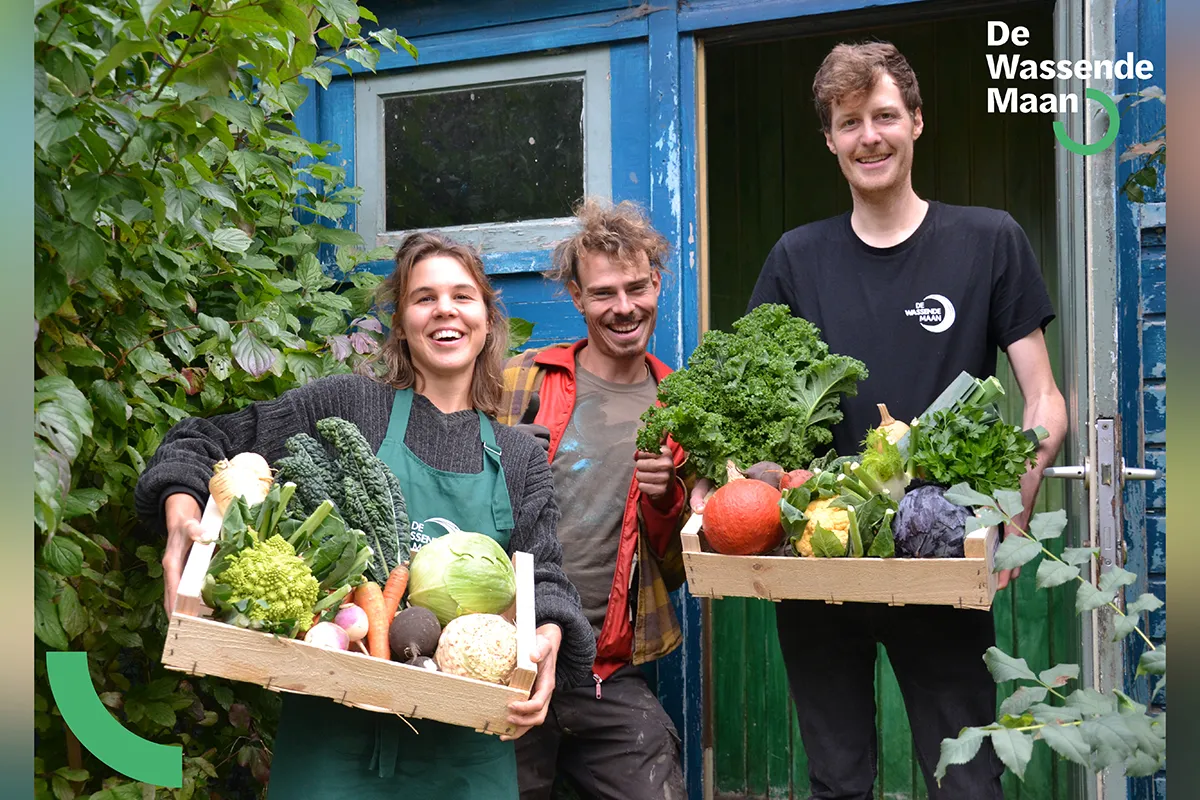
A less obvious participant is Wassende Maan. This cooperative, active in and around Ghent, promotes biodynamic farming and locally sourced food. It runs a farm and has its own vegetable-box distribution service, an organic supermarket and a webshop. “We distribute webshop orders through our network of 52 collection points in and around Ghent. But customers are increasingly asking whether we can deliver to their homes too,” says coordinator Jan Vanhuysse. Cycle logistics could make that possible.
The enthusiastic responses show that there is strong belief in the project. “It wasn’t difficult to find enough partners,” says VIL. “We have also been able to involve the industry federation Belgian Cycle Logistics Federation (BCLF) and Stad Mechelen, which means we can look at the regulatory framework too. This is a crucial piece of the puzzle, because the growing number of cargo bikes and the arrival of ever-larger models raise questions about which models should or may use cycle paths, and how this affects the way our cycling infrastructure is organised,” concludes Stefan Bottu.
Question about this story? Ask your question
Keep following this
Get an email when a new story is published. No account needed.
- SubjectMobility