Preparing for the introduction of self-driving trucks
Text Anse KeisseImage Ninatrans, imec

The logistics sector sees great potential
The Flemish transport sector faces several economic and social challenges: a severe shortage of drivers, long daily traffic jams and the need to reduce its environmental footprint, among other things. One solution lies in self-driving trucks. 10 years ago, the concept was still laughed off, but today, a car or truck capable of driving autonomously is gradually becoming a reality.
Research by the Federal Planning Bureau and Febetra, the Belgian federation of road haulage and logistics service providers, shows that freight transport is expected to grow by no less than 20% by 2040. More goods need to get from A to B, but for several years now there has been a severe shortage of drivers in the Western European transport market. “We temporarily found a solution by putting more Eastern European drivers behind the wheel, but the inflow has proved insufficient and the supply has now been exhausted,” explains Benny Smets, chairman of Febetra and CEO of Ninatrans.
The United States faces the same problem. “As we have seen several times before, we are heading towards a situation where radical change will be implemented because there is no alternative left,” Benny explains. He is referring to the use of self-driving trucks. The development of such vehicles has been under way for some time. Mercedes-Benz unveiled its first demonstrator vehicle in Europe in 2015. Since then, test drives have also been carried out in Belgium.

The first steps
Self-driving trucks are not just around the corner, however. The Flemish government and imec are joining forces to roll out smart mobility solutions such as self-driving or remotely operated vehicles. “Through pilot projects, we want to gather insights that can contribute to a legal framework for remotely operated and self-driving vehicles,” says Steven Latré, head of AI at imec.
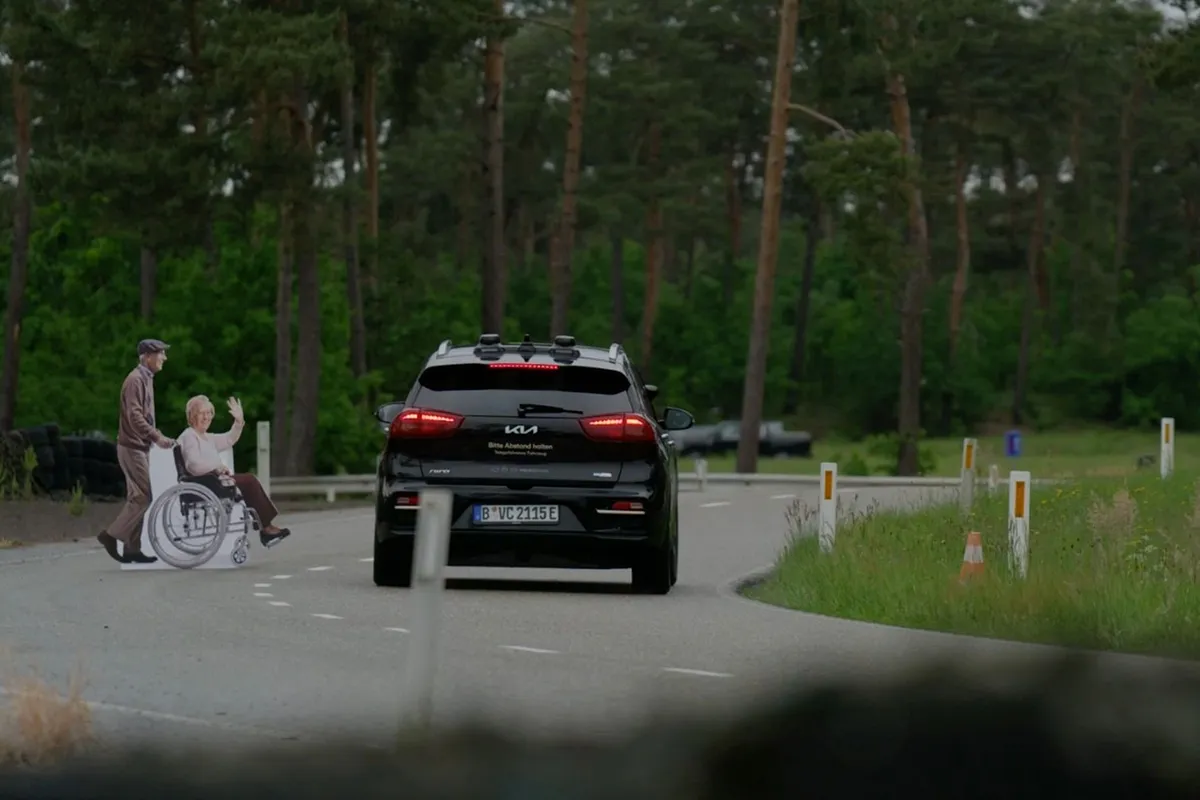
Before self-driving trucks are allowed on public roads and can therefore mix with other road users, their capabilities and limitations are thoroughly tested on a closed course. “During the test period, the focus was on evaluating the latest camera, radar and lidar technologies, as well as testing response times to dangerous situations at different speeds and in different conditions.”
A test on public roads will also take place soon, testing the connection between connected traffic lights and self-driving or remotely operated vehicles. “If integrating different technologies results in a significant improvement in road safety for remotely operated and autonomous driving, this could be a breakthrough in the wider acceptance of autonomous transport or remote operation,” says Steven Latré.
A hybrid solution
Remote driving could be an intermediate step towards self-driving trucks in the future, or could even become a permanent feature. “This combines human control and AI, for example in freight transport: trucks drive autonomously during off-peak hours, and operators intervene in complex situations. This offers solutions to the driver shortage, growing transport volumes and traffic jams,” Latré explains.
Benny Smets also believes in the potential of a hybrid solution: “We may not be able to avoid having someone remain in the vehicle to intervene when necessary, but the level of training and certification required could be lower.”
Acceptance or rejection?
Fully autonomous vehicles still have quite a few hurdles to overcome before we see them in traffic, but an important first step has already been taken. “Imec is developing sensor technology for this purpose, but is also focused on testing it in realistic conditions,” adds Steven Latré of imec.
Alongside technological feasibility, the sector faces another challenge: will decision-makers such as the government be willing to take this major step and accept responsibility for it? “From a psychological perspective, we in the sector believe that the most credible future is a hybrid solution, with tools such as AI used alongside human control, whether from on board or remotely. And whether this will be decided at European level or by individual countries remains a major question mark for now,” concludes Benny Smets, chairman of Febetra.
Question about this story? Ask your question
Keep following this
Get an email when a new story is published. No account needed.
- SubjectMobility